
 Jia Lissa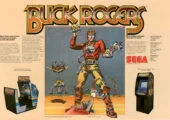
The year 1982 represented a transformative era for Sega, marked by significant corporate restructuring and a strategic pivot toward international brand integration. During this period, Sega’s North American arcade division, formerly known as Sega/Gremlin, was rebranded as Sega Electronics. This shift occurred while the company was under the ownership of Gulf + Western, a massive conglomerate that also held Paramount Pictures. In December 1981, Sega was transferred to Gulf + Western’s manufacturing arm, a move that facilitated an unprecedented synergy between the arcade powerhouse and the Hollywood film studio. This corporate alignment was intended to capitalize on Paramount’s intellectual properties, bringing iconic cinematic brands into the rapidly expanding video game market.
Paramount’s strategy was driven by a desire to compete with rivals like MCA and 20th Century Fox, both of which had begun licensing their film properties to third-party developers. By leveraging Sega’s internal development capabilities, Paramount aimed to maintain tighter control over its franchises while ensuring a high standard of technical execution. Among the projects initially planned were interactive adaptations of Dragonslayer, Friday the 13th, and War of the Worlds. However, the complexities of early 1980s game development meant that only two titles would ultimately reach the market: the critically acclaimed Star Trek: Strategic Operations Simulator and the fast-paced Buck Rogers: Planet of Zoom.
The Strategic Rebranding of Zoom 909
The development of Buck Rogers: Planet of Zoom was characterized by a pragmatic approach to localization and brand recognition. Rather than building a new game from the ground up to match the specific narrative of the Buck Rogers television series or films, Sega opted to rebrand an existing Japanese title titled Zoom 909. This decision was motivated by the need for a rapid release to capitalize on the sci-fi boom of the early 1980s.
While the connection between the gameplay and the established Buck Rogers lore was tenuous at best, the name carried significant weight in North America. Created by Philip Francis Nowlan in 1928, Buck Rogers had evolved into a cornerstone of American science fiction through novels, comic strips, and radio serials. A 1979 film revival and a television series that ran until 1981 had recently returned the character to the forefront of the public consciousness. For Sega and Paramount, the Buck Rogers name provided an immediate hook for U.S. audiences, even if the game’s content—a high-speed chase through alien environments—shared little with the protagonist’s traditional adventures.
Technical Innovations: The VCO Object System
From a technical perspective, Buck Rogers: Planet of Zoom was a showcase for Sega’s "Voltage Controlled Oscillators" (VCO) Object system. This architecture was an evolution of the technology used in Sega’s earlier hit, Turbo, and served as a crucial stepping stone toward the "Super Scaler" technology that would later define 1980s arcade classics such as OutRun, Space Harrier, and After Burner.
The VCO system allowed for the scaling of sprites at a speed and fluidity that was revolutionary for 1982. By rapidly increasing or decreasing the size of 2D images, the hardware created a convincing illusion of three-dimensional depth and forward motion. In Planet of Zoom, this manifested as a rear-perspective flight simulator where players dodged obstacles and engaged enemies at "breakneck" speeds. The immersion was further enhanced by the arcade cabinet designs. While standard upright units were available, the premium "cockpit" cabinet featured a dedicated control stick and a more enclosed environment, effectively simulating the experience of piloting a futuristic starfighter.
Gameplay Mechanics and Structural Design
The narrative premise of the game is functional rather than complex: a destructive celestial body known as the "Planet of Zoom" is traversing the galaxy, and Buck Rogers must intercept it to destroy the "Source Ship" located at its core. The gameplay is divided into rounds, each consisting of eight distinct multi-area sections.
A defining feature of Planet of Zoom is its emphasis on speed and fuel management. A red gauge at the top of the screen tracks the player’s remaining fuel, which doubles as a timer. To survive, players must navigate through each section before the fuel is exhausted. This is managed through an accelerator pedal or button that toggles between fast and slow speeds. Traveling at maximum velocity consumes fuel more efficiently and awards higher bonus points, but it significantly increases the difficulty of maneuvering around energy towers, walls, and enemy saucers.
The enemy variety is consistent throughout the stages, focusing on four primary types of hostile craft. Each round culminates in a confrontation with the Source Ship, a massive boss entity that requires the player to precisely target and destroy its four engines. This loop repeats with increasing difficulty, a standard structure for arcade games of the era designed to maximize "quarter-munching" potential.
Critical Reception and Comparative Analysis
Upon its release in late 1982, Buck Rogers: Planet of Zoom was lauded for its visual spectacle but received mixed feedback regarding its depth. Many contemporary observers noted the game’s aesthetic similarities to the Star Wars franchise, specifically the first stage’s resemblance to the Death Star trench run from A New Hope. Critics argued that while Sega took inspiration from popular sci-fi tropes, the game lacked the tactical depth found in its sister release, Star Trek: Strategic Operations Simulator.
Retrospective analysis highlights several flaws that hindered the game’s longevity. One primary issue was the scoring system; the game did not reset the score when a player inserted additional credits to continue. This design choice undermined the competitive nature of the arcade experience, as high scores became a measure of financial investment rather than pure skill. Additionally, the repetitive nature of the five short stages meant that the initial "wow factor" of the scaling graphics often gave way to boredom once the player mastered the basic patterns.
Despite these criticisms, the game remains a significant milestone. It was one of the first successful attempts to merge a classic media franchise with cutting-edge arcade hardware. Its failure to strictly adhere to the Buck Rogers lore is often viewed by historians as a symptom of the era’s experimental approach to licensing, where the "brand" was frequently treated as a marketing wrapper for existing software.
Chronology of Development and Release
The timeline of Buck Rogers: Planet of Zoom is a reflection of the rapid pace of the early 1980s gaming industry:
- 1928: Buck Rogers debuts in Armageddon 2419 A.D.
- 1979–1981: The Buck Rogers in the 25th Century television series airs, renewing interest in the IP.
- December 1981: Sega is integrated into Gulf + Western’s manufacturing group, aligning it with Paramount Pictures.
- Early 1982: Sega/Gremlin is rebranded as Sega Electronics; development begins on the Paramount game slate.
- Mid-1982: Zoom 909 is developed by Sega’s Japanese division.
- Late 1982: Buck Rogers: Planet of Zoom is released in North American arcades, utilizing the rebranded Zoom 909 software.
- 1983: Ports are released for various home systems, including the Atari 2600, ColecoVision, and Commodore 64, though they lack the arcade version’s fluid scaling capabilities.
Broader Impact and Industry Implications
The legacy of Buck Rogers: Planet of Zoom extends beyond its own gameplay. It proved that there was a massive market for licensed sci-fi titles, even if the connection to the source material was superficial. This success encouraged other studios to pursue similar partnerships, eventually leading to a market saturated with movie-based games.
Technologically, the game served as a vital laboratory for Sega’s engineers. The lessons learned in sprite scaling and pseudo-3D perspective with the VCO system directly informed the development of the "Super Scaler" boards. These boards would go on to power the "Taikan" (body-sensation) cabinets of the mid-to-late 80s, which transformed arcades into immersive theme-park-like experiences.
While Planet of Zoom may not be as frequently cited as Zaxxon or Star Wars (1983), its role as a pioneer in technical immersion and corporate synergy is undeniable. It remains a representative artifact of a time when the video game industry was transitioning from simple pixelated abstractions to the complex, brand-driven spectacles that define the modern medium. For collectors and enthusiasts, the original cockpit cabinet remains the definitive way to experience the title, preserving the fluid motion and tactile feedback that made it a "showstopper" on the arcade floors of 1982.








