Chalid Lutfie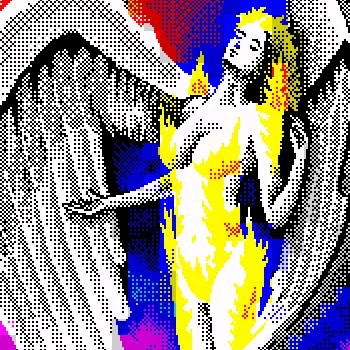
The debut album by the prolific electronic musician C-Jeff, titled Still Flying, represents a definitive milestone in the evolution of the ZX Spectrum music scene and the broader chiptune genre. Originally composed throughout 2002, the album serves as a foundational work that bridged the gap between raw hardware-based sound synthesis and the conceptual depth of traditional musical narratives. Developed using the Pro Tracker 3 music editor on authentic ZX Spectrum hardware, Still Flying was marketed under the evocative tagline of "lyric music novels," a description that highlighted the artist’s intent to move beyond the repetitive loops common in early 8-bit music toward more complex, emotionally resonant compositions. While the album began as a collection of individual tracks written within the constraints of the AY-3-8910 sound chip, its eventual release as a standalone executable musicdisk and its subsequent digital preservation on platforms like Bandcamp have solidified its place in the history of digital audio art.
Technical Foundation and Hardware Constraints
The production of Still Flying is intrinsically tied to the technical capabilities and limitations of the ZX Spectrum, a 8-bit home computer that became a cornerstone of the European and Russian computing scenes in the 1980s and 1990s. Central to the sound of the album is the AY-3-8910 programmable sound generator (PSG), or its variants like the YM2149. This hardware provided three channels of square-wave sound, a single noise generator, and limited envelope control. Unlike modern digital audio workstations (DAWs) that offer infinite tracks and high-fidelity sampling, composing on the ZX Spectrum required a rigorous understanding of frequency modulation and mathematical precision to simulate complex textures and polyphony.
C-Jeff utilized Pro Tracker 3, a sophisticated "tracker" interface that allowed composers to sequence notes, volume changes, and effects in a vertical grid. In the tracker environment, music is not recorded as a waveform but as a series of instructions sent to the hardware in real-time. This method of composition demands a high degree of technical proficiency, as the artist must manually program every vibrato, slide, and percussion hit using hexadecimal values. The "lyric music novel" approach of Still Flying suggests that C-Jeff sought to push these three channels to their absolute limit, creating a sense of progression and storytelling that transcended the technical austerity of the 8-bit era.
Chronology of Development and Competitive Debut
The timeline of Still Flying is deeply intertwined with the demoscene—an international computer art subculture focused on producing self-contained programs that demonstrate technical and artistic prowess. The tracks comprising the album were not merely studio recordings but were often entries in high-stakes "music compos" at various demoparties across Eastern Europe.
In 2002, the track "My Mind is Free" was submitted to the CAFe 2002 demoparty. Due to a self-reported lack of English fluency at the time, the track was originally titled "My mind free." Despite the minor grammatical error, the composition showcased C-Jeff’s ability to weave melodic complexity within the AY-3-8910’s constraints. The track ultimately secured 13th place in the ZX Spectrum AY Music competition, a respectable finish in a field known for its intense rivalry and high standards of technical execution. Following the competition, the track was integrated into the tracklist for the forthcoming album.
Later that same year, C-Jeff produced "Lonely Soul," a track that shared the thematic and sonic DNA of the Still Flying project. Although it was not part of the initial album concept, its stylistic alignment led to its eventual inclusion. "Lonely Soul" was entered into the Paradox 2002 demoparty, where it achieved significant critical acclaim, taking 2nd place in the ZX Spectrum AY Music compo. This success underscored the rising profile of C-Jeff within the community and validated the "lyric music novel" concept as a viable direction for the future of tracker music.
The Musicdisk Release and Collaborative Effort
Approximately 18 months after the initial compositions were completed, Still Flying was elevated from a collection of files to a cohesive digital product known as a "musicdisk." In the demoscene, a musicdisk is a specialized piece of software designed to play an album while providing a synchronized visual interface, often including custom graphics, text, and hidden features.
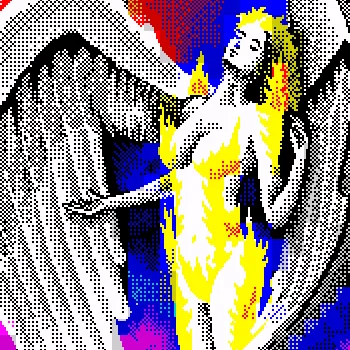
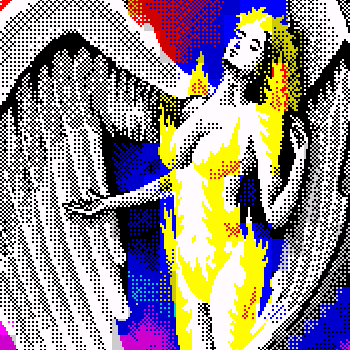
The release of the Still Flying musicdisk was a collaborative effort involving several key figures in the ZX Spectrum community. The software was coded by Vortex, a programmer who ensured the music played flawlessly while the hardware managed simultaneous visual output. The visual aesthetic of the disk was provided by Schafft, whose artwork complemented the atmospheric tone of the music. The final package was assembled and "packed" by Poisoned CyberJack, a technician responsible for optimizing the file size to ensure the entire experience could fit within the limited memory of a standard ZX Spectrum.
This release format was crucial for the album’s longevity. By presenting the music as an executable program, the creators ensured that the tracks were heard exactly as intended on the original hardware, preserving the unique "crunch" and timbre of the AY chip that is often lost in modern digital recordings.
Production Credits and Mastering Standards
Despite the retro hardware used for the primary composition, the production of Still Flying adhered to high standards of audio engineering. The album credits reflect a professional approach to independent music production:
- C-Jeff: Composer and Producer. C-Jeff acted as the primary creative force, overseeing both the technical programming of the tracks and the overarching thematic direction of the album.
- Schafft: Artwork. The visual identity of the album, both in its musicdisk form and its later digital re-releases, was instrumental in establishing the "lyric music novel" atmosphere.
- MmcM: Mastering. The involvement of MmcM (Sergey Myachin), a legendary figure in the Russian chiptune scene, provided the album with a level of sonic polish rarely seen in early 2000s tracker music. Mastering for 8-bit hardware involves balancing the harsh square waves and noise channels to ensure clarity across various playback systems without losing the characteristic grit of the ZX Spectrum.
The copyright for the work remains with C-Jeff, established in 2002, marking a period where digital artists began to assert greater control over their intellectual property within the historically open-source and free-sharing culture of the demoscene.
Historical Context and Broader Implications
To understand the significance of Still Flying, one must look at the state of electronic music in the early 21st century. While the mainstream music industry was transitioning to high-definition digital audio and the MP3 revolution was in full swing, a dedicated pocket of artists continued to explore the aesthetic possibilities of "obsolete" hardware.
C-Jeff’s work in 2002 was part of a larger movement that would eventually give rise to the global chiptune phenomenon. By treating the ZX Spectrum not as a toy or a relic, but as a legitimate musical instrument, artists like C-Jeff paved the way for the integration of 8-bit sounds into modern pop, EDM, and film scores. The "lyric music novel" tagline was particularly visionary, as it anticipated the shift toward long-form, conceptual electronic music that would become popular in the decade to follow.
The album also serves as a cultural artifact of the post-Soviet computing landscape. In Russia and neighboring countries, the ZX Spectrum clones (such as the Pentagon or Scorpion) remained popular long after the original hardware had been discontinued in the West. This created a unique ecosystem where technical innovation on 8-bit systems continued well into the 2000s, leading to some of the most complex tracker music ever written.
Digital Preservation and Modern Accessibility
In the years following its initial release, Still Flying has transitioned from a niche demoscene product to a preserved piece of digital history. The album’s availability on Bandcamp represents a significant shift in how tracker music is consumed. While the original musicdisk remains the definitive way to experience the work on original hardware, high-quality digital renders allow a global audience to appreciate C-Jeff’s compositions without the need for specialized emulators or vintage computers.
The transition to digital platforms has also allowed for the inclusion of tracks like "Lonely Soul" in a way that feels seamless, providing a complete picture of C-Jeff’s creative output during that pivotal year. The preservation of these works is essential for the study of computer science and musicology, as they demonstrate the incredible ingenuity required to create art within the severe limitations of 20th-century technology.
Analysis of the Lyric Music Novel Concept
The "lyric music novel" concept remains the most intriguing aspect of Still Flying. In traditional music theory, a novelistic approach implies a narrative arc—a beginning, middle, and end characterized by thematic development and emotional shifts. In the context of 2002-era chiptune, this was a radical departure from the "game music" tropes of the time.
Most ZX Spectrum music of the 1980s and 90s was designed to be functional, serving as background audio for video games. These tracks were often short, highly repetitive, and prioritized energy over nuance. Still Flying, conversely, utilizes the AY-3-8910 to create soundscapes that feel expansive and introspective. The tracks are allowed to breathe, with slow-building melodies and complex harmonic structures that suggest a deeper story behind the notes. This shift in focus from "game audio" to "pure music" helped elevate the status of tracker composers to that of serious contemporary musicians.
Conclusion and Future Legacy
Still Flying stands as a testament to the enduring power of creative limitation. By choosing to work within the strict confines of the ZX Spectrum in 2002—a time when much more powerful technology was readily available—C-Jeff proved that the soul of a piece of music lies not in the fidelity of the equipment, but in the vision of the composer.
The album’s journey from a series of competitive entries at demoparties like CAFe and Paradox to a professionally mastered musicdisk, and finally to a digitally preserved classic, mirrors the evolution of the chiptune genre itself. It moved from a hobbyist subculture to a respected form of artistic expression. As the demoscene continues to be recognized by international bodies like UNESCO as intangible cultural heritage, works like Still Flying will undoubtedly be cited as essential examples of how human creativity can thrive in the digital age, turning rows of hexadecimal code into "lyric music novels" that continue to fly long after their original hardware has faded into history.