Vera Clarissa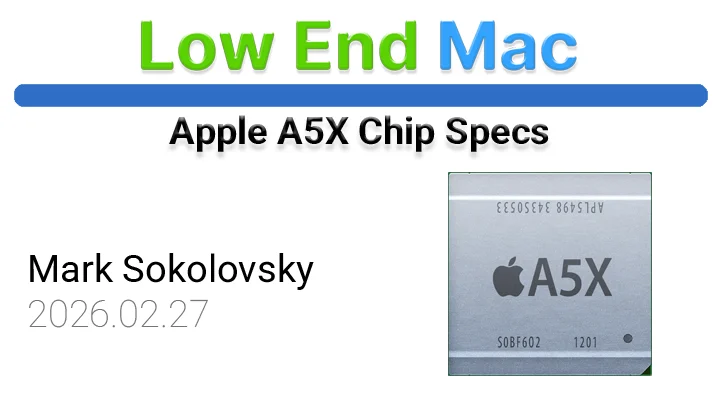
The Apple A5X System-on-Chip (SoC) represents a significant milestone in Apple’s silicon development, particularly for its role in powering the third-generation iPad. Released on March 16th, 2012, this dual-core processor, manufactured by Samsung on a 45-nanometer fabrication process, was engineered to deliver enhanced graphical performance and a smoother user experience for the tablet market. This detailed hardware profile examines the core components, memory architecture, and graphical capabilities of the A5X, contextualizing its importance within the evolving landscape of mobile computing at the time.
Core Architecture and Processing Power
At the heart of the A5X is a dual-core CPU based on the ARMv7 architecture, operating at a clock speed of 1 GHz. This configuration provided a respectable level of processing power for its era, designed to handle the demands of mobile applications, multitasking, and web browsing. While lacking the efficiency cores found in later Apple designs, the A5X’s two performance cores were optimized for responsiveness and sustained operation. The CPU featured a split cache design, with each performance core allocated 32 KB of L1 instruction cache (totaling 64 KB) and 32 KB of L1 data cache (totaling 64 KB). Additionally, a unified 1 MB L2 cache served both cores, a common design choice to improve data access speeds and reduce latency. The absence of a system-level cache indicates a focus on direct core-to-core communication and memory access, streamlined for the specific needs of the iPad.
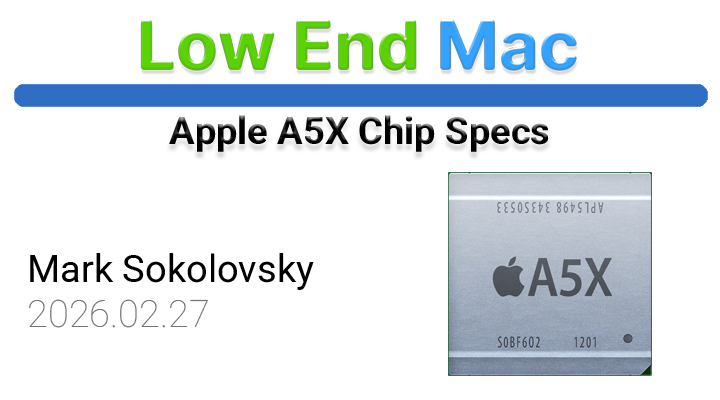
The A5X’s manufacturing by Samsung, a key foundry partner for Apple at the time, utilized a 45-nanometer process. This node, while not the bleeding edge even in 2012, offered a balance of performance, power efficiency, and cost-effectiveness. The exact transistor count for the A5X is not publicly disclosed, a common practice for Apple’s proprietary silicon, but it would have been substantial, reflecting the integration of CPU, GPU, memory controllers, and other vital components onto a single chip. The codename "APL5498" and part number "S5L8945" are internal identifiers that provide further technical specificity for hardware analysts and enthusiasts.

Memory Subsystem: Fueling Graphical Demands
A critical aspect of the A5X’s design was its memory subsystem, meticulously tuned to support its graphical prowess. The chip featured a 128-bit memory bus width, a significant enhancement over previous Apple mobile SoCs. This wider bus, coupled with four independent memory channels, each 32 bits wide, allowed for a substantial increase in data throughput. The A5X employed LPDDR2-800 memory, operating at an effective frequency of 400 MHz. This combination yielded an estimated memory bandwidth of 12.8 GB/s.
This high memory bandwidth was crucial for the A5X, as it was specifically designed to drive the high-resolution Retina display of the third-generation iPad. The ability to quickly transfer large amounts of graphical data to and from the GPU was paramount for rendering complex graphics, smooth animations, and high-definition video playback without stuttering or lag. The 512 MB capacity of the memory, while modest by today’s standards, was appropriate for the operating system and applications of 2012, balancing performance with power consumption and cost.

Graphics Architecture: A Leap Forward for Mobile Gaming and Media
The graphics processing unit (GPU) was arguably the most significant upgrade in the A5X compared to its predecessor, the A5. The A5X boasted a quad-core GPU configuration. Each core was equipped with 8 SIMD (Single Instruction, Multiple Data) execution units, contributing to a total of 64 FP32 (Floating Point Single Precision) Arithmetic Logic Units (ALUs). Running at a clock speed of 200 MHz, these GPU cores were capable of delivering approximately 25.6 GFLOPS (Giga Floating-point Operations Per Second).
This considerable graphical horsepower was a key selling point for the third-generation iPad. It enabled developers to create more visually rich and immersive applications and games, pushing the boundaries of mobile gaming and media consumption. The ability to render at higher resolutions and with more complex visual effects was a direct consequence of the A5X’s advanced GPU architecture and its robust memory interface. This advancement positioned the iPad as a more compelling platform for entertainment and creative tasks, moving beyond basic productivity.

Chronology and Context: The A5X in Apple’s Silicon Evolution
The development and release of the A5X fit into a broader trajectory of Apple’s increasing investment in custom silicon. Following the success of the A4 and A5 chips, the A5X represented a focused iteration, specifically targeting the demands of the iPad.
- 2010: Apple introduces the A4 chip, powering the original iPad and iPhone 4, marking its significant entry into custom mobile SoC design.
- 2011: The A5 chip arrives, featuring a dual-core CPU and a dual-core GPU, significantly boosting performance in the iPad 2 and iPhone 4S.
- March 2012: The Apple A5X is unveiled alongside the third-generation iPad. This release highlights a strategic decision by Apple to differentiate its tablet offerings with specialized graphics performance. The A5X’s primary objective was to power the new 2048×1536 Retina display, requiring a substantial leap in GPU capabilities.
- Later 2012: Apple introduces the A6 and A6X chips, which featured a new custom CPU architecture (Swift) and further GPU enhancements, signaling a continued pace of innovation and a shift away from reliance on licensed ARM cores for the CPU.
The A5X’s existence also underscores the strategic importance of Apple’s relationship with manufacturing partners like Samsung. While Apple designs its own chips, the actual fabrication is outsourced to foundries. The 45nm process used for the A5X was mature and reliable, allowing for high yields and a timely launch.

Impact and Implications: Setting New Standards for Tablets
The introduction of the A5X and its integration into the third-generation iPad had several key implications for the mobile technology market:
- Elevated Tablet Performance Expectations: The A5X demonstrated that tablets could deliver console-like gaming experiences and handle graphically intensive applications with ease. This raised the bar for competitors and spurred further innovation in mobile GPU technology across the industry.
- The Power of Specialized Silicon: Apple’s commitment to developing custom SoCs, tailored to specific product needs, became a significant competitive advantage. The A5X was not just a general-purpose chip; it was optimized for the demands of a high-resolution display and rich media consumption, showcasing the benefits of a vertically integrated approach.
- The Retina Display’s Viability: The A5X was instrumental in making the Retina display a compelling feature rather than a mere specification. Without the processing power to drive such a high pixel density smoothly, the Retina display might have been perceived as a gimmick. The A5X ensured that users experienced crisp text and detailed images without performance compromises.
- Shaping the Future of Mobile Gaming: The graphical capabilities of the A5X provided a platform for developers to experiment with more sophisticated game design. This contributed to the growing maturity of the mobile gaming ecosystem, pushing for higher fidelity graphics and more engaging gameplay.
While the A5X was eventually succeeded by more advanced Apple Silicon, its role in the evolution of the iPad and the broader mobile computing landscape remains significant. It represented a critical step in Apple’s journey of silicon design, showcasing the power of targeted hardware development to enhance user experience and define new product categories. The technical specifications detailed in this profile highlight the meticulous engineering that went into creating a chip capable of delivering on the promise of a truly immersive and powerful tablet experience. The A5X stands as a testament to Apple’s strategy of leveraging custom silicon to push the boundaries of what mobile devices could achieve.