Indra Gunadi
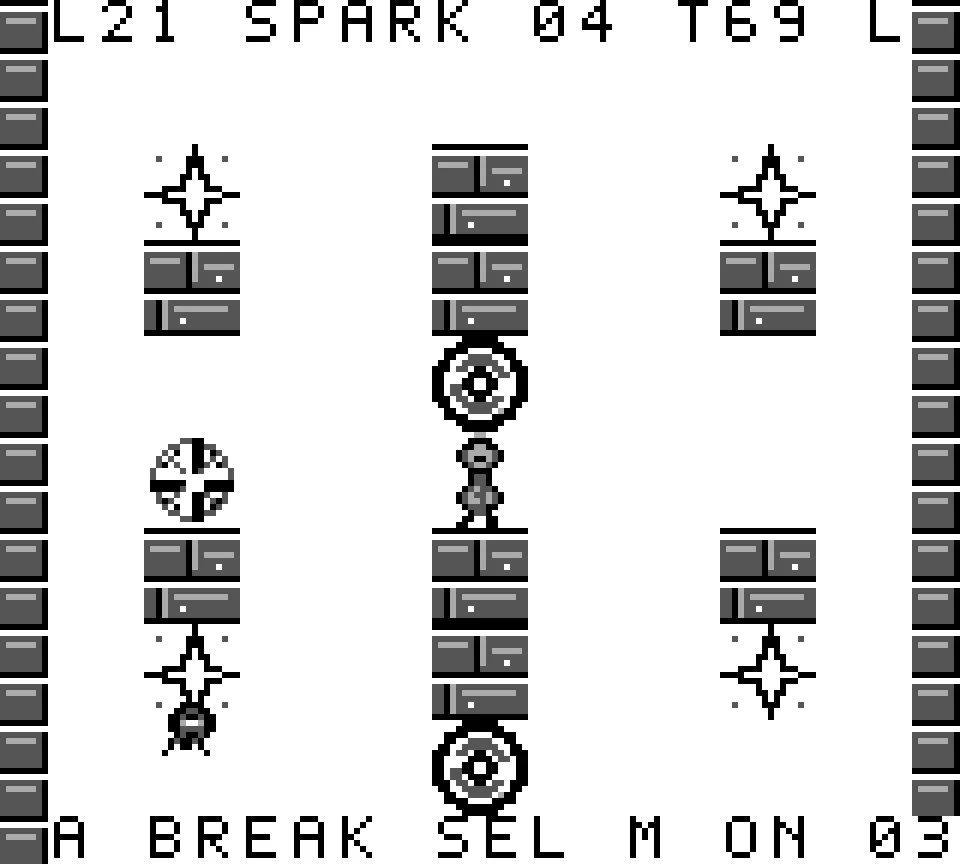
The landscape of retro game development continues to evolve as independent creators push the boundaries of hardware originally released in 1989. On October 25, 2026, a new title titled Lumen Labyrinth was released for the Nintendo Game Boy (DMG-01). Developed by the creator known as devgb, this puzzle-oriented title represents a modern intersection of classic hardware limitations and contemporary development methodologies, including the integration of artificial intelligence in the creative process. The release adds to a growing catalog of homebrew software that keeps the 35-year-old handheld platform relevant in the modern digital age.
Technical Specifications and Gameplay Mechanics
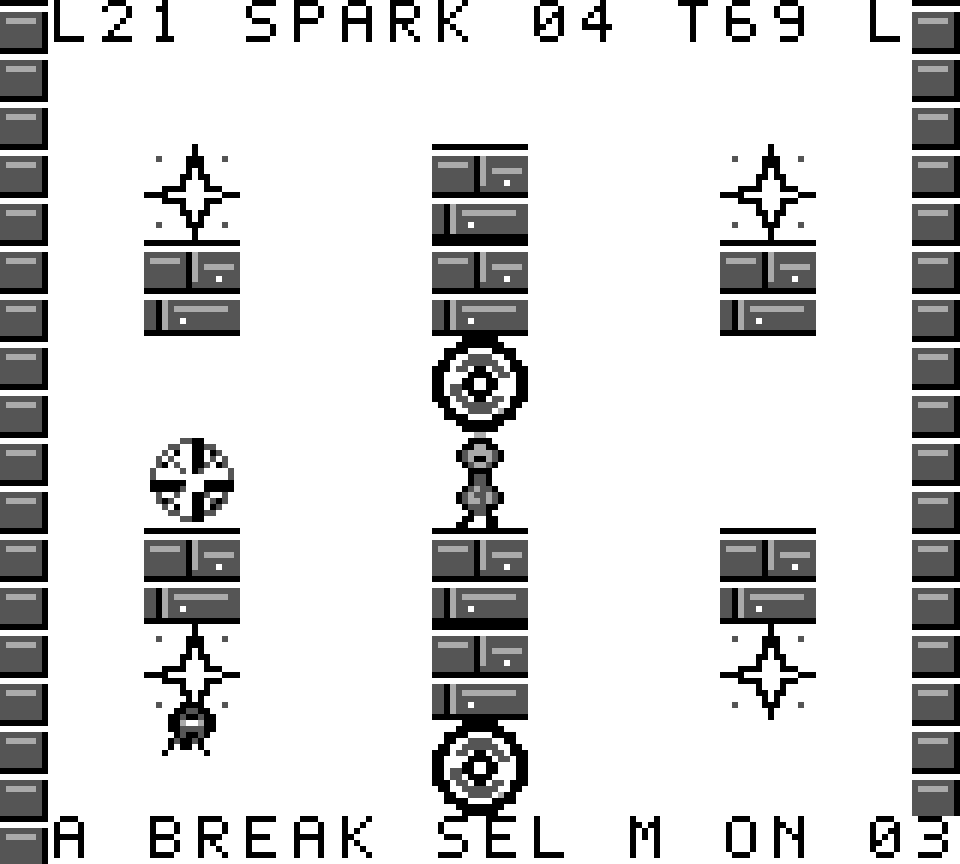
Lumen Labyrinth challenges players to navigate a series of 24 distinct rooms, each designed to test spatial reasoning and logical planning. The core gameplay loop revolves around a classic crate-pushing mechanic, a staple of the puzzle genre popularized by titles like Sokoban. However, devgb introduces a modern twist by incorporating portals and glowing star mechanics, which complicate the navigation of the maze-like environments.
The game is specifically optimized for the original Game Boy hardware, meaning it operates within the strict 160×144 pixel resolution and the limited four-shade grayscale palette characteristic of the DMG-01. Developing for this hardware requires rigorous optimization, as the system features a Sharp LR35902 processor running at approximately 4.19 MHz and only 8 KB of internal Work RAM. By successfully porting these mechanics to such constrained hardware, devgb demonstrates a high degree of technical proficiency in assembly or C-based development for the platform.
The Rise of AI-Assisted Homebrew Development
One of the most notable aspects of the release of Lumen Labyrinth is the explicit disclosure by the developer that artificial intelligence was utilized in the game’s creation. This inclusion places Lumen Labyrinth at the forefront of a shifting trend within the homebrew community. As development tools become more sophisticated, creators are increasingly leveraging generative AI to assist with asset creation, level design logic, and code optimization.
The use of AI in this context raises interesting questions regarding the future of retro-gaming. While traditional homebrew development is often associated with the painstaking manual entry of hex code or the manual drafting of pixel art, the adoption of AI suggests a democratization of game development. For the Game Boy, where assets must be extremely lightweight to fit into small ROM sizes, AI tools can potentially assist in streamlining the compression of graphics or the generation of background tiles that adhere to the system’s tile-based memory architecture.
Historical Context: The Game Boy Homebrew Movement
To understand the significance of a release like Lumen Labyrinth, one must look at the chronology of the Game Boy homebrew scene. When the Nintendo Game Boy was discontinued in the early 2000s, the developer community was relatively small and focused primarily on emulation and ROM dumping. However, the mid-2010s saw a surge in interest as affordable flash cartridges—such as the EverDrive or the EZ-Flash Junior—made it possible for enthusiasts to play custom code on authentic hardware without the need for expensive development kits.
The following timeline illustrates the maturation of the ecosystem:
- 1989–1998: The commercial lifecycle of the original Game Boy, characterized by official Nintendo-licensed software.
- 2005–2010: The nascent homebrew phase, where hobbyists focused on simple tech demos and "Hello World" applications.
- 2015–2020: The rise of accessible toolsets like GBDK (Game Boy Development Kit), allowing developers to write games in C rather than assembly.
- 2021–2026: The current era, defined by high-quality, full-length commercial-grade homebrew games and the integration of modern AI-assisted workflows.
Lumen Labyrinth is a product of this current era. It moves beyond mere technical experimentation to provide a polished, 24-level experience that rivals the complexity of late-period commercial releases for the platform.
Analytical Overview: Market Implications
The release of a new title for a console that has been defunct for decades serves as a case study in the longevity of gaming hardware. The Game Boy remains one of the most popular platforms for homebrew developers due to its simplicity, well-documented architecture, and the massive amount of available technical documentation.
From a data-driven perspective, the homebrew market has seen an uptick in activity on platforms such as Itch.io. Developers like devgb are not necessarily seeking mass-market distribution, but rather seeking to engage with a highly dedicated community of collectors and retro-enthusiasts. This "long-tail" economy allows niche games to find a sustainable audience. By distributing the game via Itch.io, devgb is able to utilize a modern delivery mechanism for a legacy format, bridging the gap between digital storefronts and physical hardware.
Design Challenges on 8-Bit Hardware
The design of Lumen Labyrinth requires careful management of the Game Boy’s VRAM (Video RAM). The system can only store a limited number of unique tiles at any given time, which forces developers to be incredibly efficient with how they render puzzles. In a game featuring crate-pushing and portal mechanics, the developer must account for:
- Collision Detection: Ensuring that the player, crates, and portals interact correctly without exceeding the processor’s cycles per frame.
- Sprite Limits: The Game Boy can only display 10 sprites per scanline. If a room has too many objects, the developer must use clever techniques—such as drawing objects as background tiles—to prevent "flicker," a common visual artifact in 8-bit gaming.
- ROM Constraints: With many Game Boy games needing to fit into 32KB, 64KB, or 128KB, the logic for 24 levels must be highly compressed. The inclusion of AI-assisted design suggests that the level layout algorithms may have been optimized to ensure the game remains under these restrictive capacity limits.
Industry and Community Reception
While there has been no formal response from Nintendo—which maintains a hands-off approach to the non-commercial homebrew scene—the broader gaming community has responded with enthusiasm. Analysts who track the retro-gaming market note that the proliferation of such titles is essential for the preservation of the medium. By creating new content for old hardware, developers ensure that the knowledge of how to program for these specific architectures is passed down and refined.
The reaction from the indie development community highlights a growing acceptance of AI as a legitimate tool for solo developers. Whereas larger studios often face controversy regarding the use of AI, the homebrew scene tends to view it as a way to overcome the "resource gap"—the difference between the time a solo developer has and the time required to build a feature-complete game.
Looking Toward the Future
Lumen Labyrinth stands as a testament to the fact that the Game Boy is not merely a relic of the past, but a living platform. As technology continues to advance, the methods used to create games for this system will likely become even more sophisticated. We may soon see projects that use AI to generate entire game loops or procedural generation systems that fit within the 8-bit memory constraints of the system.
For those interested in the technical aspects of the project, devgb has provided access to the game via the Itch.io platform. This accessibility is a hallmark of the modern homebrew scene, where the barrier to entry for both developers and players has never been lower. Whether one is a seasoned retro-enthusiast or a newcomer to the Game Boy, the existence of titles like Lumen Labyrinth ensures that the "dot-matrix" experience continues to offer challenges and entertainment well into the late 2020s.
As we look toward the remainder of 2026 and beyond, it is probable that we will see an increase in the frequency of such releases. The synergy between classic hardware and modern development tools represents a unique cultural phenomenon that preserves the spirit of early handheld gaming while embracing the technological advancements of the current era. The "Labyrinth" may be simple in its 8-bit presentation, but its existence signals a complex and thriving ecosystem that shows no signs of slowing down.