Chalid Lutfie
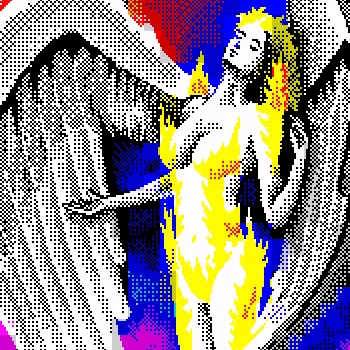
The release of Still Flying by the electronic musician known as C-Jeff represents a significant artifact in the history of chiptune music and the legacy of the ZX Spectrum platform. Composed in 2002 using the Pro Tracker 3 software on original hardware, the album serves as a definitive example of "lyric music novels," a descriptor C-Jeff applied to the work to emphasize its narrative-driven composition style. The album’s enduring appeal lies in its technical constraints and the creative ingenuity required to overcome them, marking the debut of a composer who would go on to influence the digital music scene for decades.
Technical Genesis and Creative Constraints
To understand the magnitude of Still Flying, one must examine the environment in which it was produced. The ZX Spectrum, a home computer released in the early 1980s, was primarily equipped with the General Instrument AY-3-8910 sound chip. This chip offered three channels of sound and one noise channel, a limitation that forced composers to prioritize efficiency and harmonic layering. C-Jeff utilized Pro Tracker 3, a robust tracker interface that allowed for precise control over pitch, volume, and envelope manipulation.
The composition of the album in 2002 placed it at a unique intersection of history. By the early 2000s, the "demoscene"—a subculture focused on creating computer-generated art, music, and visuals—had evolved significantly. Producers were no longer just recreating 8-bit arcade sounds; they were pushing the AY-3-8910 chip to its absolute limits, experimenting with complex polyphony and emotive melodies that defied the perceived limitations of the hardware. Still Flying emerged as a response to this creative maturation, blending technical proficiency with a distinct, melancholic, and introspective melodic sensibility.
Chronology of the 2002 Release Cycle
The production of Still Flying was not a singular event but a process spanning the calendar year of 2002, punctuated by active participation in the European demoscene circuit.
The first major public milestone for the collection was the inclusion of the track "My Mind is Free," which was submitted to the CAFe 2002 demoparty. Originally titled "My mind free" due to the artist’s linguistic constraints at the time, the piece secured 13th place in the highly competitive ZX Spectrum AY Music category. This placement served as an important validator for the artist, confirming that his compositions resonated with the core demoscene audience.
Following the CAFe party, a second key track, "Lonely Soul," was developed. While not part of the initial album concept, the track was born from the same creative cycle and shared the distinct atmospheric quality that defined the rest of the project. Its entry into the Paradox 2002 demoparty resulted in a 2nd place finish, signaling a significant leap in the artist’s recognition and confirming the commercial and artistic viability of his work.
The project reached its final form approximately 18 months after its initial composition when it was ported to a standalone executable musicdisk. This format was a staple of the era, allowing listeners to experience the music within a custom-coded interface. The technical team behind the release included programmer Vortex, graphic designer Schafft, and packer Poisoned CyberJack, all of whom collaborated to ensure that the digital packaging matched the quality of the audio content.
Production and Technical Credits
The successful realization of Still Flying relied on a collaborative effort that bridged the gap between raw composition and polished final product. The core production credits are as follows:
- Composer and Producer: C-Jeff, responsible for the initial arrangement and the structural narrative of the album.
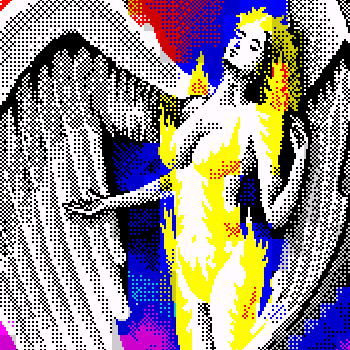
- Artwork: Schafft, who provided the visual aesthetic for the musicdisk release, ensuring the interface reflected the tone of the music.
- Mastering: MmcM, who oversaw the final technical refinement of the audio files, a critical step in preserving the fidelity of the AY-3-8910 chip’s output when converted for modern playback systems.
This collaborative structure was indicative of the demoscene’s communal nature, where musicians, coders, and artists frequently pooled their talents to produce high-quality, free-to-distribute cultural artifacts.
The Demoscene and the Evolution of AY Music
The impact of Still Flying must be contextualized within the broader demoscene, a global community dedicated to pushing the technical boundaries of legacy hardware. During the early 2000s, events like CAFe and Paradox acted as the primary hubs for creative exchange. These parties were not merely competitions; they were incubators for new synthesis techniques.
The "AY Music" category in these competitions demanded a deep understanding of hardware register manipulation. Composers had to account for the chip’s lack of true samples, relying instead on creative use of square waves and noise bursts. C-Jeff’s success in these competitions established a precedent for the "lyric music novel" approach—a style characterized by longer, more complex song structures that moved away from the short, loop-based tracks typical of early 1980s game music.
By placing 13th and 2nd in major competitions, C-Jeff proved that the ZX Spectrum could function as a legitimate instrument for high-fidelity electronic composition. The subsequent release of the musicdisk cemented this status, transitioning the work from a collection of competition entries to a cohesive, standalone album.
Analysis of Musical Style and Technical Legacy
The musical identity of Still Flying is characterized by its emotional resonance. In many ways, the album serves as a bridge between the rigid, mechanical nature of early chiptune and the more expressive, atmospheric electronic music that would dominate the indie scene in later years. The tracks exhibit a focus on melody and harmonic depth, often utilizing the three-channel limit to create intricate counterpoints.
The "lyric music novel" tagline is particularly telling. It implies that each track is meant to be a chapter in a larger story. By eschewing the frantic, high-tempo style often associated with 8-bit hardware in favor of a slower, more contemplative pace, C-Jeff expanded the perceived capabilities of the ZX Spectrum. This approach influenced a generation of composers who sought to use legacy hardware not just for nostalgia, but as a valid creative medium for personal expression.
Implications for Modern Digital Preservation
The release of Still Flying, and its later availability on platforms such as Bandcamp, highlights the ongoing relevance of digital preservation in the music industry. The original 2002 executable musicdisk remains a functional piece of software, allowing listeners to experience the work as it was originally intended. However, the migration of these files to modern streaming platforms has introduced this niche soundscape to a wider audience, facilitating a dialogue between 20th-century hardware limitations and 21st-century distribution models.
The decision to maintain the original integrity of the tracks while utilizing modern mastering techniques ensures that the work remains accessible. It serves as a reminder that the limitations of hardware—be it the limited memory of a ZX Spectrum or the narrow audio range of the AY-3-8910 chip—often force a level of creative output that is impossible to replicate with modern, infinite-track software.
Conclusion: A Foundation for Future Work
The significance of Still Flying extends beyond its initial release in 2002. As the debut album of C-Jeff, it laid the groundwork for a career defined by technical precision and emotional storytelling. The project remains a touchstone for those interested in the history of the ZX Spectrum, the evolution of the demoscene, and the development of the chiptune genre.
By documenting the transition from individual demoparty submissions to a polished, collaborative musicdisk, the history of Still Flying provides a clear view of how subcultural movements can foster professional-grade creative work. The album stands as a testament to the fact that with enough technical ingenuity and a clear creative vision, even the most restrictive hardware can be transformed into a vessel for complex and evocative musical narratives. As both a historical document and a listening experience, Still Flying continues to be an essential reference point for the intersection of computer science and electronic music.