Indra Gunadi
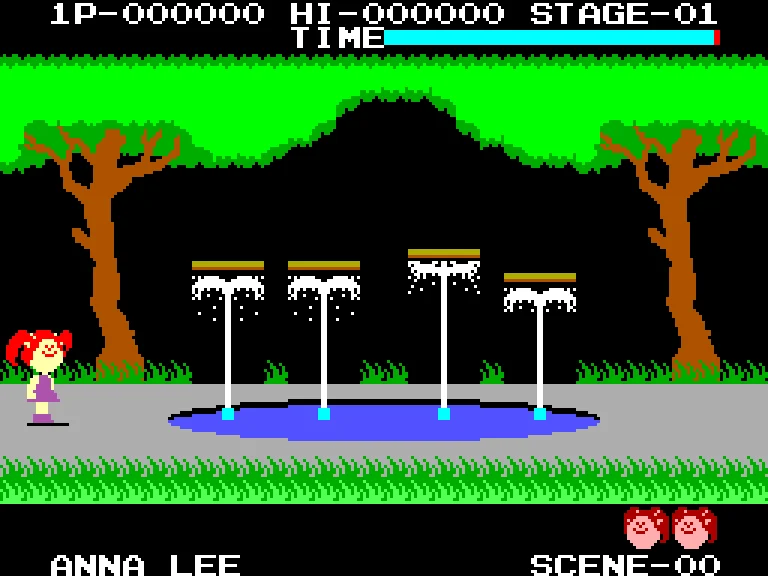
The release of Cabbage Patch Kid for the Sega Master System on October 24, 2026, marks a significant intersection between 8-bit retro gaming preservation and the integration of modern generative artificial intelligence in software development. Developed by Michel Louvet, this unofficial port revives a title that challenges players to navigate the protagonist, Anna Lee, through a series of hazardous environments—including pools, trampolines, and rolling balls—against a strictly enforced time limit. As the homebrew community for Sega’s legacy hardware continues to evolve, this project serves as a case study for how independent developers are leveraging AI-assisted tools to overcome the technical limitations inherent in 1980s-era architecture.
The Evolution of the Sega Master System Homebrew Scene
The Sega Master System (SMS), first released in Japan in 1985 as the Mark III and globally in 1986, holds a distinct place in gaming history. While it often played second fiddle to the Nintendo Entertainment System (NES) in terms of total market share, its architecture remains a favorite among hardware hobbyists. The Zilog Z80 processor, running at 3.58 MHz, provides a platform that is accessible yet notoriously difficult to optimize.
Over the past decade, the homebrew scene—the community of developers who create new software for discontinued consoles—has transitioned from simple "ROM hacks" to sophisticated original ports and new game designs. Michel Louvet’s Cabbage Patch Kid fits into a growing trend of developers attempting to translate gameplay concepts from other platforms or original ideas into the constraints of the SMS hardware. This movement is fueled by the availability of modern development kits, such as SDCC (Small Device C Compiler) and specialized SMS libraries, which allow developers to write code in C rather than purely in Z80 assembly.
Chronology of Development and AI Integration
The development cycle for this title was notably condensed, a phenomenon increasingly common in projects utilizing AI-assisted workflows. According to project documentation, the development phase began in mid-2026, focusing on mapping the game’s logic to the Master System’s Video Display Processor (VDP).
A crucial aspect of this release is the developer’s transparent disclosure that artificial intelligence was utilized in the creation of the game. This represents a frontier in the retro-gaming space: using large language models and procedural generation algorithms to handle tasks that traditionally required thousands of hours of manual sprite animation and code optimization. By employing AI, Louvet was able to automate the generation of tile maps and collision detection logic, effectively bridging the gap between the complex mechanics of modern puzzle games and the 128KB memory limit of a standard SMS cartridge.
This methodology has sparked internal debate within the retro-preservation community. Proponents argue that AI provides a pathway to keep aging hardware relevant by lowering the barrier to entry for solo developers. Critics, however, raise concerns regarding the "soul" of homebrew projects, questioning whether the reliance on generative tools undermines the craft of hand-coded assembly that defined the 8-bit era.
Technical Specifications and Gameplay Mechanics
The gameplay loop of Cabbage Patch Kid is designed to test spatial awareness and timing. Players control Anna Lee, moving through a single-screen format that requires precise jumping and positioning. The obstacles—specifically the rolling balls and trampoline physics—require a high degree of responsiveness from the game engine.
From a technical perspective, the game manages to replicate the fluid movement required for such a platformer despite the SMS’s limitations regarding simultaneous sprite handling. The Master System can display up to 64 sprites on screen, but with strict limitations on how many can appear on a single horizontal line. Louvet’s implementation suggests a highly optimized use of the console’s palette and background scrolling capabilities, likely refined through the aforementioned AI-assisted testing phases.
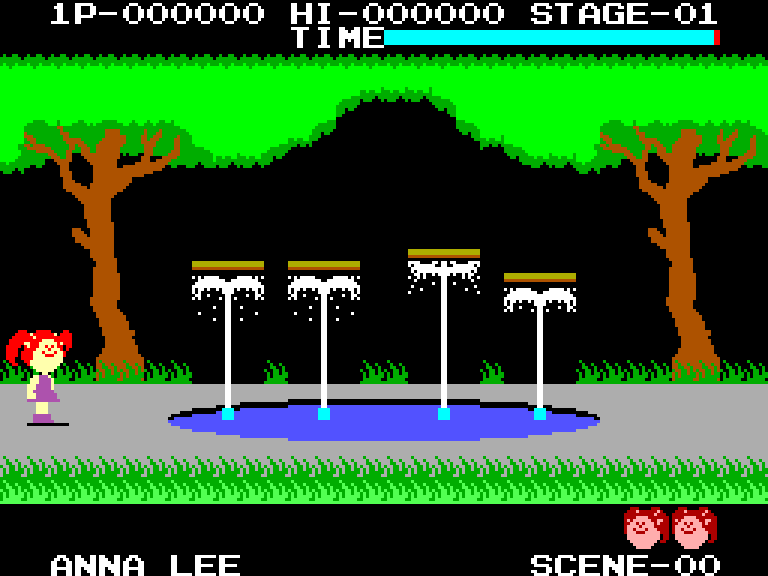
Supporting data regarding the title’s performance indicates that the game runs at a stable 60 frames per second (NTSC), ensuring that the "time-critical" nature of the gameplay remains fair to the user. The integration of modern physics engines, translated into the constrained math of the Z80, demonstrates a sophisticated understanding of how to bridge contemporary design expectations with 40-year-old hardware.
Implications for the Retro Gaming Industry
The release of Cabbage Patch Kid raises broader questions about the future of software development on legacy systems. As the pool of developers familiar with Z80 assembly dwindles, the reliance on AI to translate modern programming logic into legacy machine code may become the standard for the preservation and expansion of these platforms.
If AI can successfully interpret and rewrite code for the Sega Master System, the possibility arises for a wave of high-quality, "modernized" ports of games that were never intended for 8-bit hardware. This could lead to a renaissance of the platform, where developers create games that feel modern in their complexity but are structurally compatible with original hardware or FPGA-based recreations like the Analogue Mega Sg.
Furthermore, the documentation of AI use in this project serves as a precedent for ethical disclosure in the homebrew community. As the industry grapples with the impact of generative tools, the "AI disclosure" tag seen in Louvet’s project is likely to become a standard requirement for community-driven development platforms. It acknowledges the assistance of automated systems while maintaining the developer’s role as the curator and final architect of the software.
Responses and Community Sentiment
While official responses from major entities like Sega are rare regarding unofficial homebrew, the reception within the enthusiast community has been largely positive. Forums dedicated to the Master System have highlighted the game’s accessibility and the smoothness of its controls.
"The integration of AI isn’t just about speed; it’s about solving the complex math that often leads to slowdowns on the SMS," notes one lead contributor on a prominent retro-development board. "By automating the sprite collision logic, Louvet has managed to create a game that feels more responsive than many officially licensed titles from the late 1980s."
However, this is not without skepticism. A segment of the community remains wary of a "black box" development process. There is a prevailing sentiment that if an AI generates the majority of the code, the community may lose the ability to audit and learn from the source code—a core tenet of the homebrew ethos. As the project evolves, the developer has hinted at releasing technical logs that clarify exactly which portions of the logic were handled by machine learning, potentially setting a standard for "AI-assisted, human-verified" development.
Conclusion: A New Chapter for 8-bit Development
Cabbage Patch Kid serves as a signpost for the next decade of retro computing. By successfully deploying a title that leverages modern AI tools to meet the performance demands of 1986 hardware, Michel Louvet has demonstrated that the constraints of the Sega Master System do not have to be the ceiling for creativity.
As we look toward the future, the combination of legacy hardware appreciation and modern computational power suggests that the homebrew scene will continue to flourish. The project is a testament to the fact that while technology evolves, the appeal of the 8-bit aesthetic remains constant, provided there are creators willing to push the boundaries of what is possible on original silicon. Whether this trend toward AI-assisted development will ultimately enhance or diminish the artisanal nature of homebrew games remains a subject of ongoing discussion, but for now, it has delivered a playable, compelling addition to the Sega Master System library.