Vera Clarissa
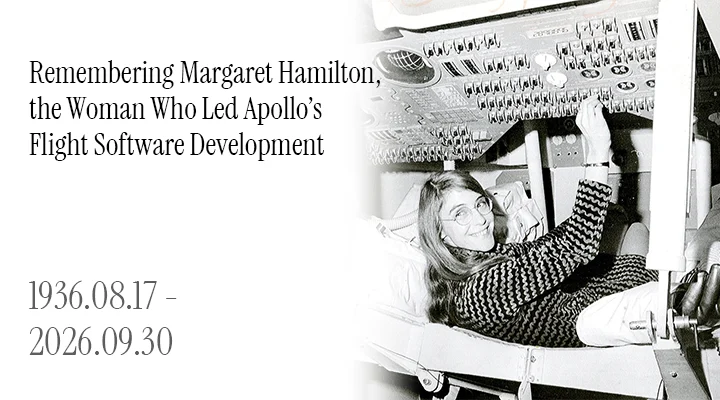
Margaret Hamilton, the visionary computer scientist who directed the Apollo Flight Software Development team and effectively institutionalized the discipline of software engineering, passed away on September 30, 2026, in Cambridge, Massachusetts. She was 90 years old. Her death, confirmed by the Massachusetts Institute of Technology, marks the end of a transformative era in computing history—an era she helped define through her rigorous approach to complex systems and her insistence that software reliability was as critical as the physical hardware of a spacecraft.
A titan of the space age, Hamilton’s career spanned the transition from the nascent days of mid-century mainframe computing to the sophisticated, high-reliability architectures that underpin modern aviation and defense. She is survived by her daughter, son-in-law, two grandsons, and four great-grandchildren. A memorial service is scheduled to be held in Cambridge in the spring of 2027.
A Foundation Built on Logic and Necessity
Born in 1936, Hamilton’s entry into the field of computer science occurred at a time when the industry was largely unorganized and lacked formal methodologies. In the 1960s, she joined the MIT Instrumentation Laboratory, which was then tasked with developing the guidance and navigation systems for NASA’s Apollo program. It was during this period that Hamilton coined the term "software engineering." She chose the phrase deliberately, arguing that software development should be viewed with the same professional rigor and institutional respect as traditional civil, electrical, or mechanical engineering.
Her work on the Apollo Guidance Computer (AGC) was not merely a matter of writing code; it was a matter of survival. The AGC was a marvel of the 1960s, possessing only 72KB of read-only memory and 4KB of erasable memory. Despite these severe hardware constraints, Hamilton insisted that the software be capable of detecting and recovering from its own errors. This philosophy, which she termed "defensive programming," required that the system anticipate potential failures—such as a pilot entering a faulty command or a hardware component glitching—and initiate a recovery process rather than succumbing to a total system crash.
Chronology of a Storied Career
Hamilton’s professional trajectory is a testament to her adaptability and technical foresight. Before her tenure at MIT, she gained critical experience working on the SAGE (Semi-Automatic Ground Environment) project, a massive air defense system that necessitated complex programming to track aircraft in real-time. This project provided the crucible in which she honed her ability to manage large-scale, high-stakes software projects.
- Early 1960s: Hamilton joins the MIT Instrumentation Laboratory, working on the development of the Apollo Guidance Computer.
- 1969: The Apollo 11 mission lands on the moon. During the critical descent, the AGC triggers a series of "1202" and "1201" alarms, signaling an overload in the computer’s processor. Because of the priority-scheduling software Hamilton and her team designed, the system ignored low-priority tasks and focused on the landing, ensuring the Lunar Module touched down safely.
- 1970s: Following the success of the Apollo missions, Hamilton transitions into the private sector. She founds two companies, Higher Order Software (1976) and Hamilton Technologies (1986), dedicated to implementing the methodologies she developed at MIT.
- 1972: She concludes her work with the final lunar landing mission, having overseen the software for all six successful landings.
- 2016: President Barack Obama awards Hamilton the Presidential Medal of Freedom, recognizing her fundamental contributions to the space program and the field of computing.
The Critical Role of Defensive Programming
To understand the gravity of Hamilton’s contributions, one must examine the specific risks inherent in the Apollo missions. During the Apollo 11 landing, the Lunar Module was bombarded with data from the rendezvous radar, which was inadvertently left in the wrong mode. The computer became overwhelmed, attempting to process more tasks than its limited cycles allowed.
In a less robust system, this would have resulted in a "hang" or a crash, likely forcing an mission abort. However, because Hamilton had implemented a preemptive priority system, the AGC was programmed to detect the overload, discard the radar data, and restart the most essential processes required for landing. In a 1971 letter to Datamation, Hamilton wrote, "If the computer hadn’t recognized this problem and taken recovery action, I doubt if Apollo 11 would have been the successful moon landing it was."
This approach remains the bedrock of modern aerospace software. Today, industries ranging from automotive design to autonomous flight rely on the principles of error handling and fault tolerance that Hamilton championed decades before they became industry standards.
Beyond the Moon: Expanding the Scope
While her work on the Apollo program is perhaps the most famous, Hamilton’s influence extended far beyond the moon landing. She played a pivotal role in the development of software for the Skylab program, the first United States space station. Furthermore, her expertise was sought in the design phases of the Space Shuttle, where she contributed to the conceptual groundwork for early digital fly-by-wire systems.
These systems—which replace manual flight controls with electronic interfaces—are now standard in both commercial and military aircraft. By ensuring that these digital systems were "man-rated" and highly reliable, Hamilton helped pave the way for the safer, more efficient air travel of the modern era. Her companies continued to bridge the gap between academic theory and practical defense application, providing the military with high-reliability software methodologies that mitigated the risk of catastrophic system failure.
Institutional Recognition and Legacy
The impact of Hamilton’s life’s work was formally acknowledged late in her career. When she received the Presidential Medal of Freedom in 2016, the citation noted that her work helped "conquer the moon" and provided the intellectual framework for the software that now "powers our world."
MIT, which served as the laboratory for much of her early innovation, has noted that her death represents a significant loss to the global scientific community. Colleagues and former students frequently highlight her unique ability to bridge the divide between theoretical computer science and the harsh, unforgiving reality of physical engineering. Her 130-plus published papers, which detail her theories on system architecture, continue to be cited by engineers tasked with building the next generation of spaceflight hardware.
Analysis: The Lasting Implications of Hamilton’s Philosophy
The broader implications of Hamilton’s career are found in the very concept of "software as a discipline." Before Hamilton, programming was often viewed as a secondary activity—a task for technicians rather than engineers. By demanding a seat at the table during the early design phases of the Apollo program, she ensured that software requirements were integrated into the hardware design, rather than treated as an afterthought.
This integration is now the standard for all major engineering projects. The shift toward formalizing software development—utilizing rigorous documentation, testing protocols, and defensive design—has directly contributed to the exponential increase in the safety and reliability of complex technological systems. Modern software developers owe a debt to Hamilton’s insistence that a line of code is not just a command for a processor, but a critical component of a larger, life-critical system.
As the aerospace industry moves toward increasingly autonomous missions and private space exploration, the principles Hamilton established remain the gold standard. Whether in the code of a commercial airliner, a deep-space probe, or a domestic smart-grid system, the "Hamiltonian" approach—prioritizing robustness, fail-safes, and clear structural logic—remains the fundamental defense against the chaos of unexpected data.
Margaret Hamilton leaves behind a legacy that is etched not just in the history books of the 20th century, but in the functional, reliable, and secure software that continues to drive human exploration into the 21st century and beyond. Her work ensured that when humanity looked to the stars, it did so with the confidence that the systems guiding us would not falter.