Hartono Sudibyo
An exceptionally rare specimen of early 1990s retro gaming history has surfaced on the online marketplace eBay, drawing the intense interest of digital preservationists and vintage hardware collectors worldwide. The item in question is a scarce, first-production-run variant of the Hartung Game Master handheld console. Listed by a dedicated retro gaming enthusiast and community contributor known online as lady_indalo1122, the device carries a fixed asking price of approximately €1,000 (£838 / $1,120).
According to the seller, the decision to part with the prized piece of collection stems from unexpected personal circumstances—specifically, mounting veterinary bills that necessitated liquidating a portion of a long-maintained archive ahead of the holiday season. The listing provides a rare glimpse into a turbulent era of the portable gaming market, one defined by ambitious hardware manufacturers attempting to challenge the absolute dominance of Nintendo during the nascent stages of the handheld revolution.
Main Facts of the Listing and Hardware Specifications
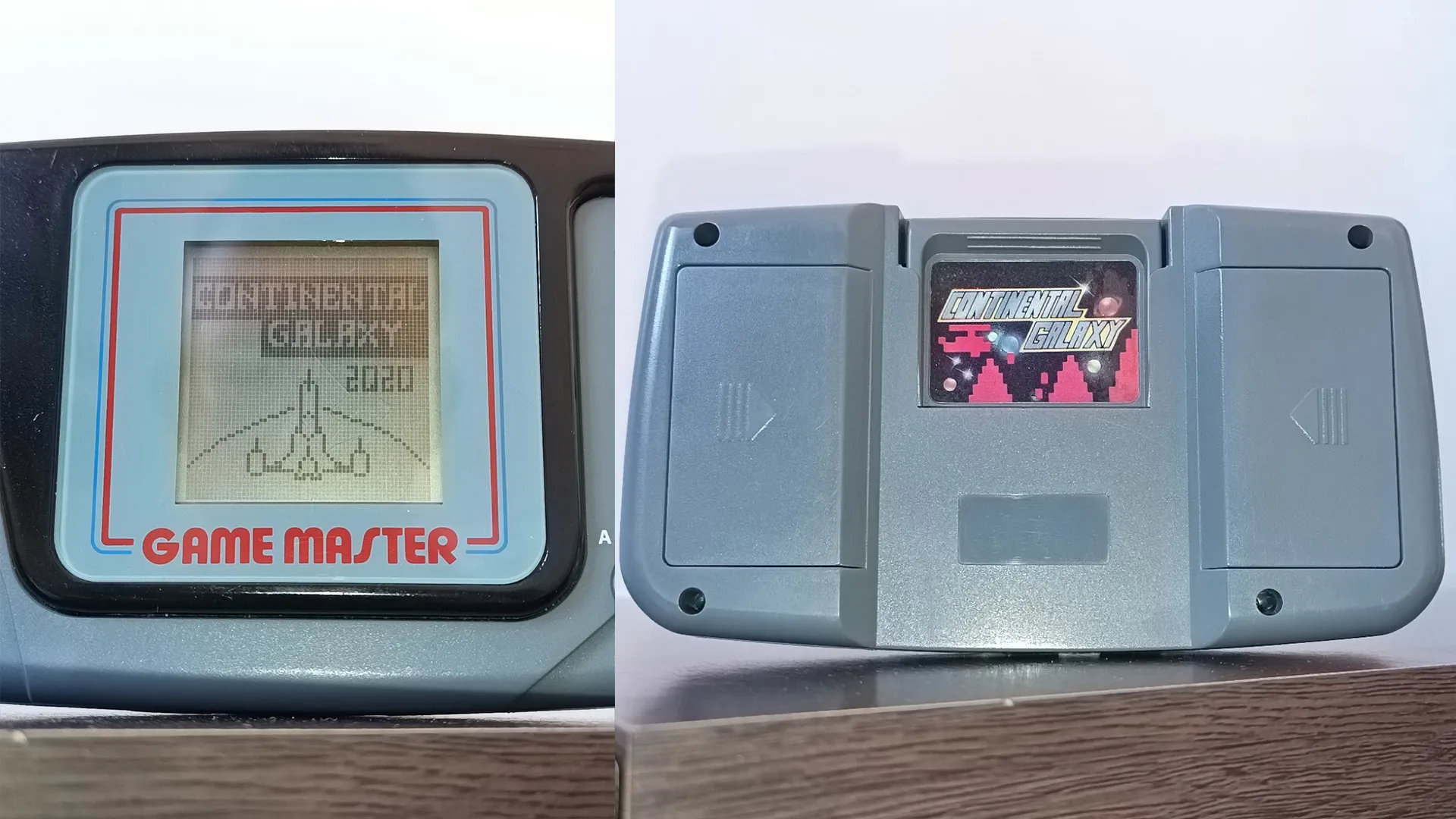
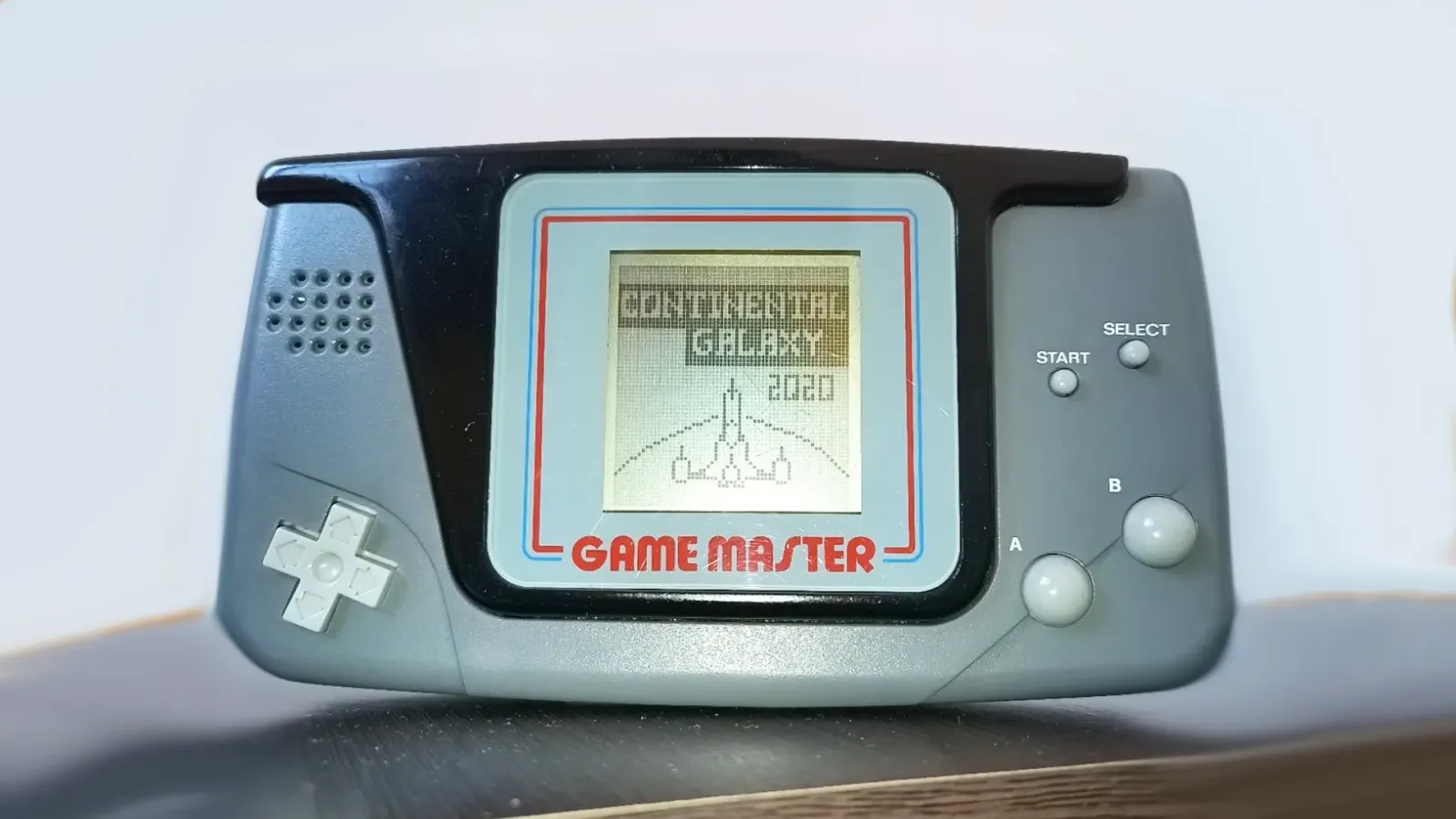
The device currently listed on eBay is not a standard retail iteration of the Hartung Game Master. While standard units are well-documented among niche collectors, this specific variant boasts unique physical characteristics that set it apart from mass-market models. Most notably, the casing features a distinctive red-and-blue graphic colorway accompanied by matte grey control buttons, departing from the typical silver buttons found on later production models. Furthermore, the rear battery compartment is entirely devoid of the factory warning stickers, regulatory markings, and serial number badges standard to mass-produced consumer electronics of the era.
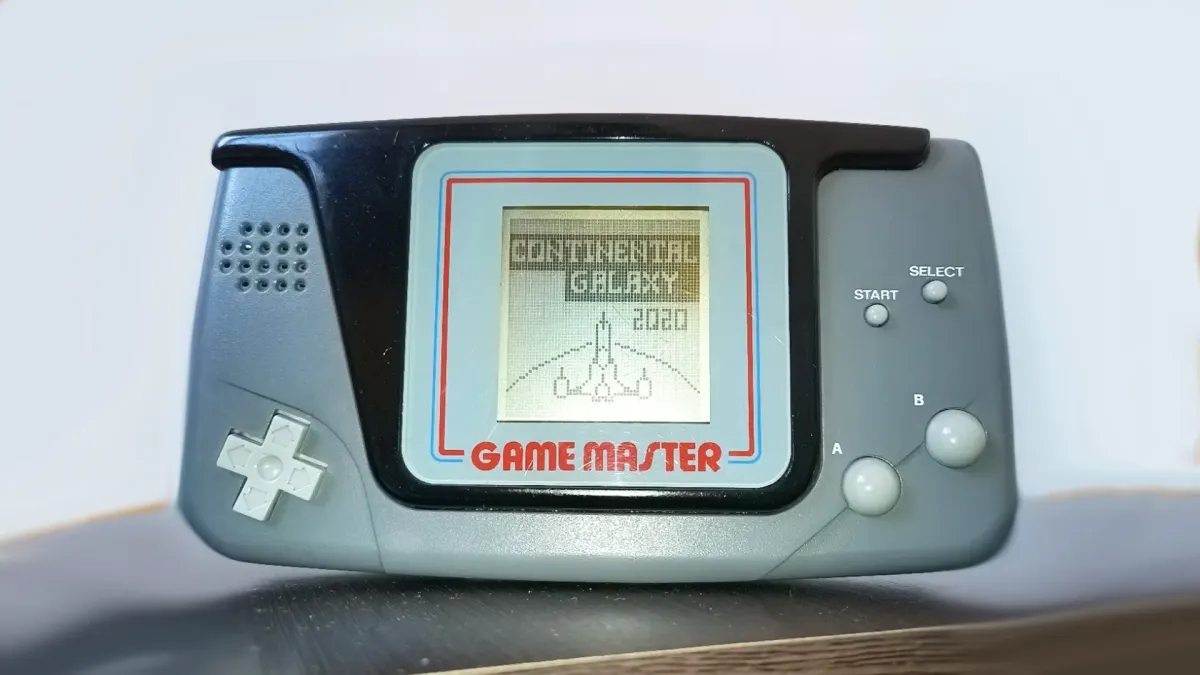
Despite its age, the console is reported to be in remarkably pristine physical and mechanical condition. The seller confirms that the battery bay is completely free of chemical corrosion, the liquid crystal display is fully functional with no dead lines or degradation, and the unit comes bundled with a physical cartridge of the game Continental Galaxy 2020.
Historical Context and the 1990s Handheld Wars
To understand the significance of the Hartung Game Master, one must examine the competitive landscape of the portable gaming industry in 1990. Nintendo had recently upended the consumer electronics market with the launch of the Game Boy in 1989. Armed with a crisp monochrome screen, robust software library, and unprecedented battery efficiency, the Game Boy quickly established a near-monopoly that sidelined rival hardware developers.
In response, several third-party electronics manufacturers attempted to capture a slice of the lucrative portable market through white-label manufacturing and regional distribution deals. The Game Master was originally engineered and manufactured by the German company Hartung, though its distribution footprint extended across the United Kingdom, France, Italy, Spain, and parts of Asia.
To maximize market penetration and minimize logistical overhead, the exact same hardware chassis and internal architecture were marketed under a bewildering array of brand names depending on the territory. Consumers in various regions could purchase the identical device under monikers such as the Game Plus, Systema 2000, Super Game, and Game Tronic.

Despite these varied branding strategies, the underlying technology struggled to capture consumer imagination. The Game Master featured an aesthetic and physical form factor closely reminiscent of the Sega Game Gear, but its technical capabilities lagged behind the industry standard. Screen ghosting, limited software support, and a lack of blockbuster intellectual properties meant the device failed to pose a genuine commercial threat to Nintendo or Sega. Consequently, production volumes were relatively low, and surviving units remain exceptionally scarce in the modern collector’s market.
Chronology of Discovery and Rarity Claims
The rarity of this specific variant has been a subject of discussion within dedicated retro gaming circles for several months. Prior to the public listing, the seller had documented the hardware’s unique attributes within online collector communities, noting that comprehensive historical archives and extant museum pieces suggest this particular red-and-blue, grey-buttoned configuration may be limited to a very small production window.
While definitive manufacturing ledgers from Hartung and its overseas partners no longer exist to verify exact production numbers, archival research and community tracking indicate that only three units matching these specific factory specifications have been publicly documented. The seller posits that these units represent the absolute earliest manufacturing run of the hardware, potentially originating from an exclusive initial test run or a localized Taiwanese manufacturing trial before standardized global specifications were finalized.
Because official corporate documentation from the manufacturer has been lost to time, independent verification of the "one of three" claim remains difficult. However, veteran collectors of obscure 1990s LCD hardware note that the absence of standard rear regulatory stamps and the distinct colorway strongly point toward an early prototype or pre-production engineering run rather than a standard retail variant.
Market Implications and the Economics of Obscure Retro Hardware
The listing price of €1,000 highlights a broader, ongoing trend within the collector ecosystem: the rapid financial appreciation of historical hardware curiosities. While mainstream systems like the Nintendo Game Boy, Sega Game Gear, and Atari Lynx command predictable market values based on high production numbers, ultra-rare niche failures have increasingly become prized assets for institutional archives, private museums, and affluent collectors.
Hardware failures of the 1990s—often dismissed during their commercial lifespans as cheap novelty alternatives—are now re-evaluated as fascinating sociological artifacts of industrial design. Devices like the Game Master offer insight into the desperate engineering and marketing strategies employed by minor firms attempting to reverse-engineer success in the shadow of multinational giants.
As these aging electronic components degrade over time due to battery leakage, screen cancer, and capacitor failure, fully operational, pristine-condition specimens command a significant premium. The sale of this specific Game Master variant will likely serve as a new pricing benchmark for extreme rarities within the obscure handheld collecting community, illustrating how personal financial necessity can occasionally bring museum-grade historical artifacts out of private storage and into the public eye.