Indra Gunadi
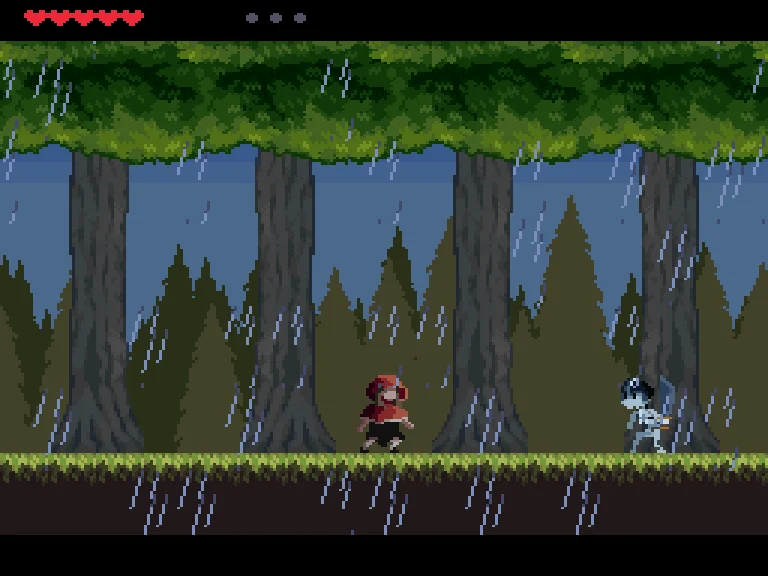
The Super Nintendo Entertainment System (SNES) homebrew scene has witnessed a significant addition with the release of Super Red Riding Hood, a 16-bit action title developed by the independent studio Mindless Turtle. The game, which officially launched in late 2026, represents a modern attempt to push the hardware constraints of the 1996-era console while integrating contemporary game design philosophies. Utilizing AI-assisted tools for asset generation, including graphics, coding frameworks, and musical composition, the project highlights a burgeoning trend in retro-development where traditional assembly-level programming is augmented by machine learning to accelerate the creation of content for legacy hardware.
Core Gameplay Mechanics and Structural Design
Super Red Riding Hood distinguishes itself through a rigorous, high-stakes combat loop that deviates from standard platformer tropes. The game is structured into twenty-four distinct levels, though each individual playthrough consists of an eight-level run. This non-linear progression is governed by a branching path system, where the player’s choice at every fork is determined by their physical positioning within the stage. This spatial dependency forces players to master the geometry of the levels, as simple navigation is inherently tied to the narrative and tactical pathing.
A defining feature of the title is its "aggression-based" healing mechanic. Unlike traditional SNES platformers that rely on static health pickups or environmental bonuses, Super Red Riding Hood requires the player to engage in active combat to recover lost vitality. This "kill-to-heal" system places a premium on offensive momentum, effectively penalizing defensive playstyles. On the game’s "BRUTAL" difficulty setting, the margin for error is razor-thin; the game’s internal logic dictates that recovery must be triggered on the third hit of a specific combo chain, demanding precise timing and situational awareness from the user.
The Role of AI in Legacy Development
The development cycle of Super Red Riding Hood serves as a case study for the integration of generative AI within the homebrew community. Mindless Turtle confirmed that the project utilized AI-assisted content for its visual assets, programming scripts, and soundtrack. In the context of 16-bit software, this approach is noteworthy because legacy hardware like the Ricoh 5A22 CPU—the heart of the SNES—requires extremely optimized machine code. By utilizing AI to assist in the translation of higher-level logic into 65816 assembly, developers can theoretically bypass the traditional labor-intensive bottlenecks associated with retro-coding.
However, this reliance on AI has prompted discussion within the broader retro-gaming community regarding the authenticity of "homebrew" titles. While the resulting game is fully compatible with original SNES hardware, the collaborative nature between human design and algorithmic generation represents a shift in how modern enthusiasts interpret the "craft" of retro-development.
Chronology of the SNES Homebrew Resurgence
The release of Super Red Riding Hood arrives during a period of sustained interest in the 16-bit era. Since the mid-2010s, the SNES homebrew scene has transitioned from simple ROM hacks to fully realized, original commercial-grade projects.
- 2015–2018: The emergence of advanced "Mode 7" utility tools and improved audio drivers allowed developers to create games that surpassed the technical capabilities of early 90s releases.
- 2021–2023: The standardization of high-quality flash cartridges and physical reproduction services made it commercially viable for independent developers to sell physical copies of their games, creating a small but dedicated market.
- 2024–2026: The adoption of AI-assisted development tools allowed for a rapid expansion in the complexity of games, leading to titles like Super Red Riding Hood that offer procedural generation and sophisticated state-tracking that were previously considered too memory-intensive for the 128KB of work RAM available on the SNES.
Technical Limitations and Optimization
Developing for the SNES in 2026 involves navigating the same limitations that faced developers in 1991. The console features a palette of 32,768 colors, of which only 256 can be displayed on screen at once. Managing these assets while maintaining a consistent frame rate, especially when incorporating modern, complex sprite-work generated by AI, requires extreme memory management.
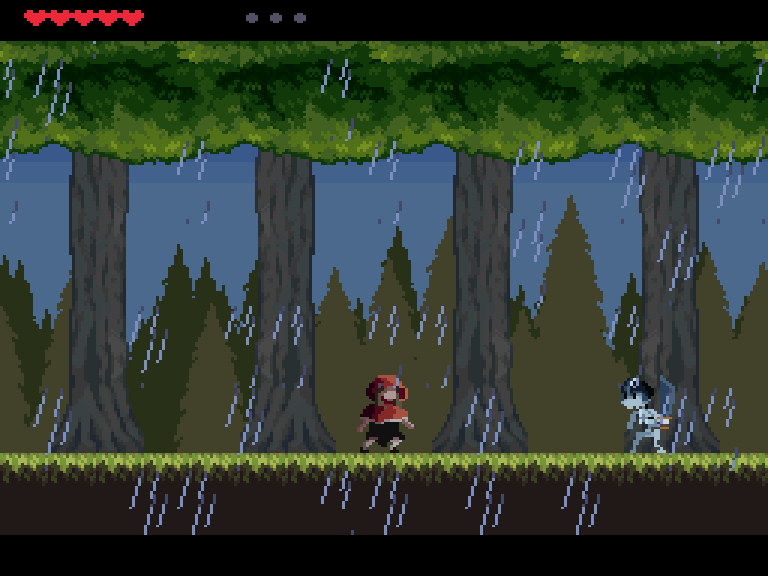
Mindless Turtle’s approach to the "forking" paths suggests an efficient use of map tiles and metadata. By prioritizing spatial positioning as the catalyst for level changes, the developers have bypassed the need for massive data storage, instead relying on logic-heavy programming to define the world state. This technical efficiency is a hallmark of the title’s development, ensuring that the game runs natively on original console hardware without the need for additional co-processors or expansion chips.
Industry and Community Reactions
The reception of Super Red Riding Hood within the retro-gaming community has been marked by a focus on its difficulty curve. Forums dedicated to speedrunning and SNES preservation have noted that the "BRUTAL" mode requires a degree of mastery typically reserved for titles like Contra III: The Alien Wars or Super Ghouls ‘n Ghosts.
Professional analysts observing the homebrew sector suggest that titles like this signal a maturation of the market. "We are moving past the novelty phase of homebrew," says one analyst familiar with independent software development. "When developers start integrating AI to solve the problem of high-fidelity asset creation on limited hardware, they are essentially creating a bridge between 90s aesthetic sensibilities and 2020s design efficiency."
There has been little formal reaction from the original intellectual property holders of the SNES, as the homebrew scene generally operates within a "gray market" of non-commercial or small-batch distribution. However, the presence of AI-generated content raises questions about future copyright protections for projects that rely on machine-learning outputs for their core creative assets.
Broader Impact and Future Implications
The implications of Super Red Riding Hood extend beyond its immediate gameplay loop. It suggests that the future of homebrew development will likely involve a hybridized workforce: developers who act as "directors" for AI-powered engines, fine-tuning output to fit within the rigid memory maps of legacy hardware.
If this model proves successful, it could lead to a surge in high-quality software for systems like the SNES, Sega Genesis, and Game Boy. The ability to generate assets at scale while maintaining the "feel" of retro hardware allows for a new era of gaming that preserves the tactile experience of the original consoles while offering a level of complexity that early developers could only dream of.
Furthermore, the focus on specific, high-skill mechanics—such as the healing-by-killing system—demonstrates that modern homebrewers are not merely recreating the past, but are actively iterating on the genre. By introducing mechanics that reward high-risk play, Mindless Turtle has positioned their game as a contemporary experience delivered through a vintage medium.
Conclusion
Super Red Riding Hood (2026) stands as a testament to the longevity of the Super Nintendo platform and the ingenuity of the modern independent developer. By blending the constraints of 16-bit hardware with the computational assistance of AI, Mindless Turtle has created a project that honors the legacy of the SNES while pushing the boundaries of what is possible on the system. As the homebrew community continues to evolve, the methodologies established by this release—specifically in terms of automated asset integration and high-difficulty mechanical design—will likely serve as a blueprint for future projects, ensuring that the legacy of 16-bit gaming remains relevant well into the next decade. Whether viewed as a technical achievement or a design challenge, the game occupies a unique space in the current gaming landscape, providing a rigorous and rewarding experience for those who still seek the tactile satisfaction of the cartridge-based era.