Indra Gunadi
The Commodore 64, a machine that dominated the home computing landscape throughout the 1980s, continues to experience a robust revival in the mid-2020s, underscored by the October 15, 2026, release of Alien Fury. Developed by the programmer known as Ozak, the title represents the latest in a long-standing tradition of hobbyist software development that has persisted for over four decades. While the C64 hardware is now considered ancient by modern technological standards, the community surrounding it remains one of the most active in the retro-gaming sector, consistently pushing the 8-bit MOS Technology 6510 processor to its absolute functional limits.
The Nature of the Title
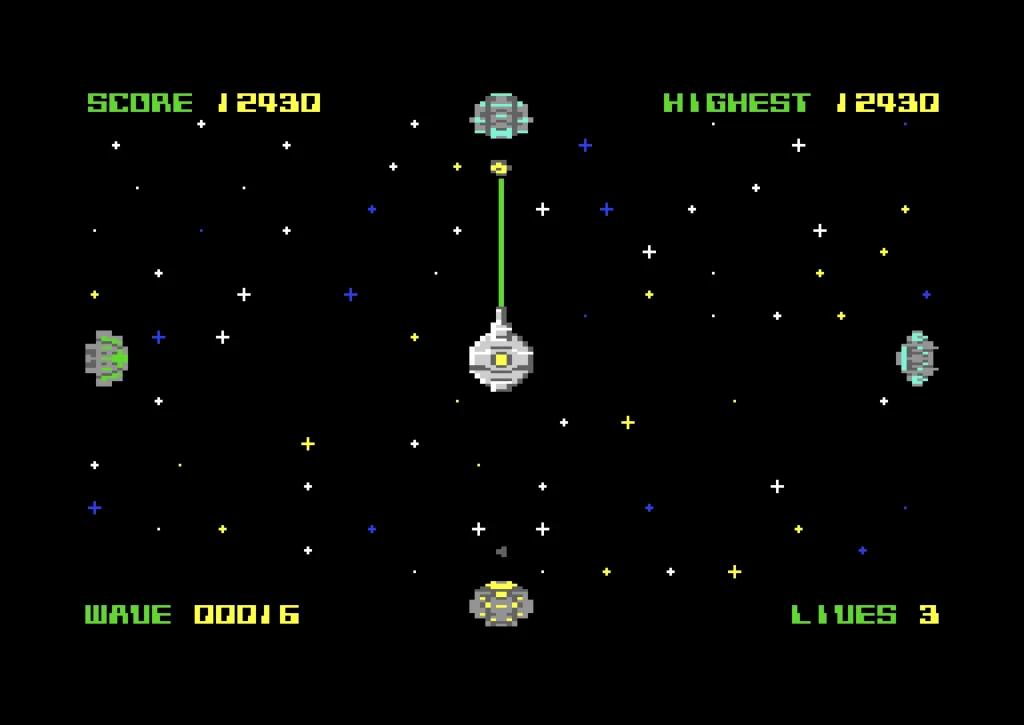
Alien Fury is categorized as an arcade-style space shooter, a genre that served as the backbone of the Commodore 64 software library during its commercial prime. Unlike conventional shooters where the primary objective is to clear waves of enemies to reach a victory screen, Alien Fury introduces a nihilistic gameplay mechanic: the player is destined to lose. The objective is not survival or victory, but rather to maximize the damage inflicted upon an encroaching extraterrestrial fleet before the player’s craft is inevitably destroyed.
Technically, the game utilizes an escalating difficulty curve. As the player survives longer, the velocity of incoming projectiles increases, creating a feedback loop of mounting tension. This design choice mirrors the "endless runner" or "survival" mechanics popularized in modern mobile gaming, adapted here for the constraints of 1980s-era architecture. By stripping away the possibility of a "win" state, Ozak shifts the player’s focus from progression to pure high-score competition, a hallmark of the classic arcade experience found in 1980s coin-op cabinets.
Historical Context of C64 Development
To understand the significance of a release like Alien Fury in 2026, one must look at the historical trajectory of the Commodore 64. Launched in 1982, the C64 became the best-selling single computer model of all time, with estimates of total units sold ranging from 12.5 to 17 million. This massive install base fostered an unprecedented ecosystem of third-party software development.
Throughout the 1980s and early 1990s, the platform hosted thousands of titles, ranging from complex tactical simulations to fast-paced arcade ports. However, as the 16-bit era ushered in by the Commodore Amiga and the Atari ST began to take hold, commercial support for the C64 waned. By the mid-1990s, the platform had effectively been relegated to the hobbyist domain.
The transition from a commercial product to a heritage platform was marked by the rise of "demoscenes"—subcultures dedicated to demonstrating technical prowess on outdated hardware. Over the last decade, this movement has matured into a sophisticated cottage industry. Developers today utilize modern cross-compilers, such as CC65, and sophisticated emulators that allow them to code in modern environments while targeting the specific register-based architecture of the C64’s VIC-II graphics chip and SID sound chip.
Chronology of the Modern Retro-Gaming Resurgence
The release of Alien Fury is not an isolated event but rather a point on a timeline of sustained interest. The following chronology highlights the environment in which this title was developed:
- 2015–2018: The "Retro-Revival" phase. Major interest grows in FPGA-based hardware, such as the Ultimate64, which recreates the C64’s logic circuits in programmable silicon, allowing for perfect cycle-accurate execution.
- 2020–2022: A surge in homebrew development occurs during global lockdowns, leading to an influx of high-quality, physical-media releases. Crowdfunding platforms like Kickstarter become primary funding vehicles for new C64 games.
- 2024: The introduction of advanced "C64 OS" iterations and hardware accelerators, such as the SuperCPU clones, enables developers to ignore some of the memory constraints that plagued original 1980s developers.
- October 2026: The release of Alien Fury, demonstrating a shift back toward minimalist, high-intensity gameplay that emphasizes "pick-up-and-play" accessibility over the technical bloat of some contemporary homebrew projects.
Technical Analysis of the 8-bit Ecosystem
The development of a new game for the Commodore 64 requires an intimate understanding of its hardware limitations. The machine operates on a 1.023 MHz processor (NTSC) or 0.985 MHz (PAL). With only 64 kilobytes of RAM, developers like Ozak must manage memory allocation with extreme precision.
In the case of Alien Fury, the visual design suggests a focus on sprite multiplexing. The VIC-II chip natively supports only eight sprites simultaneously. To display a screen filled with "fury" and swarms of aliens, the programmer must employ raster-interrupt techniques, updating sprite coordinates and definitions during the screen’s vertical blanking interval. The ability to maintain a consistent frame rate—typically 50 or 60 frames per second—while processing projectile logic and collision detection is the true measure of a title’s quality in the modern era.
Industry Implications and Community Reaction
While titles like Alien Fury are not designed to compete with multi-million dollar AAA productions, they play a critical role in the preservation of digital culture. The existence of these games provides a necessary "living" aspect to computer history. When developers continue to create for the C64, they are effectively conducting ongoing research into the limits of early computer architecture.
Observers within the retro-computing community often note that the "modern retro" movement has surpassed the original commercial era in terms of technical quality. Because today’s developers have access to vast documentation, forums, and debugging tools that did not exist in 1983, the games produced in 2026 often feature tighter controls, better-optimized code, and more sophisticated sound design than their historical counterparts.
"It is a form of digital archaeology," says an independent analyst specializing in classic computing. "When Ozak releases a title like Alien Fury, they aren’t just making a game; they are contributing to a cumulative body of knowledge. Every new line of assembly code written for the 6510 processor is a statement that the platform remains viable as a creative medium."
Market Dynamics: The Niche Economy
The market for C64 software has shifted from physical retail distribution to a hybrid model. Digital storefronts, often managed by community hubs like PDROMs, provide the primary distribution channel for titles like Alien Fury. However, there is a persistent demand for physical "Big Box" releases. Many developers now partner with boutique publishers to produce cassette tapes, 5.25-inch floppy disks, and even high-quality cartridges that can be inserted into original hardware.
This economic model is sustainable because it is not predicated on high-volume sales. Instead, it relies on a passionate, global base of enthusiasts who view these purchases as support for the hobbyist community. The fact that a game can be released on October 15 and immediately reach an international audience via the internet is a modern convenience that the original C64 developers of the 1980s could only have dreamed of.
The Future of 8-bit Development
Looking ahead, the development of software for the Commodore 64 shows no sign of decelerating. As long as the hardware remains functional—and with the advent of robust hardware clones, it will remain so for the foreseeable future—programmers will continue to seek out the platform to test their skills.
Alien Fury serves as a testament to the enduring appeal of the "arcade loop." By focusing on a singular, high-intensity experience, the game avoids the complexity trap that often leads to unfinished projects in the homebrew scene. It is a reminder that in the world of 8-bit gaming, constraints are not just obstacles—they are the very elements that define the creative challenge. As 2026 draws to a close, the release of this title confirms that the Commodore 64 is not merely a relic of the past, but a platform that continues to offer a valid, engaging, and challenging environment for developers and players alike.