Indra Gunadi
The Genesis of Qualot: A Mid-Eighties Vision
To understand the significance of Qualot, one must contextualize the development environment of 1985. The Commodore 64, released in 1982, had become the dominant home computing platform by the middle of the decade. Developers of that era were constrained by limited memory—specifically the 64KB of RAM—and the technical limitations of the MOS Technology 6510 microprocessor. Writing games in assembly language was the industry standard, requiring an intimate knowledge of hardware registers, raster interrupts, and sprite multiplexing to achieve smooth, responsive gameplay.
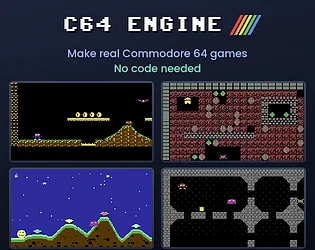
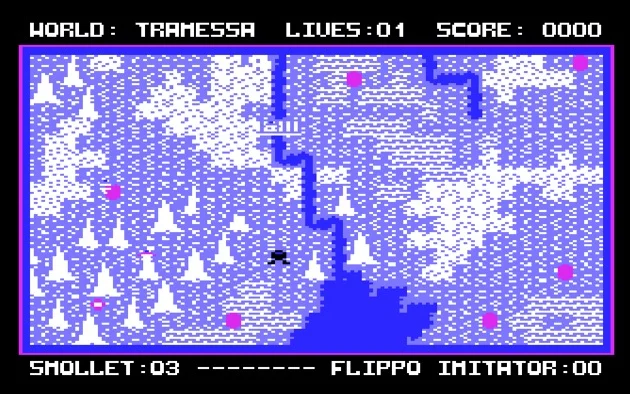
Qualot represents the quintessential "bedroom coder" aesthetic of the 1980s. Its core design philosophy revolves around high-stakes navigation and precise execution. The objective is deceptively simple: players must traverse seven alien worlds, a journey that demands perfect reflexes as the player navigates hazardous terrain and lethal traps. The scarcity of resources—specifically the "one life" mechanic—aligns with the design trends of the mid-80s arcade scene, where game length was often extended not by expansive world-building, but by extreme difficulty and the necessity for repeated play-throughs to master specific patterns.
Technical Preservation and the Modern Port
The transition of Qualot from an obscure 1985 source to a playable 2026 release is a testament to the ongoing interest in retro-computing preservation. The developer, natthrafn, utilized modern assembly development environments to ensure the game functions correctly on both original Commodore 64 hardware and contemporary emulators.
A notable aspect of this release is the use of AI-assisted graphics. In the context of modern game development for legacy hardware, AI tools are increasingly used to generate assets that conform to the Commodore 64’s color palette and sprite resolution limits. By using AI to assist in the refinement of the game’s visual identity, natthrafn has bridged the gap between the limitations of 1985 hardware and the expectations of modern players. This approach does not fundamentally alter the game’s underlying logic—which remains firmly rooted in its original assembly code—but rather enhances the presentation to ensure it remains visually coherent on modern displays.
Chronology of the Project
The timeline of Qualot is one of delayed gratification. While the core logic was authored in 1985, the game remained unreleased for four decades, likely sitting as a collection of binary files or source listings in a private archive.
- 1985: The original source code for Qualot is written. The game is designed as a high-difficulty, single-life arcade challenge.
- 1985–2025: The project remains in development limbo, a common occurrence for amateur software during the home computer boom. During this time, the code is likely stored on magnetic cassette or floppy disk media.
- Mid-2026: Natthrafn initiates the project to recover and polish the code for a public release.
- October 14, 2026: The official release of Qualot on the pdroms.de platform. The game is packaged for the Commodore 64, featuring updated graphical elements and full compatibility with standard C64 disk images.
Analytical Perspective: The Challenge of Single-Life Gameplay
The "one life" mechanic in Qualot warrants deeper analysis within the framework of game design history. In the mid-1980s, the "single life" model was often a strategy employed by developers to maximize the difficulty of a game, thereby increasing its longevity without requiring excessive memory to store sprawling levels.
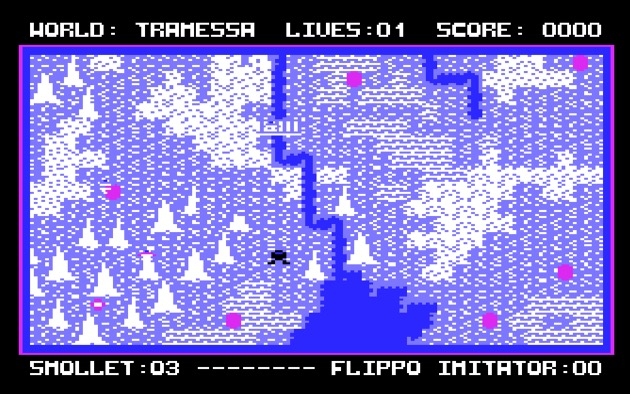
From a contemporary perspective, this mechanic serves as a filter for player engagement. While modern gaming often emphasizes "quality of life" features, save states, and checkpoints, Qualot rejects these conventions. It forces the player to internalize the geometry of the seven alien worlds. Each "Flippo"—the collection item necessary to progress—is positioned to create a high-risk, high-reward scenario. The design implications are clear: Qualot is not meant to be "beaten" in a single session by a novice. It is an endurance test designed to reward pattern recognition and mechanical skill, mirroring the "coin-op" philosophy of 1980s arcades.
Broader Impact on the Retro-Computing Community
The release of Qualot contributes to the growing ecosystem of retro-preservation. Digital archaeology is a burgeoning field, and the work done by individuals like natthrafn is essential to preventing the permanent loss of software history. When developers recover, debug, and publish long-lost code, they are not merely releasing a game; they are providing a window into the programming methodologies and creative limitations of a bygone era.
Furthermore, the integration of AI tools in this process signals a shift in how retro-software is handled. Rather than attempting a "remake" that might strip away the soul of the original code, the use of AI as an assistive technology allows for the preservation of the original assembly core while ensuring the game remains accessible to current users. This model of "hybrid preservation"—where the original logic remains untouched while assets are optimized—is likely to become a standard practice for future releases of archived material.
Community and Expert Reception
While formal reviews for a title released on the scale of Qualot are usually informal, the reaction within the Commodore 64 community has been one of appreciative curiosity. Enthusiasts often look for titles that capture the specific "feel" of the 1985 era, and the authenticity of the assembly-based movement and collision detection in Qualot satisfies this demand.
Experts in the field of 8-bit development have noted that the game’s reliance on tight timing loops is indicative of the "cycle-counting" culture prevalent among C64 coders in the 80s. This level of technical discipline, once common, is now considered a specialized skill. By releasing this code, natthrafn provides a functional case study for students of assembly language who wish to understand how developers managed to squeeze high-intensity arcade action into 64 kilobytes of RAM.
Future Implications for Digital Preservation
The successful distribution of Qualot raises questions about the sheer volume of software currently trapped on legacy media. As magnetic media—such as the 5.25-inch floppy disks favored by the C64—degrades over time, the urgency to recover and document these programs becomes paramount.
The strategy employed by the developers of Qualot—publishing the release on established archival websites—ensures that the game is cataloged and preserved in a format that will survive for decades to come. This creates a repository of knowledge that future generations can use to understand the evolution of digital interactive media. The success of this release serves as an encouragement to other developers who may be sitting on dormant code from the 1980s and 90s, demonstrating that there is a receptive and active audience for these artifacts.
Conclusion: A Legacy Reclaimed
Qualot is more than just a game; it is a time capsule. By successfully migrating 1985 assembly code to a modern, playable state, the developer has preserved a specific moment in the history of interactive entertainment. The game stands as a testament to the ingenuity of early programmers who worked under extreme hardware constraints, and its release serves as a reminder that the history of software is a living, breathing entity.
As the Commodore 64 continues to maintain a vibrant community, titles like Qualot will remain essential for their ability to transport players back to an era where every line of code was a precious resource. Whether judged by its brutal difficulty, its minimalist design, or its status as a recovered historical artifact, Qualot provides a unique and valuable contribution to the ongoing narrative of digital gaming. It is a reminder that the limitations of the past often fostered the most creative solutions, and that with the right combination of old-school logic and modern preservation, no piece of software is truly lost forever. As players continue to navigate the seven alien worlds and collect Flippos, they are participating in a historical act, ensuring that the legacy of 1985 remains relevant in the landscape of 2026.