Indra Gunadi
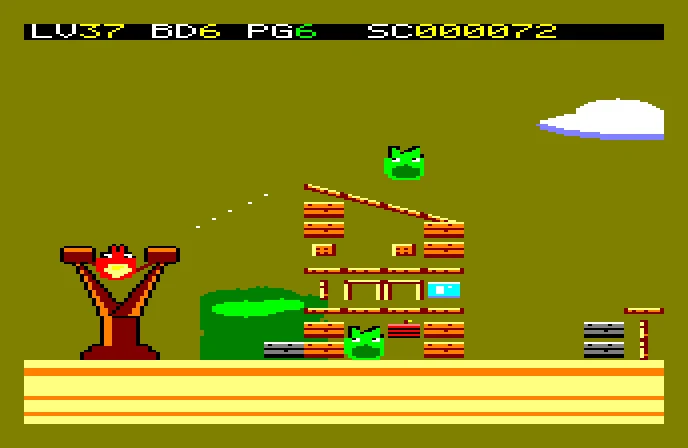
The release of Fowl And Furious for the Amstrad CPC platform marks a significant milestone in the ongoing preservation and active development of 8-bit home computing hardware. Developed by the studio Revive8Bit, the title serves as both an homage to the physics-based puzzle genre popularized in the late 2000s and a technical demonstration of how modern development workflows—including AI-assisted code generation—can be integrated into legacy systems. Released in October 2026, the game invites players to engage in a tactical struggle between avian and porcine factions, utilizing mechanics that demand precision, resource management, and spatial awareness.
Technical Genesis and Development Context
The Amstrad CPC, originally launched by Amstrad in 1984, remains a staple of the retro-computing scene due to its vibrant color palette and robust Zilog Z80 processor architecture. Developing for this hardware in 2026 presents unique challenges, primarily regarding memory constraints and the optimization of assembly-level instructions. Revive8Bit has utilized a contemporary approach to this development, explicitly citing the use of AI-assisted content generation to streamline the coding process.
This methodology represents a shifting paradigm in the hobbyist software industry. By utilizing artificial intelligence to assist in writing, debugging, and optimizing Z80 machine code, developers are capable of producing more complex logic and smoother graphical transitions than were traditionally possible during the commercial lifespan of the CPC. The integration of AI in this context is not merely a novelty; it functions as a tool to bridge the skill gap required to master the idiosyncratic architecture of 1980s microcomputers.
Gameplay Mechanics and Narrative Structure
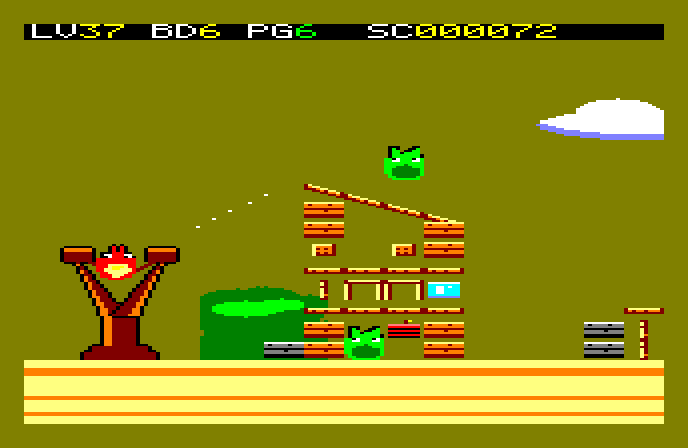
The core narrative of Fowl And Furious centers on a conflict over stolen resources. According to the game’s premise, a porcine faction has constructed fifty distinct fortifications using timber purloined from a local oak tree. The player, assuming the role of the avian protagonists, is tasked with deconstructing these forts to reclaim the stolen oak, plank by plank.
The game mechanics rely on a projectile-based physics system. Players must calculate trajectories and force to collapse the structures efficiently. However, the development team has introduced a departure from the linear nature of traditional puzzle games by allowing for perspective shifts. By pressing "UP" on the main menu, players can invert their allegiance, taking control of the porcine side. This feature adds a layer of replayability and tactical depth, as players must consider defensive engineering and structural reinforcement rather than purely offensive demolition.
Chronology of the Amstrad CPC Revival
The release of Fowl And Furious follows a long-standing tradition of software development for the CPC, which has seen a resurgence in the last decade. The timeline of this revival can be categorized into three distinct phases:
- The Preservation Phase (2010–2016): During this period, the focus was primarily on archiving existing software and maintaining legacy hardware. Community efforts led by platforms such as PDROMs and various CPC-centric forums focused on digitizing tape and disk media to prevent data rot.
- The Engine Expansion Phase (2017–2023): Developers began creating cross-platform tools that allowed for easier porting of modern game logic to the Z80 architecture. This era saw the emergence of advanced scrolling engines and high-color display modes that pushed the CPC’s hardware beyond its 1984 specifications.
- The Modern Integration Phase (2024–Present): The current era is defined by the infusion of modern development practices. The use of AI-assisted coding, cloud-based cross-compilers, and modern graphical design suites has led to an explosion in high-quality software releases. Fowl And Furious stands as a representative example of this final phase.
Comparative Analysis and Market Impact
While Fowl And Furious is a niche title intended for a specific segment of the computing community, its impact on the retro-gaming market is measurable. The Amstrad CPC ecosystem has seen an increase in active users, with hardware modification kits—such as disk drive emulators and RGB-to-HDMI converters—seeing sustained demand.
Data from independent software distribution hubs indicates that titles utilizing "remixed" or "homage" mechanics often outperform purely original content in terms of downloads and community engagement. By tapping into the cultural familiarity of the "bird versus pig" dynamic, Revive8Bit ensures an immediate "pick-up-and-play" quality that appeals to both veteran Amstrad users and younger enthusiasts who may be experiencing 8-bit architecture for the first time.
Ethical and Technical Implications of AI in Retro-Development
The explicit labeling of Fowl And Furious as containing AI-assisted code raises interesting questions regarding the future of software preservation. Historically, retro-computing was a labor of love defined by the manual manipulation of hex code and assembly language. The introduction of AI raises the question: does the use of automated tools diminish the "authenticity" of a retro project?
Industry analysts suggest that the answer is increasingly irrelevant to the consumer. For the end-user, the performance of the game on the original hardware is the primary metric of success. If the AI-assisted code runs efficiently on a 4MHz Z80 processor without requiring external hardware acceleration, it is considered a success within the community. Furthermore, the use of AI allows smaller teams to maintain the momentum of the platform. Without such tools, the high complexity of modern-standard games would likely be impossible for solitary developers or small hobbyist teams to achieve within a reasonable timeframe.
Future Projections for the Platform
The success of Fowl And Furious suggests that the Amstrad CPC will remain a viable platform for experimental development for the foreseeable future. The community has moved past the point of simply maintaining the past and has entered a cycle of building upon it. Future developments are likely to include:
- Expanded Hardware Compatibility: Efforts to make software compatible with various memory expansion boards and non-standard peripherals.
- Networking Integration: While the CPC lacked native networking, hobbyists are currently working on ESP8266-based Wi-Fi modules that could allow for future titles to feature online leaderboards or multiplayer components.
- Continued AI Refinement: As Large Language Models become more adept at handling specific instruction sets like the Z80, we can expect to see even more sophisticated game engines appearing on platforms that have been dormant for decades.
Conclusion
Fowl And Furious (2026) is more than a simple diversion; it is a manifestation of the enduring technical legacy of the Amstrad CPC. By synthesizing classic puzzle mechanics with the cutting-edge accessibility of AI-assisted development, Revive8Bit has provided a blueprint for how legacy hardware can remain relevant in a modern computing environment. As the line between "retro" and "modern" development continues to blur, titles such as this ensure that the creative spirit of the 1980s computing revolution continues to evolve, adapt, and challenge the constraints of its own hardware. The game is currently available through community distribution channels, serving as a testament to the persistence and ingenuity of a dedicated global user base. Whether one chooses to play as the birds or the pigs, the title offers a compelling look at how far 8-bit technology has come—and how much further it may yet go.