Retno Hari Mulyono
The pursuit of absolute mechanical reliability on the racetrack often forces motorsport enthusiasts to abandon conventional aftermarket performance upgrades in favor of OEM-grade or advanced electronic solutions. For the owner of a track-prepped 2000 Mazda Miata (NB generation) equipped with an MS3Pro Evo standalone engine control unit (ECU), persistent mechanical failures involving aftermarket cable-driven throttle bodies have served as the primary catalyst for a comprehensive transition to an electronic throttle control system, commonly known as drive-by-wire (DBW).
This multi-part technical documentation details the engineering rationale, hardware selection, and component evaluation process required to modernize an analog throttle interface to communicate seamlessly with a Megasquirt ecosystem via Controller Area Network (CAN) bus protocols.
Background Context and Catalyst for Conversion
The Mazda NA and NB Miata platforms—produced from 1989 through 2005—utilize a traditional mechanical throttle cable linked directly from the accelerator pedal to a butterfly valve inside the throttle body. While this mechanical linkage is inherently simple and serviced millions of vehicles worldwide, high-performance track environments expose distinct engineering vulnerabilities.

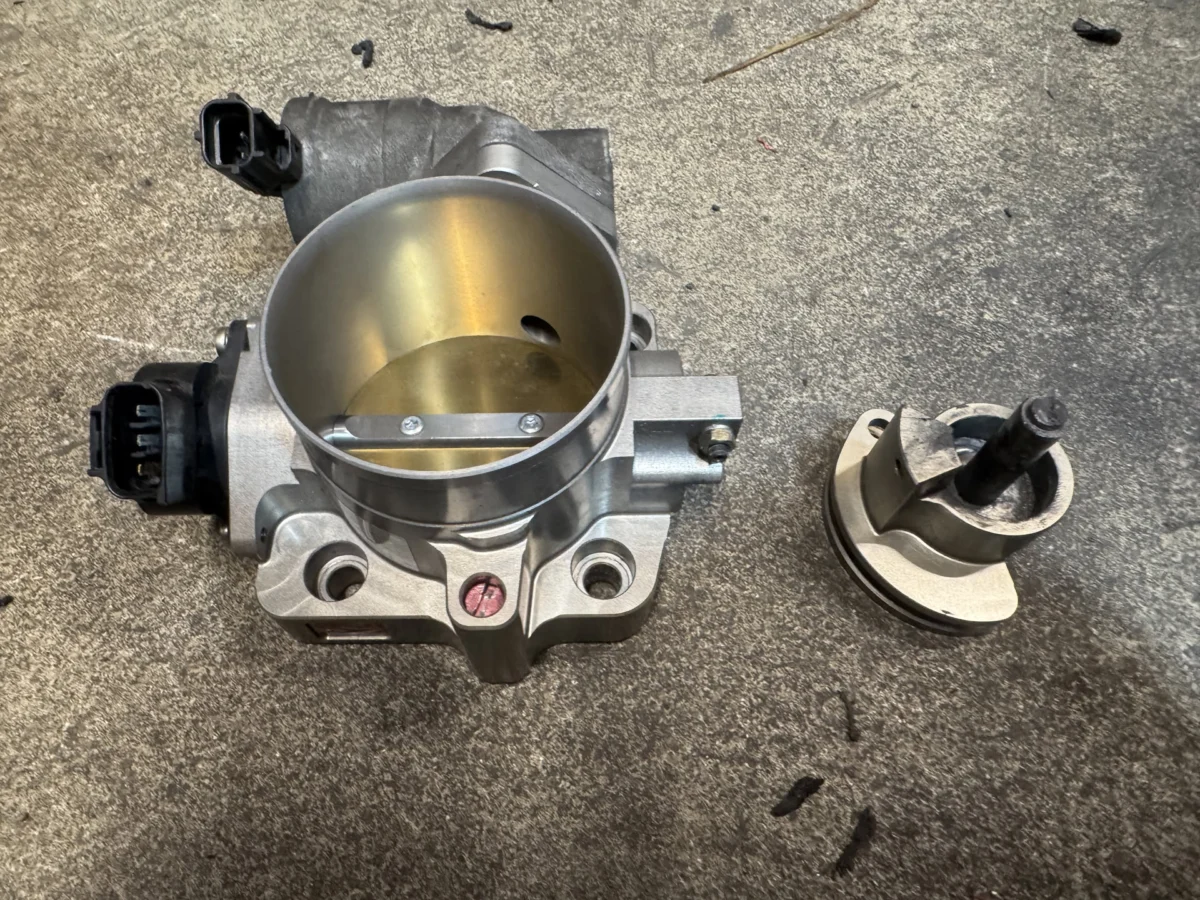
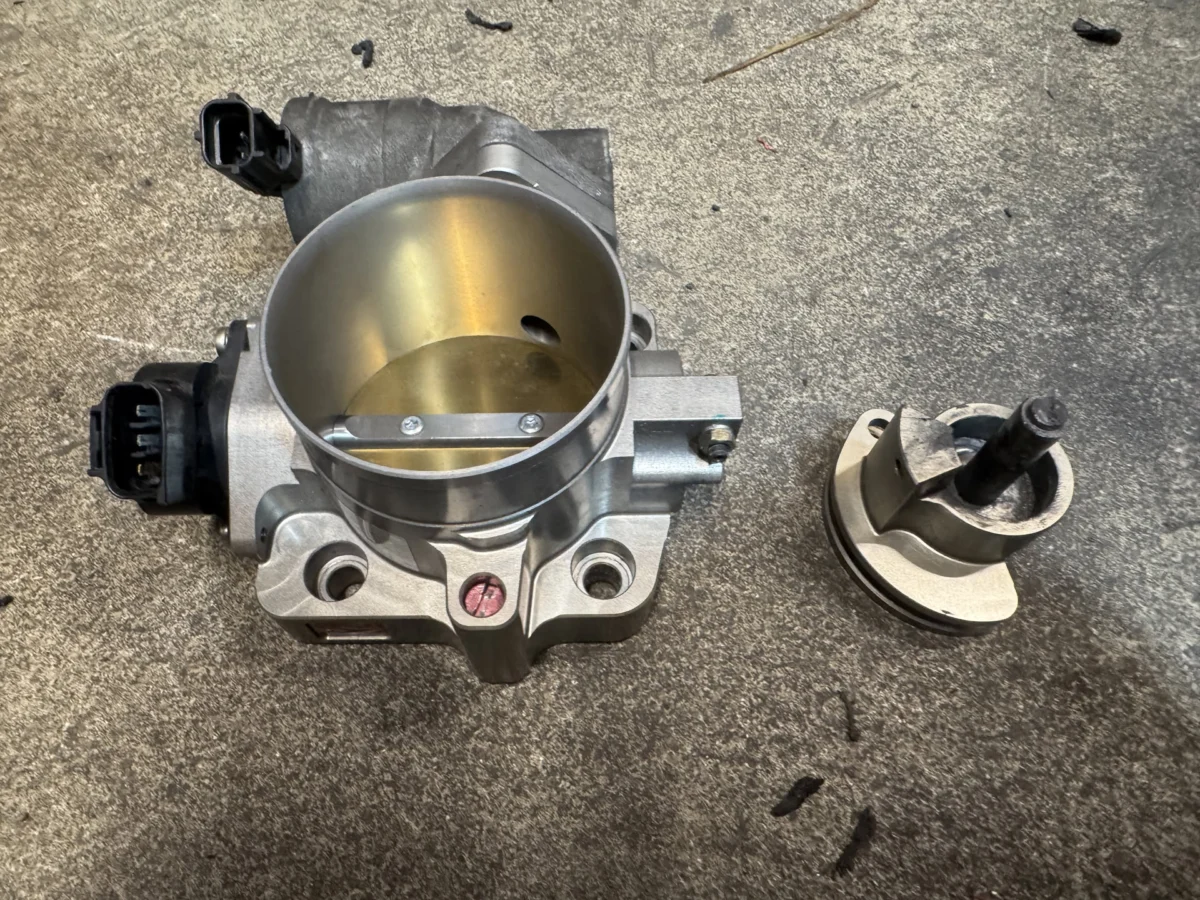
Over the course of the preceding competitive season, the subject vehicle experienced two catastrophic throttle body failures while operating under high-load track conditions. Both incidents involved components manufactured by Skunk2, a widely utilized aftermarket performance brand within the Miata community. The second failure manifested as a complete mechanical fracture of the internal throttle shaft, a critical structural fault that poses severe risks of engine ingestion of metallic debris or uncontrolled wide-open throttle scenarios.
Industry-wide documentation corroborates these reliability concerns. Beyond catastrophic shaft breakage, aftermarket Skunk2 units and aging factory assemblies frequently suffer from secondary failure modes, including throttle blade mounting screws backing out due to engine vibration and thermal cycling. Furthermore, even when operating nominally, mechanical units frequently exhibit physical binding, resulting in a partially stuck throttle blade and an elevated, unsafe idle speed.
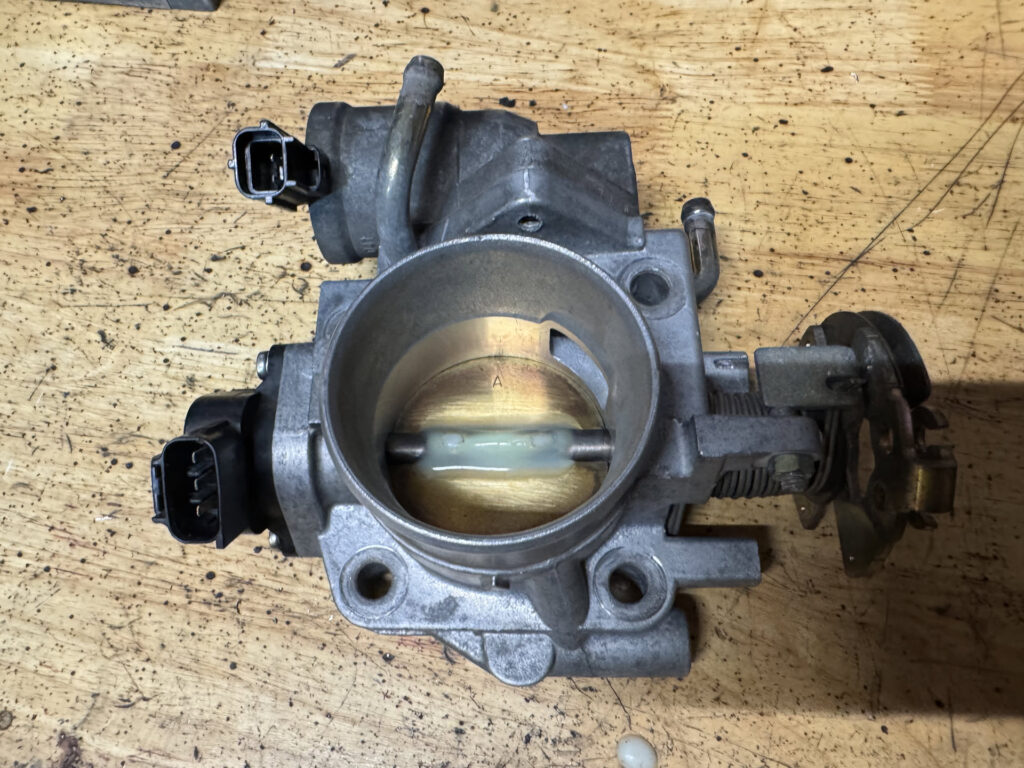
In response to these vulnerabilities during the 2005 racing calendar, temporary remediation involved reverting to a factory stock throttle body secured with high-strength aerospace epoxy (3M DP420) applied to the shaft and securing screws. However, the lack of robust, high-quality aftermarket cable-driven alternatives necessitated a more permanent, forward-thinking architectural revision. While budget-oriented Chinese knock-off alternatives exist, their metallurgical integrity and quality control standards introduced unacceptable risks for sustained high-RPM track use. Consequently, conversion to a modern drive-by-wire system emerged as the optimal engineering pathway to eliminate mechanical single points of failure while unlocking advanced electronic features such as adjustable throttle mapping, seamless cruise control integration, and automated downshift throttle-plipping (auto-blip).
Evolution of Standalone Engine Management and CAN Bus Integration
Historically, adopting drive-by-wire required selecting a high-end standalone ECU with native, internal DBW control architecture, such as those offered by MaxxECU or Haltech. Because the vehicle currently relies on a mature Megasquirt MS3Pro Evo standalone ECU—a unit that lacks native, built-in electronic throttle control circuitry—replacing the entire engine management system solely for DBW capability was economically unviable.

Fortunately, recent firmware updates deployed across the Megasquirt MS3 ecosystem have introduced robust support for external drive-by-wire controllers communicating via high-speed CAN bus messaging. This technological milestone allows the primary ECU to retain full engine management duties while delegating the complex, high-frequency PID (Proportional-Integral-Derivative) control loops required for precise electronic throttle actuation to a dedicated auxiliary module.
Comparative Market Analysis of Megasquirt-Compatible DBW Controllers
As of late 2025, the automotive aftermarket features several specialized controllers designed to bridge the gap between Megasquirt ECUs and electronic throttle bodies. A rigorous comparative evaluation of available hardware highlights distinct variations in pricing, feature sets, and physical integration requirements:

DBWX2 Controller
Introduced to the market in 2019, the DBWX2 represents the pioneering option in this specialized niche. Command-priced at approximately $500, it stands as the most expensive unit evaluated. Its defining technical capability is dual-channel architecture, allowing it to govern two independent electronic throttle bodies simultaneously—an advantage for specialized forced-induction setups, such as twin-throttle configurations or external boost control bypass valves.
LD Performance Controller
Positioned at a mid-tier price point of roughly $200, the LD Performance module provides basic CAN integration. However, it lacks native configuration support through TunerStudio (the primary tuning interface for Megasquirt), requiring proprietary software interfaces. Additionally, its physical enclosure and wiring connectors lack environmental sealing, mandating a dry cabin installation inside the vehicle’s interior.

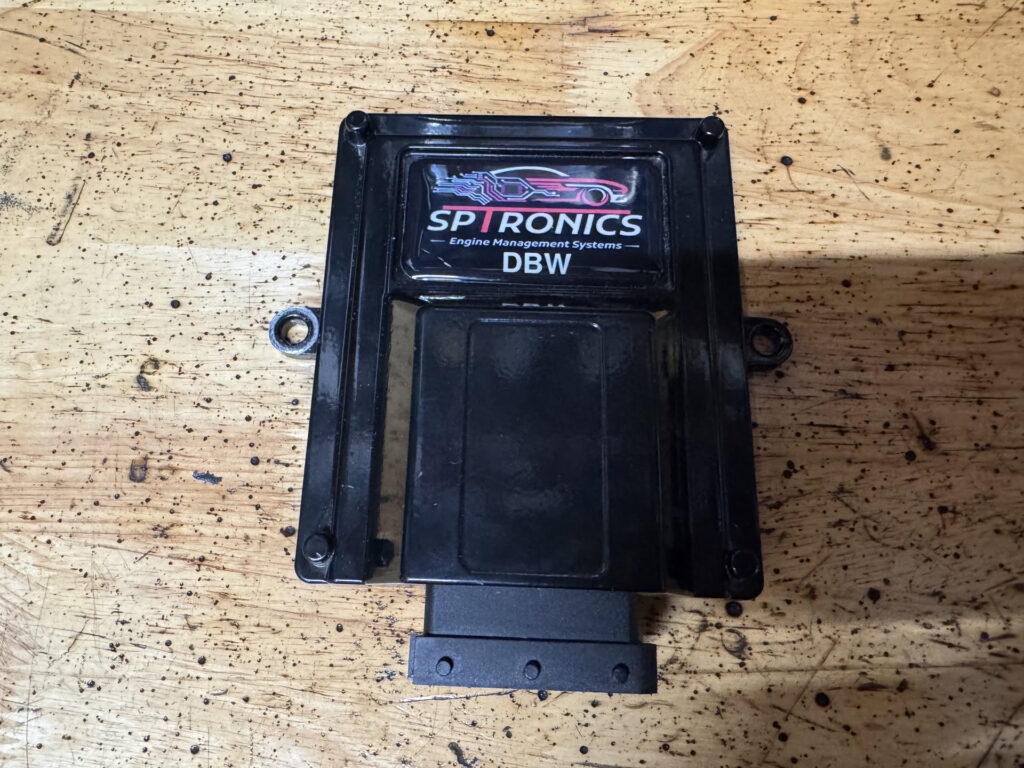
SPTronics Controller
Priced aggressively at approximately $150, the SPTronics unit offers exceptional fiscal value and is available in both single and dual-channel configurations. While highly cost-effective, it exhibits firmware limitations, including fixed internal CAN bus termination resistance, non-updatable firmware architecture, and restricted user-adjustable PID tuning parameters.
MS Labs Controller
Positioned in the upper pricing tier, the MS Labs unit boasts advanced native features, including expansive multi-map selection, sophisticated idle air control algorithms, and integrated hardware support for automated downshift auto-blip routines. However, commercial distribution restrictions currently exclude direct retail sales to the United States market, removing it from consideration for domestic builds.

AMP EFI Controller
Released in October 2025, the AMP EFI module represents the newest hardware entry into the marketplace. Priced competitively at approximately $300, it offers a hybrid operational mode enabling it to function as a fully standalone safety-monitored DBW unit utilizing discrete TPS (Throttle Position Sensor) outputs and idle control inputs. Furthermore, it incorporates dedicated hardware input pins for brake and clutch integration to facilitate automated downshift blipping.
Hardware Architecture for the 2000 Mazda Miata Conversion
Executing the conversion on the subject 2000 Mazda Miata requires the integration of three primary physical subsystems: an electronic throttle body and intake manifold adapter, an optimized accelerator pedal position sensor, and a dedicated external CAN-compatible DBW controller.
Throttle Body and Manifold Adaptation
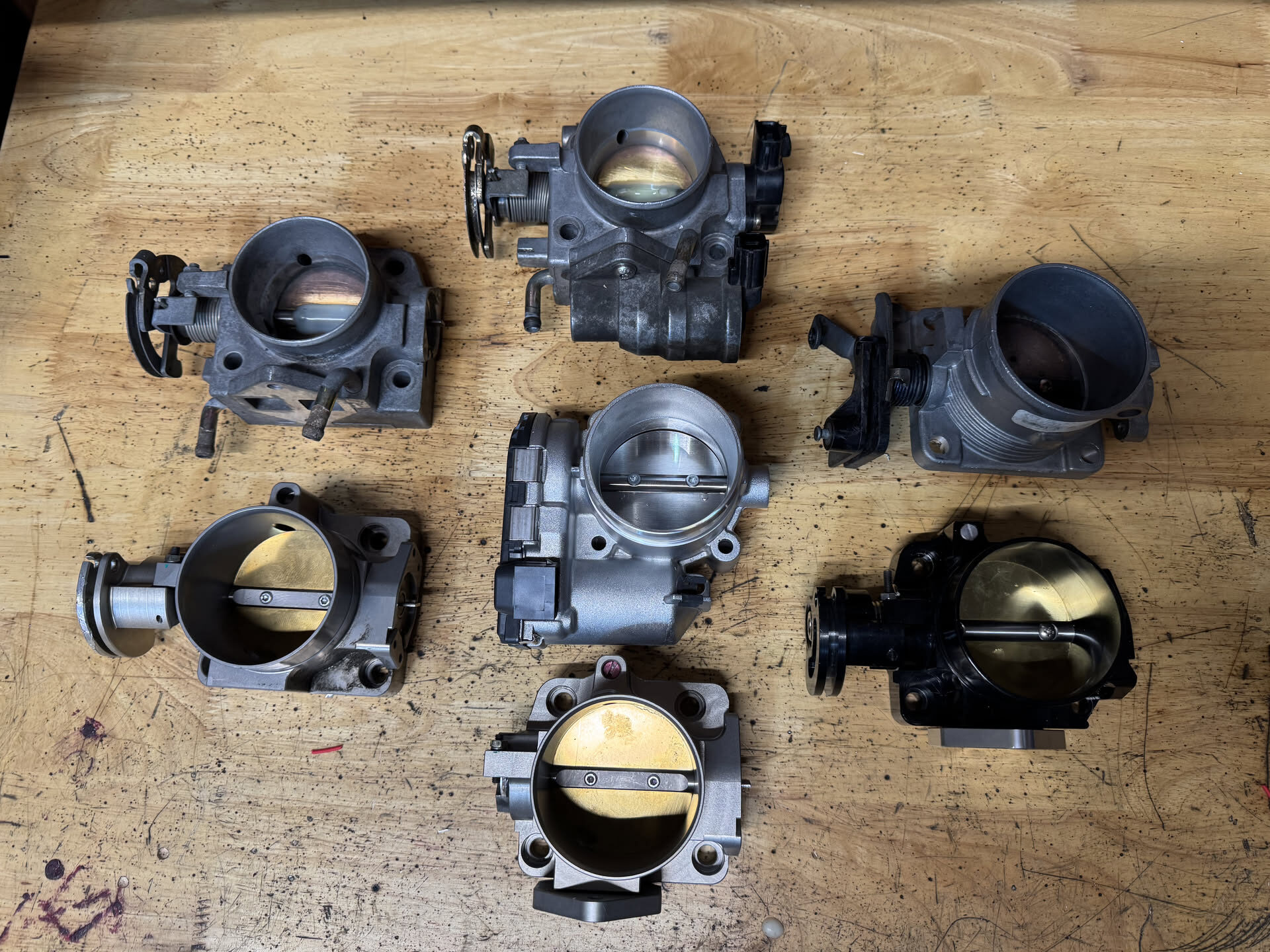
To ensure OEM-level reliability and global parts availability, the project utilizes a Bosch Motorsports 60mm electronic throttle body. Widely mass-produced for various European and domestic passenger vehicles, these units retail for approximately $150 and are engineered to automotive Tier-1 standards. Because the Bosch mounting flange differs geometrically from the stock Mazda Miata intake manifold, an adapter is required. While custom fabrication was evaluated, aftermarket solutions from specialized firms—such as Outsider Garage ($150) and ChathamCNC ($95)—provide precise engineering tolerances that significantly reduce installation timelines.
Accelerator Pedal Position Sensor Integration
Converting the cabin interface from a physical cable pull to an electronic pedal position sensor (APPS) presents packaging challenges. While modern DBW pedal assemblies from donor vehicles can be retrofitted, doing so requires extensive fabrication beneath the dashboard. To preserve the authentic tactile resistance and mechanical feel of a traditional cable-driven throttle—while simultaneously retaining factory cruise control functionality—the project implements a Honda cable-driven accelerator pedal position sensor.

Sourced from 2003 through 2007 V6-powered Honda Accord and Acura platforms (or acquired via aftermarket automotive suppliers), this mechanical-to-electronic transducer houses an internal dual-track potentiometer and a calibrated return spring. The unit accepts a standard throttle cable directly from the factory accelerator pedal, translating physical pedal travel into precise dual-channel electrical voltage signals. This design permits engine bay or interior remote mounting, vastly simplifying the mechanical integration process.
Operational Implications and Next Steps
The integration of a drive-by-wire architecture into a legacy sports car running a modular standalone ECU represents a significant technological upgrade. By replacing fracture-prone mechanical linkages with redundant electronic sensors and closed-loop motor control, the vehicle eliminates critical mechanical failure modes while gaining the precise calibration flexibility demanded in modern motorsport applications.

The subsequent phases of this technical project will involve empirical bench and track testing of three selected Megasquirt CAN-compatible controllers—specifically the SPTronics, DBWX2, and AMP EFI modules. Comprehensive data logging of response latency, fault recovery behavior, and thermal endurance will determine the ultimate long-term hardware selection for the vehicle. Detailed performance reviews of each controller will follow in subsequent technical briefs.