Hartono Sudibyo
The landscape of Pokémon ROM hacking has expanded into daily-format strategy gaming with the introduction of Daily Red, a newly developed fan-made project created by developer AmoiBuilds. Designed to capture the punishing difficulty of the iconic final battle against Trainer Red atop Mount Silver from Generation II, the project introduces a synchronized daily challenge mechanic. Unlike traditional role-playing experiences that require dozens of hours of exploratory gameplay, Daily Red condenses the Pokémon experience into a singular, high-stakes tactical puzzle that refreshes every twenty-four hours, inviting a global community of players to test their combat proficiency against identical daily parameters.

Conceptual Origin and Gameplay Mechanics
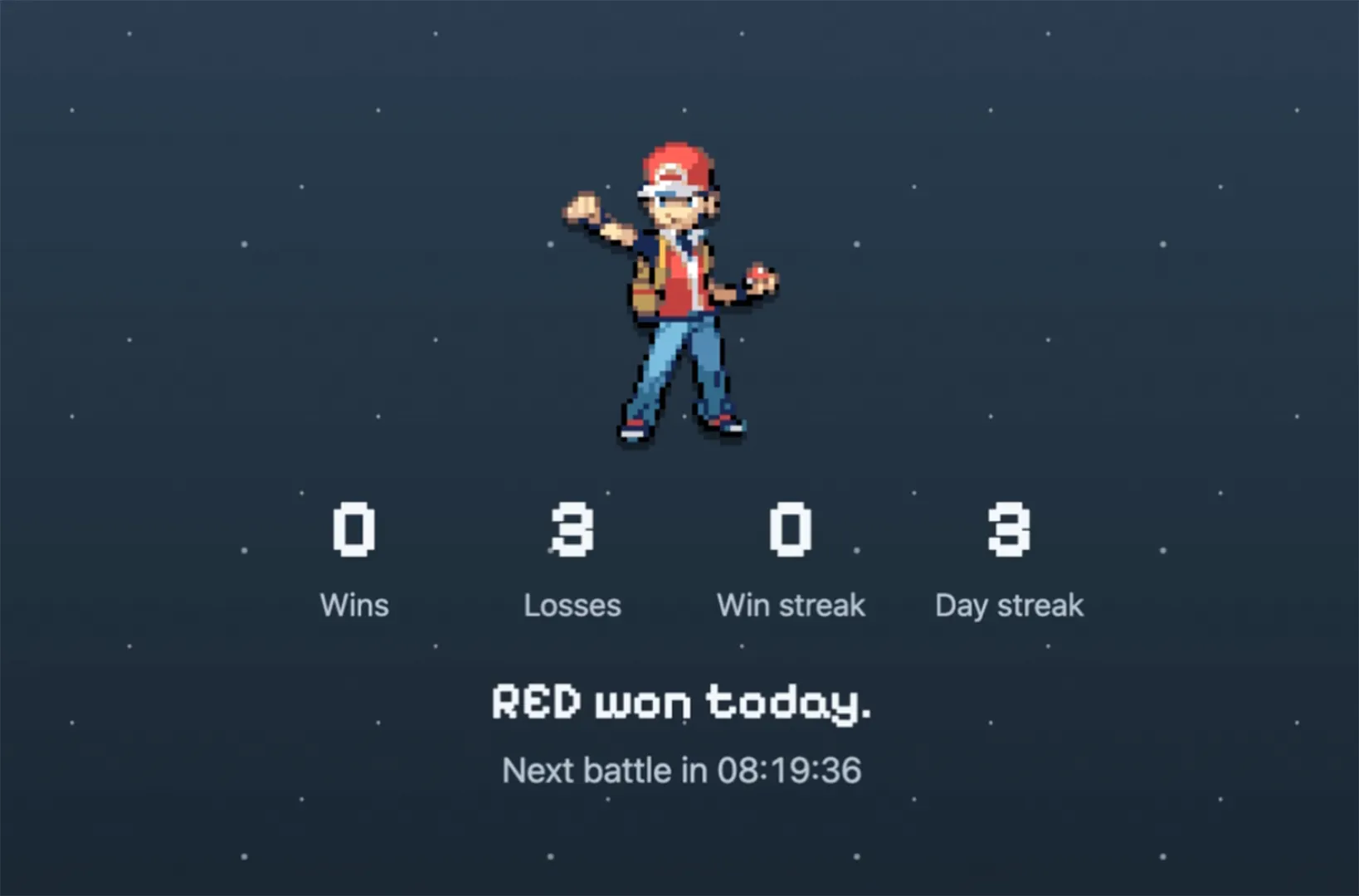
Daily Red functions on a premise heavily reminiscent of daily word and puzzle games like Wordle. Players boot up the game to face Trainer Red in a direct, unadulterated combat scenario. To level the playing field while maximizing strategic chaos, the player is assigned a fully randomized team of six Pokémon drawn from Generations 1 through 3, all scaled uniformly to level 100. Crucially, every player globally receives the exact same roster of Pokémon and randomized move-sets on any given calendar day, establishing a standardized baseline that allows for direct comparisons among friends and online communities.
The inclusion of completely randomized move-sets introduces an extreme volatility factor to the combat loop. While drawing a legendary Pokémon like Mewtwo or Rayquaza initially appears advantageous, the randomized nature of the modification can saddle powerful species with suboptimal or deeply counterintuitive attacks. Conversely, players frequently find themselves managing fragile lower-tier Pokémon—such as Magikarp or Weedle—against Red’s formidable, high-level lineup, requiring meticulous calculation of turn orders, type matchups, and status moves to survive. A permanent record-tracking system logs victories and defeats, documenting cumulative performance metrics over weeks and months of play.

Development Background and Creation
The project was developed by software creator AmoiBuilds, who described the build process as an exercise in "vibe-coding"—a development style relying heavily on rapid, intuitive iteration often assisted by modern artificial intelligence tools. Initially conceived as a personal project tailored to the developer’s own desire for a quick, repetitive tactical challenge, Daily Red was subsequently made public for enthusiasts willing to navigate non-standard installation procedures.
The title operates on a local clock synchronization system linked to the host device’s operating system. By default, the game restricts subsequent attempts after a single daily battle, locking out users until the following calendar cycle. However, because the lock is dependent on local system time, users have discovered that advancing their device clocks by twenty-four hours bypasses the restriction, mirroring workarounds commonly found in early mobile puzzle titles.

Accessibility Challenges and Technical Hurdles
Despite the straightforward nature of the gameplay loop, accessing Daily Red presents a significant barrier to entry for casual gamers. Rather than distributing a pre-compiled ROM file—a standard practice within the ROM hacking community—the developer has structured the project to require manual compilation. Users must interact with GitHub repositories, utilize terminal commands, and occasionally employ AI-assisted troubleshooting to decompile and build the game environment locally before exporting it for browser or emulator play.
This cumbersome distribution method is widely understood as a defensive posture within the independent development space. By avoiding the direct hosting of copyrighted Nintendo assets or pre-patched ROM binaries, independent creators aim to minimize the risk of intellectual property enforcement actions, such as Digital Millennium Copyright Act (DMCA) takedown requests or cease-and-desist letters from Nintendo’s legal representatives. Consequently, the developer has opted to maintain these technical friction points, effectively limiting the audience to technically proficient enthusiasts willing to invest significant time into setup.

Historical Context of Pokémon ROM Hacking and The Legend of Red
The release of Daily Red taps into decades of cultural reverence surrounding the character of Red and the climax of Pokémon Gold, Silver, and Crystal. Originating as the silent protagonist of the original 1996 Red and Green (and localized Pokémon Red and Blue) games, Red achieved legendary status within video game lore through his appearance as the ultimate secret boss in the 1999 Johto region sequels. Encountered silently at the peak of Mount Silver with an elite team of level-80-plus Pokémon, Red represented an unprecedented difficulty spike that caught millions of unprepared players off guard.
In the decades following that release, the Pokémon ROM hacking community has continuously reinterpreted core game mechanics, spawning entire sub-genres of modification including Kaizo hacks, randomized nuzlockes, and difficulty-scaled vanilla overhauls. Daily Red represents a distinct evolution within this ecosystem, shifting the focus away from narrative exploration and long-form progression toward bite-sized, competitive optimization. By standardizing the randomized team composition across a global player base on a daily schedule, the hack transforms a traditionally solitary pastime into a shared asynchronous competitive event.
Broader Implications and Community Reception
The emergence of projects like Daily Red highlights a growing intersection between traditional ROM hacking and modern web-style puzzle engagement. As gaming audiences increasingly gravitate toward high-retention, low-time-commitment formats, independent developers are finding innovative ways to distill complex role-playing systems into accessible daily routines.
However, the reliance on complex deployment methods underscores the persistent legal vulnerabilities facing fan projects in the retro gaming sphere. As long as major intellectual property holders maintain zero-tolerance policies toward unauthorized derivative works utilizing copyrighted code, developers will continue to rely on source-code distribution and manual compilation methods to protect their projects from swift regulatory removal. For those willing to navigate the command-line setup process, Daily Red offers a uniquely punishing daily ritual that recontextualizes one of gaming’s most storied boss battles for the modern era.