Edi Durjana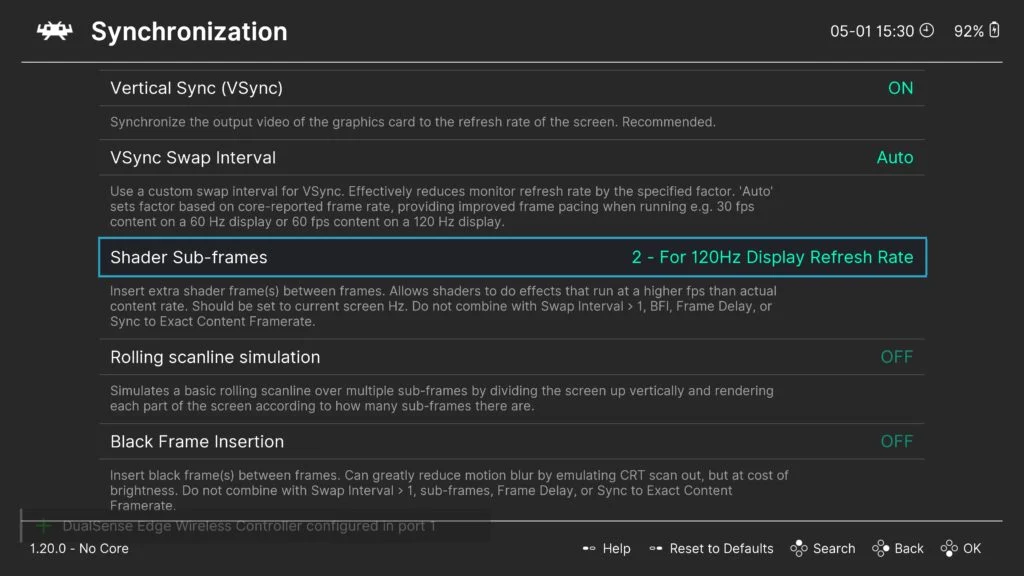
The landscape of retro gaming emulation and display technology has taken a significant leap forward with the official release of a groundbreaking shader designed to drastically enhance motion clarity on modern flat-panel displays. Developed collaboratively by Mark Rejhon, founder of the display optimization authority BlurBusters, and Timothy Lottes—widely recognized in the graphics programming community as the creator of the original FXAA (Fast Approximate Anti-Aliasing) shader and the renowned crt-lottes shaders—this new software tool addresses long-standing visual compromises associated with classic display emulation.
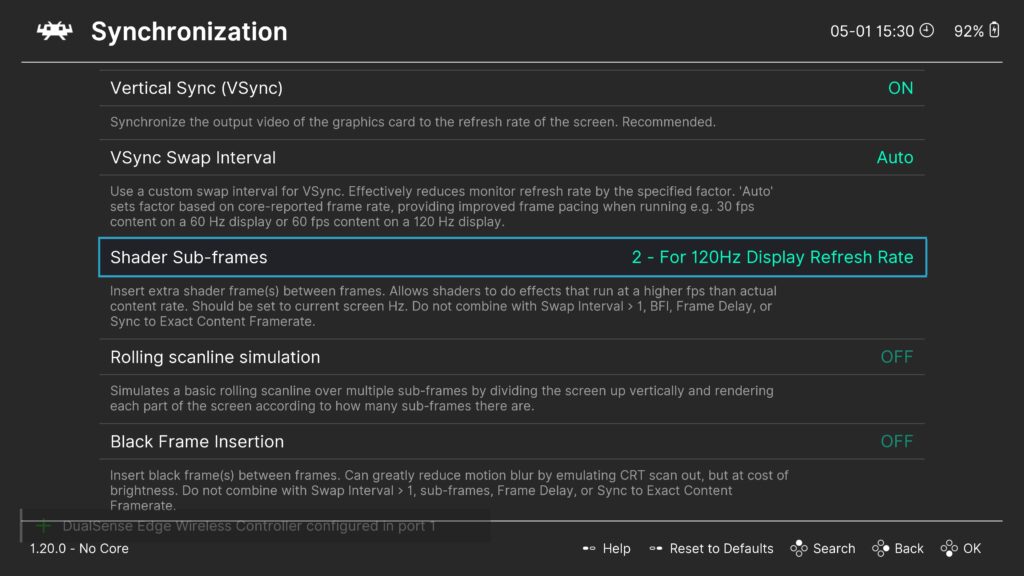
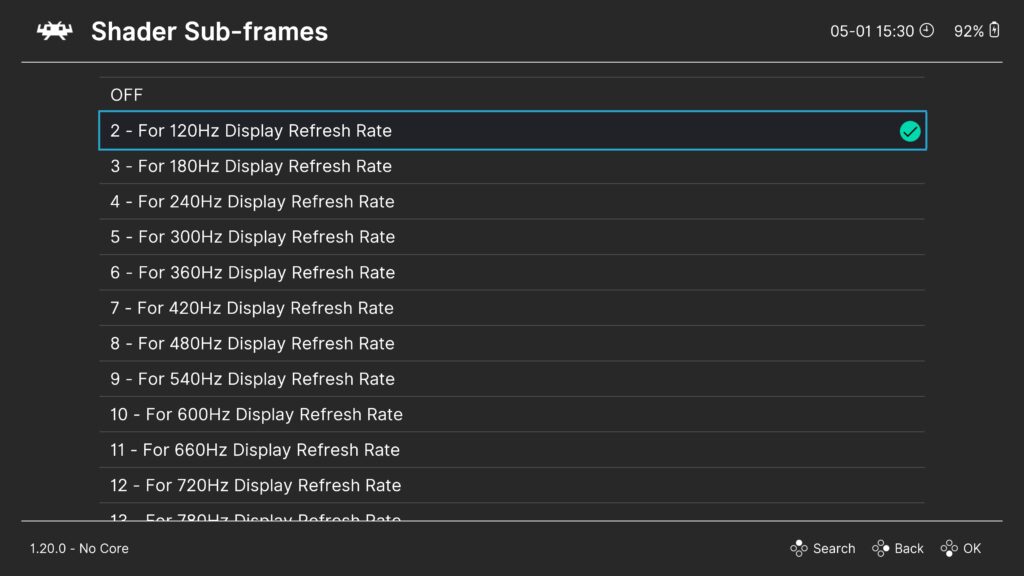
The newly introduced shader leverages RetroArch’s recently deployed "subframe" shader capabilities. This underlying architectural feature allows shaders to execute at precise multiples of standard content frame rates, processing intermediate visual steps that were previously impossible within conventional rendering pipelines. By exploiting high refresh rates (120 Hz and above), the system simulates the physical beam behavior of cathode-ray tube (CRT) monitors without imposing the heavy luminance penalties and artifacting historically linked to traditional Black-Frame Insertion (BFI) methods.
Main Facts and Technical Integration
RetroArch version 1.20.0 or higher—or any subsequent nightly build supporting the Shader Sub-frames feature—is required to run the new software. Without these specific architectural updates, the advanced timing sequences cannot be processed correctly by the application’s graphics pipeline.
The origin of the shader stems from experimental work previously hosted on Shadertoy, where an initial proof-of-concept demonstrated the viability of high-frequency subframe modulation. The production-ready slang variant integrated into RetroArch allows enthusiasts with high-refresh-rate monitors to utilize the technology directly within their emulation workflows.
Users wishing to deploy the shader can access pre-made presets cataloged under shaders_slang/presets/crt-beam-simulator. Furthermore, the modular nature of RetroArch’s slang shader system permits users to prepend the beam simulation preset to their existing favorite CRT shaders, ensuring that scanline overlays, color profiles, and phosphor masks can be combined seamlessly with the new motion-clarity enhancements.
Chronology and Development Background
The pursuit of authentic motion clarity in emulation has been a central challenge for developers and hardware enthusiasts for over a decade. While modern liquid-crystal display (LCD) and organic light-emitting diode (OLED) panels offer remarkable pixel response times, their sample-and-hold display methodology inherently causes motion blur to the human eye during high-speed tracking movements. Conversely, vintage CRT displays utilized a transient phosphor decay process that naturally cleared motion blur by illuminating pixels for only a fraction of a second per frame.
Initial software-based attempts to replicate this behavior relied on Black-Frame Insertion (BFI), which periodically inserts completely dark frames into the video stream. While effective at reducing perceived motion blur, BFI drastically reduces overall panel brightness, introduces severe flicker that can induce eye strain or headaches, and often causes visual stutter due to panel response limitations.
Recognizing these limitations, display scientists and graphics programmers began exploring subframe processing. The collaboration between Mark Rejhon and Timothy Lottes bridges the gap between theoretical display physics and practical real-time rendering. Over the past year, the Libretro development team laid the groundwork by implementing native subframe architecture into RetroArch, culminating in the official release of the CRT beam simulation shader in early 2025. This milestone represents the convergence of BlurBusters’ exhaustive motion-clarity research and Lottes’ advanced shader optimization techniques.
Supporting Data and Configuration Parameters
Proper configuration is critical to achieving optimal results with the new CRT beam simulator. Because display hardware varies significantly in peak luminance, panel technology (LCD versus OLED), and maximum refresh rate, the shader includes comprehensive runtime parameters accessible directly within the RetroArch Quick Menu.
For a standard 120 Hz monitor operating with two subframes per content frame, a gamma adjustment parameter of approximately 0.5 is recommended to maintain a neutral image and eliminate anomalous dark lines. On 240 Hz monitors utilizing four subframes, a setting of approximately 0.7 yields the ideal balance between brightness retention and crisp motion delineation.
A primary advantage of this shader over traditional BFI implementations is its mitigation of voltage accumulation. Certain flat-panel monitors are susceptible to image persistence or panel degradation caused by the rapid voltage switching inherent to traditional on/off flickering. OLED panels, however, are largely immune to this phenomenon, as are displays operating at non-integer multiples of standard video frequencies, such as 180 Hz.
To accommodate diverse hardware configurations, the developers included a runtime parameter that allows users to disable the cycle timing offset. This feature prevents the simulated raster line from continuously rolling vertically across the screen when running on odd-refresh-rate hardware. Additionally, a dedicated positioning parameter enables users to place the simulated raster line in the least obtrusive sector of the display according to personal preference.
Official Responses and Community Guidance
The release has generated widespread discussion across major emulation and hardware forums, including Reddit, Discord, and the official Libretro community boards. Industry experts specializing in display latency and visual fidelity have praised the project for offering a sophisticated alternative to brute-force frame-rate interpolation.
To assist users navigating initial setup hurdles, Mark Rejhon established a dedicated FAQ and troubleshooting repository on GitHub. The repository addresses common configuration challenges, such as micro-stuttering caused by mismatched display refresh intervals and G-Sync/FreeSync synchronization quirks. Comprehensive video walkthroughs produced by prominent display technology educators have also been published to guide users through the finer points of slang shader layering and parameter tuning.
Broader Impact and Implications for Display Technology
The deployment of subframe-based CRT simulation within an open-source framework like RetroArch signals a broader shift in how software developers approach display emulation. Rather than treating modern high-refresh-rate monitors merely as static canvases for higher resolutions, software engineers are increasingly utilizing sub-millisecond frame intervals to manipulate temporal resolution.
For the retro gaming community, this technology bridges the perceptual gap between legacy analog displays and modern digital panels without requiring specialized hardware modifications or expensive external scan converters. By accurately mimicking the electron beam scanning process of vintage televisions and arcade monitors, the shader preserves the artistic intent of classic game developers who designed their pixel art around the physical scanning characteristics of CRT hardware.
As high-refresh-rate displays become increasingly mainstream—with 240 Hz, 360 Hz, and even 480 Hz monitors entering the consumer market—the headroom for subframe processing will expand further. This trend suggests that advanced temporal shaders will play a foundational role in future graphics rendering pipelines, extending far beyond retro emulation into modern PC gaming and professional visualization tools. Users experiencing technical difficulties or seeking further optimization advice are encouraged to consult the official Libretro support channels and developer repositories for ongoing updates and community-driven presets.