Hartono Sudibyo
The landscape of open-source hardware modification has entered a dynamic new phase following the commercial release of the ModRetro M64. Barely months after the retro gaming console’s initial market debut, independent developers have begun harnessing its underlying architecture to expand its operational parameters far beyond the original factory specifications. Among the most ambitious projects currently moving through development is Magic64, a completely ground-up custom firmware designed to transform the M64 into a multi-system emulation powerhouse capable of running platforms native to the MiSTer FPGA ecosystem.
Helmed by developer Nate—widely recognized for previous hardware and firmware projects, including the specialized ChroMagic firmware for the Chromatic handheld—Magic64 represents a total reimagining of the M64’s native capabilities. Unlike incremental patches or superficial software modifications, this project involves writing both the FPGA configuration images and the low-level microcontroller code entirely from scratch. As the retro gaming community continues to embrace modular, open-source hardware, projects like Magic64 underscore the growing demand for user-driven customization and hardware-level versatility in modern retro consoles.
Background and Development Chronology
The introduction of the ModRetro M64 earlier this year sparked considerable interest among hardware enthusiasts and FPGA developers. Built with an open-source ethos, the console invited community tinkering from day one. Shortly after the hardware’s release, early community efforts began materializing, including the initial announcement of the OM64 fan-made firmware. However, Magic64 distinguishes itself through its comprehensive architectural overhaul.
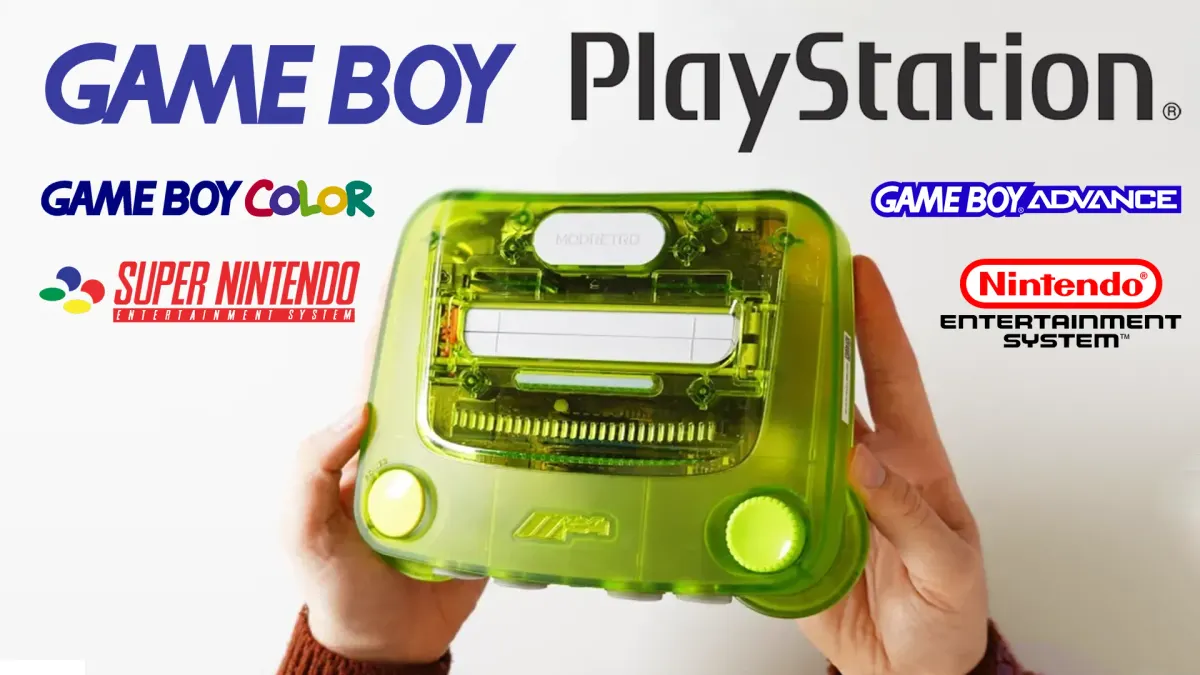
Development on Magic64 commenced quietly, driven by Nate’s objective to bypass the limitations of the stock operating environment. By creating a custom firmware stack that addresses both the microcontroller and the field-programmable gate array simultaneously, the developer aimed to establish a stable, high-performance foundation for multi-system support.
According to development timelines shared during recent interviews, the project has progressed rapidly through its core engineering phase and is currently navigating the final stages of optimization and user-interface polishing. If current benchmarks and stability tests hold true, the developer anticipates releasing the first public beta build. This milestone will mark the transition from closed development to community-driven testing, allowing early adopters to evaluate the firmware’s performance across supported hardware configurations.
Technical Architecture and System Compatibility
At its core, Magic64 relies on hardware-based emulation rather than software-dependent interpretation, ensuring that titles execute at authentic speeds matching original hardware specifications. The initial release of the firmware is engineered to support six distinct systems, with each platform operating as an independent FPGA image loaded directly via the console’s built-in SD card reader.
Rather than rushing to incorporate a massive catalog of unstable or poorly optimized platforms, the development strategy has prioritized stability and execution fidelity. The initial lineup has been built upon adapted open-source MiSTer cores, a gold standard in the FPGA emulation community known for cycle-accurate performance.

For platforms such as Sony’s original PlayStation, the firmware supports direct loading of game images in standard .cue/.bin and .chd formats. Furthermore, the architecture accommodates essential features right out of the box, including virtual memory card management and native multi-disc switching capabilities. Users are advised to supply their own system BIOS files to ensure full compatibility, though alternative open-source BIOS solutions remain under consideration for integration in subsequent iterations.
Hardware Integration and Ecosystem Connectivity
One of the most notable technical achievements of the Magic64 project is its cross-platform hardware integration, particularly its interaction with other custom-engineered devices in the retro ecosystem.
By leveraging Nate’s previous ChroMagic firmware, users can physically connect a Chromatic handheld to the M64 via a standard USB interface. In this configuration, the Chromatic functions seamlessly as both a Game Boy cartridge reader and a specialized Transfer Pak. This bridging of hardware allows users to play physical Game Boy and Game Boy Color cartridges directly through the M64 console interface. Additionally, it enables legacy peripheral connectivity for titles such as Pokémon Stadium, replicating the authentic hardware interactions of the late 1990s.
Regarding control inputs, the firmware maintains native compatibility with standard Nintendo 64 controllers as well as the wireless M64 Pro controller, complete with custom button-mapping capabilities. Future roadmap updates include plans to introduce broad USB controller support, alongside compatibility with wireless USB dongles to facilitate the use of various third-party modern gamepads.
Quality-of-Life Enhancements and Modern Features
Beyond core system emulation, Magic64 introduces several modern quality-of-life enhancements absent from the stock M64 firmware. Among the most anticipated additions is full integration with RetroAchievements. This inclusion brings modern achievement tracking, leaderboards, and community challenges to all six supported core systems, satisfying a long-standing request from the console’s user base.
The firmware also respects physical media collectors by retaining full functionality within the original N164 cartridge slot. Users can continue to play physical N64 cartridges normally, with the added capability to back up cartridge ROM data and save files directly to the SD card for preservation purposes.
Future Roadmap and Industry Implications
Looking beyond the imminent beta launch, the developer has outlined an aggressive long-term roadmap for Magic64. Future development phases aim to introduce physical cartridge adapter support for classic home consoles such as the Nintendo Entertainment System (NES), Super Nintendo Entertainment System (SNES), Game Boy, Game Boy Color, and Game Boy Advance. Implementing physical cartridge slots for these diverse architectures on an N64-based console represents a formidable engineering hurdle, but one the developer appears prepared to tackle.
The emergence of projects like Magic64 carries broader implications for the retro gaming hardware market. As manufacturers increasingly design consoles with open-source capabilities or accessible FPGA architectures, the lifespan and utility of these devices are significantly extended by independent developers. Rather than remaining locked into a single manufacturer-approved feature set, hardware platforms become adaptable canvases capable of evolving alongside community ingenuity.
As the Magic64 beta release approaches, industry observers and retro gaming enthusiasts will be watching closely to evaluate its real-world performance, stability, and ease of installation. For owners of the ModRetro M64 looking to maximize their hardware investment, Magic64 promises to redefine what the console can achieve, setting a new benchmark for open-source firmware development in the modern retro gaming era.