 Retno Hari Mulyono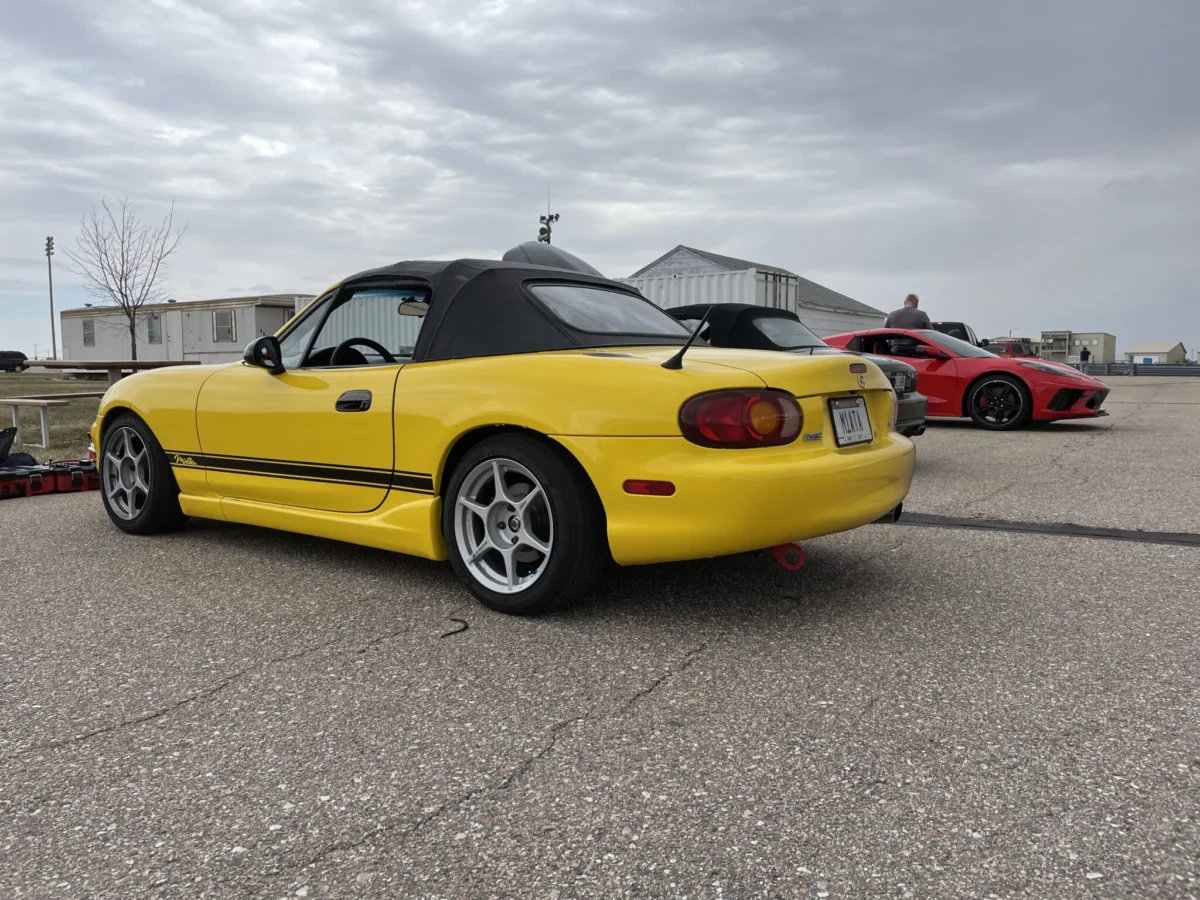
The evolution of a dedicated track car offers a compelling study in automotive engineering, driver development, and the relentless pursuit of performance optimization. Marking the completion of its second full year of ownership, a heavily modified 1999–2005 (NB generation) Mazda Miata project provides a detailed look at the financial, mechanical, and logistical realities of amateur motorsports. Purchased in late March 2021, the vehicle has transitioned from a standard street roadster into a competitive, purpose-built machine capable of competing in regional road racing, autocross, and rallycross events across the American Midwest. Over the subsequent 24-month period spanning March 2022 through February 2023, the project underwent significant overhauls, including comprehensive suspension geometry revisions, powertrain enhancements, custom fabrication of transport logistics solutions, and the integration of professional-grade aerodynamic downforce packages.
Chronological Overview of Year Two Modifications and Track Operations
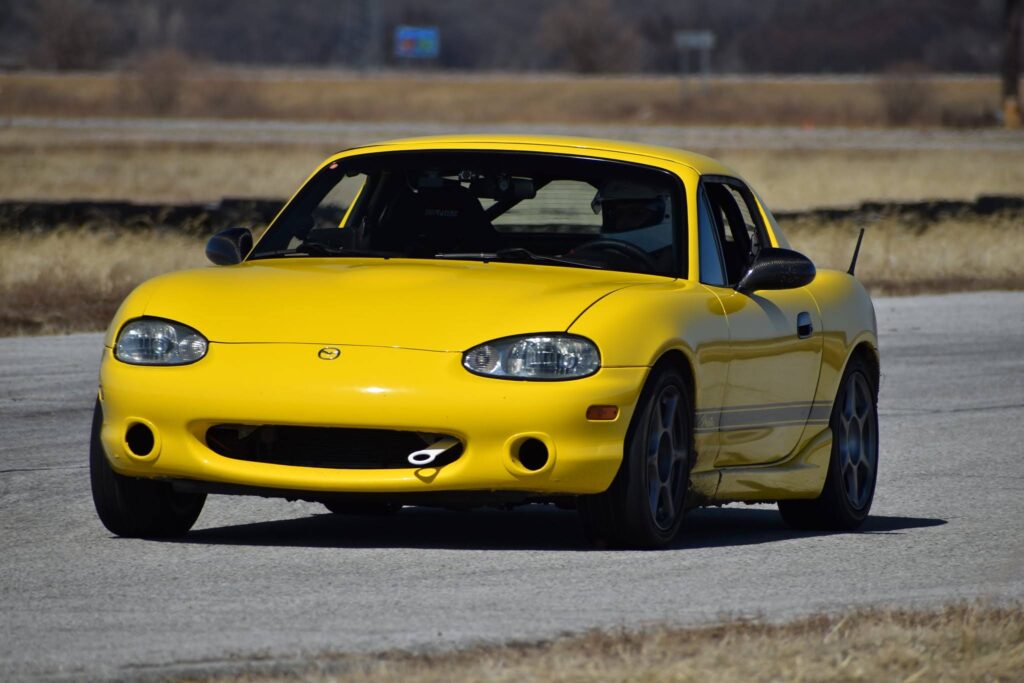
The second year of the NB Miata project commenced on March 19, 2022, with a high-performance track day at the Raceway Park of the Midlands (RPM), situated near Omaha, Nebraska. Operating as the primary testing ground for the vehicle due to its geographic proximity, RPM hosted eight distinct track sessions throughout the 2022 calendar year. Systematic telemetry and lap-timing data gathered across these events illustrate a dramatic progression in vehicle capability and driver proficiency. Initial baseline lap times at the facility steadily decreased over a seven-month period, reflecting an aggregate improvement of 11.29 seconds. This performance gain was achieved through a combination of iterative chassis tuning, enhanced engine output, and advanced seat-time instruction focusing on optimal racing line execution, braking zones, and throttle application.
Following the season opener at RPM, the vehicle was transported to Motorsports Park Hastings (MPH) on April 1, 2022. Unlike the abrasive, patch-laden surface of Raceway Park of the Midlands, MPH benefited from a comprehensive asphalt repaving project completed during the preceding winter off-season. The facility features a billiard-smooth track surface, a fully paved paddock, and modern indoor infrastructure. Data collected from this single outing established a baseline for future high-speed development at the venue, though financial considerations and travel distance continued to favor RPM for the majority of the season’s testing schedule.
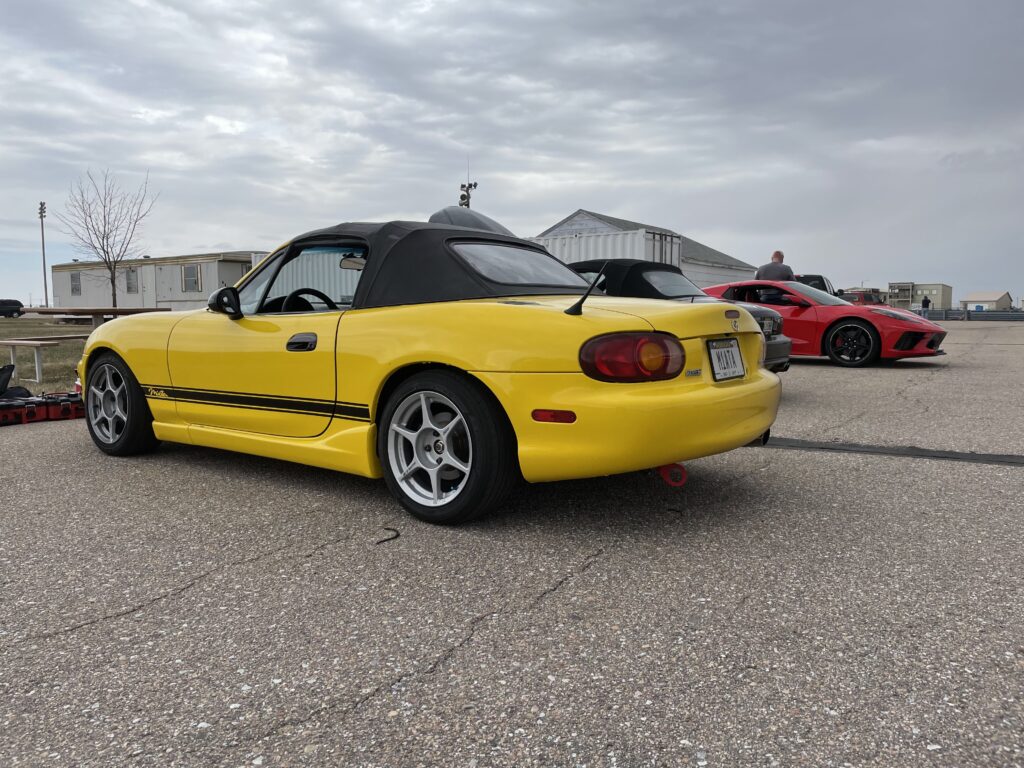
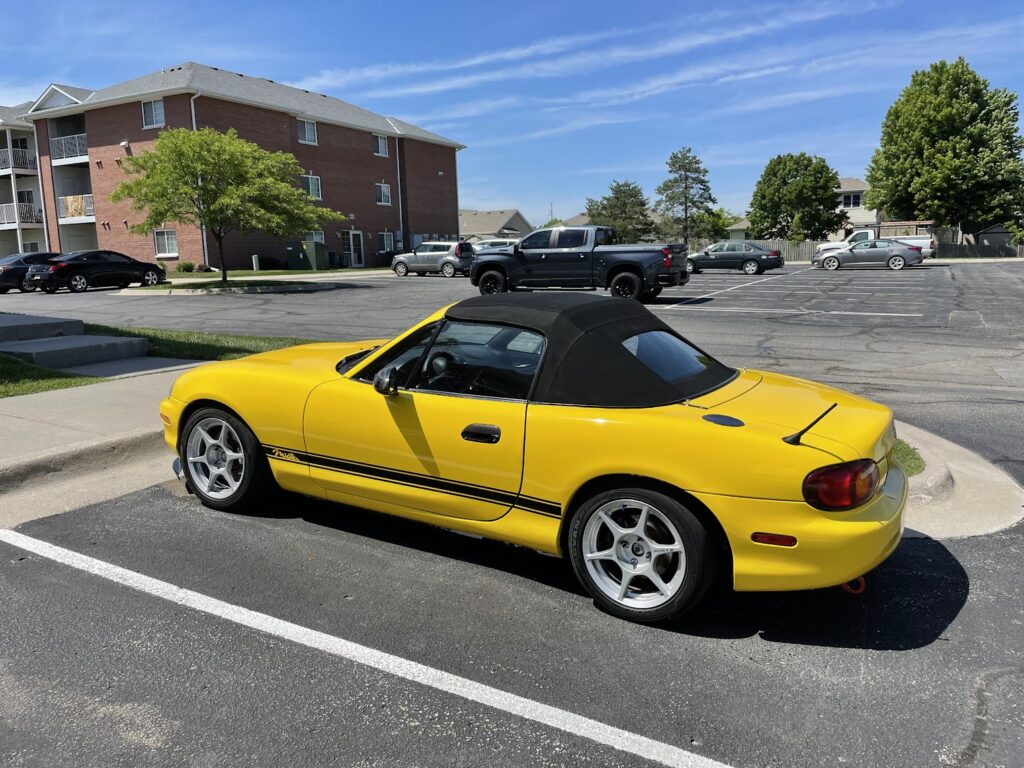
As the spring season progressed into May 2022, attention shifted toward rectifying chronic cosmetic and functional deficiencies in the vehicle’s weather protection systems. The factory vinyl soft top, characterized by extensive patching and structural degradation, was replaced during the extended Memorial Day weekend. To streamline the installation process and minimize vehicle downtime, a secondary soft top frame was sourced from an automotive salvage yard. A premium Robbins canvas soft top featuring a zippered glass rear window was fitted to the spare assembly prior to the vehicle swap. Installation required thermal conditioning via direct solar exposure to facilitate the necessary mechanical stretching of the canvas and rain rail assembly. The conversion yielded superior thermal insulation, improved operational ease in cold ambient temperatures, and enhanced structural rigidity compared to the original factory specification.
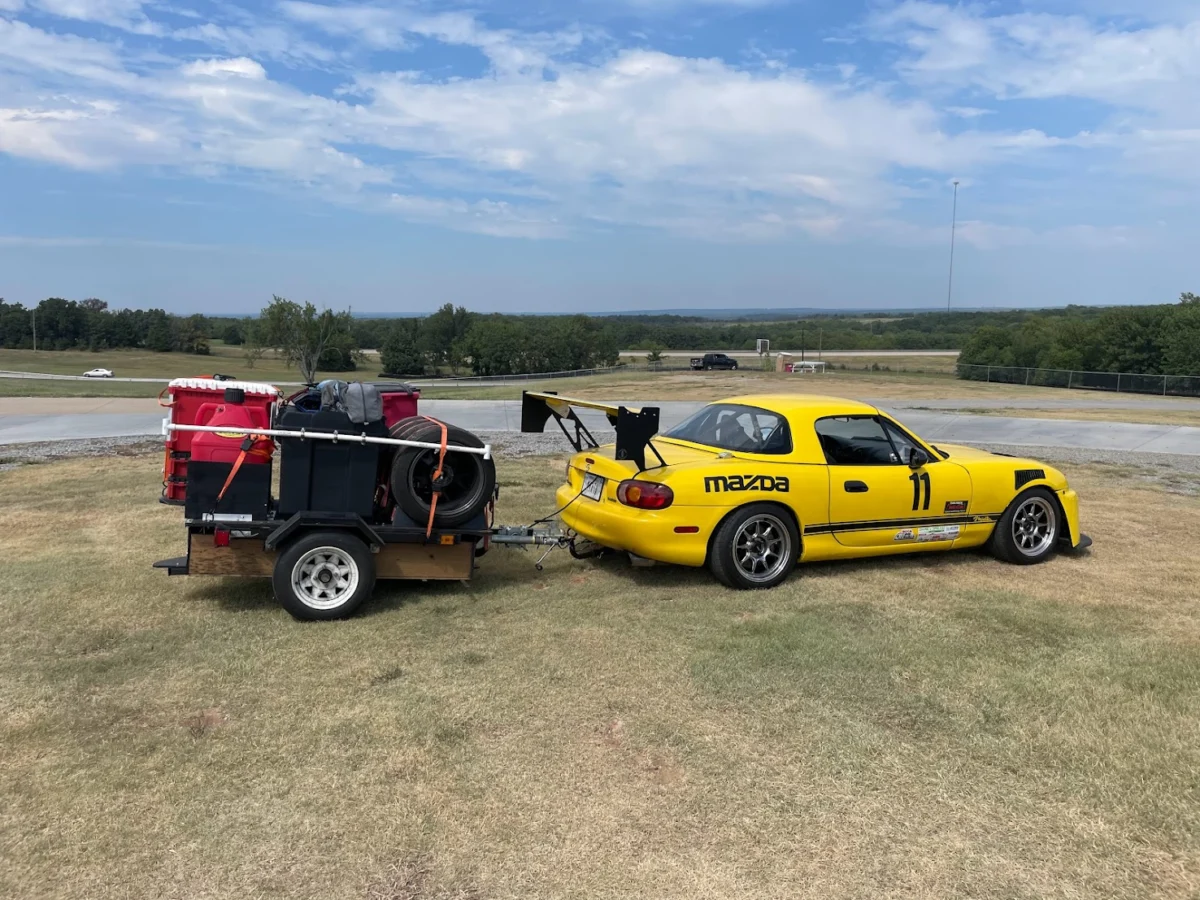
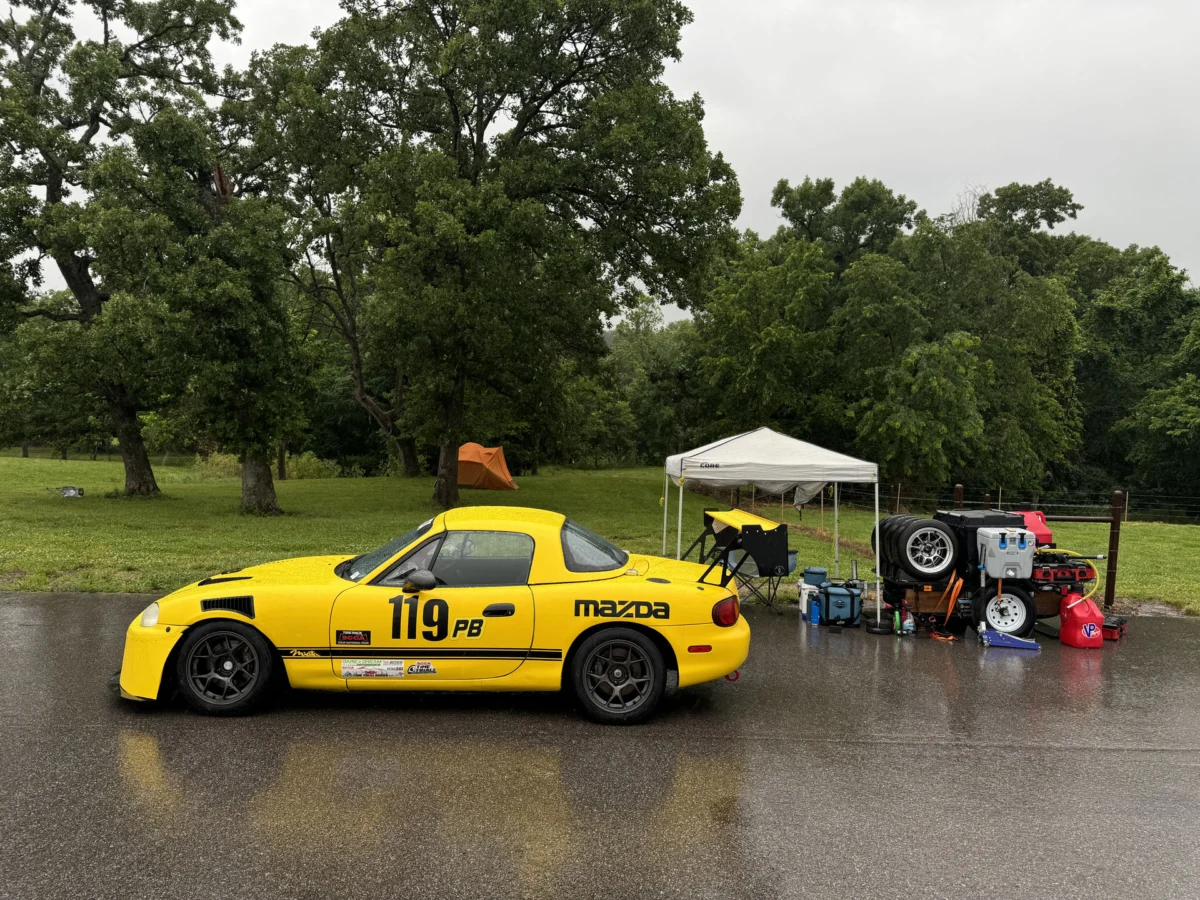
Logistical constraints inherent to the compact dimensions of the Mazda Miata platform necessitated a specialized transport solution for track-day equipment, which was realized in June 2022. Given the physical impossibility of accommodating a complete set of secondary track tires, heavy-duty hand tools, spare mechanical components, automotive fluids, fuel jugs, and a trackside canopy within the passenger cabin or trunk, a dedicated towing solution was designed and fabricated. A utility trailer measuring 40 by 48 inches, manufactured by Northern Tool, was modified with an extended marine-grade plywood cargo deck. The configuration incorporated a forward-mounted tire rack capable of securing a full quartet of 15-inch track wheels and tires, a central weatherproof locking storage chest, and a rear-mounted framework anchored by heavy-duty tie-down straps securing modular Milwaukee Packout storage containers alongside dual five-gallon fuel transfer jugs. Fully loaded, the trailer weighed approximately 700 pounds and was successfully towed over 1,000 cumulative miles during the 2022 season without mechanical incident, proving the towing capacity and chassis stability of the NB platform.
Powertrain Development and Dynamometer Verification
Engine performance metrics were rigorously evaluated in July 2022 via a series of chassis dynamometer testing sessions designed to quantify the efficacy of sequential hardware and engine management upgrades. Baseline performance figures recorded during the first year of ownership in August 2021—featuring basic bolt-on modifications including an aftermarket cold-air intake, exhaust headers, and a cat-back exhaust system—yielded a modest 115 wheel-horsepower (whp) and 106 pound-feet (lb-ft) of torque from the naturally aspirated BP-4W engine.
Re-evaluation on the dyno in July 2022 demonstrated significant gains, recording a peak output of 136 whp and 119 lb-ft of torque. These performance increases were directly attributed to the installation of a high-flow square-top intake manifold and a fully programmable Megasquirt engine control unit (ECU) calibrated to operate on E85 fuel. The transition to high-octane ethanol blend fuel allowed for aggressive ignition timing advancements and improved volumetric efficiency across the mid-to-high RPM operating range.
Further powertrain diagnostics were conducted in January 2023 during an engine-out maintenance interval required to rectify a persistent rear main seal oil leak. This service window was utilized to execute an extensive preventive maintenance schedule and infrastructural overhaul. Concurrently, auxiliary powertrain inventory was expanded through the acquisition of a low-compression BP4W engine, a healthy BP6D variable valve timing (VVT) motor, and a matching six-speed manual transmission assembly, ensuring long-term mechanical redundancy for future competition seasons.
Competitive Multidisciplinary Motorsport Participation
Throughout the 2022 operating calendar, the vehicle’s versatility was tested across multiple distinct motorsports disciplines, expanding beyond traditional asphalt road racing to include SCCA-sanctioned rallycross and autocross competitions.
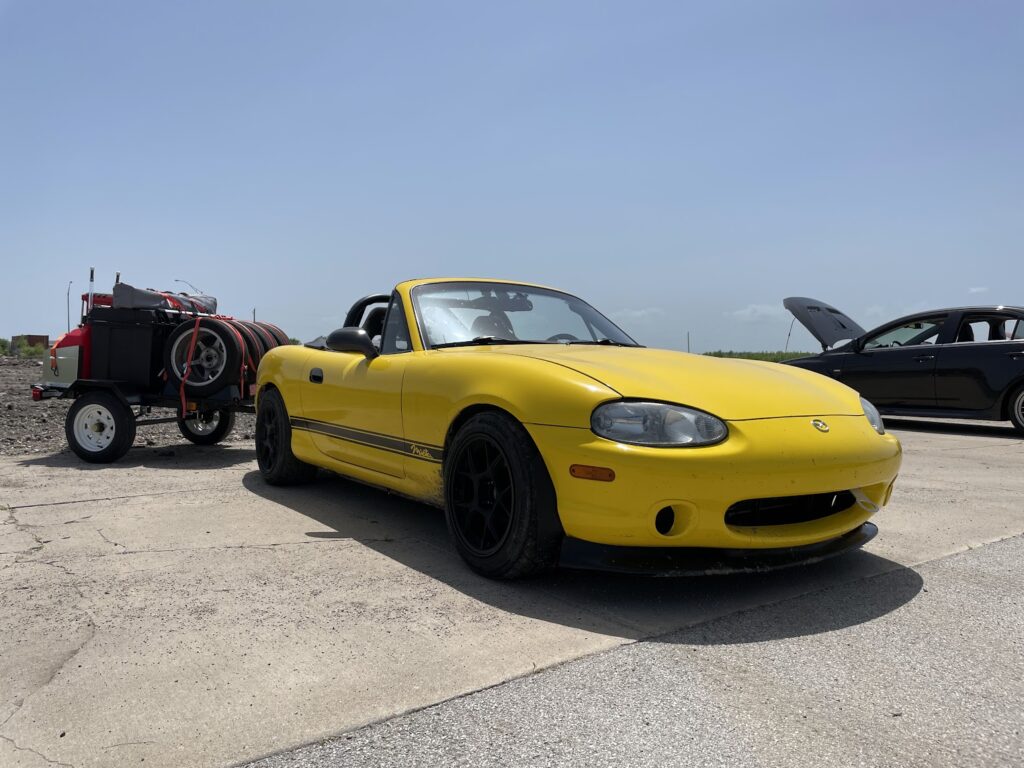
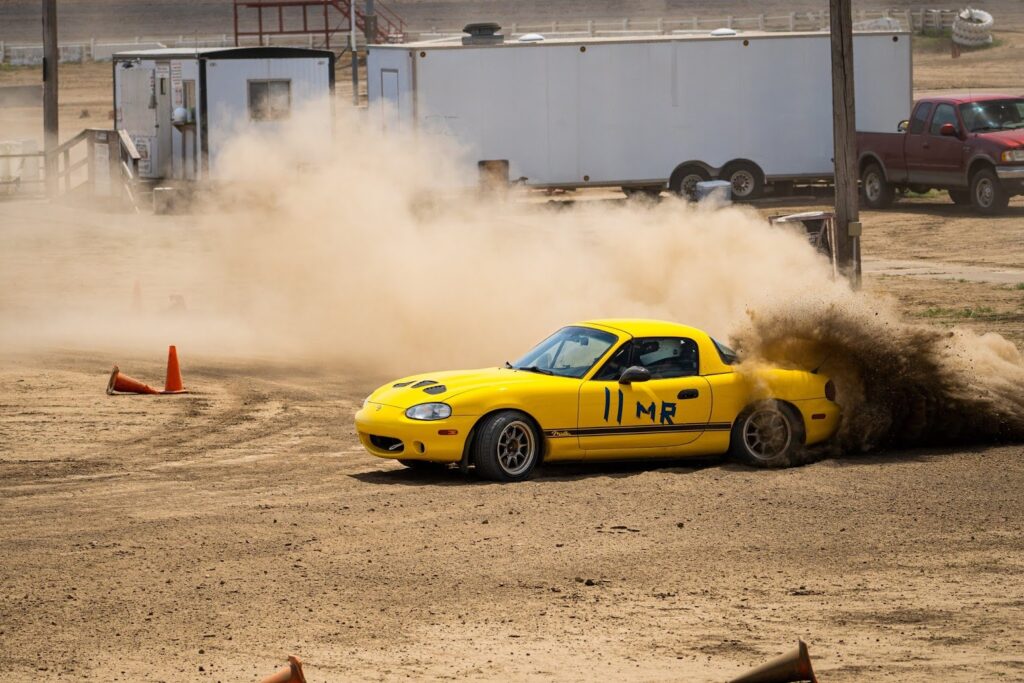
In August 2022, the car was entered into its first-ever Sports Car Club of America (SCCA) Rallycross event held at I-80 Speedway in Nebraska. Operating on a loose dirt and gravel surface, the rear-wheel-drive platform demonstrated predictable handling characteristics despite a complete lack of dedicated suspension or chassis modifications suited for off-road competition. While low-speed maneuvers allowed for easily controllable vehicle rotation and yaw angles, the low-clearance road setup resulted in the structural detachment and loss of the front splitter lip.
Transitioning back to high-friction paved environments, the vehicle completed a full competitive season in the Nebraska Region SCCA Autocross championship, held at the Lincoln Airpark—the permanent home of the SCCA Solo National Championships. Competing locally on expansive, high-speed tarmac courses, driver progression was quantitatively tracked against regional PAX and raw time indices. Initial competition events placed the driver in the bottom decile of the overall field (slower than 92% of competitors), whereas end-of-season benchmarks demonstrated a dramatic upward trajectory, consistently placing the driver in the median cohort (faster than 50% of the competitive field).
Track Incidents, Chassis Repair, and Structural Optimization
The pursuit of vehicle limits on high-speed road courses inevitably introduces operational risk. On October 29, 2022, during the final track day of the competitive season at Raceway Park of the Midlands, the vehicle sustained moderate structural and cosmetic damage following a high-speed off-track excursion. Entering Turn 10 with excess entry velocity, the rear tires exceeded their lateral grip threshold, inducing significant oversteer. Although corrective counter-steering successfully arrested the initial slide, the resulting trajectory carried the car through Turn 11 with remaining kinetic energy, leading to terminal understeer across the grass runoff area and a frontal impact with a tire barrier at an estimated velocity of 60 miles per hour.
The impact energy absorption provided by the tire wall successfully mitigated severe structural frame damage or occupant injury. Post-incident assessment revealed localized deformation of the aluminum hood, structural crushing of the front bumper reinforcement, a compromised left front fender, a fractured headlight assembly, and extensive rubber transfer marks along the left-front quarter panel. Notably, the vehicle remained mechanically operational and was driven home under its own power.
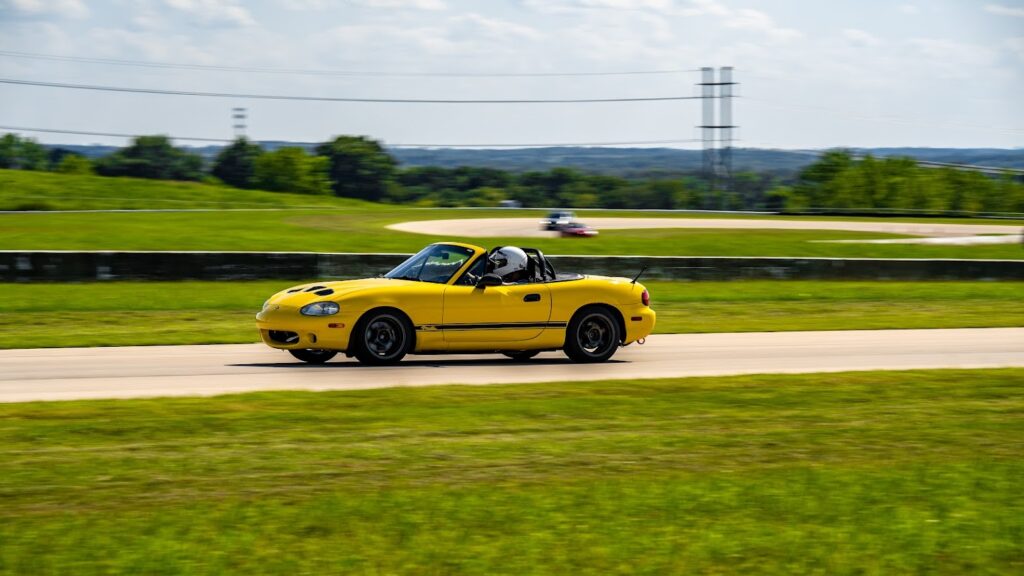
Rapid restorative repairs were executed within a four-week window following the incident. Replacement OEM body panels—including a front fender, bumper cover, and hood—were sourced, fitted, and integrated beneath the vehicle’s existing exterior vinyl wrap. The logistical advantages of architectural vinyl wrap were highlighted during this phase, as full-body re-wrapping eliminated the extensive downtime and color-matching expenditures typically associated with traditional multi-panel automotive paint repairs.
Advanced Chassis Geometry and Aerodynamic Integration
Following the conclusion of the 2022 track season, winter preparation focused on structural rigidity, suspension compliance, and high-speed aerodynamic stability.
In December 2022, the factory control arms and elastomeric bushings were entirely overhauled. Having previously installed IL Motorsports rubber bushings in 2021, the suspension was upgraded to a comprehensive set of replacement control arms housing A1 Ground Control Nylatron bushings. Nylatron—a self-lubricating engineering thermoplastic sharing material properties with Delrin—was selected to eliminate rotational stiction and bushing deflection without the binding characteristics or high maintenance requirements associated with standard polyurethane formulations. Additionally, adjustable rear upper control arms manufactured by Paco Motorsports were integrated into the rear geometry to allow for fine-tuned camber and toe adjustments. While these solid-material bushings successfully reduced suspension compliance, they measurably increased cabin noise, vibration, and harshness (NVH).
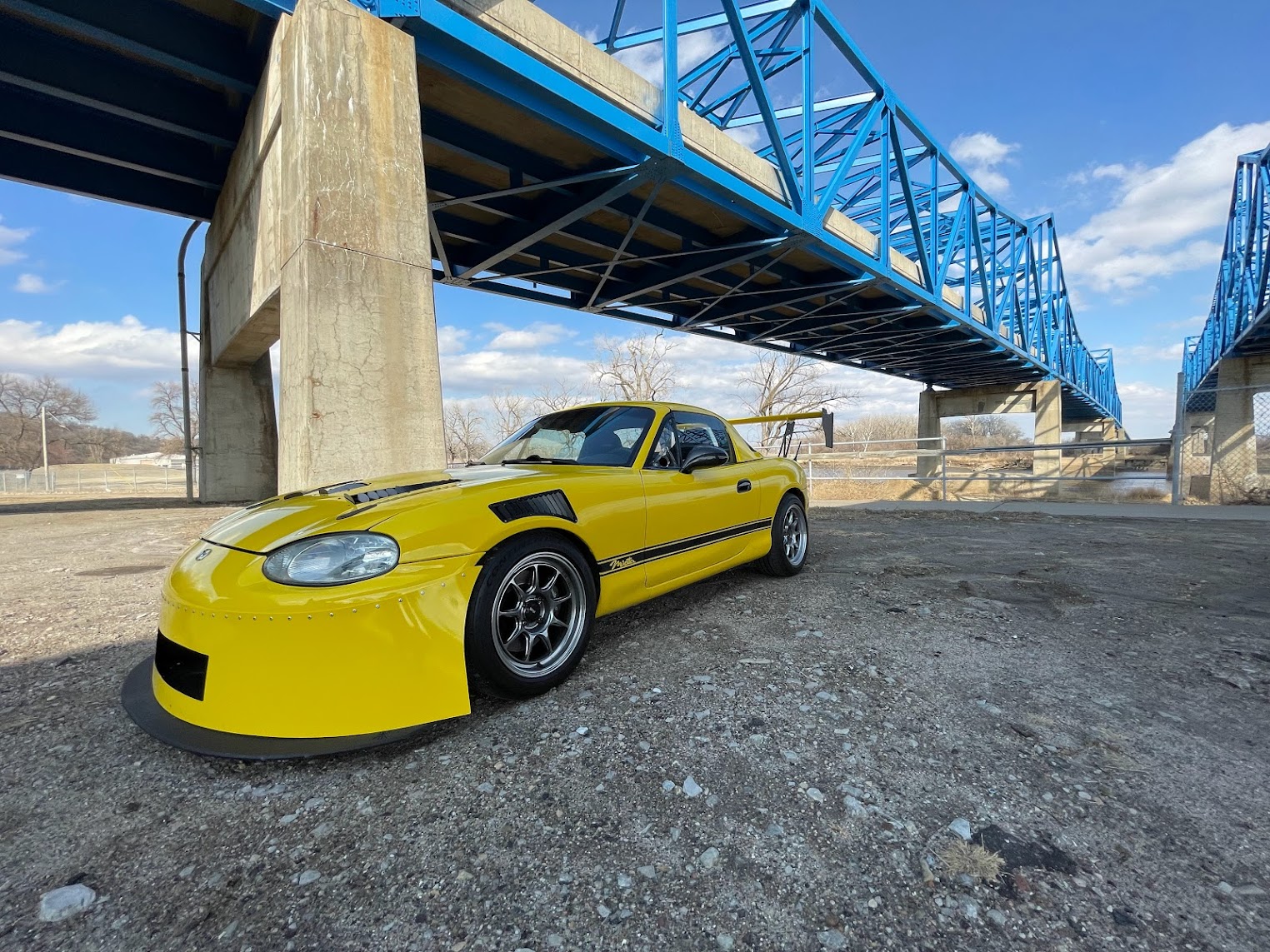
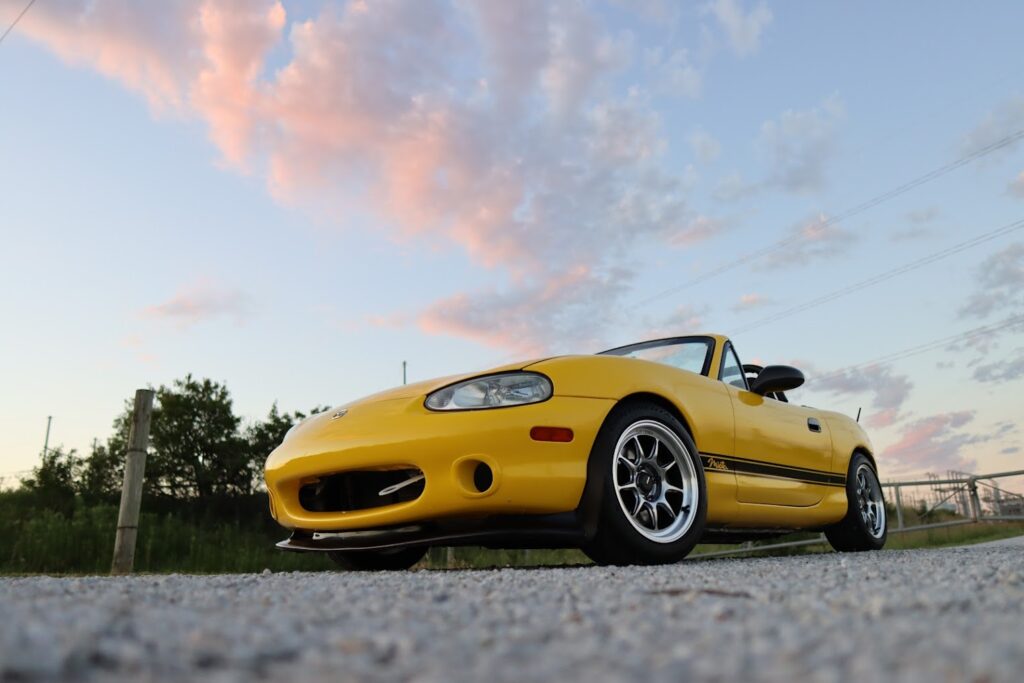
The final major performance enhancement of the winter build cycle was completed in February 2023 with the installation of a Nine Lives Racing Medium Downforce aerodynamic kit, purchased during the company’s preceding Black Friday promotional event. The package included a single-element aluminum rear wing mounted directly to the structural load paths of the trunk lid, complemented by matching front splitter and chassis undertray elements. Because the vehicle competes in classes such as SCCA XS-B—which permits off-the-shelf aerodynamic modifications—the hardware remains permanently installed for both street and track use.
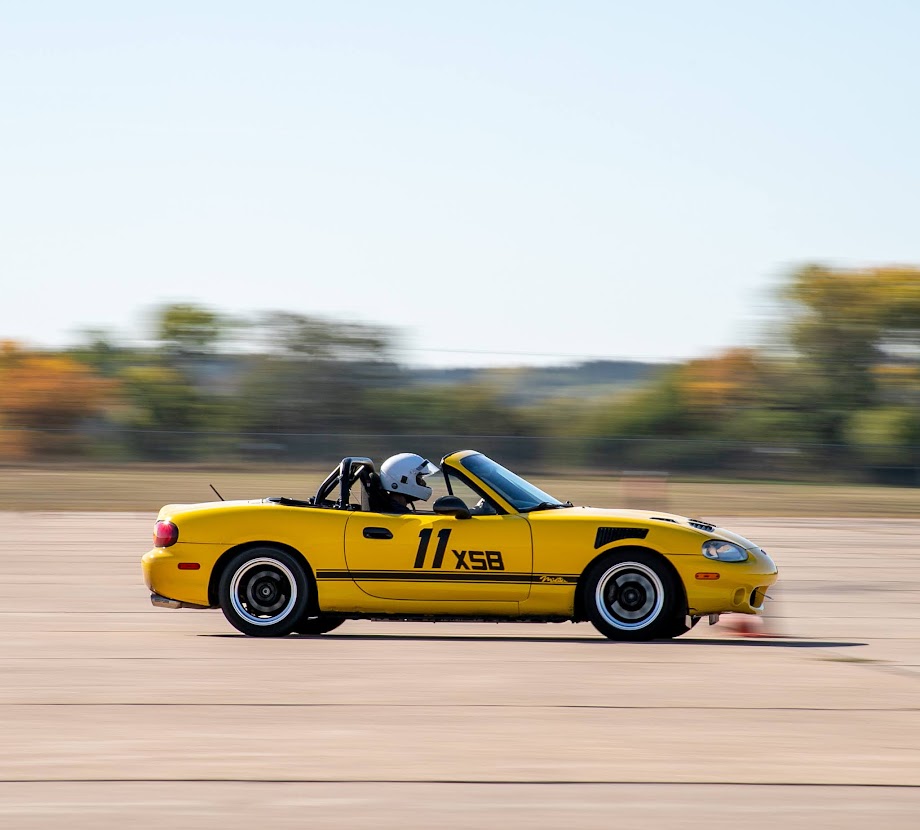
Street and initial testing evaluations revealed a transformative improvement in high-speed vehicle dynamics. Whereas the stock NB chassis historically exhibited noticeable aerodynamic lift and high-speed directional instability at elevated speeds, the integration of the Nine Lives Racing downforce package produced a planted, stable high-speed envelope. Furthermore, empirical testing indicated no measurable drag-induced deficit in straight-line acceleration capacity, confirming that the downforce-to-drag ratio achieved by the kit optimizes overall circuit efficiency.
Summary of Project Status
Entering its third year of ownership in March 2023, the NB Mazda Miata project stands as a fully developed amateur racing platform. Through two consecutive years of methodical mechanical iteration, data-driven suspension tuning, systematic powertrain enhancements, and the adoption of professional-grade safety and aerodynamic hardware, the vehicle has evolved from a tired street car into a highly capable time-attack and autocross competitor. Future operational plans involve expanding participation in regional sanctioning bodies such as NASA Central Region and the Sports Car Club of America, with continued telemetry analysis targeted at further reducing circuit lap times.