 Farhan hamdan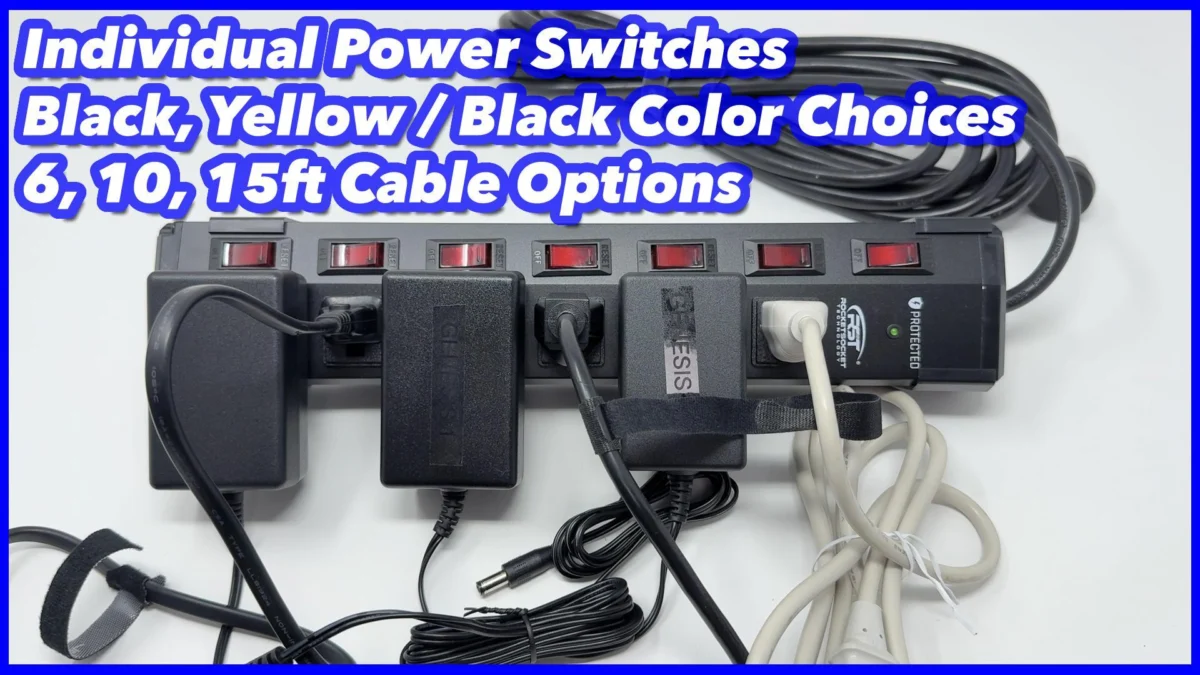
Power management has long remained one of the most persistent logistical hurdles for retro gaming enthusiasts, collectors, and hardware preservationists. As enthusiasts accumulate hardware spanning multiple generations—from the original Nintendo Entertainment System and Sega Genesis to the PlayStation 2 and original Xbox—they are routinely confronted by a tangled labyrinth of bulky alternating current adapters, commonly referred to as power bricks. Unlike modern consumer electronics, which typically rely on standardized USB power delivery or slim line cords, older hardware frequently utilizes oversized transformer blocks designed decades ago. These legacy power supplies often block adjacent outlets on standard commercial power strips, rendering multi-plug configurations inefficient and frustrating.
Addressing this enduring hardware management challenge, a newly evaluated hardware solution has emerged that combines heavy-duty industrial construction with individual outlet switching and optimized spacing. The CRST 6-outlet metal power strip offers a purpose-driven configuration designed to accommodate oversized transformer blocks while providing granular control over individual hardware components. This hardware review examines the structural design, utility, and broader implications of implementing industrial-grade power distribution within specialized electronic and vintage computing environments.
Design Specifications and Structural Integrity
Constructed from robust, industrial-grade metal housing, the CRST power strip is engineered to withstand rigorous environments ranging from permanent entertainment center installations to active electronics workbench setups. Unlike the lightweight thermoplastic enclosures commonly found in consumer-grade retail surge suppressors, the metallic chassis of the CRST unit offers superior durability, enhanced heat dissipation, and improved resistance to physical impact.
A critical engineering consideration for retro gaming setups is physical spacing. Standard power strips typically feature closely aligned receptacles that accommodate narrow, two-prong plugs but fail when presented with wide transformer blocks. The CRST model addresses this spatial limitation by utilizing an outlet orientation and spacing layout that permits the insertion of larger power bricks, provided users alternate the orientation of the plugs. Furthermore, the receptacles are manufactured to maintain a secure, snug fit without exhibiting excessive resistance, striking a balance between long-term connection stability and the frequent plugging and unplugging characteristic of test benches and experimental workspaces.
In addition to the master power toggle, the unit features individual illuminated rocker switches for each of the six outlets. This granular level of control enables operators to isolate specific consoles or peripheral devices without disconnecting the primary power source or disrupting neighboring hardware. The unit is made available in multiple color configurations and varying cable lengths to accommodate diverse spatial layouts within media rooms and laboratories.
Chronology and Background of the Search for Retro Power Solutions
The demand for specialized power distribution units within the retro gaming community has escalated steadily alongside the vintage hardware market. Nearly a year prior to the introduction of the CRST unit, community interest surged following the evaluation of a 12-outlet metal power strip. While that high-capacity unit garnered significant attention from collectors managing extensive hardware libraries, it simultaneously exposed a widespread consumer grievance: the complete absence of individual outlet switches and the restrictive nature of fixed-interval receptacle spacing.
In the months following the initial 12-outlet evaluation, ongoing hardware investigations revealed a notable gap in the consumer market. Standard industrial power strips frequently offered individual switches but suffered from cramped receptacle configurations that made utilizing more than two or three legacy power bricks impossible. Conversely, wide-spaced power strips rarely incorporated individual toggle switches, forcing users to rely on a single master switch that powered an entire array of sensitive electronic equipment simultaneously.
The discovery and subsequent testing of the CRST 6-outlet configuration represent the culmination of a protracted search for a balanced intermediary device. By merging individual switching capabilities with a layout optimized for bulky transformers, the hardware successfully bridges the divide between heavy-duty industrial power management and the specific spatial demands of vintage electronics preservation.

Safety Considerations: Power Strips Versus Surge Protectors
When integrating high-density power distribution systems into vintage electronic environments, technical analysts emphasize the fundamental distinction between standard power strips and dedicated surge protection devices. The CRST unit functions primarily as a power distribution and switching strip rather than an advanced multi-stage surge suppressor equipped with Metal Oxide Varistors (MOVs) or transient voltage suppression architecture.
Within professional audio-visual and retro computing communities, reliance on basic power distribution units is often a deliberate operational choice. Vintage power supplies, particularly linear power transformers utilized in hardware from the 1970s, 1980s, and 1990s, can occasionally exhibit unique electrical interactions with complex surge suppression circuitry. Furthermore, many preservationists adhere to strict operational safety protocols by manually cutting power to all peripheral devices via physical switches or by completely unplugging equipment arrays when not actively in use. This practice mitigates potential risks associated with prolonged standby current draw, capacitor degradation, and unexpected electrical anomalies originating from municipal power grids.
Consequently, users evaluating the CRST power strip are advised to assess their specific electrical infrastructure requirements. For environments where comprehensive lightning and transient surge protection is mandatory, upstream industrial-grade surge protection devices or dedicated Uninterruptible Power Supply (UPS) units should be integrated into the electrical chain prior to the distribution strip.
Broader Industry Implications and Collector Impact
The introduction and favorable reception of specialized power management hardware underscore a broader trend within the niche technology and retro gaming sectors. As vintage hardware transitions from casual nostalgia to recognized technological heritage, the infrastructure supporting its operation has evolved accordingly. Collectors and archivists are increasingly migrating away from flimsy, mass-market retail accessories in favor of commercial-grade solutions designed for longevity, safety, and mechanical reliability.
The practical implications of utilizing a modular, switchable power strip extend beyond mere convenience. Managing multi-console setups often involves complex signal chains, video switchers, audio processors, and upscalers that are sensitive to ground loops and power sequencing. By enabling operators to selectively power on individual consoles—such as turning on a single Sega Saturn or Sony PlayStation while leaving adjacent systems entirely unpowered—users can minimize unnecessary thermal wear on aging electronic components and reduce electromagnetic interference across shared video routing equipment.
Furthermore, the adoption of metal-enclosed power distribution units addresses growing safety consciousness within domestic and studio environments. Plastic enclosures subjected to continuous electrical loads over extended periods can experience thermal degradation. The metallic housing of units like the CRST power strip provides an added layer of thermal management and physical containment, aligning with best practices for high-density electronic installations.
Conclusion
The evaluation of the CRST 6-outlet metal power strip highlights a practical solution to a long-standing physical and electrical challenge for retro gaming enthusiasts and hardware hobbyists. By successfully combining individual outlet toggles, robust metallic construction, and a spatial layout capable of accommodating legacy transformer blocks, the unit fulfills a distinct operational niche. While consumers must remain cognizant of the functional differences between switched power distribution and comprehensive surge protection, the hardware offers a reliable, structured approach to managing complex, multi-device electronic environments. As the vintage computing and gaming preservation community continues to expand, the availability of purpose-built infrastructure components will remain a vital element in maintaining and protecting historical technology.