Jia Lissa
The transition from the 16-bit era to the next generation of hardware remains one of the most scrutinized chapters in the history of the video game industry. Central to this period was Sega, a company that commanded the global market with its Genesis console while simultaneously grappling with the internal pressures of a decentralized corporate structure. Recent insights from former executive Mike Fischer, who held roles at both Sega of America and Sega of Japan, offer a rare, first-hand account of the company’s operations between 1990 and 1997, shedding light on the cross-continental tensions and strategic decisions that defined the decade.

The Early 1990s: A Period of Rapid Expansion
In April 1990, the landscape for Sega was rapidly evolving. The Mega Drive (known as the Genesis in North America) had established a foothold in the United States, but the Japanese market remained a different battleground. Fischer, who joined the company as an entry-level employee in the Overseas Consumer Products Business Division, witnessed the company’s transition from a niche arcade manufacturer to a global consumer electronics giant.

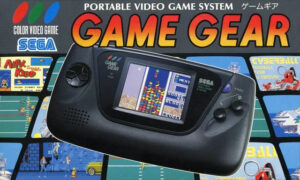
The division’s primary objective was the dissemination of hardware and software to international subsidiaries, a task complicated by the lack of modern digital infrastructure. Communication relied heavily on faxes and physical shipments of ROM prototypes. During this formative time, Sega launched the Game Gear, a handheld device intended to challenge the dominance of Nintendo’s Game Boy. While critics often highlight the Game Gear’s battery consumption and physical bulk, historical sales data suggests that the platform was a significant revenue generator, supported by a vast library of Master System ports that allowed Sega to maximize its R&D investment.
Cultural Friction and the Role of Management
A persistent theme in the history of Sega is the perceived rivalry between the Japanese headquarters and the American subsidiary. However, accounts from former employees suggest the friction was less about overt sabotage and more about fundamentally different corporate philosophies. Sega of Japan, led by figures like Hayao Nakayama, operated with a focus on arcade-to-home conversions and technical innovation. Conversely, Sega of America, under the leadership of Tom Kalinske, prioritized aggressive marketing, localizing titles to appeal to Western tastes, and establishing deep retail relationships with chains like Toys "R" Us.
Fischer notes that this dynamic was not a zero-sum game but a result of disparate market realities. By the mid-90s, the Mega Drive had largely plateaued in Japan, while the Genesis continued to enjoy high penetration in North America. When Nakayama pushed for aggressive growth targets, the disconnect between these markets became pronounced. Despite the friction, Nakayama’s respect for the American team’s autonomy allowed for successes such as the Sonic the Hedgehog franchise, which utilized Western design sensibilities to challenge the market dominance of Nintendo’s Mario.
Technical Challenges and the Saturn Era
As the industry shifted toward 32-bit hardware, the development of the Sega Saturn introduced new complexities. Unlike the Motorola 68000 chip, which had powered the Genesis with significant efficiency, the Saturn’s architecture—reliant on a Hitachi processor—proved difficult for many developers to master. This led to a dearth of high-quality third-party titles at launch, a critical disadvantage in the competition against the burgeoning PlayStation.
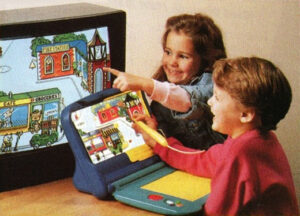
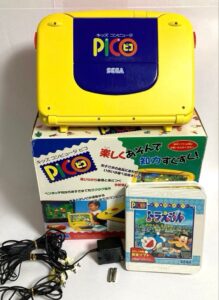
Fischer, who transitioned into the toy division to work on the Sega Pico, observed these technical hurdles from the periphery. He recalls instances where design choices, such as the use of sparkly plastic in manufacturing, failed to translate into high-quality production, serving as a microcosm for the broader disconnect between hardware design and manufacturing viability. The Saturn’s struggle was compounded by the fact that the company’s internal teams were often working in silos, with little cross-pollination between the arcade and console divisions until late in the product lifecycle.
The Pivot to Software-Only Operations
The eventual decline of the Dreamcast and Sega’s subsequent decision to exit the hardware market in 2001 marked the end of an era. The transition to a third-party developer required a complete restructuring of the company’s business model. Fischer, who briefly left the company to work at Namco before returning during this transitional phase, highlights the importance of rebuilding relationships with former rivals.
The strategic shift involved securing multi-platform development contracts with Sony and Nintendo, a move that would have been unthinkable a decade earlier. The cooperation between these entities was necessitated by the shifting economics of the industry, where the costs of hardware development had become prohibitively expensive for a single entity to sustain without a massive, captive install base.
Strategic Implications and Modern Perspectives
Today, under the leadership of Shuji Utsumi, Sega is navigating a new phase of growth, focusing on the revitalization of its extensive intellectual property portfolio. Fischer characterizes Utsumi as a decisive leader capable of balancing the company’s storied past with the demands of the modern market. The success of the Yakuza (Like a Dragon) series stands as a primary example of how Sega can innovate by blending traditional storytelling with contemporary gameplay mechanics.

Reflecting on the industry, Fischer notes that the current challenges facing Sega are not unlike those of the 1990s: the need for clear communication, the importance of fostering new creative talent, and the ability to pivot when market trends shift. The reliance on legacy IP, while beneficial for brand recognition, must be tempered by a willingness to experiment, as evidenced by the success of community-driven projects like Sonic Mania.
Legacy and Oral History
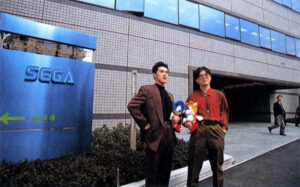
The preservation of Sega’s corporate history remains an ongoing endeavor. For many former employees, the experience of working at Sega was defined by a unique, albeit turbulent, creative environment that empowered individuals to take ownership of global projects. The documentation of these experiences serves as a vital resource for scholars and gaming historians, ensuring that the lessons learned from the transition between the 8-bit, 16-bit, and 32-bit eras are not lost.
As the industry moves toward a future dominated by digital distribution and cloud-based gaming, the foundational strategies employed by Sega in the early 1990s continue to provide a framework for understanding the complexities of global entertainment corporations. The evolution from a hardware-centric model to one driven by software innovation and IP licensing represents one of the most successful, if challenging, pivots in business history. The insights provided by figures like Fischer, who stood at the intersection of these cultural and technological shifts, remain essential for understanding how a single company shaped the childhoods of a generation and the trajectory of an entire industry.