Arya Paningal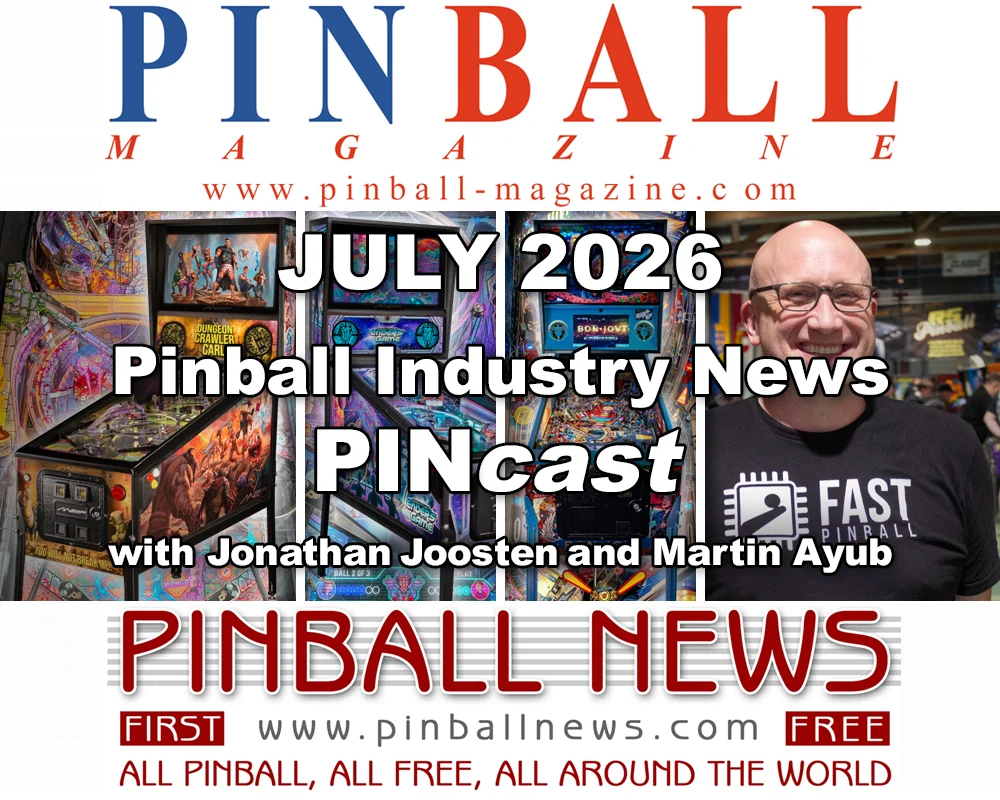
The mid-summer period of 2026 has proven to be an unprecedented season of activity within the global pinball manufacturing sector. Rather than the traditional summer slump often associated with the industry, this July has been defined by a flurry of product launches, factory expansions, and strategic manufacturing partnerships. As detailed in the latest edition of the Pinball Industry News PINcast, hosted by Martin and Jonathan, the landscape of modern pinball is evolving rapidly, driven by a combination of high-profile licensing agreements and technical innovations in playfield hardware.
The Multimorphic Double Feature: Innovation in P-ROC Architecture
Multimorphic, the Texas-based manufacturer renowned for its P3 modular pinball platform, initiated a significant shift in market momentum this month by simultaneously announcing two distinct titles: Dungeon Crawler Carl and Ender’s Game. This dual release strategy represents a departure from traditional industry release cycles, which typically space out major product debuts to maximize marketing impact.
Both titles leverage the same core physical gameplay architecture, yet the implementation differs drastically in terms of software, rule sets, and sensory feedback. Central to both games is a sophisticated, large-format rotating disk assembly. This hardware integration, complemented by an array of over 180 individually addressable RGB LEDs, allows for dynamic lighting patterns that synchronize with the game’s logic.
In an exclusive interview with the PINcast team, Multimorphic head Gerry Stellenberg explained that the shared platform allows for rapid iteration and a reduction in development time, while Co-Creative Director Stephen Silver noted that the distinction between the two games is rooted in the narrative immersion provided by the artwork, crafted by designer Brad Albright. The Dungeon Crawler Carl license, in particular, signals a pivot toward modern literary and pop-culture franchises that command high engagement from younger demographics, while Ender’s Game targets a broader science-fiction audience.
Barrels of Fun Enters the Rock and Roll Arena
Following the Multimorphic announcement, fellow Texas manufacturer Barrels of Fun solidified their presence in the market by unveiling their fourth title, Bon Jovi. Limited to a production run of just 700 units, the machine is positioned as a collector-focused asset. The game features the proprietary “Shot Through The Heart” playfield mechanism—a design element that has garnered significant attention for its mechanical complexity and tactile feedback.
The release of Bon Jovi comes on the heels of its premiere at the Southern Fried Gaming Expo, where early playtesters provided generally positive feedback, particularly regarding the unconventional outlane ball-save device. In his discussion with Jonathan, David Van Es, Barrels of Fun’s Chief Mischief Maker, highlighted that the reception of the game has been a critical litmus test for the company’s “Barrels Reserve” membership program. The sales trajectory for this title is being closely monitored by industry analysts to determine if band-based licenses can continue to drive premium-tier pricing in an increasingly competitive market.
Strategic Consolidations and Production Milestones
While new titles dominate headlines, established manufacturers are focusing on production efficiency and supply chain vertical integration. American Pinball has officially entered the final production phase of its Galactic Tank Force title, capping the run with a 100-unit “Victory Edition.” This final iteration serves as a platform for the company’s new partnership with The Art of Pinball. Under this exclusive agreement, The Art of Pinball will supply specialized sculptural elements for current and future machines, a move that suggests a trend toward higher-quality, aftermarket-style aesthetics being integrated directly into factory-standard units.

Simultaneously, Turner Pinball has reached a critical juncture in the development of its Yukon Yeti title. The manufacturer has finalized its comprehensive sound package, which is essential for the initial shipments currently being distributed to early-access buyers. Beyond the product itself, Chris Turner has confirmed that construction of a new, purpose-built manufacturing facility is underway. This expansion is indicative of the capital investment currently flowing into the sector, as small-to-mid-sized manufacturers scale operations to meet a post-pandemic surge in consumer interest.
Industry Trends and Technical Evolution
The broader implications of these developments suggest a maturing industry. The focus is no longer solely on the playfield design, but on the integration of software updates that extend the life cycle of the hardware. Across multiple manufacturers, developers are pushing out extensive firmware patches designed to address legacy bugs and introduce new, complex rulesets. This "live-service" approach to pinball maintenance ensures that machines remain relevant long after their initial purchase date, protecting the investment value for collectors.
Furthermore, the integration of non-pinball-specific talent—including professional audio engineers and digital artists from outside the traditional arcade sphere—is resulting in a higher production value for modern machines. This is evidenced by the deep-dive interviews conducted for the July PINcast, which highlighted that manufacturers are prioritizing narrative coherence and thematic depth over simple high-score mechanics.
The State of Homebrew and Community Contributions
A recurring theme in the latest PINcast is the symbiotic relationship between professional manufacturers and the homebrew community. Martin’s interview with Aaron Davis of FAST Pinball underscores the importance of the homebrew sector as an incubator for talent and technology. The discussion touched upon the state of DIY pinball development, noting that many of the features now considered "industry standard"—such as sophisticated LED lighting controllers and modular board architectures—were first popularized by independent developers.
This collaboration is vital for the sustainability of the industry. As manufacturers face the challenges of rising component costs and complex supply chain logistics, the ability to source talent and innovative ideas from the community remains a distinct competitive advantage. The segment titled "What’s Cooking, with…?" serves as a reminder that the industry, while professionalizing, maintains a grassroots culture that values transparency and community engagement.
Future Outlook
The outlook for the remainder of 2026 remains bullish. With several manufacturers finalizing their year-end release schedules and others beginning to tease projects for 2027, the pace of innovation shows no signs of decelerating. The shift toward higher-quality hardware, combined with the professionalization of game development teams, suggests that the market for high-end pinball machines is shifting from a niche hobbyist segment toward a broader luxury entertainment category.
For enthusiasts and stakeholders, the July 2026 edition of the PINcast provides a comprehensive summary of these shifts. Whether it is the expansion of manufacturing footprints in Texas or the debut of high-concept licensed games like Dungeon Crawler Carl, the industry is clearly in a phase of aggressive growth. The challenge for these companies in the coming quarters will be to maintain this momentum while navigating potential economic headwinds and the increasingly high expectations of a global collector base.
Listeners are encouraged to access the full interview transcripts and technical analyses through the official Pinball Industry News portal or via the Spotify podcast feed. As the industry continues to move at a rapid pace, these monthly briefings serve as an essential resource for tracking the evolution of one of the world’s most enduring forms of mechanical entertainment. The combination of hardware, art, and software innovation currently being witnessed suggests that the pinball industry is entering a "golden era" of technical refinement, one that will likely set the standard for the next decade of arcade design.