Jia Lissa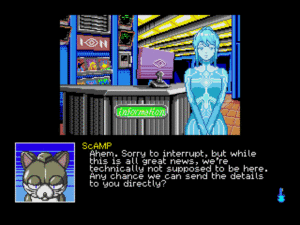
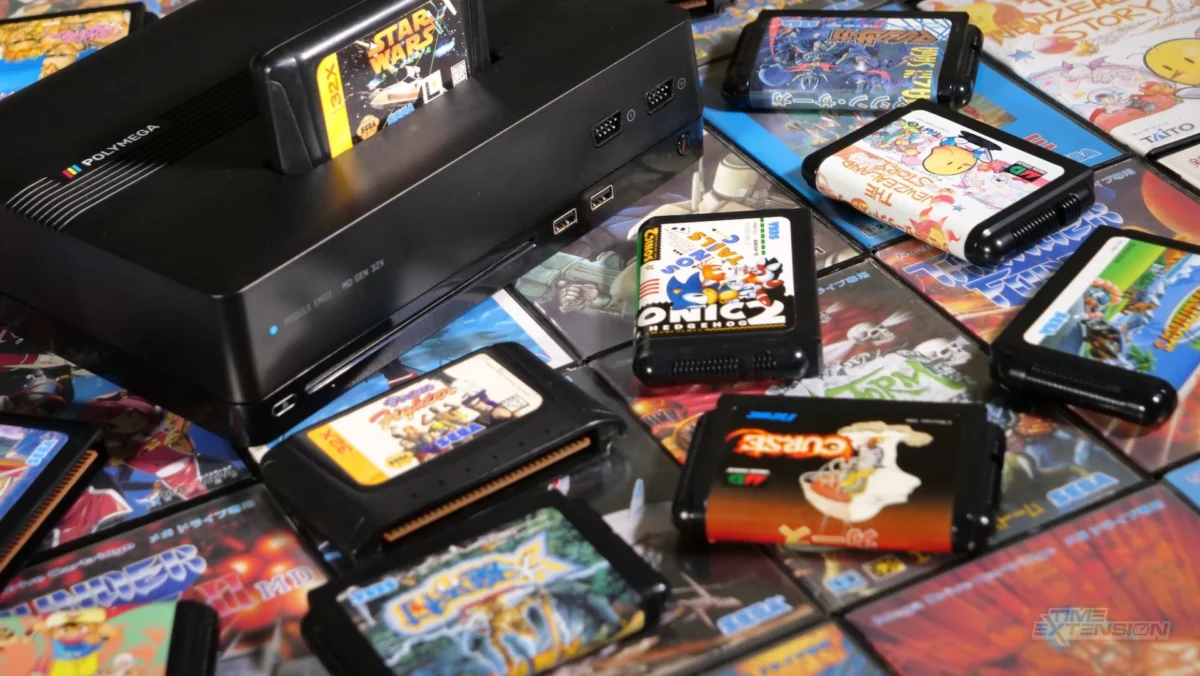
The Sega CD remains a landmark platform for the graphic adventure genre, having played host to definitive titles such as the cyberpunk noir masterpiece Snatcher and the satirical, high-seas humor of The Secret of Monkey Island. While the standard Sega Genesis (Mega Drive) hardware was historically viewed as a domain dominated by high-octane action games and platformers, a shift is occurring within the homebrew and indie development community. Pixel Pusher Games is currently spearheading this evolution with the development of Chords, a narrative-driven adventure designed specifically for the cartridge-based Genesis architecture. By pushing the boundaries of what the 16-bit console can achieve, the studio intends to deliver a cinematic experience that challenges the long-held assumption that high-fidelity storytelling is the exclusive purview of CD-ROM media.
The Genesis of a New Narrative Experience
The project, led by developer Matt, represents a technical and creative effort to bring the "graphic adventure" experience to a platform that historically lacked a deep library in the genre. Graphic adventures, which rely heavily on menu-driven interaction, detailed environmental assets, and branching dialogue trees, typically require significant storage space for assets. By optimizing data compression and leveraging advanced programming techniques, Pixel Pusher Games is attempting to replicate the depth of Hideo Kojima’s Snatcher—a game that served as a foundational inspiration for the project.
However, Chords is not merely an homage; it is a standalone title. The game’s narrative follows Akio, a protagonist navigating a competitive, high-stakes global battle-of-the-bands tournament. As the story unfolds across three distinct acts, players must peel back the layers of a corporate-led conspiracy that threatens to manipulate the music industry for darker purposes. The project is currently being developed for both the Sega Genesis and modern PC platforms, with the former serving as a rigorous test of the game’s technical efficiency and design philosophy.
Chronology and Technical Development
The development lifecycle of Chords has been characterized by a commitment to the aesthetic and functional constraints of 1990s hardware while integrating modern narrative pacing. Over the past several years, the team has focused on establishing a "seamless" narrative flow. The current internal build—which was recently made available for preview—demonstrates a sophisticated level of interaction.
In terms of scale, the game is designed to be substantial. Preliminary data from the development team suggests a single playthrough of the first chapter alone can take approximately 45 minutes for a speed-run, with the full, three-act experience expected to offer several hours of gameplay. This level of content is significant for a cartridge-based game, which must operate within the strict memory constraints of the Genesis hardware without the benefit of streaming audio or video data from a disc.
Design Philosophy and Gameplay Mechanics
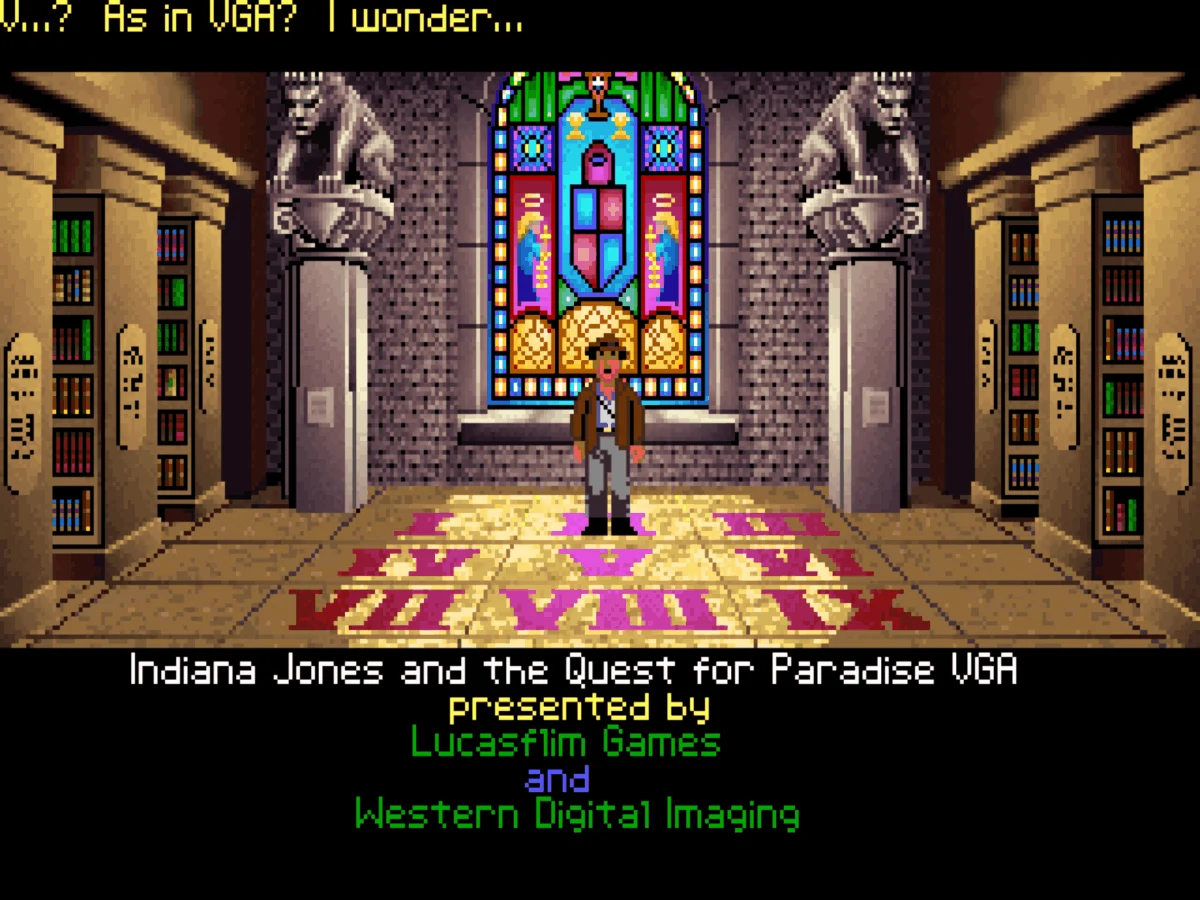
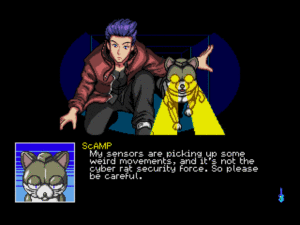
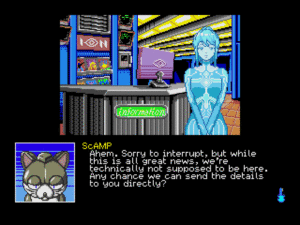
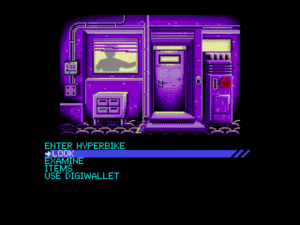
At its core, Chords employs a classic command-based interface—utilizing options like "Move," "Look," "Talk," and "Use"—to facilitate player agency. Unlike many modern iterations of the genre that favor automated puzzle solving, Chords adheres to a more traditional, logical approach. Players are required to synthesize information gathered during conversations with subtle visual cues hidden within the game’s 16-bit environments.
The team has emphasized that the game’s difficulty is rooted in observational rigor rather than arbitrary trial-and-error. The developers note that items, posters, and environmental details often contain the keys to progress, rewarding the player for thorough investigation. This design choice is intended to mirror the "cinematic storytelling" approach popular in the early 1990s, where the world-building is conveyed through environmental details as much as through written dialogue.
Artistic Collaboration and Global Accessibility
The visual and auditory identity of Chords is a result of strategic collaboration between established figures in the retro-gaming development scene. The art direction is spearheaded by Daniel "108 Stars" H., whose portfolio includes work on the critically acclaimed Pier Solar and the Great Architects. The 16-bit pixel art is designed to capture a specific atmospheric tone, utilizing the Genesis color palette to create distinct, immersive locations that reflect the game’s musical theme.
Complementing the visuals is an original chiptune score composed by SuperJet Spade. The music is intended to serve as a narrative anchor, shifting in tone to reflect the emotional beats of Akio’s journey. Furthermore, in an effort to reach a global audience, Pixel Pusher Games has committed to multi-language support. At launch, the game will be available in English, French, German, Spanish, and Portuguese, a move that recognizes the enduring, international popularity of the Sega Mega Drive console.
Industry Implications and Broader Context
The emergence of games like Chords indicates a maturation within the retro-gaming market. For decades, the Genesis library was viewed through a lens of limited genres; however, the recent surge in high-quality homebrew titles—ranging from modern shooters to complex RPGs—has forced a re-evaluation of the console’s potential.
From an industry standpoint, the success of such projects serves as a testament to the longevity of 16-bit hardware. By demonstrating that narrative-dense experiences can exist on cartridge media, Pixel Pusher Games is challenging the technical hegemony of early 90s CD-based consoles. This trend is likely to continue as more developers leverage modern tools to port and optimize software for the Genesis.
Furthermore, the studio’s simultaneous work on the dungeon crawler Crypt of Dracula highlights a broader commitment to diversifying the Genesis library. By moving away from the arcade-style "pick up and play" design and focusing on long-form, interactive fiction, these developers are effectively extending the lifecycle of the hardware by decades.
Future Outlook and Availability
While a definitive release date for the physical and digital editions of Chords has yet to be finalized, the project is entering a phase of refined development. The team at Pixel Pusher Games has maintained an open channel of communication with their community, utilizing platforms like BlueSky to document the iterative process of sprite animation, soundtrack integration, and script testing.
For enthusiasts of the graphic adventure genre, Chords represents a rare bridge between the design sensibilities of the past and the technical capabilities of a modern independent studio. Whether it succeeds in matching the cult status of the games that inspired it remains to be seen, but the current trajectory suggests it will be a significant addition to the Genesis canon. As the title moves toward completion, it stands as a reminder of the enduring power of the 16-bit era to provide compelling, character-driven storytelling. Interested parties are encouraged to monitor the official Pixel Pusher Games website for updates regarding pre-order information, hardware compatibility, and the eventual launch of both the cartridge and digital versions. As development progresses, the industry will be watching closely to see if Chords can indeed hold its own alongside the titans of the Sega CD library.