Farhan hamdan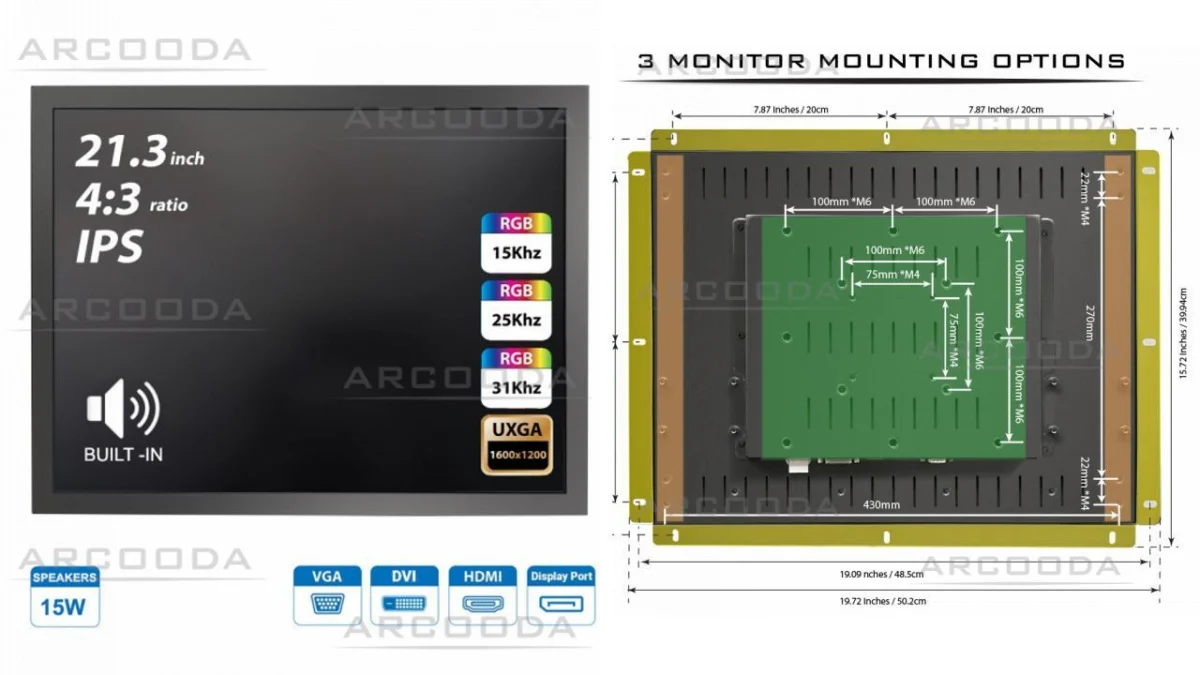
The retro-gaming and arcade restoration hardware market has received a significant update with the official launch of a new 21.3-inch 4:3 aspect ratio LCD monitor by Arcooda. Priced at approximately $800 and currently available for purchase through the manufacturer’s distribution channels, the display introduces several specialized features tailored to both commercial arcade cabinet restorers and enthusiasts of classic home video games. Most notably, this release marks the first time Arcooda has integrated stereo speakers directly into a display within this specialized product category, alongside a native resolution of 1600 by 1200 pixels.
Designed primarily as a modern drop-in replacement for aging cathode-ray tube (CRT) displays in classic arcade cabinets, the new monitor bridges the gap between legacy analog hardware and modern digital input sources. As the availability of functional CRT monitors continues to decline globally, hardware manufacturers have increasingly focused on developing LCD alternatives that can faithfully replicate the geometry, response time, and signal compatibility required by retro hardware without necessitating complex external scalers or custom interface wiring.
Main Technical Specifications and Performance
The newly released 21.3-inch Arcooda panel utilizes a high-tier display matrix that is notably shared with premium, medical- and industrial-grade equipment, such as high-end professional monitors retailing for upward of $1,000. By pairing this top-tier LCD panel with a proprietary, retro-focused control board, Arcooda has engineered the display to handle a vast array of video resolutions natively.
The monitor accepts input signals ranging from standard-definition 240p—commonly output by retro consoles and arcade boards—all the way up to its native 1600×1200 resolution. Signal connectivity includes standard HDMI, VGA, DVI, and DisplayPort inputs, ensuring compatibility with everything from vintage hardware to modern PCs, the MiSTer FPGA platform, and external video processors like the Open Source Scan Converter (OSSC).
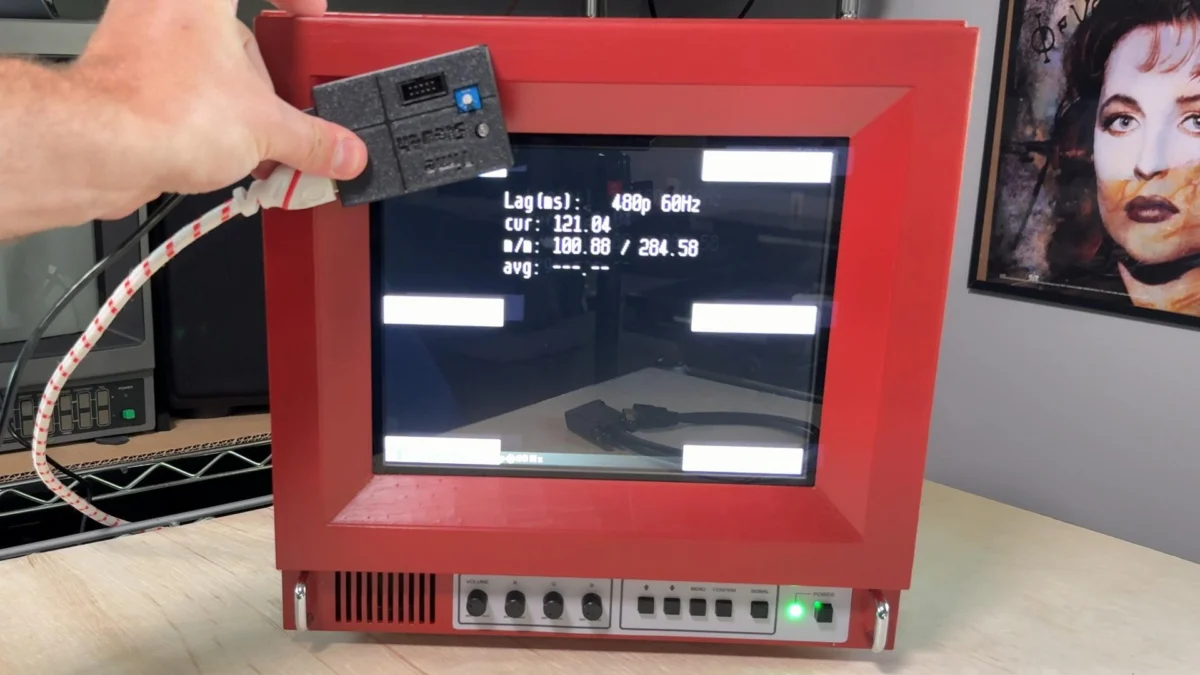
Performance-wise, the monitor maintains the rapid signal processing standards established by Arcooda’s previous 1080p and 4K display iterations. The hardware adds approximately just 1 millisecond of input lag from the moment the image is received to when the panel begins drawing the frame. This ultra-low latency is a critical requirement for authentic retro gaming experiences, where frame-accurate inputs and timing can dictate gameplay responsiveness, particularly in fast-paced fighting games, shoot-’em-ups, and platformers.
Background Context and the Evolution of Arcade LCD Replacements
For decades, cathode-ray tubes remained the undisputed standard for arcade cabinets and retro gaming setups due to their zero native input lag, deep black levels, and natural motion-handling characteristics. However, as CRTs age, they suffer from component degradation, failing flyback transformers, tube burn-in, and high-voltage hazards that require specialized technical expertise to repair. By the late 2010s, the scarcity of replacement tubes created a crisis for commercial arcade operators and private collectors alike.
Early attempts to replace CRT monitors with off-the-shelf consumer LCD panels largely failed to satisfy the retro gaming community. Consumer monitors typically suffer from severe scaling lag, inability to accept 240p or 15kHz RGB signals without expensive external upscalers, and incorrect aspect ratios that force classic 4:3 content to stretch into widescreen formats. Furthermore, mounting a consumer LCD securely inside a curved arcade cabinet chassis often required dangerous, improvised modifications.
Arcooda entered the market to address these specific engineering challenges. By developing custom driver boards capable of direct 15kHz RGB, CGA, and EGA signal processing, the company established a niche in arcade preservation. Over subsequent years, the manufacturer expanded its catalog to include various screen sizes, culminating in higher-resolution 1080p and 4K variants. The introduction of the new 21.3-inch 1600×1200 model represents a strategic refinement, offering an intermediate physical footprint with a native pixel grid that maps cleanly to high-resolution retro content and computer-based arcade boards.

Integration, Pricing, and Cost Analysis
While an $800 price tag places the 21.3-inch Arcooda monitor well above the cost of standard consumer desktop monitors of similar physical dimensions, industry analysts and enthusiasts note that its value proposition must be evaluated within the specialized context of arcade machine restoration.
When replacing a broken CRT in a standard arcade cabinet, traditional methods often require purchasing a generic industrial LCD, a separate video scaler board, custom JAMMA wiring harnesses, and custom metal mounting brackets to secure the panel to the existing chassis. These auxiliary components can quickly accumulate costs that match or exceed the price of an integrated solution, while frequently introducing additional points of failure and perceptible video latency.
Arcooda’s ecosystem mitigates these logistical hurdles. Using a dedicated $15 RGB JAMMA adapter printed circuit board and an appropriate mounting bracket, technicians can wire the display directly into an existing arcade cabinet chassis with minimal friction. This streamlined installation process significantly reduces labor time for commercial operators maintaining public arcade spaces.
Expansion into the Enthusiast Home Market
Beyond commercial arcade repairs, a substantial portion of Arcooda’s customer base comprises home enthusiasts building custom arcade cabinets, home-theater retro gaming rigs, or dedicated 4:3 desktop display stations. Recognizing this demographic shift, the inclusion of integrated speakers in the 21.3-inch model serves as a direct response to consumer feedback.
While dedicated bookshelf speakers or arcade cabinet audio systems will naturally deliver superior acoustic fidelity and volume, the built-in audio capability provides a streamlined, all-in-one solution for compact builds where space is at a premium. Users operating minimalist setups can route audio directly via HDMI or DisplayPort without requiring external amplification hardware.
Furthermore, the choice of a 4:3 aspect ratio remains a crucial selling point. Modern monitor manufacturers have almost entirely abandoned 4:3 panels in favor of widescreen (16:9) and ultrawide formats. Consequently, retro gamers utilizing classic arcade software, vertical-oriented (TATE mode) shoot-’em-ups, or older computer systems face letterboxing and scaling compromises on contemporary screens. A native 4:3 panel eliminates wasted display real estate and ensures geometric accuracy for classic titles without relying on software-based cropping or artificial scaling algorithms.
Industry Implications and Future Outlook
The release of Arcooda’s 21.3-inch display underscores the ongoing maturation of the retro gaming hardware ecosystem. As vintage electronics continue to age past their projected operational lifespans, the preservation of classic gaming culture increasingly relies on modern engineering solutions that mimic or improve upon original performance metrics.
Although manufacturers like Arcooda occupy a specialized, low-volume market segment, their continued research and development into low-latency control boards and native 4:3 panels demonstrate that commercial viability exists for boutique display manufacturing. As high-grade LCD panels become scarcer and more expensive to source, future iterations of retro-compatible hardware may increasingly incorporate advanced FPGA-driven video processing or alternative display technologies to meet the exacting demands of preservationists and competitive players alike.
For the immediate future, the 21.3-inch 1600×1200 display fills a specific gap for builders seeking high-end panel quality, robust input compatibility, and native 4:3 geometry in a compact, low-latency package. Detailed technical demonstrations and stress tests of Arcooda’s underlying drive technology are available via community livestreams and archival video documentation provided by hardware analysts, offering prospective buyers a transparent look at performance metrics prior to purchase.