Farhan hamdan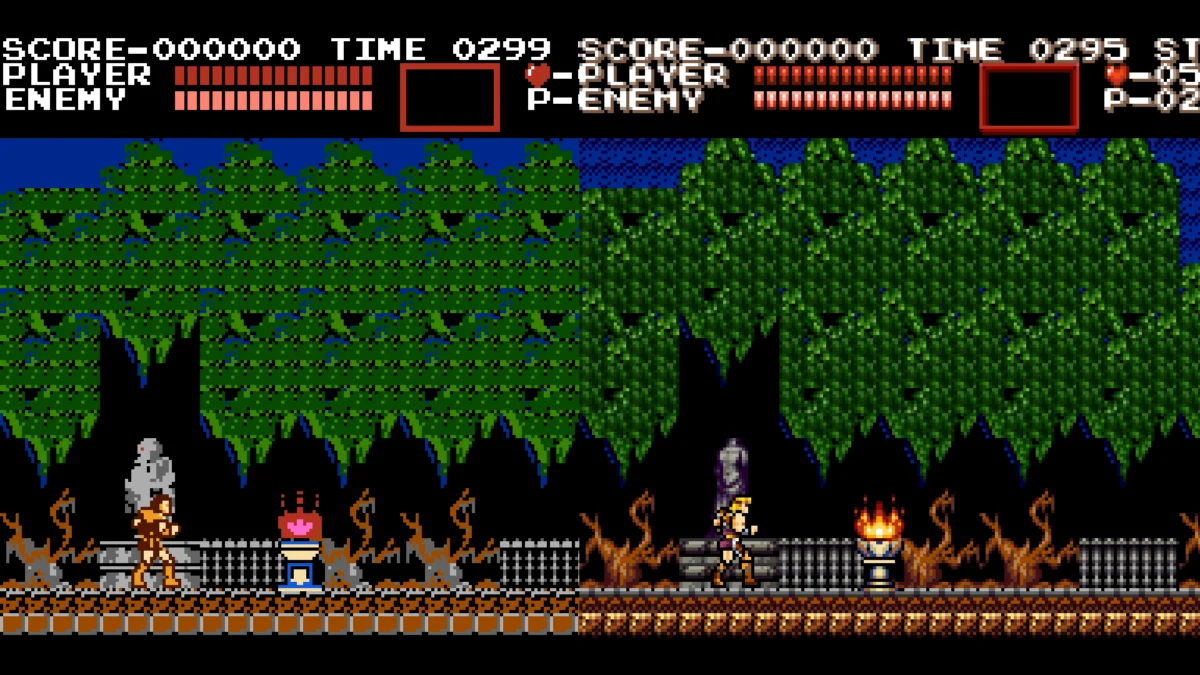
The landscape of retro video game preservation and homebrew development has reached a new milestone as developer Rumbleminze releases a significant update to their ongoing Nintendo Entertainment System (NES) to Super Nintendo Entertainment System (SNES) conversion of the classic 1986 platformer Castlevania. Originally designed to run within the hardware constraints of the 8-bit NES, the newly updated ROM hack now incorporates a comprehensive 16-bit graphical overhaul crafted by artist Fiuke Bnuy. This latest iteration bridges the stylistic gap between the original 8-bit classic and the visual fidelity associated with fourth-generation 16-bit hardware, while retaining the underlying mechanical integrity of Konami’s foundational title.
For decades, the modding and retro-gaming communities have explored the boundaries of classic hardware through reverse engineering, translation projects, and porting efforts. The transition of titles across generational boundaries—specifically from the 8-bit era to the 16-bit era—offers a fascinating look at how classic game design scales when hardware limitations are lifted. Rumbleminze’s conversion project exemplifies this technical pursuit, moving beyond simple emulation enhancements to fundamentally re-engineer how the game interacts with system memory, rendering pipelines, and audio subsystems.
Technical Foundations and Hardware Improvements
To understand the significance of the 16-bit graphical update, one must first examine the baseline improvements established by Rumbleminze’s initial SNES port of Castlevania. The original NES version of Castlevania, while celebrated as a masterpiece of action-platforming design, was infamously constrained by the technical limitations of the Ricoh 2A03 processor and the Picture Processing Unit (PPU). Players of the original cartridge frequently encountered severe technical hurdles, most notably intensive software slowdowns (lag) whenever multiple sprite objects occupied the screen simultaneously, as well as aggressive sprite flickering resulting from the PPU’s hardware limitation of displaying only eight sprites per scanline.
By porting the game code to the SNES architecture, Rumbleminze harnessed the superior capabilities of the 16-bit console’s Ricoh 5A22 CPU and custom picture-processing chips. The resulting conversion effectively eradicates the notorious sprite flicker that plagued the original hardware release. Furthermore, the SNES architecture permits vastly improved memory management, virtually eliminating the frame-rate slowdowns that occurred during chaotic combat sequences, such as battles against multi-part bosses or screens crowded with Medusa heads and flying enemies.

In addition to visual and performance stability, the conversion integrates support for MSU-1 (Media Streaming Unit 1) audio. This custom enhancement chip, originally conceptualized by hardware modder neviksti, allows for the playback of high-quality, pre-rendered CD-quality audio tracks on original SNES hardware via flash cartridges like the FX Pak Pro. Consequently, players can experience Simon Belmont’s legendary trek through Dracula’s castle accompanied by fully orchestrated arrangements of iconic tracks like Vampire Killer and Bloody Tears, moving far beyond the limitations of the NES’s 2A03 programmable sound generator.
The 16-Bit Visual Overhaul by Fiuke Bnuy
The most recent update introduces an entirely optional, yet meticulously crafted, 16-bit aesthetic layer designed by artist Fiuke Bnuy. Moving beyond the standard color palette adjustments typically seen in basic color-correction hacks, Bnuy has reworked individual tiles, environment layouts, and sprite assets to exploit the SNES’s expanded color capabilities.
The SNES video architecture is capable of displaying up to 256 colors simultaneously from a master palette of 32,768 colors, a massive leap over the NES’s restrictive palette limit of 52 concurrent colors. Bnuy’s graphical overhaul capitalizes on this expanded hardware headroom by introducing deeper shading, intricate background details, and smoother lighting gradients across all stages of Dracula’s castle. Bricks, stonework, and gothic architectural elements have been redrawn to evoke the atmospheric richness later seen in true 16-bit entries in the franchise, such as Super Castlevania IV released on the SNES in 1991.
Crucially, the development team recognized that nostalgia plays a critical role in the retro gaming community. To accommodate purists who prefer the stark, high-contrast look of the 1980s original, Rumbleminze and Fiuke Bnuy implemented an in-game option accessible directly from the main title screen. Players can seamlessly toggle between the newly minted 16-bit graphical presentation and the classic NES visuals. Regardless of the graphical mode selected, users retain all underlying performance benefits of the SNES conversion, including the elimination of lag, removal of sprite flicker, and optional MSU-1 audio integration.
Chronology of the Project and Community Reception
The development and refinement of the Castlevania NES-to-SNES conversion reflect a collaborative, iterative process typical of high-level retro homebrew development.

- Initial Conception and Porting: Rumbleminze began investigating the feasibility of moving the NES Castlevania codebase over to the SNES, focusing initially on resolving hardware bottlenecks such as sprite limitations, CPU slowdowns, and audio mapping.
- Release of Baseline Conversion: The functional SNES port was made available to the public, drawing immediate praise from retro enthusiasts, speedrunners, and hardware modders for its flawless performance replication and implementation of advanced audio options.
- Collaboration with Fiuke Bnuy: Recognizing an opportunity to expand the project’s visual scope, Rumbleminze partnered with pixel artist Fiuke Bnuy to design a completely overhauled set of 16-bit assets, tiles, and backgrounds tailored to the SNES color palette.
- Current Update Release: The fully integrated package—featuring both the traditional NES graphics option and the new 16-bit mode—was officially released, accompanied by distribution via standard archival platforms including Internet Archive and Mega.
The community response has been overwhelmingly positive. Retro gaming analysts and preservationists have noted that projects of this caliber demonstrate the enduring viability of classic software, proving that community-driven engineering can breathe new life into decades-old intellectual property without compromising the design ethos of the original creators.
Broader Implications for Retro Game Preservation and Modding
The release of the updated Castlevania conversion highlights a broader trend within the retro video game community: the shift from simple emulation to deep-level source code porting and architectural modernization. For years, improving classic games relied heavily on emulator-specific enhancements, such as run-ahead logic, graphic filtering, and overclocking options applied via software wrappers.
Projects like Rumbleminze’s SNES port, however, operate closer to actual hardware execution, targeting real SNES consoles and high-end FPGA-based hardware emulation devices like the Analogue Super Nt. By adapting the game engine to execute natively within a different generation’s memory map and instruction set, developers preserve the tactile feel of the software while eliminating the artificial constraints imposed by budgetary and technological limits of the mid-1980s.
Furthermore, this release opens conversational avenues regarding the potential adaptation of other foundational 8-bit titles. As mentioned by prominent retro commentators, the successful translation of Castlevania from NES to SNES architecture establishes a technical template that could theoretically be applied to other pillar franchises of the era, such as Nintendo’s own The Legend of Zelda or Metroid. While such projects remain conceptual explorations or community musings, the execution demonstrated in this update proves that the technical groundwork for generational cross-pollination is entirely viable.
The updated ROM patch, along with installation documentation and asset resources, remains publicly accessible via the developer’s designated distribution channels on Internet Archive and Mega, ensuring that preservationists and hardware enthusiasts can continue to study, test, and enjoy this unique intersection of 8-bit design and 16-bit execution.