Farhan hamdan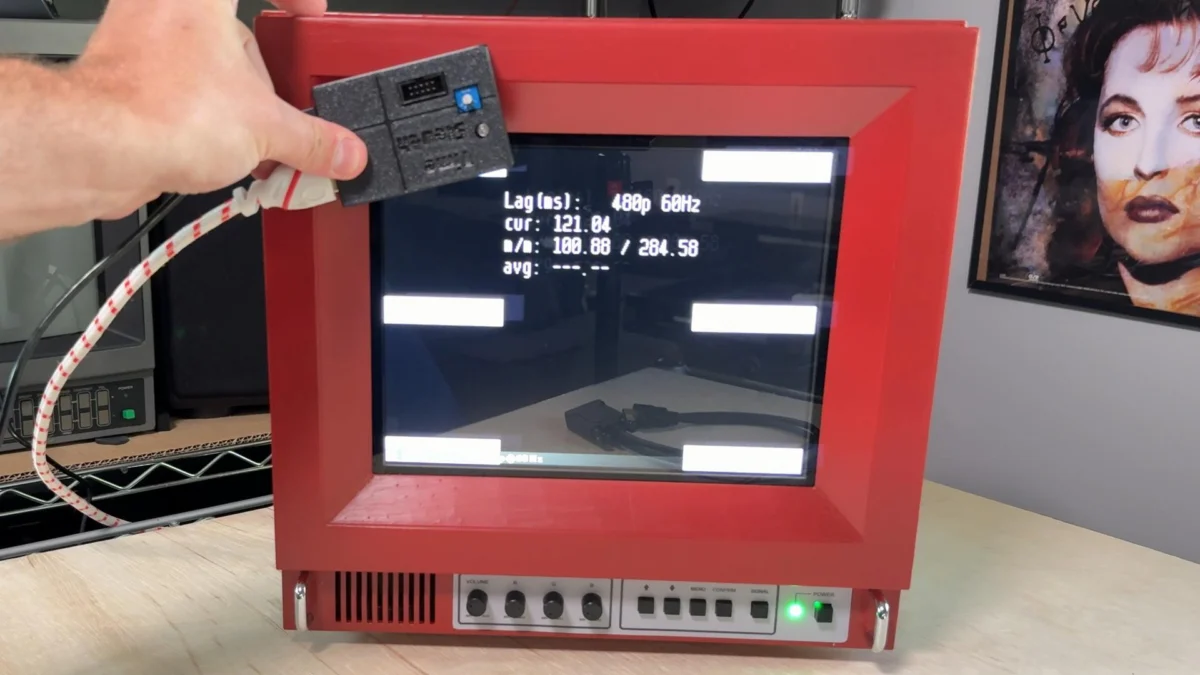
The consumer technology crowdfunding landscape has once again become the epicenter of a high-stakes debate regarding product readiness, prototype testing, and manufacturer transparency. Unico, a company known for niche gaming peripherals, has officially launched a Kickstarter campaign for the Traveller ULW10, a 4:3 aspect ratio, 10-inch LCD monitor styled to resemble a classic Sony PVM (Professional Video Monitor) CRT. Priced at approximately $300, the device aims to capture the nostalgic aesthetic of vintage cathode-ray tube displays while serving modern retro-gaming setups powered by devices such as the MiSTer FPGA or Raspberry Pi via HDMI.
However, pre-release evaluation of the prototype hardware has revealed critical technical shortcomings that threaten to undermine the viability of the project. Review units distributed to industry experts ahead of the crowdfunding launch failed to meet basic functional standards, exhibiting severe input lag and a failure to process legacy video signals. These discoveries have sparked widespread discussions within the retro-gaming community regarding the risks of backing hardware campaigns on platforms like Kickstarter, where financial contributions are legally non-refundable once the campaign concludes.
Chronology of the Review and Prototype Testing
The trajectory of the Unico Traveller ULW10 project took a controversial turn following a sequence of events that began in early July. According to independent reviewers who received early hardware samples, the timeline of communication between the manufacturer and evaluators highlights significant discrepancies between marketing claims and actual hardware performance.
In early July, testing units were offered to prominent hardware reviewers under the impression that the products were in a finished, retail-ready state. The manufacturer noted that configuration could be handled entirely through a web browser without the need for specialized software installation. Reviewers received the hardware on July 24 and initiated diagnostic testing the following day.
Initial benchmarks immediately exposed fundamental engineering flaws. Despite marketing and website specifications boasting "legacy signal support," the monitor proved entirely incapable of accepting 240p or 480i signals across any of its physical inputs. Furthermore, latency testing yielded alarming results, with the display averaging approximately 10 frames of input lag—equating to roughly 120 milliseconds of delay. In the realm of retro gaming, where precise frame-timing is critical for gameplay responsiveness, 120ms of latency renders fast-paced titles virtually unplayable.
Upon discovering these performance bottlenecks, evaluators contacted Unico representatives with empirical proof of the failures, questioning whether the supplied hardware was defective. The manufacturer acknowledged the issues, promised a firmware patch within several days, and requested technical recommendations for lag-testing equipment. Despite multiple follow-up inquiries, no firmware update was delivered.
When the expected August launch window for the Kickstarter campaign passed without an update, observers initially assumed the project had been delayed to allow for a hardware redesign. However, the crowdfunding campaign went live unexpectedly, rapidly accumulating over $100,000 in backing from consumers who remained unaware of the prototype’s critical flaws.
Manufacturer Responses and Engineering Realities
Confronted with the live campaign and the persistence of unaddressed hardware bugs, reviewers pressed the manufacturer regarding the functional status of the devices being funded. Unico representatives maintained that the technical deficiencies would be resolved before the conclusion of the crowdfunding campaign.

When questioned about the feasibility of implementing comprehensive hardware and software fixes within an active campaign window, company representatives indicated that both software engineers and hardware teams were actively working on firmware revisions. Furthermore, the company floated the possibility of substituting the current display panel with an alternative IPS (In-Plane Switching) screen to ensure all issues are permanently rectified. Unico further assured evaluators that a corrected unit would be provided for verification prior to mass production shipments reaching consumer hands.
Industry veterans with decades of experience in product design and manufacturing have expressed skepticism regarding these assertions. Engineering consensus suggests that conducting a complete product redesign—potentially involving new display panels, custom controller boards, and extensive firmware optimization—is extraordinarily difficult to achieve while maintaining a strict delivery timeline. The project currently targets a shipping date of December 2026, a distant horizon that leaves ample room for unforeseen supply chain complications and developmental delays.
Market Context and the Appeal of CRT-Style Displays
The underlying concept of the Traveller ULW10 addresses a genuine demand within the retro-gaming community. Authentic CRT monitors, particularly high-end Sony PVM and BVM units prized for their geometric precision and vibrant color reproduction, have become increasingly rare and expensive collector’s items. Furthermore, traditional CRTs are notoriously heavy, bulky, and require specialized maintenance and technical knowledge to repair aging components.
To bridge this gap, various manufacturers and DIY creators have explored alternative solutions, such as custom-molded LCD enclosures—exemplified by products like LaserBear’s "LCD CRT" kits—which house modern flat-panel displays inside retro-styled shells. These devices do not attempt to replicate the physical mechanics of electron-gun cathode-ray tubes; rather, they offer a lightweight, low-maintenance alternative for enthusiasts wishing to build a themed gaming station.
Market analysts note that the choice of an LCD panel over an OLED alternative is a pragmatic financial decision. While enthusiasts frequently lobby for 4:3 OLED panels to achieve deep black levels and instantaneous pixel response times, small-format 4:3 OLED displays remain prohibitively expensive. Utilizing an LCD panel allows Unico to target a mass-market price point of approximately $300, making the device accessible to a broader demographic of hobbyists.
Broader Implications for Crowdfunded Hardware
The situation surrounding the Unico Traveller ULW10 underscores the inherent risks associated with hardware crowdfunding. Platforms like Kickstarter allow independent and boutique companies to secure capital for niche products that traditional venture capital or corporate financing might overlook. However, the lack of consumer protection mechanisms—specifically the policy that pledges are non-refundable once a campaign closes—places a heavy burden of trust on the backer.
Experts emphasize that while crowdfunding platforms can serve as incubators for innovative technology, consumers must exercise heightened caution when evaluating pre-production prototypes. Reviewers who have analyzed the ULW10 stress that the product is not an intentional scam; the concept is economically viable, competitively priced, and addresses a legitimate consumer desire for aesthetic nostalgia. Nevertheless, the vast gap between prototype performance and production promises highlights the necessity for rigorous, independent verification before financial capital is committed.
Ultimately, the future of the Unico Traveller ULW10 hinges on the manufacturer’s ability to transition from marketing aspirations to concrete engineering execution. If the development team successfully resolves the intractable input lag and delivers functional legacy signal support, the device could carve out a successful niche among retro-gaming enthusiasts. Until those engineering milestones are independently verified, however, prospective backers must weigh the allure of a retro-styled display against the documented reality of its early prototype phase.