Farhan hamdan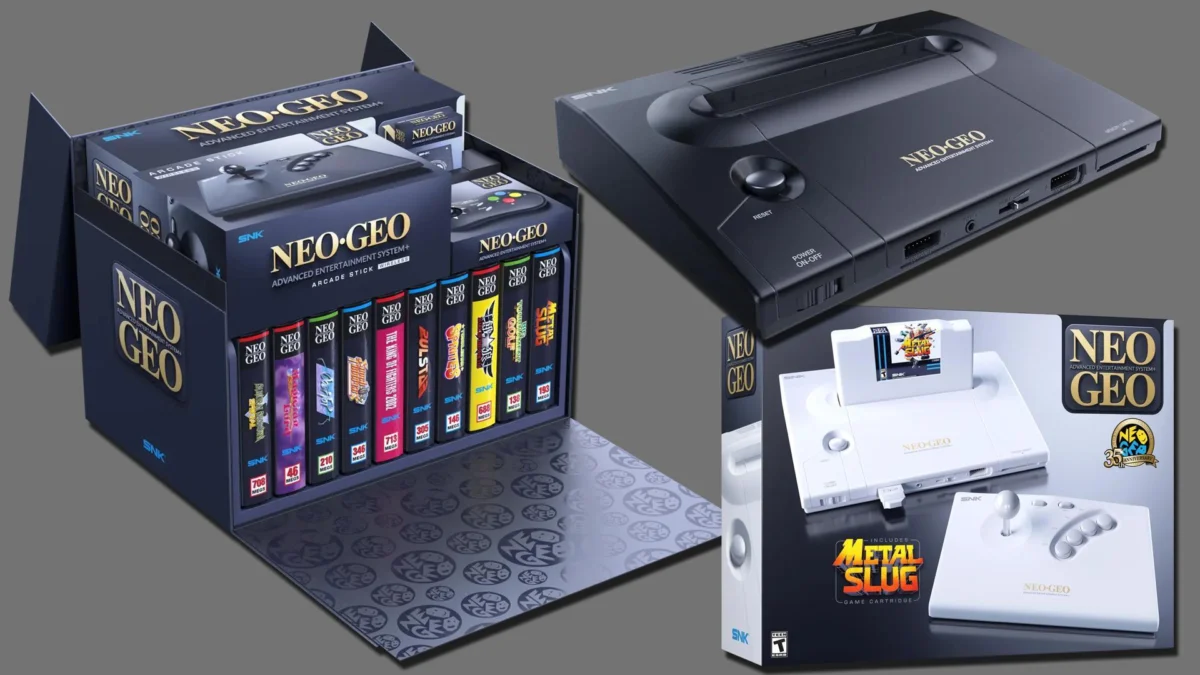
Plaion has officially announced a significant postponement of the highly anticipated Neo Geo AES+ project, pushing its intended release date out by a full year to September 16, 2027. The hardware initiative, which has garnered substantial attention within the retro gaming community for its ambition to deliver an authentic and modernized iteration of SNK’s legendary 16-bit and 24-bit arcade platform, has faced a winding and confusing path toward mass production. Originally teased earlier this year, the timeline has seen multiple adjustments, leaving consumers, retail partners, and industry analysts questioning the logistics behind bringing complex emulation-based hardware to the consumer market.
The Announcement and Confusing Pre-Release Timeline
The latest scheduling update arrived via official communications from Plaion, confirming that the hardware rollout will not meet its initially projected 2026 window. This pivot follows a series of contradictory statements regarding product release schedules that began earlier in the summer. Back in July, initial confusion sparked online when conflicting announcements circulated regarding hardware timelines. While early notices suggested a delay affecting the Neo Geo platform, subsequent clarifications from corporate representatives insisted that the delay pertained to an entirely different hardware line and categorically reaffirmed that the Neo Geo AES+ would successfully hit retail shelves before the end of the year.
This abrupt reversal to a September 2027 release date has introduced a layer of logistical uncertainty for early adopters. Plaion has confirmed that current pre-orders will remain active throughout the extended waiting period. However, consumers seeking to withdraw their financial commitments are being given options to secure refunds. For customers who placed orders through major retailers such as Amazon, standard cancellation procedures apply, allowing buyers to rescind their purchases without penalty. Direct purchases through Plaion’s dedicated portal, plaionreplai.us, require direct customer service engagement to process refund requests, a process that industry observers note could test consumer patience over the coming months.
Analysis of the Original Development Schedule and Red Flags

From the moment the Neo Geo AES+ was first unveiled to the public, industry analysts and hardware preservationists voiced skepticism regarding the feasibility of Plaion’s timeline. When the project was officially announced earlier in the year, the corporate strategy relied on an exceptionally aggressive schedule that aimed to transition from concept to mass-produced consumer hardware within a single calendar year. Crucially, the announcement lacked fundamental prerequisites standard for major hardware launches, such as independent media reviews, comprehensive technical demonstrations, or hands-on reviews of working prototype units.
In the electronics manufacturing sector, transitioning from a conceptual prototype to a brand-new Application-Specific Integrated Circuit (ASIC) production unit is a monumental engineering feat. Even the most established multinational conglomerates in the consumer electronics space routinely require multi-year development cycles to navigate component sourcing, silicon wafer fabrication, firmware optimization, and regulatory compliance testing. Attempting to compress this multifaceted pipeline into a few short months presented an acute risk of delays. While corporate statements attribute the year-long postponement primarily to persistent global supply chain constraints—a lingering bottleneck that continues to affect semiconductor manufacturing and international logistics—observers note that the conspicuous absence of functional, review-ready units suggests underlying engineering, software maturation, or manufacturing yield challenges as well.
Pedigree and Technical Architecture: The Jotego and Furrtek Connection
Despite the glaring timeline miscalculations and production delays, the Neo Geo AES+ remains one of the most intellectually compelling hardware projects in the retro gaming ecosystem. The enthusiasm surrounding the device is largely driven by its high-profile technical pedigree. The hardware architecture is designed around renowned open-source and FPGA (Field-Programmable Gate Array) development figures Jotego and Furrtek, utilizing foundational work derived from the acclaimed MiSTer FPGA project core.
By leveraging the architectural accuracy of the MiSTer Neo Geo core and translating it into a dedicated ASIC platform, Plaion’s project represents a fascinating convergence between grassroots retro gaming preservation and commercial hardware manufacturing. For years, software emulation and FPGA hardware mods have served as the gold standard for enthusiasts seeking latency-free, pixel-perfect recreation of classic arcade and home console hardware without relying on aging original circuit boards. The promise of the Neo Geo AES+ lies in its potential to democratize this technology, offering an affordable, mass-market consumer device that preserves the exact visual fidelity, audio processing, and operational performance of SNK’s original hardware ecosystem without requiring specialized technical knowledge or expensive, scarce original cartridges.
The Broader Implications for the Retro Gaming Hardware Market

The decision by Plaion to absorb a twelve-month delay highlights the high-stakes nature of commercializing open-source retro gaming developments. As the market for retro-inspired hardware matures, consumers have grown increasingly sophisticated, demanding hardware that respects the legacy of the original platforms while delivering modern connectivity, such as HDMI output, low-latency controller inputs, and robust build quality.
However, translating enthusiast-grade open-source code into a commercially viable, mass-produced consumer product introduces complex legal, manufacturing, and financial variables. ASIC manufacturing requires enormous upfront capital investment, particularly concerning mask production and foundry allocation. If a company attempts to rush this process, it risks delivering substandard hardware plagued by firmware instability, hardware revisions, or inventory shortages. By hitting the pause button and extending the development cycle to late 2027, Plaion is attempting to mitigate these structural risks, albeit at the cost of consumer momentum.
Outlook and What to Watch For Moving Forward
As the retro gaming community processes this extended delay, attention will inevitably shift toward tangible milestones that can validate the project’s viability. The single most significant indicator of whether the Neo Geo AES+ will succeed or falter will be the appearance of functional, production-intent hardware in the hands of independent technical reviewers and hardware analysts.
Until the development team permits third-party inspection of a working unit—demonstrating flawless core implementation, accurate audio-visual reproduction, and stable software architecture—skepticism regarding the September 2027 launch window will persist. For now, prospective buyers are left in a holding pattern, balancing the enticing prospect of an officially sanctioned, affordable, MiSTer-derived Neo Geo experience against the reality of a multi-year wait and a tumultuous pre-production history. Whether Plaion can successfully navigate these hurdles and deliver a product that lives up to the community’s high expectations remains one of the most closely watched narratives in the modern retro gaming landscape.