
 Farhan hamdan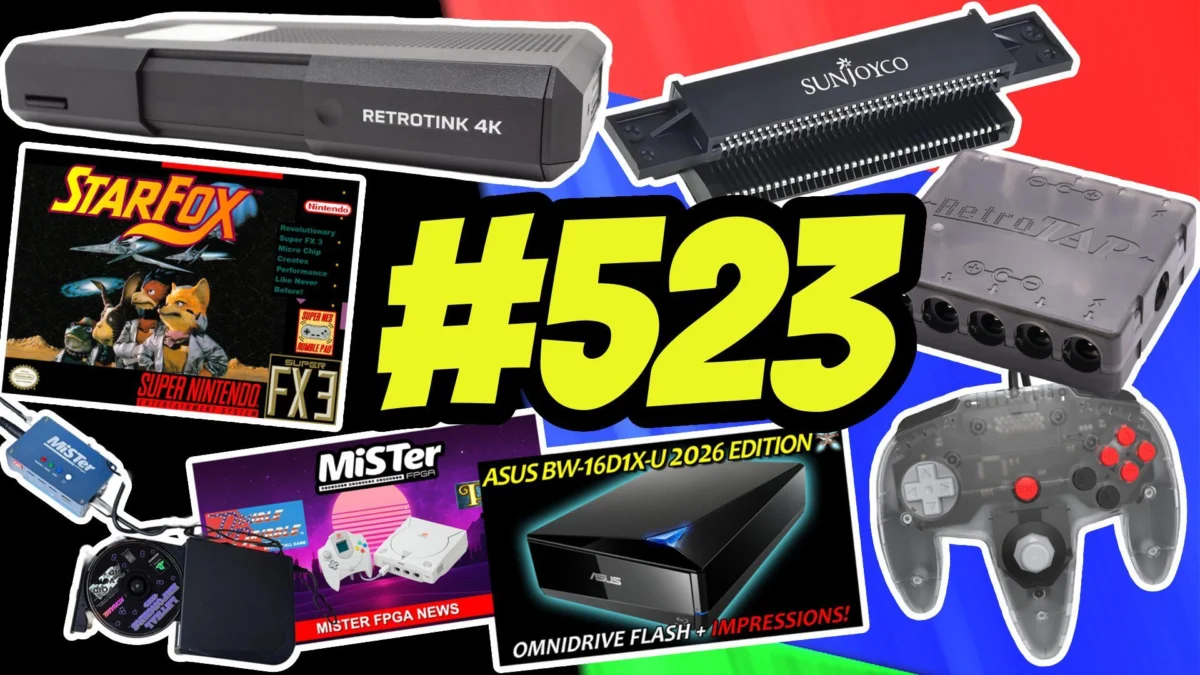
The latest installment of the Weekly Roundup, broadcast on July 22nd, 2026, delivered a comprehensive overview of significant advancements and notable releases within the vibrant retro gaming and hardware enthusiast community. This week’s digest, available across major podcast platforms including iTunes, Google Podcasts, Stitcher, Spotify, and Amazon Music, highlighted crucial developments ranging from essential console components and modern controller innovations to advanced video upscaling technologies, optical drive solutions, and critical updates for FPGA-based emulation platforms. The recurring segment also touched upon community support initiatives and practical solutions for organizing retro gaming setups.
Revitalizing Classic Hardware: NES 72-Pin Connector Enhancements
A significant point of discussion centered on ongoing efforts to improve the reliability of vintage console hardware, specifically with the NES 72-pin connector. For decades, the Nintendo Entertainment System has been plagued by the notorious "blinking light" issue, primarily attributed to wear and tear on the console’s original 72-pin connector. This component is crucial for establishing the electrical connection between the game cartridge and the console’s motherboard. The roundup detailed the latest iteration of replacement connectors, emphasizing advancements in design and material science aimed at providing a more robust and long-lasting solution than previous aftermarket alternatives. Early third-party connectors often replicated the flaws of the original, leading to similar connectivity problems over time. Modern designs, however, are reportedly utilizing higher-quality metals and improved spring tension mechanisms to ensure a tighter, more consistent grip on game cartridges, thereby mitigating the common insertion and connectivity frustrations. This ongoing refinement underscores the community’s commitment to preserving the playability of classic systems without resorting to extensive console modifications, offering a plug-and-play solution for common hardware failures. The implications are substantial for collectors and casual players alike, ensuring that one of gaming’s most iconic consoles remains readily accessible and functional for future generations.
Modernizing Control: Hyperkin Captain Hall Effect N64 Controller
The landscape of retro gaming is continuously evolving, bridging the gap between nostalgic experiences and modern ergonomic and technological standards. The Hyperkin Captain Hall Effect N64 Controller emerged as a focal point, representing a significant stride in this direction. The Nintendo 64 controller, while revolutionary for its time with its iconic trident shape and analog stick, is known for its susceptibility to wear, particularly in the stick mechanism. Traditional potentiometers, used in original N64 controllers, degrade over time, leading to "dead zones" and imprecise input. Hyperkin’s new offering addresses this by integrating Hall Effect sensors into its analog stick. Hall Effect technology utilizes magnetic fields to detect position, offering several key advantages: dramatically increased durability due to the absence of physical contact between moving parts, superior precision, and immunity to drift, a common issue in older and even some modern controllers. The introduction of such a controller signifies a growing trend where peripheral manufacturers are not just replicating classic designs but actively enhancing them with contemporary technology, providing retro enthusiasts with a premium, long-lasting, and highly accurate control experience. This development is particularly welcomed by competitive players and those deeply invested in the N64’s extensive library of 3D games, where analog stick precision is paramount.
Elevating Visual Fidelity: RetroTINK 4K CE Auto-Phase and Lumacode Tweaks
For enthusiasts dedicated to achieving the highest possible visual fidelity from their retro consoles on modern displays, the RetroTINK 4K CE (Collector’s Edition) has been a game-changer. The roundup highlighted significant firmware updates, specifically the addition of an "Auto-Phase" feature and further "Lumacode" tweaks. The RetroTINK series, developed by Mike Chi, specializes in sophisticated video upscaling, converting analog signals from classic consoles into digital formats compatible with HDMI displays, often adding advanced processing to improve image quality.
The new Auto-Phase functionality is a crucial enhancement. Many retro consoles output signals that can exhibit slight phase shifts, leading to subtle visual artifacts like shimmering or pixel misalignment on modern high-resolution displays. Manually adjusting the phase can be a complex and time-consuming process for users. Auto-Phase automates this, intelligently detecting and correcting phase discrepancies in real-time, ensuring a sharper, more stable image with minimal user intervention. This feature significantly lowers the barrier to entry for achieving optimal picture quality, making the RetroTINK 4K CE even more user-friendly.
Complementing this, the Lumacode tweaks represent an ongoing commitment to refining color and luminance processing. "Lumacode" refers to specific algorithms and adjustments designed to enhance color accuracy, reduce noise, and improve overall image clarity, particularly in challenging scenarios where older consoles produce less stable signals. These iterative improvements demonstrate the continuous development cycle behind high-end retro video processors, pushing the boundaries of what is possible in terms of visual presentation for vintage gaming. The implications of these updates are profound, offering a near-perfect visual experience that respects the original artistic intent of game developers while leveraging the capabilities of modern display technology.
Expanding Accessibility: OmniDrive Update and ASUS External Drive Compatibility
The ability to access and play disc-based retro games without relying on aging optical drives has been a long-standing goal for many in the preservation community. The OmniDrive project, a community-driven initiative focused on universal optical drive emulation for various retro consoles, received a notable update in the roundup. Specifically, the segment discussed the compatibility of the ASUS BW-16D1X-U (2026 Edition) external Blu-ray drive with the OmniDrive system. This announcement is critical because sourcing reliable, compatible external optical drives has often been a bottleneck for users wishing to implement disc-loading solutions for platforms like the PlayStation, Sega CD, or PC Engine CD.
The OmniDrive system aims to allow users to connect a modern, readily available external optical drive to their retro consoles (via specific adapters or mods), enabling direct loading of original game discs or backups. The validation of a specific, current-model ASUS drive provides a clear pathway for enthusiasts, eliminating guesswork and ensuring a high success rate for those looking to build or upgrade their disc-based retro setups. This development underscores the community’s drive towards making retro gaming more accessible and sustainable, reducing reliance on potentially failing vintage hardware while still honoring the physical media aspect of the hobby. It represents a significant step towards future-proofing the experience of playing disc-based games.
Enhancing Classic Titles: Star Fox FX3 Mod Released
The modding community continues to breathe new life into classic games, and the release of the "Star Fox Super FX3 Mod" exemplifies this creative spirit. Star Fox, a landmark title on the Super Nintendo Entertainment System (SNES), was renowned for its pioneering use of the Super FX chip, an enhancement co-processor embedded within game cartridges that allowed for rudimentary 3D graphics. The Super FX chip, however, had limitations in terms of processing power and clock speed, leading to lower frame rates in the original game.
The Super FX3 Mod is a sophisticated hardware modification or an advanced ROM patch that leverages either more powerful custom FPGA-based Super FX chip replacements or highly optimized code that pushes the original hardware beyond its conventional limits. The essence of the mod is to significantly improve the game’s performance, primarily by boosting the frame rate and potentially enhancing graphical fidelity or adding new features without altering the core gameplay experience. This could involve overclocking a custom FX chip or rewriting portions of the game’s rendering engine to be more efficient. Such projects are a testament to the dedication of fan communities, who tirelessly reverse-engineer and optimize classic software, offering a "definitive" version of beloved titles that couldn’t be achieved with the original console’s limitations. For Star Fox fans, this mod promises a smoother, more immersive aerial combat experience, bringing it closer to modern performance expectations while retaining its nostalgic charm.

Streamlining Power Management: RetroTap Multi-PSU
Managing power supplies for a diverse collection of retro consoles can quickly become a cumbersome and aesthetically unpleasing endeavor. The RetroTap Multi-PSU (Power Supply Unit) was introduced as an innovative solution to this common problem. Many classic consoles, from the NES to the Sega Genesis, each require their own specific power adapter, leading to a tangled mess of wires and occupied power outlets. The RetroTap aims to consolidate these needs into a single, centralized unit.
While specific technical details were not exhaustively enumerated in the roundup, the concept of a "multi-PSU" implies a system that can provide multiple voltage and amperage outputs, each tailored to the requirements of different retro consoles, all from a single wall outlet connection. This often involves a high-capacity main power supply unit feeding into a distribution board with various output jacks, potentially featuring voltage regulation and overcurrent protection for each output. The "1st Look" suggests an early public unveiling, hinting at its impending availability. The implications are clear: a cleaner, more organized gaming setup, reduced power strip clutter, and potentially enhanced safety by using a single, high-quality power source rather than numerous aging, individual adapters. This product addresses a practical, everyday challenge faced by retro gamers with extensive collections, offering a streamlined and elegant solution to power management.
MiSTer FPGA Developments: Disc Loading and Core Updates
The MiSTer FPGA (Field-Programmable Gate Array) platform continues to be a cornerstone of modern retro gaming, offering unparalleled accuracy in hardware-level emulation. The roundup provided two significant updates concerning MiSTer: the ability to boot disc-based games from any USB optical drive and the latest "Lu’s MiSTer Updates."
The capability to boot disc-based games directly from a USB optical drive is a groundbreaking development for the MiSTer platform. Previously, disc-based games often required converting physical media into digital ROMs (e.g., ISO, BIN/CUE files) to be loaded from an SD card. This new feature enables MiSTer users to connect a standard USB optical drive (CD, DVD, or Blu-ray) and play original game discs directly, mimicking the experience of playing on a physical console. This not only simplifies the process for users but also acts as a powerful preservation tool, allowing collectors to utilize their physical media without ripping them. It also significantly reduces the storage requirements on the MiSTer’s SD card for large disc libraries. This functionality further solidifies MiSTer’s position as a highly versatile and accurate retro gaming platform.
Accompanying this, "Lu’s MiSTer Updates" refer to the continuous stream of core updates and enhancements developed by the prolific MiSTer developer, Sorgelig (known as "Lu" in some community circles). These updates typically include new console cores (e.g., emulating new systems like the PlayStation, Saturn, or obscure arcade boards), performance optimizations for existing cores, bug fixes, and new features for the MiSTer’s overall operating system. The consistent and rapid pace of these updates is a testament to the platform’s active development community, ensuring that MiSTer remains at the forefront of hardware-accurate retro gaming emulation. These ongoing developments collectively expand the MiSTer’s capabilities, making it an increasingly indispensable tool for retro enthusiasts and preservationists alike.
Enhancing the Gaming Environment: "Retro" AV Stands and Wide, Low TV Stand Solutions
Beyond the technical hardware and software, the weekly roundup also touched upon practical aspects of setting up and enjoying a retro gaming space. Two specific items related to furniture and display solutions were highlighted: "Retro" AV Stands and a "Wide, Low TV Stand."
The segment on "Retro" AV Stands likely refers to furniture designed with the aesthetics and functional needs of vintage audio-visual equipment in mind. This could include features such as ample shelving for multiple consoles, integrated cable management solutions, and designs that complement the often bulky and distinct appearances of CRT televisions or early flat-panel displays. Such stands are crucial for collectors who wish to display their hardware tastefully and keep their setups organized, preventing the common issue of clutter.
The mention of a "Wide, Low TV Stand" specifically addresses the ergonomic and visual requirements for displaying larger CRT televisions or modern flat-panel screens used for retro gaming. CRT TVs, while delivering authentic retro visuals, are often heavy and require sturdy, wide surfaces. A low stand can also be desirable for optimal viewing angles, especially when seated on lower furniture or playing on the floor, which was common with many console setups. For modern flat-panel displays, a wide stand provides stability and space for multiple consoles and accessories underneath, maintaining a clean look. These discussions underscore the holistic approach many retro enthusiasts take, considering not just the games and hardware, but the entire environment in which they are enjoyed. The availability of purpose-built furniture solutions reflects a maturing market that recognizes the specific needs and preferences of the retro gaming community, moving beyond generic entertainment units to specialized designs.
Community Support and Future Outlook
The Weekly Roundup consistently concludes with a strong emphasis on community support, reminding viewers and listeners that the continued development and dissemination of retro gaming knowledge and technology rely heavily on collective contributions. Calls for monthly support services, tips, and the use of affiliate links are not merely fundraising efforts but a vital mechanism for sustaining independent content creation and research within the niche. The featured segment encouraged patrons to support Bob on Patreon, directly fueling the ongoing production of these informative roundups and deeper dives into retro gaming hardware and software.
The breadth of topics covered in Weekly Roundup #523 underscores the dynamic and innovative nature of the retro gaming scene. From fundamental hardware fixes like the NES 72-pin connector to cutting-edge video processing with the RetroTINK 4K CE, and from modernizing classic controllers to expanding the capabilities of FPGA platforms like MiSTer, the community demonstrates an unwavering commitment to preservation, enhancement, and accessibility. The ongoing development of projects like OmniDrive and community-driven mods like Star Fox FX3, coupled with practical solutions for organizing gaming spaces, paints a picture of a vibrant ecosystem continually pushing the boundaries of what is possible in celebrating and experiencing video game history. As technology advances, so too does the ability to revisit and improve upon the experiences of yesteryear, ensuring that the legacy of classic gaming remains alive and thriving for enthusiasts worldwide.








