Farhan hamdan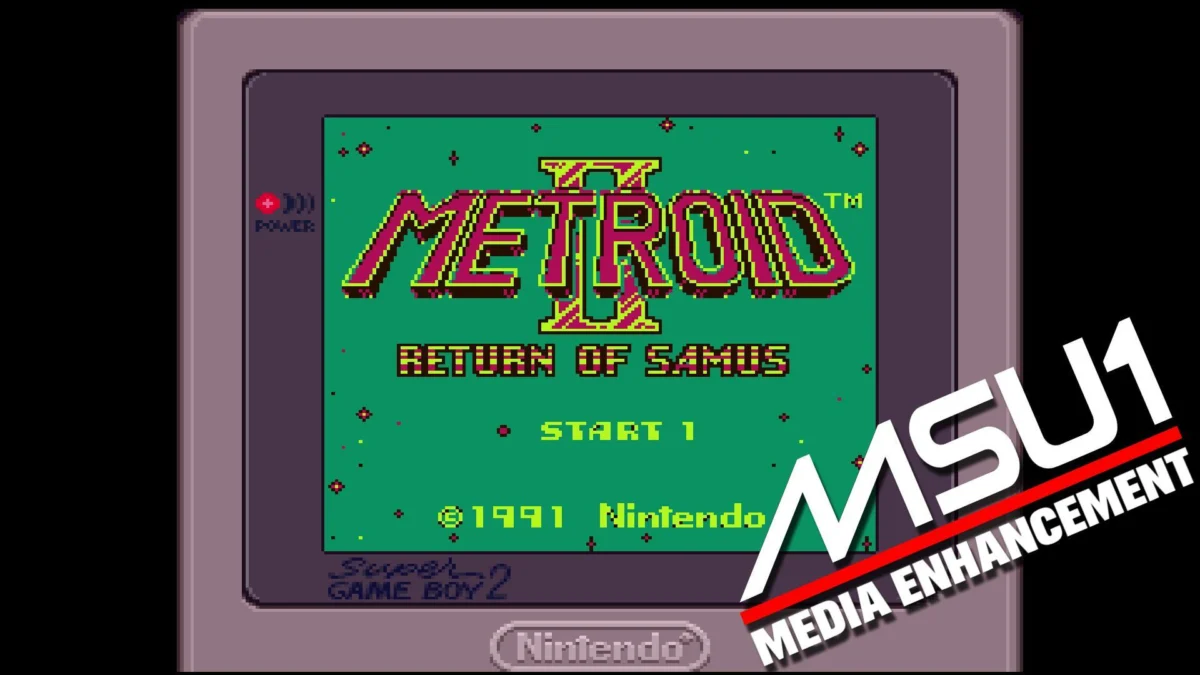
In a significant development for the retro gaming community, the dedicated developer known as Relikk has unveiled an MSU-1 audio patch designed to dramatically enhance the sonic experience of the original Metroid II: Return of Samus. This eagerly anticipated modification not only supports the classic Game Boy title but also incorporates soundtracks from its critically acclaimed fan-made PC remake, AM2R (Another Metroid 2 Remake), and Nintendo’s official 3DS reimagining, Metroid: Samus Returns. The patch facilitates a modern auditory overhaul for a game originally constrained by the Game Boy’s rudimentary sound chip, allowing players to experience the desolate planet SR388 with a richness previously unimaginable.
The integration of this MSU-1 patch allows for playback across a variety of modern and legacy platforms, bridging decades of gaming technology. Enthusiasts can apply the patch to play Metroid II with enhanced audio via the MiSTer’s highly accurate Super Game Boy core, on original Super Nintendo Entertainment System (SNES) hardware using a flash cart like the FXPak Pro (formerly SD2SNES), or through compatible SGB/MSU-1 enabled emulators such as Mesen and BSNES Plus. This broad compatibility ensures that a wide array of retro gaming aficionados, whether preferring FPGA hardware, original consoles, or software emulation, can benefit from Relikk’s meticulous work. The release underscores a vibrant ecosystem of community-driven development that continues to elevate and preserve classic video games.
Understanding the MSU-1 Technology: A Paradigm Shift for Retro Audio
To fully appreciate the impact of Relikk’s Metroid II patch, it is essential to understand the technology behind MSU-1. MSU-1, or Media Streaming Unit 1, is a groundbreaking enhancement chip for the Super Nintendo Entertainment System, initially developed by Ikari in the early 2010s for the SD2SNES flash cart (now known as FXPak Pro). Unlike traditional SNES enhancement chips that were integrated into game cartridges, MSU-1 is a virtual chip, implemented in hardware flash carts and emulators. Its primary function is to enable the streaming of CD-quality audio and full-motion video directly from an SD card, bypassing the SNES’s inherent limitations.
The SNES, while renowned for its advanced sound capabilities for its era, relied on a dedicated audio chip (the SPC700) with limited memory and processing power, producing samples at a maximum of 32kHz. MSU-1 shatters these barriers, allowing games to utilize uncompressed 44.1kHz stereo WAV files, equivalent to audio quality found on compact discs. This capability has revolutionized how classic SNES titles are experienced, with numerous fan-made patches emerging over the years to integrate orchestrated soundtracks, voice acting, and even video cutscenes into beloved games like The Legend of Zelda: A Link to the Past, Chrono Trigger, and Super Metroid.
The application of MSU-1 to a Game Boy title, specifically through the Super Game Boy accessory, represents a particularly innovative leap. The Super Game Boy (SGB), released in 1994, was a peripheral that allowed Game Boy cartridges to be played on a Super Nintendo console, displaying games in color (albeit with a limited palette) on a television screen. Crucially, while the SGB provided visual enhancements, the audio remained entirely reliant on the Game Boy’s original sound hardware, which featured a simple 4-channel sound chip. Relikk’s patch leverages the SGB’s ability to communicate with the SNES’s hardware, thereby allowing the MSU-1 chip – whether virtualized in MiSTer or emulators, or physically present in an FXPak Pro – to inject high-fidelity audio, transforming the monophonic, chiptune soundtrack of Metroid II into a rich, orchestral experience.
Metroid II: Return of Samus – A Legacy Reimagined Through Sound
Metroid II: Return of Samus, released for the original Game Boy in 1991, holds a pivotal place in the venerable Metroid saga. It was the first portable entry in the series, tasked with advancing the storyline after the critical success of the original Metroid on the NES. The game follows bounty hunter Samus Aran on her perilous mission to the Metroid homeworld, SR388, with the objective of exterminating all Metroids to prevent their misuse. Despite the technical limitations of the Game Boy’s monochrome display and modest sound capabilities, Metroid II introduced several series staples, including Samus’s iconic Varia Suit design, the Spider Ball, and the gradual evolution of the Metroid life cycle.
While critically acclaimed for its atmosphere and exploration, the game’s audio was necessarily minimalistic, composed of chiptune melodies and sound effects that, while memorable, could not convey the same depth and grandeur as its console counterparts. This limitation led to a persistent desire within the fan community for an enhanced version. This desire manifested in two significant remakes:
- AM2R (Another Metroid 2 Remake): A fan-made PC remake developed by Milton Guasti (DoctorM64) and a team of volunteers, released in 2016. AM2R was lauded for its faithful yet modernized take on the original, featuring vastly improved graphics, gameplay mechanics reminiscent of Metroid Fusion and Zero Mission, and, crucially, a completely re-orchestrated soundtrack. Despite its widespread praise, Nintendo issued a DMCA takedown notice shortly after its release, leading to its official cessation. However, the game continues to be celebrated and unofficially maintained by the community.
- Metroid: Samus Returns: Nintendo’s official 3DS remake, developed by MercurySteam and released in 2017. This remake offered 3D graphics, new abilities, and a modern orchestral score, providing Nintendo’s official vision for a modernized Metroid II.
Relikk’s MSU-1 patch ingeniously leverages these remakes by allowing players to choose their preferred soundtrack – whether the original game’s enhanced chiptunes, the fan-favorite AM2R score, or the official Samus Returns compositions – and integrate them into the classic Game Boy ROM. This offers an unparalleled level of customization and immersion, finally allowing the original game’s visual and structural design to be paired with a truly epic soundscape.

A Detailed Guide to Installation and Configuration
For those eager to dive into this enhanced experience, the installation process is straightforward, though it requires a few specific components and steps. The primary download for the patch and the various soundtrack options is available on the Zeldix.net forums, a hub for MSU-1 development.
Required Components:
- Relikk’s MSU-1 Patch and Preferred Soundtrack: Downloadable from the provided link on Zeldix.net. Users must select one soundtrack from the available options (original Metroid II enhanced, AM2R, or Samus Returns).
- Original Metroid II (Return of Samus) ROM: A clean, unpatched ROM file of the original Game Boy game is essential.
- Patching Utility: A utility like FloatingIPS (FLIPS) is recommended. These programs apply the MSU-1 patch file (.ips) to the original game ROM.
Installation Steps:
- Download and Extract: Obtain the MSU-1 patch and your chosen soundtrack files, along with a patching utility and the Metroid II ROM. Extract all files to a single, easily accessible folder.
- Apply the Patch: Use FLIPS or a similar utility to apply the downloaded MSU-1 patch (which will likely have a .ips extension) to your clean Metroid II ROM. This process modifies the ROM to recognize and utilize the MSU-1 audio streams.
- Rename Files: After patching, rename the modified ROM file to exactly match the base name of the MSU-1 audio files. For example, if the audio files are named "m2_SGB_MSU1-01.wav", "m2_SGB_MSU1-02.wav", etc., the patched ROM should be named "m2_SGB_MSU1.gb". Consistency in naming is crucial for the MSU-1 chip/emulator to link the audio to the game.
- Consolidate Files: Ensure all files – the patched ROM and all associated MSU-1 audio files – are placed together in the same directory.
- Load and Play: Load the patched ROM on your chosen platform (MiSTer’s SGB core, FXPak Pro on SNES, or an MSU-1 capable emulator). It is important to note that only one MSU-1 soundtrack should be present in a given folder at a time to avoid conflicts. For MiSTer users, ensuring the SGB2 BIOS is properly configured is often recommended for optimal compatibility.
The seamless integration, as reported by early testers, confirms that the experience is precisely what enthusiasts have longed for. The author of the original news piece on RetroRGB expressed a personal connection to this development, noting that they had hoped for exactly such a patch almost six years prior, when SGB MSU-1 support was first announced. This sentiment resonates widely across the retro gaming community, underscoring the significance of Relikk’s contribution.
The Broader Implications: Preservation, Innovation, and Community
Relikk’s Metroid II MSU-1 patch is more than just a technical achievement; it represents a powerful confluence of retro game preservation, community-driven innovation, and the enduring passion for classic titles.
- Enhanced Preservation: By overlaying high-quality audio onto the original Game Boy game, the patch offers a modernized way to experience Metroid II without altering its core gameplay or visual aesthetic. This ensures that the original game, with its unique design choices and historical significance, remains relevant and engaging for new generations of players who may find the original chiptune audio less immersive than contemporary soundtracks. It highlights a critical aspect of preservation: not just archiving ROMs, but also enhancing them to ensure their continued enjoyment.
- Community-Driven Innovation: This project is a testament to the power of the modding community. Developers like Relikk invest countless hours, often unpaid, driven solely by a passion for gaming and a desire to see beloved titles reach their full potential. Their work frequently pushes boundaries that official developers might not, or cannot, due to commercial constraints or legacy hardware limitations. The existence of projects like the Metroid II MSU-1 patch, AM2R, and countless other fan translations and enhancements, demonstrates a vibrant, self-sustaining ecosystem of creativity and technical prowess.
- The Future of Retro Gaming: The trend of enhancing classic games with modern audio, visual upscaling, and even online capabilities is steadily growing. Platforms like MiSTer FPGA, with their cycle-accurate emulation, combined with advanced flash carts like the FXPak Pro, provide the perfect canvas for these innovations. This movement suggests a future where retro games are not merely relics of the past but living, evolving experiences that continue to surprise and delight players, blending nostalgia with cutting-edge fan development. It opens doors for revisiting entire libraries of games, offering them a new lease on life with the fidelity that their original creators could only dream of.
The release of the Metroid II MSU-1 patch also subtly highlights the ongoing dialogue between official developers and the fan community. While Nintendo has, in the past, taken a firm stance against fan projects like AM2R, the continued enthusiasm for enhancing classic titles through methods like MSU-1 demonstrates a persistent demand for modernized retro experiences. These community efforts, while unofficial, often fill gaps left by publishers, keeping intellectual properties alive and relevant in the collective consciousness.
Looking ahead, the successful implementation of this patch naturally sparks further desires within the community. The original article’s author, for instance, humorously concluded with a wish for "a port of AM2R to MiSTer." While a direct port of a PC game to a MiSTer core presents its own unique technical challenges, the sentiment reflects the ongoing ambition within the retro gaming scene: to unify and elevate the best aspects of classic games and their modern interpretations onto versatile, accurate platforms.
In conclusion, Relikk’s MSU-1 audio patch for Metroid II: Return of Samus stands as a monumental achievement, not just for fans of the Metroid series, but for the entire retro gaming community. It serves as a powerful reminder of what dedicated individuals can accomplish, transforming a monochrome, chiptune classic into a rich, acoustically vibrant adventure, ensuring its legacy continues to resonate with unprecedented fidelity for years to come.