
 Farhan hamdan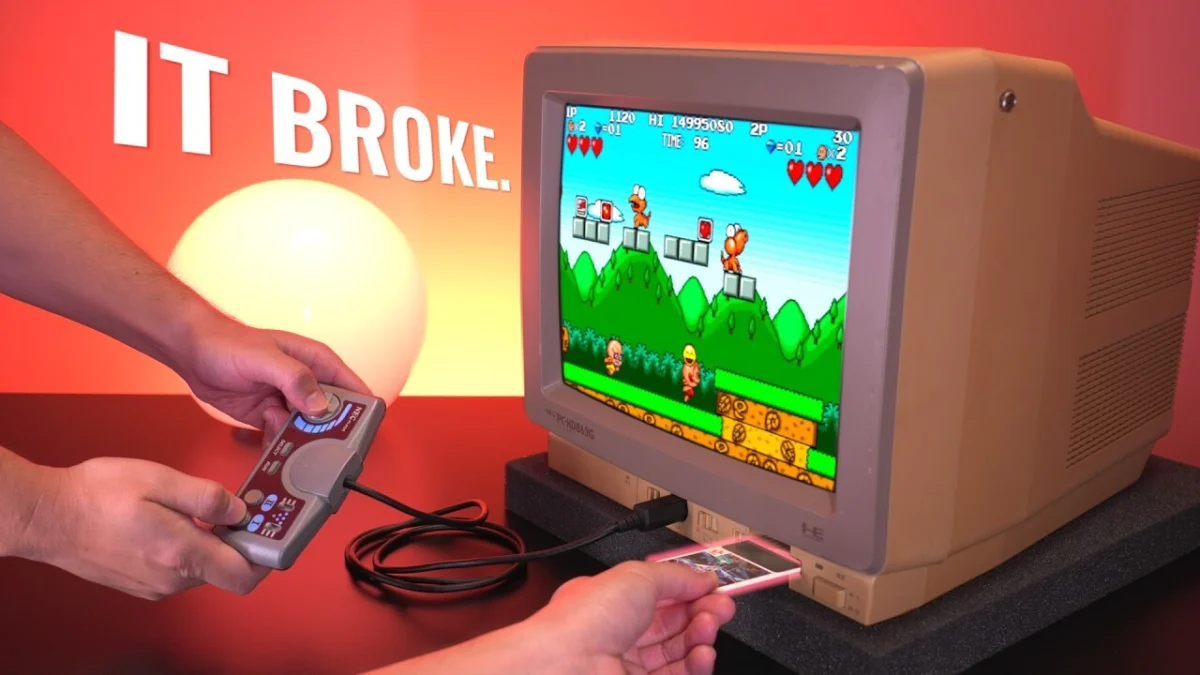
Tito D’Agostino, known in the retro gaming community as Macho Nacho Productions, recently documented an extraordinary endeavor: a transatlantic journey to Japan to acquire one of the rarest and most coveted pieces of vintage gaming hardware, the NEC PC-KD863G monitor. This specialized Cathode Ray Tube (CRT) display, distinguished by its integrated PC Engine console, represents a pinnacle for collectors seeking authentic retro gaming experiences. D’Agostino’s adventure, chronicled in a widely viewed video, serves not only as a testament to the passion driving the retro gaming movement but also as a practical guide to the intricate challenges inherent in sourcing, transporting, and restoring aging electronics.
The Pursuit of Rarity: Unpacking the NEC PC-KD863G
The NEC PC-KD863G is not merely a monitor; it is a historical artifact and a technological marvel of its era. Produced by Japanese electronics giant NEC, this particular model stands out due to its unique integration of a PC Engine console directly into the display unit. The PC Engine, known as the TurboGrafx-16 in North America, was a pioneering fourth-generation video game console released in Japan in 1987. It gained acclaim for its innovative HuCard game format, impressive sprite capabilities, and a library of iconic titles. The PC-KD863G essentially offered a self-contained, high-fidelity gaming station, eliminating the need for separate console and display units.
For retro gaming enthusiasts, CRTs like the PC-KD863G offer unparalleled advantages over modern flat-panel displays. Unlike contemporary LCDs or OLEDs, CRTs inherently produce no input lag, a critical factor for precision-based vintage games. Furthermore, CRTs render scanlines and pixel structures authentically, replicating the visual experience intended by game developers of the 8-bit and 16-bit eras. The interlaced and progressive scan resolutions of CRTs perfectly complement the output signals of older consoles, providing a warmth and clarity that emulation or upscaling on modern displays often fail to replicate. The rarity of the PC-KD863G, combined with its integrated design and superior CRT performance, elevates it to a holy grail status for dedicated collectors. Its limited production run and Japan-centric distribution make international acquisition a significant undertaking.
A Transcontinental Expedition: Planning and Execution
D’Agostino’s quest began with the identification of a rare NEC PC-KD863G unit available for purchase in Japan. Recognizing the fragility and substantial weight of a 20-inch CRT monitor, standard international shipping methods were deemed insufficient and excessively risky. The decision was made to personally transport the unit, necessitating an international flight and meticulous logistical planning.
The primary challenge in transporting such an item is its susceptibility to damage. CRTs contain a large, evacuated glass tube, highly prone to shattering from impact or excessive vibration. They also house high-voltage components and delicate internal circuitry that can be dislodged or fractured. To mitigate these risks, D’Agostino commissioned a custom-built flight case. This specialized container was designed with precise internal dimensions, high-density foam inserts, and robust external construction to absorb shocks and vibrations during transit. The cost and effort involved in creating such a bespoke shipping solution underscore the significant investment, both financial and personal, that high-end retro collecting often demands.
The journey itself spanned thousands of miles, beginning with the flight to Japan. Upon arrival, D’Agostino navigated local transportation systems to retrieve the monitor. The physical acquisition of the unit was followed by the careful packing into the custom flight case, a process requiring precision to ensure the monitor was securely cradled and protected for its return journey. This phase of the expedition highlights the hands-on nature of dedicated collecting, often moving beyond simple online purchases to involve direct, physical interaction with the items and their journey.
The Unforeseen Challenge: A Critical Malfunction
Despite the extensive precautions taken, the inherent fragility of decades-old electronics became starkly apparent upon the monitor’s arrival back home. After the arduous journey and careful unpacking, the initial setup and power-on revealed a critical malfunction: the monitor failed to display an image correctly. This moment of disappointment, after such a monumental effort and investment, underscored the significant risks associated with acquiring vintage hardware. The failure highlighted a universal truth in retro electronics: nearly all CRTs, especially those approaching or exceeding three decades in age, will require some form of maintenance or repair. Components such as electrolytic capacitors degrade over time, leading to power supply issues, picture distortion, or complete failure. Solder joints can become brittle, and internal wiring can fray.
For D’Agostino, this setback transitioned the acquisition from a simple purchase into a complex restoration project. The video extensively documented the diagnostic process, which involved disassembling the monitor to identify the root cause of the failure. This segment offered invaluable insight for the retro community, showcasing practical troubleshooting steps and the common issues encountered when reviving vintage displays. It demonstrated the necessity of technical proficiency, patience, and access to specialized tools and knowledge for anyone venturing into serious retro hardware collecting.
The Anatomy of a Vintage Display: Technical Insights
The repair process for the NEC PC-KD863G provided an opportunity to delve into the intricate world of CRT electronics. D’Agostino’s video offered detailed shots of the monitor’s internal components, including the main circuit boards and the electron gun assembly. One particularly educational aspect highlighted was the necessity of trace repair. Circuit traces are the copper pathways etched onto a printed circuit board (PCB) that connect electronic components. Over time, due to heat cycling, physical stress, or corrosion, these traces can crack or delaminate, breaking the electrical connection. Repairing these delicate pathways requires a steady hand, specialized soldering equipment, and a thorough understanding of circuit diagrams.

The specific malfunction in D’Agostino’s unit likely stemmed from a combination of age-related component degradation and potential stress during transit, despite the custom packaging. Common points of failure in CRTs include the flyback transformer (which generates the high voltage for the electron beam), deflection yokes (which guide the electron beam across the screen), and various capacitors in the power supply and video signal paths. The process of diagnosing such issues often involves testing components, checking for continuity in traces, and meticulously examining solder joints for cracks or cold connections. This segment of the journey provided a valuable resource for "modding nerds" and electronics hobbyists, offering a practical demonstration of advanced repair techniques applicable to a wide range of vintage hardware.
The Retro Gaming Renaissance: Broader Context
D’Agostino’s global quest is emblematic of a broader cultural phenomenon: the resurgence of retro gaming. What began as a nostalgic pastime has evolved into a vibrant subculture with a significant economic footprint. Factors contributing to this renaissance include:
- Nostalgia: A generation that grew up with these consoles is now financially capable and eager to revisit their childhood memories.
- Authenticity: Many enthusiasts prioritize playing games on original hardware, seeking the most authentic experience, which modern emulation or ports often cannot fully replicate.
- Historical Preservation: Collectors and content creators play a crucial role in preserving gaming history, maintaining rare hardware, and documenting its functionality for future generations.
- Community: The retro gaming scene thrives on a strong online and offline community, facilitating knowledge sharing, trading, and collaborative projects.
This growing market has led to increased demand and escalating prices for rare consoles, games, and, critically, period-accurate displays. The challenges of sourcing and maintaining this equipment underscore the dedication required to be a part of this community. Content creators like Macho Nacho Productions serve as educators and entertainers, bringing these complex processes to a wider audience, thereby fueling further interest and participation in the hobby.
Community and Collaboration: A Network of Support
The journey was not a solitary one. D’Agostino’s video highlighted the crucial role of community and friendship in overcoming such complex challenges. He met with several individuals during his trip, including Carci, Scruffy, and Oleg, who are recognized figures within the retro gaming hardware community. Their assistance, whether logistical, technical, or simply moral support, demonstrates the collaborative spirit that often underpins large-scale retro projects. This network of enthusiasts shares knowledge, resources, and often physical assistance, making seemingly impossible tasks achievable.
The public sharing of this adventure also galvanized the wider community. Viewers and fellow enthusiasts offered words of encouragement, shared their own experiences with vintage hardware repair, and even provided leads for locating the missing components. This collective engagement transforms an individual’s quest into a shared experience, reinforcing the bonds within the retro gaming world.
The Ongoing Restoration: The Search for Speakers
While the primary display unit has been acquired and is undergoing repair, D’Agostino’s quest for the NEC PC-KD863G is not yet complete. A key component still missing is the matching external speaker set, model PSP-101. These speakers were designed specifically for the monitor, completing the aesthetic and auditory experience of the integrated PC Engine setup. The search for these speakers represents the final frontier in restoring the unit to its original, complete condition.
The hunt for specific peripheral components often proves to be as challenging, if not more so, than finding the main unit itself. Peripherals were often produced in smaller quantities, were more easily lost or damaged, and are less frequently preserved by collectors. D’Agostino’s public appeal for assistance in locating the PSP-101 speakers leverages the power of the retro gaming community, demonstrating how collective effort can help complete even the most elusive collecting goals. This ongoing search highlights the meticulous attention to detail and the pursuit of completeness that characterizes high-level vintage hardware collecting.
Implications for Preservation and Collecting
D’Agostino’s journey to acquire and restore the NEC PC-KD863G carries several broader implications for the retro gaming community and the field of electronic preservation:
- Validation of Effort: The extensive effort involved validates the cultural and historical significance of vintage gaming hardware, elevating it beyond mere entertainment to a form of digital heritage.
- Educational Resource: The detailed documentation of the acquisition, transport, and repair process provides an invaluable educational resource for aspiring collectors, repair technicians, and content creators. It demystifies the complexities of working with old electronics.
- Sustainability of the Hobby: By demonstrating that even severely damaged vintage items can be restored, the video promotes a culture of repair and sustainability within the hobby, reducing waste and extending the life of valuable artifacts.
- Economic Impact: The narrative implicitly highlights the growing economic ecosystem surrounding retro gaming, encompassing specialized retailers, repair services, custom fabrication (like flight cases), and content creation platforms.
- Future Challenges: As these technologies age further, the challenges of sourcing replacement parts, finding skilled technicians, and mitigating inherent component degradation will only intensify. Stories like D’Agostino’s serve as a call to action for continued community effort and innovation in preservation techniques.
In conclusion, Tito D’Agostino’s odyssey for the NEC PC-KD863G is more than just a personal collecting endeavor. It is a compelling narrative that encapsulates the passion, challenges, and triumphs inherent in the pursuit of retro gaming authenticity. From the meticulous planning of international logistics to the intricate dance of electronic repair, and the ongoing quest for completeness, this journey stands as a testament to the enduring appeal of vintage technology and the vibrant, supportive community that dedicates itself to its preservation.








