Indra Gunadi
The vibrant retro gaming scene has once again captivated enthusiasts with the announcement on July 20, 2026, of a compelling new adventure game titled Lefty: Stirred, Not Solved. Developed by the independent studio Quantum Code Monk, this title is specifically crafted for the Amiga AGA (Advanced Graphics Architecture) platform, a testament to the enduring legacy and active community surrounding Commodore’s iconic 16/32-bit home computer. Set to release in 2025, this game is described as a direct homage to the classic Police Quest series, promising a gripping narrative involving missing persons at the titular Lefty’s bar, which quickly escalates as the protagonist, a character reminiscent of Sonny Bonds, finds himself ensnared in a perilous trap laid by the elusive "Death Angel." A notable technical requirement for prospective players is the separate installation of Scala Player, indicating a specific approach to the game’s multimedia presentation and interactive elements.
The Enduring Allure of the Amiga AGA Platform
The Amiga AGA refers to the third generation of custom chipsets developed by Commodore, primarily featured in the Amiga 1200, Amiga 4000, and Amiga CD32 consoles, released in 1992. These machines represented the pinnacle of Amiga technology, offering enhanced graphics capabilities, including 256,000 colours from a palette of 16.8 million, alongside improved memory management and processing power compared to their OCS/ECS predecessors. Despite Commodore’s eventual bankruptcy in 1994, the Amiga platform fostered a dedicated and passionate community that continues to thrive decades later. This community is characterized by its commitment to preserving the platform’s history, developing new hardware upgrades, and, crucially, creating new software, including games, demos, and applications. The release of Lefty: Stirred, Not Solved underscores this phenomenon, demonstrating that the Amiga is far from a forgotten relic, but rather a living, breathing ecosystem where innovation and nostalgia converge. Developers like Quantum Code Monk leverage the unique constraints and capabilities of the AGA chipset, offering experiences that resonate with veteran Amiga users while also attracting a new generation of retro computing enthusiasts intrigued by the platform’s distinctive charm and technical prowess. This continued development is a significant aspect of digital preservation, ensuring that the skills and creativity associated with vintage hardware are not lost to time.
A Homage to Police Quest: Genre and Narrative Roots
The description of Lefty: Stirred, Not Solved as a "Police Quest homage" immediately situates it within a specific and beloved subgenre of adventure games. The original Police Quest series, created by former police officer Jim Walls and published by Sierra On-Line, pioneered a unique blend of adventure gameplay with realistic police procedural elements. Debuting in 1987, the series was renowned for its meticulous attention to detail regarding law enforcement protocols, moral choices, and the consequences of player actions. Players often had to follow correct procedures for everything from traffic stops to evidence collection, with deviations potentially leading to failure or even the death of protagonist Sonny Bonds. This emphasis on authenticity, combined with compelling crime narratives, set Police Quest apart from other adventure titles of its era.
Quantum Code Monk’s Lefty: Stirred, Not Solved appears to draw heavily from these foundational principles. The inclusion of "Sonny Bonds" as a character reference, even if not literally the same character, signals an intent to evoke the spirit of the original series’ hero – a dedicated, ethical officer facing the grim realities of crime. The premise of "missing persons at Lefty’s bar" provides a classic noir-esque starting point, a common trope in detective fiction that quickly immerses players in a world of mystery and potential danger. The subsequent revelation that Sonny Bonds (or his equivalent) is led "into the Death Angel’s trap" suggests a narrative escalation characteristic of the best adventure games, moving beyond simple investigation to a more direct, perilous confrontation with a formidable antagonist. This structure promises a blend of investigative gameplay, puzzle-solving, and dramatic tension, all filtered through the lens of a police procedural, appealing deeply to fans of classic point-and-click adventures and those who appreciate narrative depth in their gaming experiences.
Quantum Code Monk and the Niche Development Landscape
While specific details about Quantum Code Monk are limited in the initial announcement, their choice to develop for the Amiga AGA platform in the mid-2020s speaks volumes about their likely motivations and ethos. Developing for retro platforms is often a passion project, driven by a deep love for the hardware, the software of yesteryear, and the unique challenges it presents. Unlike modern game development, which benefits from extensive middleware, powerful engines, and large teams, creating a game for the Amiga AGA often involves working with constrained resources, older development tools, and a profound understanding of the machine’s architecture. This dedication implies that Quantum Code Monk is likely a small team or even a single developer committed to preserving and expanding the Amiga’s software library.
The decision to make Lefty: Stirred, Not Solved available on platforms like itch.io (as indicated by the provided link) is also significant. Itch.io has emerged as a crucial digital storefront for independent developers, particularly those working on niche projects, retro games, and experimental titles. It offers an accessible platform for distribution, allowing creators to reach their target audience directly without the overheads and strictures of larger commercial marketplaces. This democratized distribution model is vital for the retro gaming scene, enabling projects like Lefty: Stirred, Not Solved to find an audience and contribute to the platform’s ongoing vitality. The implied 2025 release year for the game, followed by its announcement on July 20, 2026, suggests a development cycle that culminated in a release that year, with its public announcement and availability on platforms like pdroms.de occurring slightly later, a common practice in indie and retro game distribution.
The Scala Player Requirement: Technical Implications
One of the most intriguing aspects of the announcement is the requirement for "Scala Player separately." Scala Player, originally known as Scala Multimedia, is a robust multimedia authoring and presentation software for the Amiga, first released in the late 1980s. It gained significant popularity for its ability to create interactive presentations, kiosks, and even early forms of multimedia applications, utilizing the Amiga’s advanced graphics and sound capabilities. Its architecture allowed for the sequencing of images, animations, sound samples, and interactive elements, making it a versatile tool for non-linear storytelling and user engagement.
The fact that Lefty: Stirred, Not Solved requires Scala Player suggests that Quantum Code Monk has either developed the game entirely within the Scala environment or is using it as a sophisticated engine to manage the game’s visual assets, sound design, and interactive sequences. This approach is somewhat unconventional for a traditional adventure game, which typically relies on custom-coded engines or more general-purpose game development kits. However, it offers several potential advantages:
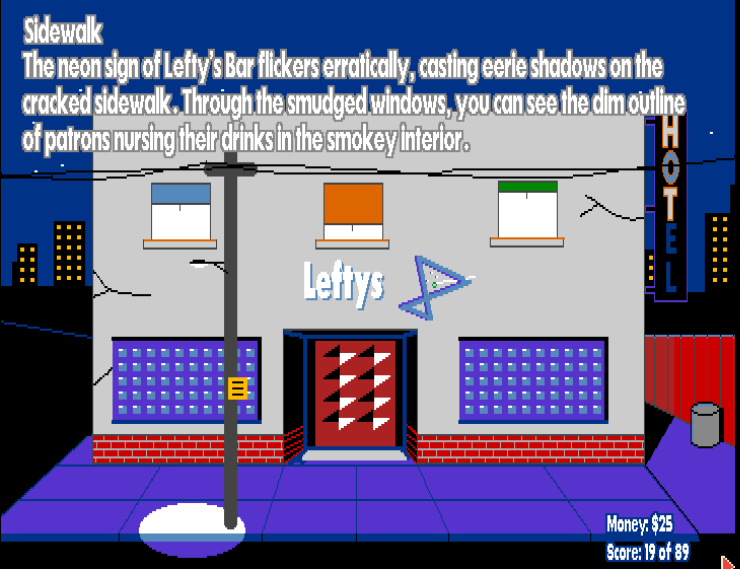
- Rich Multimedia: Scala Player excels at integrating high-quality graphics and sound, which could lend a distinctive cinematic or interactive presentation style to the game, perhaps akin to early CD-ROM titles that prioritized multimedia experiences.
- Streamlined Development: For developers familiar with Scala, it could offer a more efficient way to prototype and implement complex interactive narratives without extensive low-level coding.
- Unique Aesthetic: Games developed with specific multimedia frameworks often possess a unique look and feel, potentially differentiating Lefty: Stirred, Not Solved from other Amiga adventure games.
For players, this requirement means an additional step in setting up the game, but it also hints at a potentially rich and visually engaging experience. Amiga users, accustomed to managing various system components and software configurations, are generally well-equipped to handle such requirements, whether running the game on original hardware or via emulators like WinUAE or FS-UAE, which accurately replicate the Amiga environment and support its diverse software ecosystem. The necessity of a separate, foundational piece of software underscores the intricate and often bespoke nature of Amiga development in the modern era.
Chronology of a Retro Release
To fully appreciate the context of Lefty: Stirred, Not Solved, it is beneficial to outline a brief chronology:
- 1985: The original Commodore Amiga 1000 is launched, beginning the platform’s influential journey.
- 1987: Sierra On-Line releases Police Quest: In Pursuit of the Death Angel, establishing the genre that Lefty: Stirred, Not Solved would later pay homage to.
- Late 1980s – Early 1990s: Scala Multimedia (later Scala Player) gains prominence as a powerful Amiga multimedia authoring tool.
- 1992: Commodore introduces the AGA chipset with the Amiga 1200 and Amiga 4000, significantly upgrading the platform’s graphical capabilities.
- 1994: Commodore International files for bankruptcy, marking the end of the Amiga’s mainstream commercial life but galvanizing its dedicated community.
- 2000s – Present: The Amiga community continues to grow, with ongoing hardware development, software preservation efforts, and the emergence of new homebrew games and applications.
- Circa 2020-2025: Quantum Code Monk likely undertakes the development of Lefty: Stirred, Not Solved, driven by passion for the Amiga and classic adventure games.
- 2025: Lefty: Stirred, Not Solved is completed and released, making it available to the Amiga community.
- July 20, 2026: The game is officially announced and highlighted on retro gaming news portals like pdroms.de, signifying its entry into the broader retro gaming consciousness.
This timeline illustrates a remarkable journey from the platform’s commercial peak to its current status as a vibrant niche, continually sustained by dedicated developers and players.
Broader Impact and Implications for Retro Gaming
The release of Lefty: Stirred, Not Solved is more than just another game for an old computer; it represents several significant trends within the broader retro gaming and computing communities.
Firstly, it highlights the unwavering resilience and creativity of independent developers. In an industry increasingly dominated by large studios and high-budget productions, projects like this demonstrate that compelling experiences can still emerge from passion-driven efforts, often embracing the unique constraints of vintage hardware as creative challenges rather than limitations. This fosters a diverse ecosystem of games that cater to specific tastes and historical interests.
Secondly, it reinforces the concept of digital preservation through creation. By continuing to develop new software for platforms like the Amiga, developers contribute to the platform’s ongoing relevance, attracting new users who might explore the hardware and its history. This active creation complements efforts in archiving existing software and hardware.
Thirdly, the game taps into the powerful vein of nostalgia and intellectual property homage. For fans of the Police Quest series and Sierra-style adventure games, Lefty: Stirred, Not Solved offers a new narrative experience in a familiar vein, fulfilling a desire for new content that respects the classics. This practice of homage ensures that the design philosophies and narrative styles of influential games continue to be explored and evolved.
Finally, the technical requirement of Scala Player underscores the unique learning curve and technical engagement inherent in retro computing. Players are often required to understand and configure various system components, drivers, and external software, fostering a deeper appreciation for the underlying technology. This level of engagement contrasts with the plug-and-play simplicity of modern gaming, offering a more hands-on and rewarding experience for those who appreciate the technical intricacies.
In conclusion, Lefty: Stirred, Not Solved (2025) by Quantum Code Monk is a significant addition to the Amiga AGA library. Its release, announced on July 20, 2026, is not merely a piece of news about a game; it is a narrative about the enduring power of retro platforms, the dedication of their communities, and the continued innovation possible within the niche world of vintage computing. It promises an engaging adventure for Amiga users, a respectful nod to a classic genre, and a testament to the timeless appeal of well-crafted storytelling.