Farhan hamdan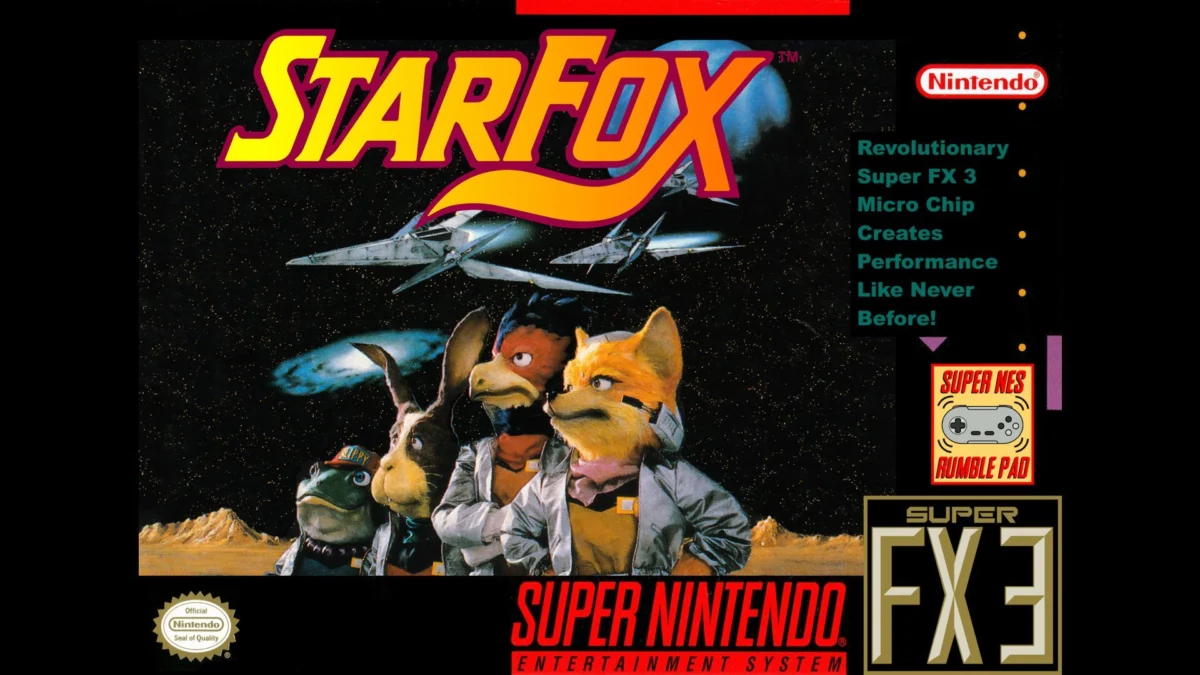
In a significant development for retro gaming enthusiasts, developer Sunlit, in collaboration with legendary programmer Randy Linden, has officially released a transformative patch for the original Super Nintendo Entertainment System (SNES) title, Star Fox. This patch integrates the advanced “Super FX3” chip technology, previously utilized by Linden for the enhanced SNES Doom FX3 Edition, to deliver a vastly improved gameplay experience. The implementation of the Super FX3 is reported to allow Star Fox to achieve a more consistent frame rate of 20 frames per second (fps), drastically reducing the notorious slowdowns and dips that characterized the original release. Beyond performance, the patch introduces modern amenities such as rumble support and MSU-1 audio, elevating the classic space combat simulator to new technical heights.
The Evolution of Super FX Technology and the Genesis of FX3
To fully appreciate the scope of this achievement, it is crucial to understand the historical context of the Super FX chip. Introduced in 1993, the Super FX was a co-processor developed by Argonaut Games and Nintendo, designed to augment the SNES’s limited graphical capabilities. The SNES, while powerful for its time, was primarily a 2D sprite-based console. The Super FX chip, initially dubbed the "MARIO chip" (Mathematical, Argonaut, Rotation, I/O), allowed the system to render 3D polygon graphics, a groundbreaking feat for a 16-bit console. Star Fox, known as Star Wing in Europe, was the inaugural title to showcase this technology, creating a sense of depth and perspective previously unseen on the platform.
However, the original Super FX chip, operating at approximately 10.7 MHz, was a pioneering but limited piece of hardware. Subsequent revisions, known as the GSU-1 and GSU-2 (Graphics Support Unit), increased the clock speed to 21.4 MHz, offering improved performance, but still grappling with the inherent challenges of rendering complex 3D environments on a system not originally designed for it. Games like Doom, Stunt Race FX, and Yoshi’s Island later leveraged these improved chips, pushing the boundaries of what was thought possible on the SNES.
Randy Linden, a name synonymous with pushing the limits of retro hardware, famously ported id Software’s Doom to the SNES, a monumental task given the console’s architectural constraints. His subsequent work on the SNES Doom FX3 Edition involved developing the Super FX3, a significantly accelerated version of the original co-processor, designed to run at speeds far exceeding its predecessors. This Super FX3, now repurposed for Star Fox, represents a modern re-engineering of a vintage concept, breathing new life into a foundational title.
According to technical specifications detailed on the patch page, the Super FX3 operates approximately eight times faster than the original 10.7 MHz MARIO chip found in the first Star Fox cartridges. Furthermore, it boasts a speed advantage of about four times over the 21.4 MHz GSU-1/GSU-2 chips. Despite this dramatic increase in processing power, the developers emphasize that "the game speed is not untied from the framerate, nor has the framerate cap been raised." This crucial detail means the game’s core logic and pacing remain faithful to the original, but the rendering pipeline is now robust enough to consistently hit the target 20fps more often.
Unpacking the Performance Enhancements: A Technical Deep Dive
To clarify the intricate technical details, Sunlit provided extensive insights into the patch’s inner workings. The FX3 emulation within MesenCE, a prominent SNES emulator, applies a 4x clock multiplier, aligning with the estimated 4x speed increase of the Super FX3 compared to the GSU-1/GSU-2. This enhanced processing capability allows the game’s rendering tasks to be completed four times faster, enabling Star Fox to maintain its intended 20fps much more frequently than with the original MARIO chip or even the GSU series chips running at their full 21.4 MHz speed (with the clock divider disabled).
A lesser-known but equally significant aspect of this upgrade involves the SNES’s central processing unit (CPU). The game logic in Star Fox primarily runs on the CPU, separate from the Super FX chip’s graphical duties. To optimize CPU performance, FastROM mode was enabled. FastROM allows the SNES CPU to access ROM data at its full speed (3.58 MHz) rather than the slower 2.68 MHz of SlowROM. This seemingly minor adjustment provides a subtle yet noticeable 1% speed boost to the CPU, further contributing to overall game fluidity. Sunlit explained that while this difference might only be apparent in a side-by-side comparison, it compounds the benefits of the FX3.
Interestingly, the implementation of FastROM with Super FX chips was historically problematic. Sunlit noted that "FastROM+Super FX actually wasn’t possible with Super FX before the FX3." While emulators and flashcarts often permitted this combination, it was an inaccurate representation of original hardware behavior. Phonymike, known for his audio engineering contributions to Star Fox EX, reportedly attempted a FastROM build of Star Fox on an actual GSU-2 cartridge, which failed to boot. This was due to the GSU-2 mapping FastROM banks $80-$FF to a separate ROM intended exclusively for CPU access, creating an incompatibility. The FX3 circumvents this architectural limitation, enabling the simultaneous benefits of accelerated graphical processing and optimized CPU access.
Despite these substantial improvements, the developers acknowledge that Star Fox may still experience minor slowdowns in particularly dense scenes, such as Sector Z with its numerous flying obstacles. However, the overall consensus is that the patch delivers a "massive improvement" over the original experience. Sunlit elaborated on the fundamental difference in architecture between Star Fox and games like Doom ’95 or The Ultimate Doom, which utilize the Super FX chip more extensively for game logic. In those Doom titles, nearly all game logic is offloaded to the Super FX, with the CPU primarily handling input, audio commands, and framebuffer transfers. In contrast, Star Fox 1 and 2 rely on the CPU to instruct the Super FX on drawing tasks, creating a bottleneck that even the FX3 cannot entirely eliminate, though it significantly mitigates its impact.
Enhanced Immersion: Rumble Support and MSU-1 Audio
Beyond raw performance, the patch introduces features that enrich the player’s immersion. Rumble support, a common feature in later console generations, allows for tactile feedback during gameplay, making explosions and impacts more visceral. This addition brings a modern sensibility to a classic title, enhancing the sensory experience for players.

Equally significant is the integration of MSU-1 audio. The Media Streaming Unit-1 (MSU-1) is a modern enhancement for the SNES that allows for CD-quality audio playback and full-motion video streams, capabilities far beyond the original SNES sound chip. By implementing MSU-1 audio, the patch replaces the original cartridge-based music and sound effects with high-fidelity, uncompressed audio tracks. This transforms the game’s soundtrack from its iconic 16-bit MIDI-like compositions into a rich, orchestral experience, akin to a movie score. For a game like Star Fox, where atmosphere and epic space battles are central, this audio upgrade can profoundly deepen player engagement and nostalgia.
Current Compatibility and Future Hardware Integration
At present, the Star Fox Super FX3 patch is compatible exclusively with the latest development builds of MesenCE, a highly accurate SNES emulator. This initial limited compatibility is a common phase for such ambitious hardware-level modifications, as specialized emulation or hardware support is required to simulate the FX3 chip.
However, the retro gaming community eagerly anticipates broader compatibility. Efforts are underway to integrate Super FX3 support into popular retro gaming hardware platforms such as the FXPak Pro and MiSTer. The FXPak Pro (formerly SD2SNES Pro) is a state-of-the-art flashcart for the SNES, allowing users to play ROMs from an SD card on original hardware. Its advanced co-processor support makes it an ideal candidate for FX3 integration, enabling players to experience the enhanced Star Fox on their original SNES consoles.
The MiSTer FPGA (Field-Programmable Gate Array) is another critical platform. MiSTer uses configurable hardware logic to recreate the behavior of classic consoles at a fundamental level, offering an incredibly accurate and low-latency emulation experience that is often indistinguishable from original hardware. Adding FX3 support to the MiSTer core for SNES would allow a vast number of retro enthusiasts to enjoy the upgraded Star Fox on a highly versatile and precise platform. The successful integration into these devices would mark a significant milestone, transitioning the patch from a purely software-emulated enhancement to a true hardware-compatible upgrade, accessible to a much wider audience of purists and enthusiasts.
Addressing the Visual Canvas: The Letterboxing Conundrum
A common question among players of early 3D SNES titles, including Star Fox, concerns the persistent letterboxing and smaller display area, leading many to wonder if future enhancements could allow the game to fill the entire screen. Sunlit provided an insightful explanation into why this is a fundamental limitation of the SNES architecture, even with the Super FX3.
The FX3, like its predecessors, is still constrained to a maximum canvas size of 224×192 pixels. The reason for the letterboxing lies in the SNES’s data transfer mechanisms. Each time a frame is rendered, the SNES CPU must perform a Direct Memory Access (DMA) transfer to copy the framebuffer data from the RAM on the cartridge (where the Super FX chip processes its graphics) to the SNES’s Video RAM (VRAM) for display. Copying a full screen’s worth of tiles (typically 256×224 pixels for the SNES) within the limited time available for a single frame would be too slow, resulting in significant slowdowns or dropped frames.
Sunlit succinctly summarized the architectural challenge: "Unfortunately Nintendo didn’t think of letting coprocessors access VRAM directly back in the day." This limitation meant that all graphical data had to be intermediated by the CPU, creating a bottleneck that dictated the smaller, letterboxed display area for Super FX titles. While modern recompilations of Star Fox, such as SpyderTL’s StarFoxDisassembly project, can run at high resolutions and full screen on powerful PCs, these bypass the original hardware’s constraints entirely. The FX3 patch, while dramatically improving performance within the original hardware’s framework, cannot overcome these inherent design limitations related to VRAM access and data transfer speeds.
A Testament to Collaborative Innovation and Preservation
The release of the Star Fox Super FX3 patch is a testament to the enduring passion and ingenuity within the retro gaming community. It highlights the collaborative spirit between talented developers like Sunlit and legendary figures such as Randy Linden, whose foundational work continues to inspire and enable new advancements. Linden’s prior interview, accessible through various platforms, offers further context into his groundbreaking contributions to SNES development and his philosophy on pushing hardware to its limits.
This project is more than just a performance boost; it is an act of digital preservation and enhancement. By meticulously re-engineering the game to leverage advanced, yet period-appropriate, co-processor technology, Sunlit and Linden have not only improved a beloved classic but also deepened our understanding of the SNES’s capabilities and limitations. The implications extend beyond Star Fox; this successful implementation of the Super FX3 could pave the way for similar enhancements for other Super FX-enabled titles, potentially revitalizing a significant portion of the SNES library.
As the retro gaming landscape continues to evolve, with increasing interest in both faithful emulation and hardware-level modifications, projects like the Super FX3 Star Fox patch stand as beacons of innovation. They bridge the gap between historical accuracy and modern expectations, allowing players to experience cherished games in ways that were once only dreamed of. The promise of FXPak Pro and MiSTer compatibility will undoubtedly ignite further excitement, ensuring that this enhanced version of Star Fox reaches the widest possible audience, celebrating the enduring legacy of one of gaming’s most iconic titles. The community eagerly awaits further announcements regarding expanded device support, anticipating a new golden age for SNES Super FX games.