 Jia Lissa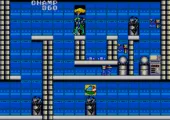
The release of Zillion for the Sega Master System in 1987 represents a pivotal moment in the intersection of Japanese animation and interactive entertainment. Developed and published by Sega Enterprises, the title emerged during a period of rapid industry expansion, where hardware manufacturers sought to leverage existing intellectual property to drive software sales. While the game originated as a tie-in to the Tatsunoko Productions anime series of the same name, its design philosophy transcended the typical limitations of licensed software, offering a complex, non-linear experience that remains a subject of study for historians of the 8-bit era.
Historical Context and Development Origins
The Zillion anime series premiered in Japan in 1987, capturing the attention of audiences with its high-concept science fiction narrative and distinct character designs. Recognizing the potential for synergy, Sega secured the rights to develop an interactive adaptation. While the anime maintained a domestic presence in Japan, its footprint in Western markets was minimal, save for limited VHS distribution and a notable, albeit brief, appearance in the 1995 Michael and Janet Jackson music video "Scream."
The game’s development was led by designer Kotaro Hayashida, a key figure at Sega during the mid-1980s. Hayashida’s vision for the title departed from the arcade-style, high-score-oriented gameplay that dominated the era. Instead, he implemented a structural design that emphasized exploration, inventory management, and spatial puzzle-solving. This approach placed Zillion in a nascent category of action-adventure titles, distinguishing it from the linear platformers that populated the Master System library at the time.
Mechanics and Gameplay Structure
In Zillion, the player assumes the role of JJ, a field operative for the White Knights peacekeeping force. The core objective involves infiltrating the subterranean Norsa Empire base to retrieve five encoded floppy disks, which contain critical intelligence, and subsequently decommissioning the facility’s central computer. The gameplay loop centers on the use of the "Zillion" laser, a versatile tool that functions both as a primary weapon and a utility device for interacting with terminals and unlocking storage compartments.
The game’s progression is tied to the rescue of two additional operatives: Apple and Champ. Each character possesses distinct physical attributes:
- JJ: A balanced operative suited for general infiltration.
- Apple: Distinguished by superior agility and jumping capacity, essential for navigating complex platforming sequences.
- Champ: Defined by increased durability, serving as a tactical asset for high-combat zones.
The inclusion of these characters introduced a layer of strategic depth, as players were required to manage their health pools effectively. If an operative is defeated, the player must return to the specific cell where they were captured to restore them to the roster. This system served as a rudimentary life-management mechanic, forcing players to weigh the risks of exploration against the potential loss of specific skill sets.
Environmental Design and Non-Linear Exploration
Zillion is set within a sprawling, interconnected facility comprising approximately 50 distinct rooms. This non-linear environment challenged players to map the layout, identify shortcuts, and manage resources, such as ID cards and ammunition. The facility is populated by security systems, including electrified barriers, automated turrets, and laser-equipped guards.
A defining feature of Hayashida’s design was the interactive terminal system. Players could input codes to deactivate security measures, toggle power to elevators, or open restricted areas. This integration of puzzle-solving within an action framework created a tempo that required both fast reflexes and methodical planning. The complexity of the base layout often necessitated backtracking, a design choice that was largely innovative for the 1987 console market.
Comparative Analysis: Zillion and the Metroid Parallel
The release of Zillion occurred in the same year as Nintendo’s Metroid, leading to frequent comparisons between the two titles. Both games share core characteristics: side-scrolling navigation, gradual character empowerment, and an emphasis on discovery. However, a technical analysis reveals fundamental differences in their design intent.
Metroid focused on the theme of isolation, tasking the player with navigating an alien environment largely devoid of human interaction. Zillion, conversely, maintains a high-tech, military-industrial aesthetic, emphasizing constant skirmishes with hostile guards and the management of a multi-character squad. Furthermore, while Metroid utilized a vast, planet-wide map, Zillion remained confined to a single, deep-facility installation. The two games represent distinct approaches to the emerging genre, with Zillion drawing more substantial stylistic inspiration from the 1984 computer game Impossible Mission than from the atmospheric exploration of Metroid.
Technical Limitations and Consumer Experience
Despite its innovative mechanics, Zillion was subject to the hardware constraints of the 1987 era. The most significant of these was the absence of an integrated save or password system. Because the game tracked the state of dozens of doors, collected items, and rescue progress, implementing a traditional password system would have been technically demanding.
Sega did produce titles with battery-backed save functionality in 1987, such as Phantasy Star; however, the retail cost of such cartridges—often exceeding $100—was prohibitive for a title like Zillion. Consequently, players were required to complete the mission in a single session, a common practice at the time that prioritized endurance and memorization. This forced a "practice run" culture, where players would systematically map the facility over several attempts to optimize their final run.
Critical Reception and Legacy
While the game is lauded for its atmosphere and depth, it faced criticism regarding its final act. The climactic encounter features a mechanical lizard boss—an entity with no prior narrative setup—which stands in contrast to the buildup toward the Norsa Empire leader, Baron Ricks. The absence of a final showdown with Ricks during gameplay was viewed by many as an anti-climactic resolution to a high-stakes mission.
Furthermore, the potential for character-specific gameplay was underutilized. While the characters offered different statistics, their utility remained limited to survival rather than unique narrative paths or specialized mission objectives. Despite these shortcomings, Zillion remains a significant artifact in the history of Sega. It demonstrated the viability of complex, narrative-driven exploration games on 8-bit hardware.
The series did not receive a proper 16-bit evolution on the Sega Genesis, and its sequel, while maintaining the brand, failed to iterate on the core strengths of the original. Nonetheless, for collectors and retro-gaming enthusiasts, Zillion stands as a testament to the ambition of 1980s game design, showcasing an early attempt to integrate character-based RPG elements with action-platforming mechanics.
Summary of Impact
In the broader scope of the industry, Zillion serves as a case study for the evolution of the "Metroidvania" genre. By integrating elements of puzzle-solving, multi-character management, and non-linear backtracking, the game established a blueprint that would be refined by later developers. While it lacked the long-term industry momentum of its competitors, its influence on the development of action-adventure games during the late 1980s is objectively documented through its mechanical depth and its successful, albeit challenging, approach to non-linear world design.
As of the current era, the title is frequently revisited through emulation, which addresses the original hardware’s lack of save functionality. This accessibility has allowed a new generation of players to experience the game’s demanding, yet rewarding, structure, cementing its reputation as a cult classic of the Master System era.