Hartono Sudibyo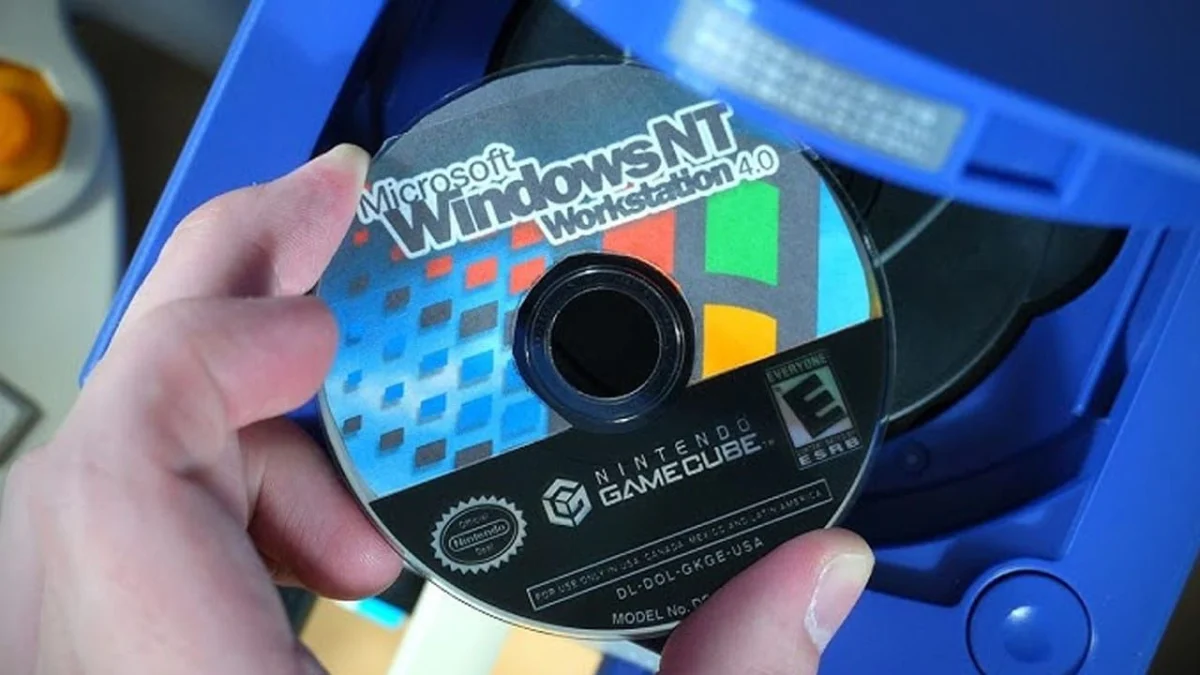
The world of retro gaming and hardware modification continues to push boundaries, demonstrating that even seemingly incompatible technologies can be coaxed into coexisting. In a remarkable feat of technical ingenuity, a dedicated group of enthusiasts has successfully ported and executed Microsoft’s foundational operating system, Windows NT, onto the venerable Nintendo GameCube. This development, spearheaded by the YouTube channel JigaTech and further detailed on Hackaday, marks a significant milestone in the ongoing trend of running modern operating systems on vintage gaming consoles.
The Genesis of an Audacious Project
The GameCube, launched by Nintendo in 2001, was celebrated for its robust performance and its library of beloved first-party titles such as Super Mario Sunshine, The Legend of Zelda: The Wind Waker, and Metroid Prime. However, its internal architecture, designed for gaming and entertainment, was never intended to host a complex operating system like Windows NT, which first emerged in 1993 as a powerful, business-oriented platform. The very notion of such a port was, until recently, relegated to the realm of speculative curiosity for most gamers and tech enthusiasts.
The inspiration for this particular project appears to stem from a growing wave of similar endeavors. The successful porting of Windows CE onto the Nintendo 64, as demonstrated by fellow YouTuber Throaty Mumbo, served as a potent indicator that the limitations of older hardware might be more flexible than initially perceived. This success likely emboldened JigaTech and their collaborators to explore the possibility of running an even more demanding operating system on a console with a different, albeit still relatively constrained, architecture.
A Deep Dive into the Technical Hurdles and Triumphs
The process of bringing Windows NT to the GameCube was far from straightforward. It involved a complex interplay of hardware modification, software adaptation, and a deep understanding of both the GameCube’s internal workings and the intricacies of Windows NT’s architecture. The key to this success lies in the existence of a PowerPC version of Windows NT, released by Microsoft in 1995. The GameCube, while a proprietary Nintendo design, is based on IBM’s PowerPC Gekko processor, creating a theoretical compatibility layer.
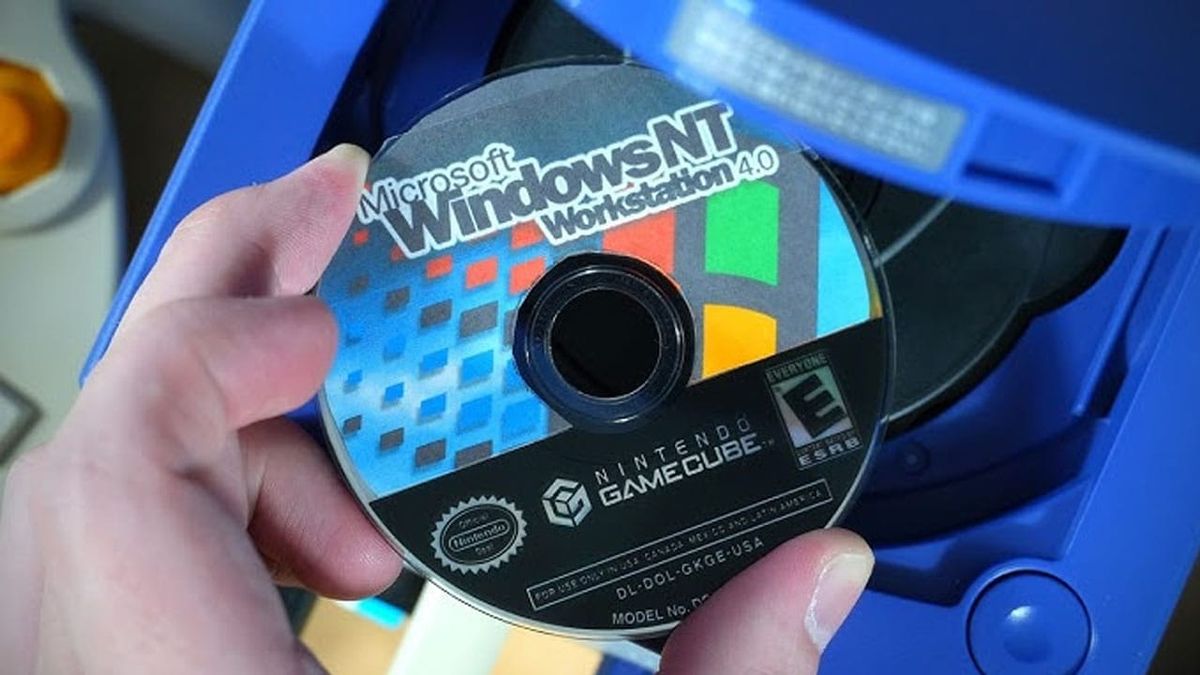
The primary challenge involved creating a bootloader and an intermediary software layer that could translate the GameCube’s hardware calls and system functions into a format that Windows NT could understand and utilize. This is where the contributions of individuals like Rairii, NTx86, and stonedDiscord become crucial. Their collective expertise in reverse engineering and operating system development was instrumental in bridging the gap between the two distinct technological platforms.
The result is a functional, albeit rudimentary, Windows NT environment running on the GameCube. Early demonstrations reveal the operating system booting up and exhibiting basic functionality. Notably, the project has showcased the ability to interact with the system using unconventional peripherals, including the iconic DK Bongos, originally designed for Donkey Konga. This whimsical integration underscores the experimental and often playful nature of such homebrew projects, highlighting the sheer joy of pushing technological limits for the sake of curiosity and demonstration.
The Chronology of an Unconventional Port
While a precise timeline for the development is not publicly detailed, the recent surfacing of this project on platforms like Hackaday suggests a period of intense research and development culminating in the successful demonstration. The timeline can be broadly understood as follows:
- 1993-1995: Microsoft releases early versions of Windows NT, including a PowerPC architecture variant, laying the foundational software groundwork.
- 2001: Nintendo launches the GameCube, featuring its custom PowerPC Gekko processor.
- Recent Years: A growing community of retro hardware enthusiasts begins exploring the feasibility of running modern operating systems on older consoles. Demonstrations of Windows CE on the N64 gain traction.
- Undisclosed Period: JigaTech and collaborators begin their ambitious project to port Windows NT to the GameCube. This phase likely involves extensive reverse engineering, hardware analysis, and software development.
- June 2026 (approximate): The project culminates in successful demonstrations of Windows NT running on the GameCube, shared via YouTube and subsequently reported on by tech news outlets like Hackaday and Retro Dodo.
Supporting Data and Technical Context
The success of this project can be contextualized by understanding the underlying specifications of both the GameCube and Windows NT.
Nintendo GameCube Specifications:

- CPU: IBM PowerPC "Gekko" at 485 MHz
- RAM: 24 MB main 1T-SRAM, 16 MB auxiliary 1T-SRAM (total 40 MB)
- Graphics: ATI "Flipper" GPU
- Operating System: Proprietary Nintendo OS
Windows NT (circa 1995 PowerPC Release):
- Architecture: Designed for various processor architectures, including PowerPC.
- System Requirements (minimum for early versions): Typically required a 386/486 processor or equivalent, 12-16 MB RAM, and significant hard drive space. While the GameCube’s processor is more advanced than early NT-compatible chips, its overall system architecture and memory management present unique challenges.
- Key Features: Preemptive multitasking, memory protection, a robust kernel designed for stability and security.
The GameCube’s 485 MHz Gekko processor, while modest by today’s standards, is capable of handling the computational demands of Windows NT’s core functions. The primary bottleneck is likely to be the GameCube’s limited RAM (40 MB total) compared to the typical requirements for a smooth Windows NT experience. However, the demonstration suggests that the operating system can boot and operate, indicating that the essential components have been successfully adapted.
Potential for Expansion and Future Implications
The implications of this achievement extend beyond mere novelty. It opens up avenues for further exploration in the retro-computing community:
- Enhanced Functionality: With the addition of peripherals like the ASCII Nintendo GameCube Keyboard Controller, the GameCube can be transformed into a rudimentary portable computing device. This also hints at the possibility of running other Windows applications, though performance would undoubtedly be a significant limitation.
- Cross-Platform Compatibility: The fact that the GameCube’s hardware is compatible with Windows NT’s PowerPC version suggests that similar ports might be achievable on other PowerPC-based retro consoles. Furthermore, since the Nintendo Wii is backward compatible with GameCube games and shares similar architecture, Windows NT could theoretically be run on the Wii as well.
- Educational Value: Projects like this serve as invaluable educational tools, offering practical insights into operating system design, hardware interfacing, and software porting techniques. They demonstrate the fundamental principles that underpin modern computing by deconstructing them onto older platforms.
The success of running Windows NT on the GameCube is a testament to the persistent curiosity and technical prowess of the homebrew community. It underscores the enduring appeal of retro technology and the drive to explore its untapped potential. While the practical utility of running Windows NT on a GameCube might be limited, the achievement itself is a significant demonstration of what can be accomplished when innovation meets nostalgia. This endeavor, alongside other similar projects like running Windows on the Game Boy Color, solidifies a fascinating trend: the unexpected resurgence of Windows as a software target for vintage gaming hardware, prompting the question of whether Windows itself is becoming the new "DOOM" – a benchmark for demonstrating the capabilities of diverse and often unexpected platforms.
The availability of detailed instructions on GitHub further empowers aspiring enthusiasts to replicate or build upon this groundbreaking work. As the retro-computing landscape continues to evolve, it is clear that the boundaries between gaming consoles and personal computers are becoming increasingly blurred, offering exciting new ways to interact with the technology of the past.