Farhan hamdan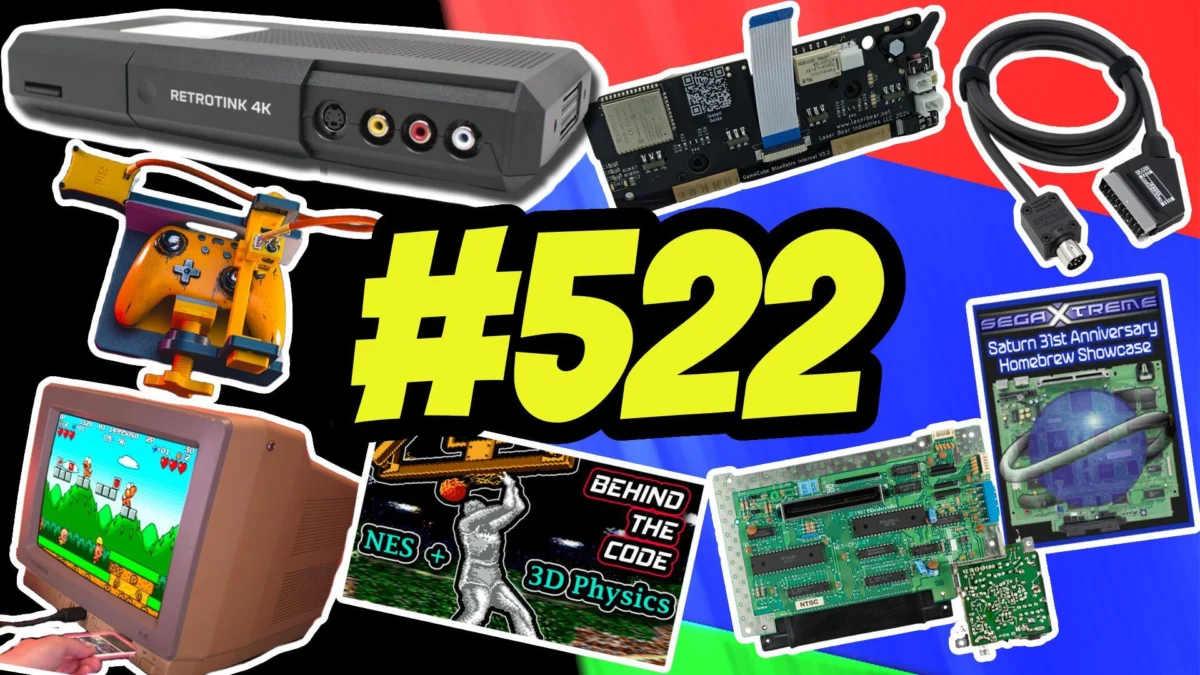
The latest installment of the RetroRGB Weekly Roundup, released on July 15th, 2026, has delivered a comprehensive overview of significant developments within the retro gaming hardware and software communities. This edition, presented in both video and audio podcast formats across major platforms including iTunes, Google Podcasts, Stitcher, Spotify, and Amazon Music, highlights crucial advancements in signal fidelity, console preservation, input latency testing, and community-driven projects. The roundup underscores the ongoing dedication of enthusiasts and developers to ensuring classic gaming experiences remain accessible and optimized for contemporary standards, while also preserving their authentic historical context.
Enhancing Visual Fidelity: Cables, Scalers, and Signal Integrity
A focal point of this week’s roundup is the continuous pursuit of optimal video quality for vintage consoles. New specialized SMS MK-2000 RGB Cables have been introduced, addressing a specific need within the Sega Master System community. The Japanese MK-2000 model of the Master System, while sharing much of its architecture with its international counterparts, often presents unique video output challenges due to region-specific pinouts and internal configurations. These new RGB cables are engineered to provide a pristine analog RGB signal, which is widely regarded as the highest quality output achievable from the console without internal modifications. This development is particularly significant for collectors and enthusiasts of Japanese imports, as it allows them to experience games with vibrant colors and sharp detail on modern displays via upscalers, bypassing the often-degraded composite video signals common with older hardware. The availability of high-quality, purpose-built cables is a testament to the community’s commitment to maintaining signal integrity, a foundational principle for accurate retro gaming preservation.
Further advancing display compatibility and image processing, the RetroTINK 4K Profile Editor has seen significant updates. Developed by "Pipes," this user-friendly software tool empowers RetroTINK 4K owners to create, modify, and manage custom video profiles with unprecedented granularity. The RetroTINK 4K, a leading video scaler in the retro gaming market, is celebrated for its advanced processing capabilities, enabling classic consoles to output stunning 4K visuals on modern televisions with minimal latency. The profile editor extends this versatility, allowing users to fine-tune aspects such as aspect ratio, scaling algorithms, color rendition, and filter application to perfectly match specific consoles, games, or personal preferences. This level of customization ensures that whether a user prioritizes pixel-perfect integer scaling, a softened CRT-like aesthetic, or specific aspect ratio corrections, the RetroTINK 4K can deliver. The introduction of such a robust editing tool not only enhances the user experience but also fosters community collaboration, as users can share and refine profiles, collectively pushing the boundaries of retro video fidelity.
In a related development for the RetroTINK 4K, Lumacode Support has been officially integrated. Lumacode refers to a technique that processes the luma (brightness) and chroma (color) components of a video signal independently, often to extract a cleaner luma signal from composite video sources. Historically, composite video, while widely supported, is notorious for its inherent signal degradation, including color bleeding and artifacting. Lumacode support in the RetroTINK 4K is a critical enhancement for accurately digitizing and displaying signals from consoles that primarily output composite video, such as the original Nintendo Entertainment System or early Atari systems. By intelligently separating and processing the luma and chroma, the scaler can mitigate some of the common visual shortcomings of composite video, resulting in a clearer, more stable image. This feature reflects the commitment of developers like Mike Chi, the creator of the RetroTINK line, to providing solutions that not only upscale but also meticulously preserve and enhance the nuances of original analog video signals, irrespective of their initial quality.
Understanding and Optimizing Classic Hardware
The roundup also delved into the intricacies of vintage hardware, offering explanations for long-standing technical curiosities. A detailed analysis was provided on the phenomenon of "NES Wobbly Video." For decades, enthusiasts connecting their original Nintendo Entertainment System consoles via composite video have observed a subtle but noticeable "wobble" or instability in the image, particularly at the edges of the screen. This new explanation delves into the underlying causes, often attributed to specific timing characteristics of the NES’s Picture Processing Unit (PPU) and its interaction with the analog video output circuitry. Understanding the root cause of this "wobble" is crucial for both diagnostic purposes and for the development of future modifications or external solutions aimed at stabilizing the video output. Such deep dives into hardware behavior not only satisfy curiosity but also empower the modding community to develop more informed and effective solutions for common issues, ultimately contributing to a better play experience for all.
Community-Driven Preservation and Innovation
The retro gaming community thrives on collective effort, and this was exemplified by the announcement of the SegaXtreme Showcase Winners and the release of a new Digital Magazine. SegaXtreme is a prominent hub for Sega Saturn enthusiasts, known for its vibrant homebrew development, hardware modification discussions, and preservation efforts. The annual showcase provides a platform for developers to present new games, tools, and utilities for the Saturn, demonstrating the console’s enduring appeal and untapped potential. The winners of this year’s showcase represent the pinnacle of creativity and technical prowess within the Saturn scene, inspiring further innovation. Concurrently, the release of a digital magazine serves as a vital historical record, documenting these achievements, offering insights into development processes, and providing a curated collection of articles and interviews. This initiative underscores the importance of community-led publishing in preserving the history and ongoing evolution of specific retro gaming niches, ensuring that knowledge and achievements are not lost to time.
Another fascinating insight came from the "Behind The Code" series, focusing on NES Double Dribble. This segment meticulously dissected the game’s innovative (for its time) 3D ball physics and, famously, the "corner three exploit." Released in 1987, Double Dribble was one of the earliest basketball simulations to attempt a semblance of three-dimensional movement for the ball, a significant technical feat on the NES hardware. The "Behind The Code" analysis likely explored the programming techniques used to achieve this effect, revealing the clever optimizations and workarounds employed by early developers. Furthermore, the segment addressed the game’s notorious "corner three exploit," a programming oversight that allowed players to consistently score three-pointers from specific spots on the court with almost perfect accuracy. Such deep dives into game mechanics and code provide invaluable insights into the development constraints and design philosophies of the era, offering both historical context and a new appreciation for the ingenuity, and sometimes charming flaws, of classic titles. This form of digital archaeology is crucial for understanding the evolution of game design and for preventing such knowledge from being lost.

Advancements in Input Latency Measurement
A critical concern for competitive retro gamers and enthusiasts of precise control is input latency. To address this, Gamepadla’s new Lag Test Kit, Prometheus 82, was highlighted. Input lag, the delay between a player’s action (e.g., pressing a button) and the corresponding on-screen reaction, can significantly impact gameplay feel and competitive performance. The Prometheus 82 is a sophisticated hardware device designed to accurately measure this delay across various setups, including original consoles, emulators, different display technologies, and input devices. It provides objective, quantifiable data, allowing users to identify bottlenecks in their gaming chain and optimize their setup for minimal latency. This device is an invaluable tool for hardware reviewers, modders, and players alike, enabling standardized testing and a more scientific approach to achieving the most responsive retro gaming experience possible. The development of such precise measurement tools reflects a growing maturity in the retro gaming scene, moving beyond anecdotal observations to data-driven optimization.
Exploring Unique Hardware Combinations and Modern Integrations
The roundup also presented a fascinating look at a rare CRT + PC Engine combo. The appeal of Cathode Ray Tube (CRT) displays for retro gaming remains strong due to their native handling of interlaced signals, zero input lag, and characteristic visual artifacts that contribute to an authentic retro aesthetic. This specific segment likely showcased a particular, perhaps uncommon, CRT model that exhibits exceptional synergy with the PC Engine console, known for its vibrant 8-bit and 16-bit era graphics. Such unique hardware pairings are often sought after by purists aiming for the most period-accurate and visually pleasing experience, highlighting the diverse preferences within the retro community and the ongoing discovery of optimal display solutions.
Modern conveniences were also discussed with the introduction of a GameCube Internal Bluetooth Kit. This modification allows the classic Nintendo GameCube console to natively support wireless Bluetooth controllers, eliminating the need for bulky adapters or wired connections. The GameCube, while a beloved console, predates widespread wireless controller technology. This internal mod brings it into the modern era, offering enhanced convenience and a cleaner gaming setup. Such developments bridge the gap between retro hardware and contemporary expectations, extending the usability and appeal of classic consoles for a new generation of players or those seeking a less cluttered setup.
Digital Archaeology and Lifestyle Integration
Beyond direct gaming hardware, the roundup touched on broader technological history and lifestyle integration. A segment on AIM History and Server explored the legacy of AOL Instant Messenger, a seminal platform in early internet communication. This discussion, likely referencing historical videos and efforts to revive or document the service, underscores the importance of digital archaeology in preserving the cultural and technological milestones of the internet. The re-establishment of an AIM server, even if for nostalgic or archival purposes, offers a tangible link to a bygone era of online interaction, reminding us how far digital communication has evolved.
Finally, the Coffee Machine Re-Review segment offered a practical, albeit tangential, update for the RetroRGB audience. While not directly related to gaming, such reviews often cater to the broader lifestyle interests of the channel’s demographic, who appreciate quality hardware and informed opinions. A "re-review" implies a long-term evaluation, providing insights into the durability, sustained performance, and overall value of a product over an extended period. This approach builds trust with the audience, demonstrating a commitment to thorough, practical assessments that extend beyond initial impressions.
Community Support and Future Outlook
The RetroRGB Weekly Roundup consistently serves as a vital resource for the retro gaming community, bridging enthusiasts with developers, chronicling technological advancements, and fostering a deeper understanding of classic hardware and software. The content highlighted in this particular roundup—from specialized cables and advanced scaler features to deep dives into game code and latency testing—demonstrates a robust and active ecosystem dedicated to the preservation, enhancement, and enjoyment of vintage gaming. The call for community support via monthly services, tips, and affiliate links is a testament to the independent nature of this content creation, emphasizing that the continued output of such valuable information relies heavily on the engagement and financial contributions of its dedicated audience. As the retro gaming landscape continues to evolve, platforms like RetroRGB remain indispensable in guiding enthusiasts through its complexities and celebrating its enduring legacy.