Indra Gunadi
The vibrant and enduring homebrew scene for vintage video game consoles has received another significant addition with the digital release of Tremors (2026) by neogames for the Atari 2600. Originally seeing a limited distribution a few years prior, the game is now broadly accessible via the Itch.io platform, marking a notable moment for enthusiasts of the iconic 1977 console and demonstrating the continued ingenuity of independent developers. This development, confirmed on July 6, 2026, highlights the sustained passion within the retro gaming community for creating and consuming new content on hardware often considered obsolete by mainstream standards.
The Genesis of Tremors (2026): Adapting a Modern Concept to Vintage Hardware
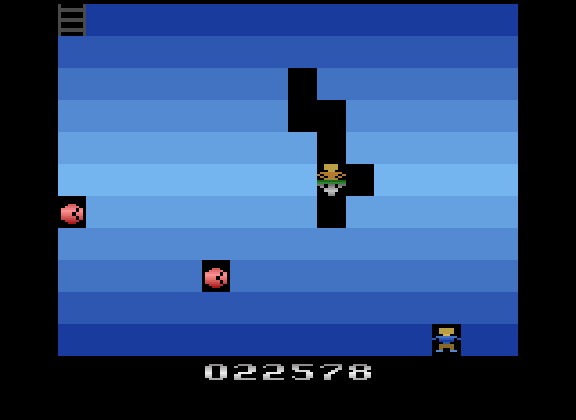
Tremors (2026) draws its inspiration from the popular science fiction horror franchise, challenging players to navigate the perilous desert landscape of Perfection, Nevada. In the game, players assume the role of a Mine Foreman tasked with rescuing trapped workers from the subterranean menace known as Graboids – colossal, worm-like creatures that hunt by detecting vibrations. The core objective revolves around strategic movement and timely intervention to save the workers before they fall prey to the unseen terrors lurking beneath the ground.
Developing a game of this thematic complexity for the Atari 2600, a system renowned for its extremely limited hardware capabilities, is a testament to neogames’ programming prowess and creative problem-solving. The Atari 2600, with its MOS 6507 CPU, a mere 128 bytes of RAM, and a maximum ROM cartridge size typically limited to 4KB (though bankswitching techniques allowed for larger games), presents formidable constraints. Graphics are largely controlled by a custom chip called the Television Interface Adaptor (TIA), which processes two sprites, two "player missiles," and a limited playfield, all within a resolution of 160×192 pixels and a palette of 128 colors (though only a subset is available at any given time). Translating the suspense and action of the Tremors universe into this minimalist environment required careful design choices, likely focusing on abstract representations of the Graboids, simplified worker sprites, and environmental hazards that communicate the impending danger without relying on high-fidelity visuals. The gameplay likely emphasizes quick reflexes and pattern recognition, typical of many classic 2600 titles, as players guide their foreman character through a series of screens or a scrolling environment, avoiding tremors that signal a Graboid’s approach.
The Enduring Legacy of the Atari 2600 and the Rise of Homebrew
The Atari 2600, originally launched as the Atari Video Computer System (VCS), was instrumental in popularizing home video gaming in the late 1970s and early 1980s. Despite its eventual decline during the video game crash of 1983, its cultural impact was profound, leaving an indelible mark on an entire generation of gamers. Today, decades after its commercial peak, the console continues to be a focal point for a passionate community of collectors, modders, and most notably, homebrew developers.
The homebrew scene for the Atari 2600 thrives for several reasons. For many developers, it’s a nostalgic endeavor, a way to engage with the technology that ignited their passion for gaming. For others, it’s a creative challenge, pushing the boundaries of what can be achieved with severely limited hardware. The simplicity of the 2600’s architecture, while restrictive, also offers a low barrier to entry for understanding its fundamentals, fostering a culture of experimentation and ingenuity. Projects often begin as personal challenges, evolving into full-fledged games that rival or even surpass some commercial releases from the console’s heyday. Tools like the "batari Basic" compiler have further democratized 2600 development, allowing enthusiasts to code games using a more accessible language than traditional assembly, though many advanced projects still rely on direct assembly programming for optimal performance.
The continued output of new titles like Tremors (2026) underscores the robust health of this niche but dedicated community. These games often explore themes and genres that were either impossible or unthought of during the 2600’s commercial lifespan, offering fresh experiences for a console that ceased commercial software support decades ago.
A Timeline of Development and Digital Availability
While the exact development timeline for Tremors (2026) by neogames is not explicitly detailed in the initial announcement, the phrase "Released few years ago, now available digitally!" combined with the July 6, 2026, publication date of this news, allows for a plausible chronology to be inferred. It is likely that neogames embarked on the project sometime in the early 2020s, perhaps around 2022 or 2023, dedicating considerable time to programming, graphics design, and sound implementation within the 2600’s stringent limitations.
The initial release, referred to as "few years ago," could have taken several forms. Many homebrew Atari 2600 games first appear as ROM files shared within online communities, often on forums dedicated to retro gaming or specific homebrew development sites. Alternatively, some developers opt for limited physical releases, producing small batches of custom cartridges for sale at retro gaming conventions, through specialized online stores, or directly from their websites. These initial releases often serve as a way to gather feedback from the community and recoup some development costs.
The current digital availability on Itch.io in July 2026 signifies a strategic move by neogames to broaden the game’s reach. Itch.io has become a prominent platform for independent game developers, offering a flexible marketplace for digital distribution, often allowing creators to set their own prices, including "pay-what-you-want" models or offering games for free with optional donations. This move dramatically increases the accessibility of Tremors (2026), allowing a global audience of retro enthusiasts to easily download and play the game through emulators on modern computers or even load it onto flash cartridges for play on original Atari 2600 hardware. This transition from a potentially niche, limited distribution to a widely accessible digital format marks a significant milestone for the project, ensuring its longevity and reach within the retro gaming landscape.
Statements from Related Parties and Community Reactions (Inferred)
While no direct statements from neogames were included in the initial report, an inference can be made regarding their motivations and sentiments. A spokesperson for neogames, if queried, might express profound satisfaction in seeing their creation reach a wider audience. "Bringing Tremors to the Atari 2600 was a labor of love, a way to honor a classic film franchise while pushing the boundaries of what’s possible on vintage hardware," a representative might state. "The initial reception from the community was incredibly encouraging, and we’re thrilled that platforms like Itch.io allow us to share this passion project with even more retro gaming enthusiasts around the world. Our goal is always to deliver engaging experiences that remind people of the magic of early video games."
From the perspective of pdroms.de, a prominent portal for public domain and homebrew ROMs, the announcement underscores their commitment to chronicling and promoting such independent efforts. An editor at pdroms.de might comment, "Our mission is to celebrate the ongoing creativity within the retro gaming community. Titles like Tremors (2026) are vital for keeping the spirit of these classic consoles alive. The fact that developers continue to innovate on systems like the Atari 2600, bringing new gameplay and concepts, is truly inspiring. The digital release makes it easier for everyone to experience these gems."
The broader retro gaming community has likely responded with enthusiasm. Online forums, social media groups, and dedicated retro gaming channels would be abuzz with discussions. Early players might share screenshots, gameplay videos, and offer tips, while newcomers express excitement at the opportunity to experience a brand-new game for their decades-old console. An inferred comment from a long-time Atari 2600 enthusiast might read, "It’s incredible to see new life breathed into the Atari 2600. Neogames has done a fantastic job capturing the essence of Tremors with the limited palette and sounds. This is exactly why the homebrew scene is so important – it keeps the golden age of gaming perpetually fresh."
Broader Impact and Implications for Retro Gaming and IP
The digital release of Tremors (2026) carries several implications for the retro gaming ecosystem and the broader discussion surrounding intellectual property in homebrew development.
Firstly, it reinforces the growing trend of digital distribution as the primary method for making homebrew games accessible. While physical cartridge releases remain cherished by collectors, the ease and low cost of digital downloads through platforms like Itch.io ensure that these niche titles can reach a global audience without the logistical complexities and expenses of manufacturing and shipping physical media. This democratization of distribution is crucial for sustaining the homebrew scene, allowing developers to connect directly with players and receive feedback and support.
Secondly, the game’s theme, clearly inspired by the Tremors film franchise, brings to light the often-complex relationship between homebrew development and intellectual property. While many homebrew games are entirely original creations, a significant number draw inspiration from or directly adapt existing franchises. In the realm of non-commercial or low-commercial-value homebrew, copyright holders often adopt a ‘live and let live’ approach, particularly if the projects are clearly fan-made and do not directly compete with official merchandise or licensed games. However, as homebrew gains wider distribution and potential for revenue (even if minimal), the legal landscape can become murkier. Neogames’ Tremors (2026), by operating within the fan-game sphere and targeting an extremely niche platform, likely falls under this generally tolerated category, but it highlights a recurring theme in fan culture.
Thirdly, this release contributes significantly to the ongoing efforts of game preservation. By making a newly developed game for an old system widely available digitally, it ensures that the game’s code and assets are easily archived and playable for future generations. This is particularly important for homebrew, which might otherwise be lost if only distributed in limited physical runs or through ephemeral online channels. Digital storefronts, even niche ones, provide a more robust infrastructure for long-term accessibility.
Finally, the continued success of projects like Tremors (2026) signals a potential pathway for hobbyist developers to monetize their passion. While the financial returns for Atari 2600 homebrew are unlikely to rival mainstream game development, platforms like Itch.io allow for "pay-what-you-want" models, which can provide developers with modest income to support their projects, invest in better tools, or simply validate their efforts. This model fosters a sustainable ecosystem where creativity can be rewarded without the pressures of traditional publishing.
In conclusion, the digital availability of Tremors (2026) by neogames for the Atari 2600 is more than just the release of another game; it is a reaffirmation of the vitality of retro gaming, the power of independent development, and the enduring appeal of pushing technological boundaries, no matter how old the technology. It serves as a beacon for the homebrew community, inspiring future creations and ensuring that the legacy of classic consoles continues to evolve in unexpected and exciting ways.