Indra Gunadi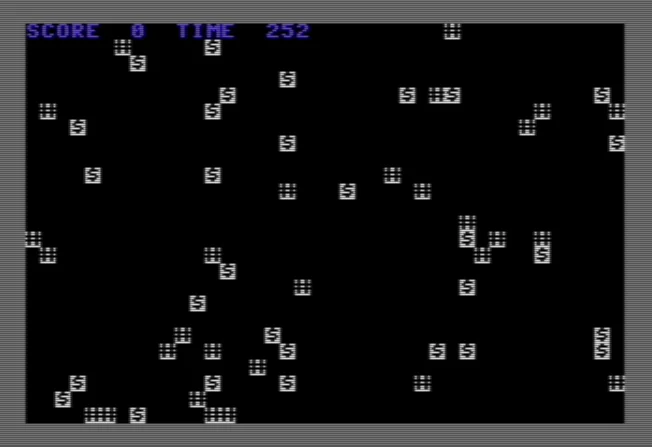
The Evolution of Type-in Software Culture
The history of the Commodore 64 is inextricably linked to the concept of the "type-in" program. Throughout the 1980s, computer magazines such as Compute!, RUN, and Ahoy! provided readers with pages of hexadecimal code or BASIC listings. Readers would spend hours manually inputting these lines into their machines, debugging syntax errors, and saving the results to cassette tape or floppy disk. This practice was not merely a way to acquire software; it was a fundamental educational tool that demystified the inner workings of the MOS Technology 6510 processor.
ZombieGamer80’s release of Tomb Jones acts as a modern homage to this bygone era. Originally conceived as a personal project in 2018, the game was designed using Commodore BASIC 2.0—the native language of the C64. By bringing this project to the public in 2026, the developer has highlighted a growing trend in the enthusiast community: the transition from private development to public archiving and documentation.
Technical Foundations and Gameplay Mechanics
At its core, Tomb Jones is a thematic exploration of the "Indiana Jones-style" adventure genre, a staple of early 8-bit gaming. The game places the player in the role of an explorer navigating a cursed tomb, featuring hazards such as rolling boulders and various mechanical traps. From a technical standpoint, writing in BASIC 2.0 on the C64 presents significant limitations. Unlike machine language (assembly), which allows for direct hardware manipulation and high-speed sprite movement, BASIC 2.0 is an interpreted language that executes significantly slower.
Developers working within this framework must rely on PEEK and POKE commands to interact with the C64’s memory-mapped I/O, specifically for controlling the VIC-II graphics chip and the SID sound chip. The simplicity of Tomb Jones is, in many ways, its defining characteristic. It avoids the complexities of modern engine-driven game design, opting instead for a logic-based approach that requires the player to time their movements precisely to avoid the encroaching obstacles.
Chronology of the Project
The timeline of Tomb Jones spans nearly a decade, reflecting the patience inherent in the retro-development community:
- 2018: ZombieGamer80 completes the initial draft of the game in BASIC 2.0. At this stage, the project remains a personal exercise in code optimization and logic design.
- 2019–2025: The project remains in the developer’s private repository, mirroring the thousands of unfinished or unpublished games created during the 1980s that never made it to commercial distribution.
- 2026 (Early): The developer decides to curate the project for public release, framing it as a tribute to the type-in magazine format.
- September 11, 2026: The software is officially released via public distribution channels, marked by documentation and a visual preview of the game’s interface.
Analysis of the Retro-Gaming Market
The release of Tomb Jones arrives at a time when the market for 8-bit software is more robust than at any point since the mid-1990s. This resurgence is driven by several factors, including the availability of modern development tools like C64 Debugger, cross-compilers such as CC65, and hardware flash-carts like the 1541 Ultimate II+, which allow modern users to run original software on authentic hardware without the need for fragile physical media.
While Tomb Jones is a relatively small-scale project, it contributes to the broader ecosystem of "homebrew" gaming. Homebrew developers currently occupy a unique space in the gaming industry, where they operate outside of the profit-driven mandates of AAA publishers. Instead, the motivation is primarily archival. By releasing source code and documentation alongside the executable files, developers ensure that the history of the Commodore 64 remains a living, evolving entity rather than a static historical artifact.

The Significance of BASIC 2.0 in Modern Contexts
There is a recurring debate among retro-enthusiasts regarding the merits of using BASIC versus machine language in 2026. Critics of BASIC often cite its lack of efficiency and the "chunky" movement it produces in games. However, proponents argue that BASIC 2.0 is the "lingua franca" of the C64. It is accessible to beginners, requires no external compilers, and provides an immediate feedback loop that allows developers to see their code take shape in real-time.
Tomb Jones serves as a case study for this philosophy. By choosing to publish the game as a tribute to the type-in era, the developer is making a statement about the democratization of game development. It suggests that the value of a project is not strictly measured by its frame rate or its graphic fidelity, but by its accessibility and the historical context it maintains.
Implications for Digital Preservation
The long-term impact of releasing such titles is significant for digital preservationists. Many early 1980s games were lost due to media degradation—the physical magnetic tape or floppy disks simply decayed over time. By digitizing and releasing these projects in 2026, the community creates redundant backups across multiple platforms and cloud-based repositories.
Furthermore, the publication of Tomb Jones encourages other hobbyists to revisit their own archives. It is estimated that there are thousands of BASIC programs sitting on dusty cassette tapes in basements across the globe. As these developers reach middle age, many are opting to share their early work with the public, creating a digital "gold rush" of historical software that provides insight into the creative minds of the 1980s and 1990s.
Industry Perspectives on Homebrew Releases
While formal statements from established gaming companies are rare regarding minor homebrew releases, the general sentiment within the developer community is one of appreciation. Retro-gaming historians note that titles like Tomb Jones provide a "bottom-up" view of computing history. While the history of the C64 is often written through the lens of commercial successes like Impossible Mission or The Last Ninja, the reality of the platform was defined by the thousands of smaller, more experimental projects that filled the pages of magazines and the drives of hobbyists.
By providing a link to the original source, ZombieGamer80 has enabled others to study the logic of the game, potentially adapting it for other 8-bit systems or experimenting with their own modifications. This "open-source" approach to legacy gaming is arguably the most effective method for ensuring that these machines remain relevant for future generations.
Future Prospects for Commodore 64 Development
Looking ahead, the trajectory for C64 development remains upward. As AI-assisted coding tools begin to emerge for legacy hardware, we may see a surge in more complex projects, yet the charm of simple, BASIC-based games like Tomb Jones will likely endure. The constraints of the platform—such as the limited color palette and the necessity of managing memory in the 64KB range—force developers to focus on gameplay mechanics and clever design rather than superficial assets.
In conclusion, Tomb Jones stands as more than just a simple game. It is a bridge between the past and the present, a testament to the longevity of the Commodore 64, and a reminder that the spirit of exploration and creativity that defined the early days of personal computing is still very much alive. Whether the player is a veteran of the 1980s or a modern user discovering 8-bit systems for the first time, projects like this offer a window into the fundamental joy of programming and the enduring appeal of the digital frontier. As the retro-computing community continues to grow, the preservation and celebration of these small, passionate projects will remain essential to our understanding of the history of technology.