Jia Lissa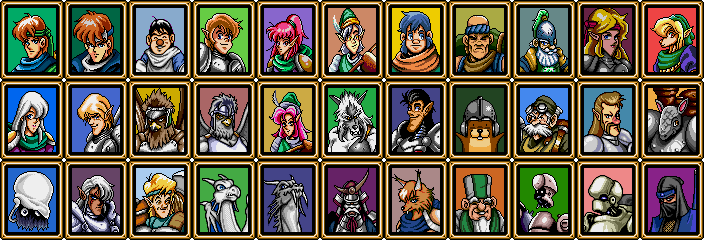
The release of Shining in the Darkness in March 1991 marked a transformative moment for Sega and the developer Climax, establishing a foundation for a franchise that would navigate the evolving landscape of the role-playing game (RPG) genre for decades. While its predecessor was a dungeon crawler that proved the viability of the genre on the Genesis/Mega Drive hardware, its successor, Shining Force, represented a massive leap in scope, technical ambition, and narrative depth. The development of Shining Force was not merely a sequel’s progression but a pivotal restructuring of how Sega approached the RPG market, leading to the formation of a specialized development unit and pushing the technical boundaries of 16-bit hardware.
The Formation of Sonic Co. Ltd. and Sega’s RPG Strategy
At the dawn of the 1990s, Sega of Japan recognized a significant gap in its software library. While the company dominated the arcade-to-home port and sports categories, it trailed behind competitors like Nintendo in the RPG sector. To rectify this, Sega management, led by CEO Hayao Nakayama, sought a deeper partnership with Hiroyuki Takahashi, the founder of Climax. Takahashi argued that for Sega to change the public perception of the Mega Drive, it needed a consistent stream of high-quality RPGs, a task that Climax, with its limited staff, could not achieve alone.
This realization led to the founding of Sonic Co. Ltd. in June 1991. The new entity was a joint venture capitalized at 40 million yen. Sega held an 85 percent majority stake, while Climax held 6.25 percent and Takahashi personally held 4 percent. The company was named after Sega’s burgeoning mascot, Sonic the Hedgehog, following a trend set by Nintendo’s character-named affiliates like Ape Inc. and Mario Inc. The primary mandate of Sonic Co. was to streamline the planning, market research, and marketing of RPGs for the Genesis and Game Gear, utilizing specialists from the manga and anime industries to ensure high production values. Kenji Orimo, a director with extensive experience in the manga industry, was recruited to bridge the gap between traditional game design and cinematic storytelling.
Conceptual Origins and Tactical Innovation
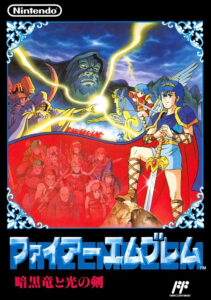
Despite the expectations that Climax would produce a direct sequel to the dungeon-crawling Shining in the Darkness, Hiroyuki Takahashi had been harboring a different vision since his time at Enix. He sought to evolve the turn-based combat system, which he believed was becoming stagnant and "fatiguing" for players. Takahashi’s dissatisfaction with existing strategy titles, such as Fire Emblem, stemmed from what he perceived as a lack of "tempo" and a reliance on board game mechanics that felt disconnected from the narrative.
The catalyst for the tactical shift in Shining Force was the PC88 title Silver Ghost (1988), developed by Kure Software Koubou. Takahashi was impressed by the game’s management of multiple characters and the strategic importance of spatial positioning. He realized that by introducing "distance" and "terrain" into combat, the range of tactical choices would expand exponentially. Players would no longer simply swap attacks; they would have to consider formations, advantageous positions, and the unique movement ranges of different unit types. This conceptual shift moved the project from a simple RPG to a "Simulation RPG," a hybrid genre that would eventually become the hallmark of the Shining series.
Technical Engineering and the 12-Megabit Threshold
The transition from a dungeon crawler to a tactical RPG brought immense technical challenges. Shining Force was designed to be a "blockbuster" title, eventually requiring a 12-megabit cartridge—the largest available for the Mega Drive at the time of its development. This was a significant increase from the 8-megabit capacity of Shining in the Darkness and the 6-megabit size of Phantasy Star II.
One of the most notable technical achievements was the battle system’s speed. Takahashi insisted on quick enemy turn speeds and fluid animations. Programmer Yoshinori Tagawa developed an artificial intelligence (AI) routine that allowed enemies to calculate their entire turn—including movement, action selection (attack, magic, or heal), and target prioritization—in under one second.
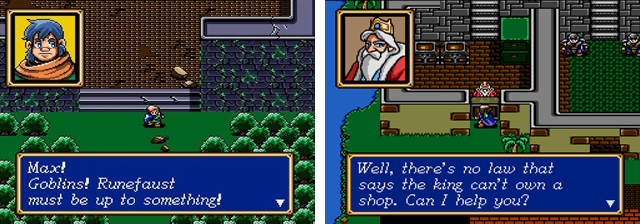
Furthermore, the animation of the battle scenes posed a memory crisis. Climax’s designers, led by Yoshitaka Tamaki, insisted on large, detailed sprites and unique attack patterns for every character and enemy. Initial estimates suggested the battle data alone would require 40 megabits. To solve this, the team refined their proprietary compression routines, achieving a remarkable 22 percent compression rate, compared to the industry standard of approximately 50 percent. This efficiency allowed the game to include 31 unique battle screens and a massive cast of playable characters without sacrificing visual fidelity.
Artistic Direction and Character Development
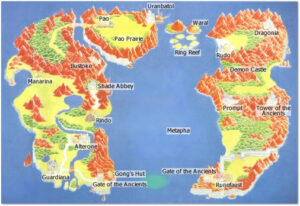
The aesthetic of Shining Force was a deliberate departure from the "Disney-like" caricatures of its predecessor. Artist Yoshitaka Tamaki aimed for a more realistic, albeit still fantasy-driven, look to reflect the game’s darker themes of war and political betrayal. The setting was expanded from a single kingdom to the dual continents of East and West Rune, providing a broader canvas for world-building.
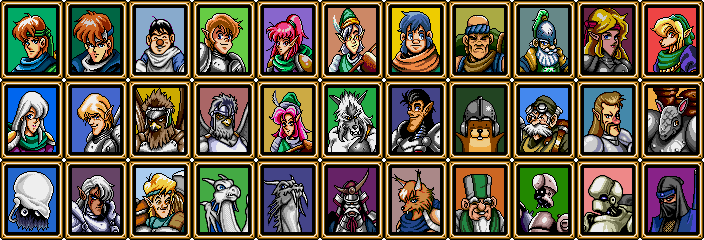
The game featured an eclectic cast of over 30 recruitable characters across 10 races, including centaurs, birdmen, and the fan-favorite "wolfling" Zylo. The design of the centaur class—the Royal Knights—was born out of a practical limitation; Tamaki admitted he struggled to draw men on horseback, leading him to create half-man, half-horse hybrids instead.
The development also included several "inside jokes" that became series staples. The character Jogurt (Yogurt), a hamster-like creature that deals only one point of damage, began as a graphics test placeholder using a doodle from Tamaki’s sketchbook. Despite its lack of combat utility, the character became a mascot for the series, appearing in multiple sequels and spin-offs.
Corporate Friction and the Fractured Relationship with Sega
While Shining Force was a creative success, the relationship between Climax and Sega was strained by internal politics and budgetary constraints. Takahashi later revealed that despite the commercial success of the Shining titles, the budgets provided by Sega were minimal, barely covering the cost of development.
As Sega of Japan grew, its management structure became more corporate and profit-oriented. Takahashi felt that Climax was treated as an "unruly subsidiary" rather than a valued partner. This tension was exacerbated by the crunch culture required to meet release deadlines. For the 1992 Winter Consumer Electronics Show (CES), the team worked under a "state of emergency," with developers like Yasuhiro Taguchi reporting that they were unable to leave the office for weeks at a time. This friction eventually led to Climax distancing itself from Sega, with the Dreamcast notably becoming the only major Sega platform not to host a main-line Shining installment developed by the original team.
Market Reception and Long-term Legacy
Shining Force was released in Japan on March 27, 1992, and arrived in Western markets a year later. While official sales data from the era is often imprecise, producer Yoichi Shimozato later estimated that the game sold approximately 200,000 to 300,000 copies worldwide. While these numbers were slightly lower than those of Shining in the Darkness, the game’s critical impact was far-reaching.
Shining Force is credited with popularizing the tactical RPG genre on consoles, providing an accessible entry point for players who found PC-based strategy games too daunting. Its influence is visible in later franchises such as Final Fantasy Tactics and Disgaea. The game established a "Shining" lore that fans continue to dissect, involving mysterious figures like the "Reading Girl" (Simone) and the recurring villainy of Darksol across different timelines.

The game’s legacy is preserved through numerous remakes and digital re-releases. The 2004 remake, Shining Force: Resurrection of the Dark Dragon for the Game Boy Advance, introduced new characters and expanded plot points, proving the enduring appeal of the original 1992 vision. Today, Shining Force remains a cornerstone of the 16-bit era, cited by historians and gamers alike as a masterclass in balancing complex strategy with engaging, character-driven storytelling.
Chronology of Development
- April 1990: Climax Co. Ltd. is founded by Hiroyuki Takahashi.
- March 1991: Shining in the Darkness is released on the Mega Drive, becoming a surprise hit.
- June 1991: Sonic Co. Ltd. is established as a joint venture between Sega and Climax.
- August 1991: Sega officially announces Shining Force at a press conference in Japan.
- December 1991: Final ROM submission occurs after a period of intense "crunch" development.
- January 1992: The game is showcased at the Winter CES in Las Vegas.
- March 27, 1992: Shining Force launches in Japan.
- July 1993: Shining Force is released in North America, solidifying the Genesis as a premier RPG platform.
Through a combination of technical innovation, a shift in gameplay philosophy, and a high-risk corporate partnership, Shining Force did more than just expand a franchise; it defined a genre and secured its place in the annals of gaming history.