
 Vera Clarissa
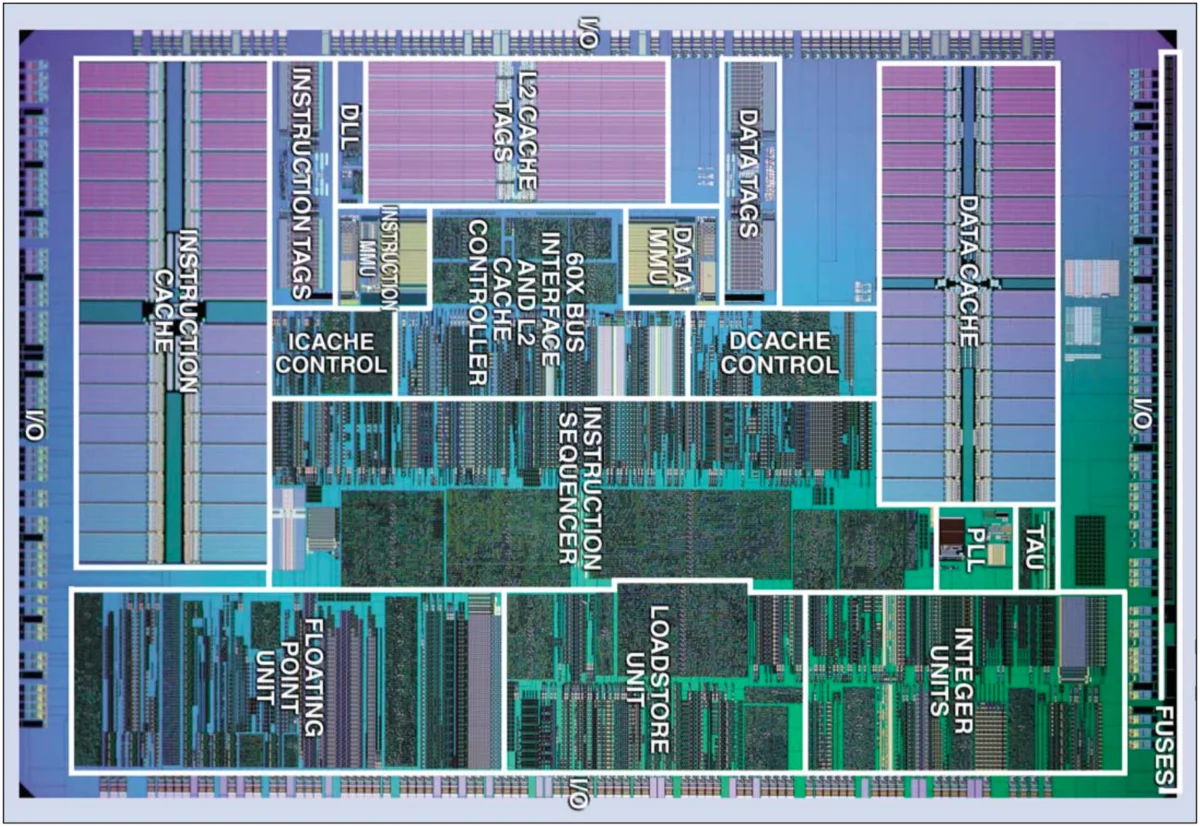
The PowerPC G3 processor stands as a pivotal chapter in the history of personal computing, representing a critical transition point for Apple between 1997 and 2003. As a 32-bit member of the PowerPC architecture, the G3—comprising the 740, 750, 750CX, 750CXe, and 750FX iterations—fundamentally redefined the performance-per-watt metrics for the Macintosh platform. Developed through the AIM alliance—a strategic partnership between Apple, IBM, and Motorola—the G3 was designed to address the shortcomings of its predecessor, the 603e, while positioning Apple to compete effectively against the rapid clock-speed advancements of the Wintel ecosystem during the late 1990s.

The Architectural Evolution from the 603e
To understand the impact of the G3, one must examine the state of processor design in the mid-1990s. The PowerPC 603e was renowned for its power efficiency, making it a staple for mobile devices; however, it lacked the computational throughput required for the high-end desktop market, which was then dominated by the more robust, albeit power-hungry, PowerPC 604e.

The G3 (internally codenamed "Arthur" for the 740/750 models) was a strategic pivot. Engineers focused on refining the 603e’s architecture rather than reinventing the core logic. Key advancements included the addition of a second integer execution unit, which significantly boosted multitasking capabilities, and a doubling of the L1 cache to 64 KB (32 KB for instructions and 32 KB for data). Perhaps most notably, the G3 introduced an integrated backside L2 cache interface. Unlike the 604e, which relied on the system bus for cache access, the G3’s dedicated backside path allowed the processor to communicate with the cache at speeds independent of the main bus. This architectural choice effectively bypassed the bottlenecks inherent in contemporary logic board designs, providing a massive performance uplift for real-world applications.

Chronology of the G3 Generation
The rollout of the G3 family occurred in distinct phases, reflecting the rapid pace of semiconductor manufacturing advancements at the turn of the millennium.

- 1997: The introduction of the PowerPC 740 (no L2 cache support) and 750 (with backside L2 support) marked the G3’s debut. These chips were built on a 0.29-micron process and featured approximately 6.35 million transistors.
- 1999–2000: As manufacturing processes matured, the 750CX was introduced, bringing the L2 cache onto the processor die itself. This addressed previous concerns regarding cache coherency and latency, marking a transition toward more integrated system-on-a-chip designs.
- 2001–2002: The 750CXe and 750FX further pushed the boundaries of efficiency. The 750FX, in particular, moved to a 0.13-micron process, allowing for higher clock speeds (up to 900 MHz) with significantly reduced power consumption, peaking at roughly 38 million transistors.
Technical Hurdles and Design Constraints
The G3 development cycle was not without its challenges. Industry analysts at the time noted the difficulty of implementing dual-processor configurations using the 750 architecture. Because of limitations in cache coherency protocols, a dual-processor G3 system using an inline or backside cache was never commercially viable. This prevented the G3 from becoming the flagship for Apple’s high-end professional workstations, a role that was eventually ceded to the PowerPC G4 and later the G5 series.

However, the G3’s efficiency profile made it an ideal candidate for Apple’s consumer and portable lines. The move to on-die L2 cache in the 750CX represented a major engineering achievement, as it solved the physical layout constraints that had previously hampered board designers. By integrating the cache, Apple and its partners could create more compact logic boards, which was essential for the aggressive industrial design shifts seen in products like the original iBook and the later iMac G3 iterations.

Comparative Analysis: G3 vs. 604e
The decision to move away from the 604e architecture in favor of the G3 was a subject of intense debate among developers. The 604e featured a 6-stage pipeline and a wider execution engine, which theoretically provided superior raw computational power. Yet, the 604e was hampered by high heat output and significant power draw. The G3’s 4-stage pipeline, while shorter, was highly optimized for integer performance—the workload typical of most desktop applications at the time. By prioritizing the backside cache, the G3 achieved higher effective system performance, demonstrating that architectural balance often outweighs raw instruction-per-clock (IPC) statistics.

Broader Impact on the Industry
The influence of the PowerPC 750 extended well beyond the Apple ecosystem. Its energy-efficient design made it a highly attractive candidate for embedded systems and gaming consoles. Most notably, the "Gekko" processor used in the Nintendo GameCube was a heavily customized derivative of the IBM PowerPC 750CXe. This adaptation underscored the versatility of the G3 architecture, proving that the same fundamental design could be scaled from a desktop office computer to a dedicated high-performance gaming machine.

The Legacy of the 32-Bit Era
As we look back at the 32-bit era of Apple computing, the G3 stands as a symbol of pragmatic engineering. It was not the most powerful chip of its day, nor was it the longest-lived, but it provided the necessary foundation for Apple to weather a period of extreme financial instability and market uncertainty. The G3 allowed Apple to offer competitive performance in the iconic "Bondi Blue" iMac and the PowerBook G3, products that were instrumental in the company’s late-90s resurgence.

From a contemporary perspective, the transition from discrete components to integrated L2 cache seen in the 750CX and 750FX paved the way for modern processor design, where the integration of cache, memory controllers, and eventually graphics controllers directly onto the silicon die became the industry standard.

Summary of Key Specifications
The technical specifications of the G3 family illustrate the rapid advancement of semiconductor manufacturing during its tenure. While the early 740/750 models operated at modest clock speeds on a 0.29-micron process, the later 750FX pushed the physical limits of the architecture to 0.13 microns.

- Memory Architecture: The family maintained a 64-bit data bus and a 32-bit address bus, supporting up to 4 GB of RAM. While this was more than sufficient for the operating systems of the era, the 32-bit address space would eventually become a limiting factor as memory requirements for professional software grew.
- Thermal Design: Typical power draw for the early 750 chips hovered around 10–15 watts, a stark contrast to the burgeoning heat outputs of competing x86 processors of the era. This low thermal footprint allowed for the fanless or near-silent operation that became a hallmark of Apple’s aesthetic.
- Manufacturing Milestones: The shift from 6.35 million transistors in the original 750 to 38 million in the 750FX represents a nearly six-fold increase in density over just five years. This scaling trajectory provided the necessary performance headroom for Apple to sustain its transition to Mac OS X, which demanded significantly more from the underlying hardware than the legacy Mac OS 9.
Concluding Reflections
The PowerPC G3 served as a bridge between the classic era of Macintosh computing and the modern, Unix-based foundation of the Apple experience. By balancing power efficiency with a innovative approach to cache management, IBM and Motorola provided Apple with the tools to sustain its product line during one of the most volatile periods in the company’s history. The lessons learned during the G3 era—particularly regarding the importance of power efficiency and cache integration—would inform Apple’s design philosophy for decades to come, eventually culminating in the company’s decision to develop its own silicon in the modern Apple Silicon era. The G3 is, therefore, not merely a legacy component, but a foundational element in the technological lineage of the modern personal computer.







