Cecilia Chamidah Nur
The realm of retro gaming frequently uncovers fascinating anomalies, particularly lesser-known adaptations and reimaginings of popular titles that often remained exclusive to their regions of origin. Among these captivating curiosities, Super Mario Bros. Special stands out as a unique and largely forgotten chapter in the history of one of gaming’s most iconic franchises. Developed by Hudson Soft for Japanese home computers like the NEC PC-8801 and Sharp X1 in 1986, this official, yet unconventional, version of Super Mario Bros. offers a compelling look at the challenges and creative solutions involved in porting a console masterpiece to vastly different hardware architectures.
A Deep Dive into Obscurity: The Genesis of Super Mario Bros. Special
Super Mario Bros. Special emerged from a unique period in the relationship between Nintendo and Hudson Soft. Hudson Soft, a pioneering Japanese developer, held the distinction of being Nintendo’s first third-party developer for the Famicom (NES). This relationship was solidified through their collaboration on FamilyBASIC, an educational programming tool for the Famicom, which led to a crucial cross-licensing agreement. This agreement granted Hudson Soft the unusual permission to develop and release Nintendo-branded games for various Japanese home computers, a market segment distinct from the burgeoning console space. Prior to Super Mario Bros. Special, Hudson Soft had already produced computer versions of other Nintendo arcade hits such as Punch Ball Mario Bros. and Mario Bros. Special (both based on the 1983 Mario Bros. arcade game), Donkey Kong 3: Dai Gyakushū, Balloon Fight, Ice Climber, Golf, Tennis, and Excitebike.
The decision to create a computer version of Super Mario Bros., a game that had redefined the platforming genre on the Famicom just a year prior, was ambitious. Released in September 1985 on the Famicom, the original Super Mario Bros. was a phenomenon, selling over 40 million copies worldwide and cementing Nintendo’s dominance in the console market. Porting such a technically advanced and fluid game to the diverse and often less powerful Japanese home computer systems of the mid-1980s presented significant hurdles. The PC-8801, for instance, typically featured a NEC µPD70008A (compatible with the Zilog Z80) CPU running at 4 MHz, with varying amounts of RAM and graphical capabilities that, while respectable for its time, differed significantly from the custom Picture Processing Unit (PPU) and Ricoh 2A03 CPU of the Famicom. The Sharp X1, while offering some graphical advantages, also presented its own set of hardware idiosyncrasies.
Technical Compromises and Creative Adaptations
The most immediately noticeable difference for players transitioning from the Famicom to Super Mario Bros. Special was the absence of "smooth scrolling." The Famicom’s hardware was specifically designed to handle continuous, fluid screen movement, a feature integral to the original game’s design and feel. On the PC-8801, this was replaced with "page scrolling," where the screen would snap to a new segment once Mario reached a certain point, effectively creating distinct "pages" of the level. The X1 version, while slightly more advanced, still suffered from delayed scrolling, a far cry from the seamless experience of the Famicom.
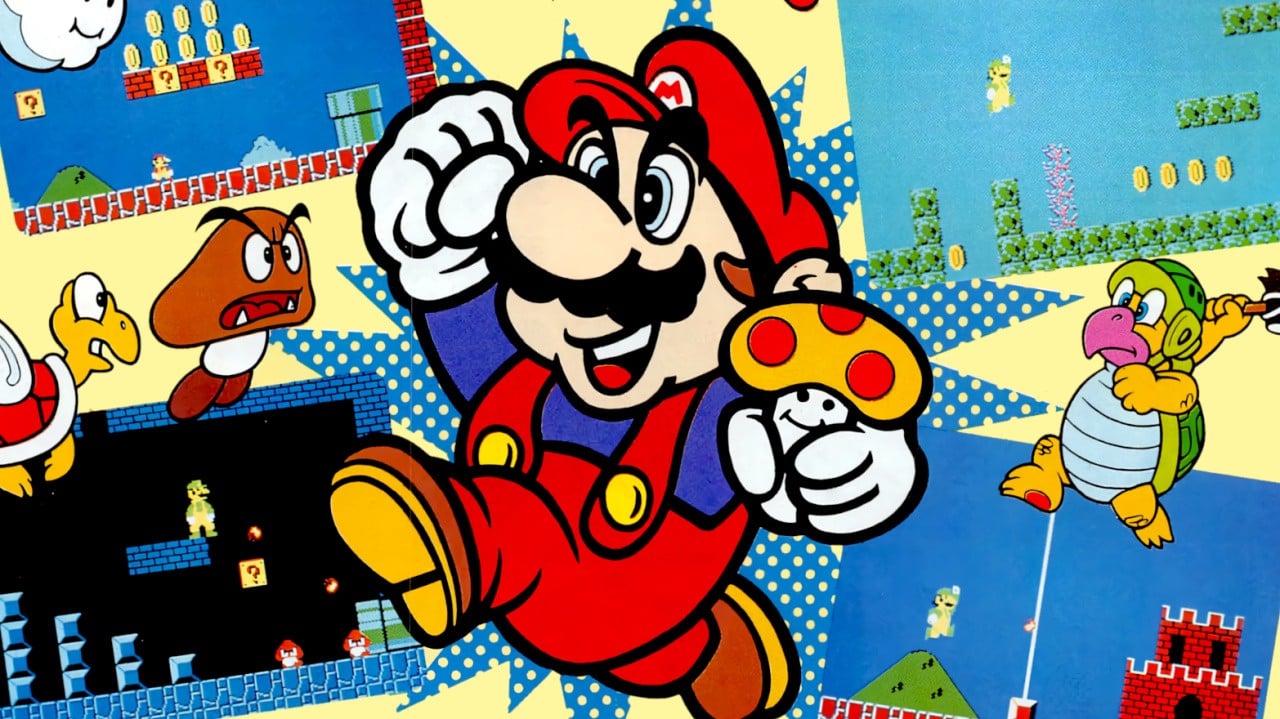
Programmer Yukio Takeoka, who worked on the Excitebike port before Super Mario Bros. Special, recalled the technical struggles. "Graphics and the like were heavy on the PC-8801," Takeoka-san explained, "so we gave up on drawing 8 colours on 3 planes and instead had to use 2 planes with 4 colours." This severe reduction in the color palette meant that the vibrant, iconic look of Super Mario Bros. had to be reinterpreted with a more limited visual vocabulary. Furthermore, the very concept of horizontal scrolling proved taxing. "Even with that compromise, horizontal scrolling was still heavy on the system, and the game required even more precise controls than Excitebike, so in the end, we settled on page scrolling," Takeoka-san stated. This technical necessity directly influenced the game’s level design.
Ichiro Sakurada, who was responsible for level design and joined Hudson Soft fresh out of high school with "basically zero development experience," confirmed the profound impact of these limitations. "Switching screens means you can’t see what’s ahead, so it gets a lot harder," Sakurada-san noted. "As a result, I redesigned the courses to avoid situations where you could suddenly die." This meant meticulously reworking many of the original game’s stages, not just to accommodate the scrolling mechanics but also to prevent unfair deaths that would result from blind jumps or enemies suddenly appearing from off-screen. The X1 version, while retaining some scrolling, still required careful design adjustments.
Beyond the Port: A Unique "Arrangement"
Despite the technical compromises, Super Mario Bros. Special was far from a simple, flawed port. It evolved into what Takeoka-san described as an "arrangement" and Sakurada-san viewed as a "spin-off." Hudson Soft injected its own creative flair, introducing a range of new items, enemies, and collectibles that distinguished it significantly from its Famicom counterpart. Players could find the hammer from Donkey Kong, allowing Mario to temporarily smash blocks and enemies. The crab enemies (Sidesteppers) from the Mario Bros. arcade game also made an appearance, adding another layer of challenge. Uniquely, the Hudson Soft Bee (Hachisuke), the company’s mascot, was included as a collectible, granting additional points upon retrieval—a clear nod to Hudson’s identity within Nintendo’s universe.
These additions altered the gameplay dynamics, providing new strategic options and obstacles. Sakurada-san reflected on these creative liberties: "Adding original tools and enemies is a very Hudson specialty, but I think it’s unnecessary." He elaborated on other specific design changes: "The course structures are close to the original version, but the difficulty is slightly greater. Because we couldn’t implement the looping in Bowser’s Castle [World 8-4], I altered the level construction to use pipes at dead ends. When starting underground courses, we couldn’t get Mario to automatically enter the pipes that lead underground, so the player has to enter them themselves." These modifications highlight the comprehensive effort to adapt the game, not just technically, but also in terms of its interactive elements.
The Development Process: Resourcefulness and Collaboration
The development environment itself reflected the resourcefulness required during this era of early game development. Sakurada-san described creating a rudimentary level editor on the PC-88 itself. "It’s kind of like Mario Maker," he explained, "where you can place the graphics, but it was only images—you couldn’t play the levels. That data could be converted to CSV data, then imported into the main program to check how it functioned." The core programming was done on a PC-98, assembled, and then transferred to the PC-88 for execution. Takeoka-san recalled using a parallel interface board with an Intel 8255 to transfer program data, a common method for the time.
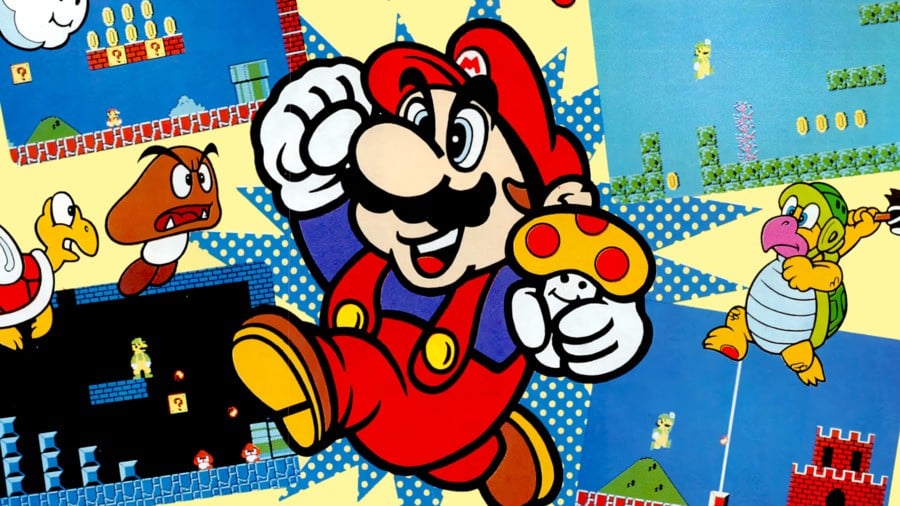
The support from Nintendo, while crucial for the cross-licensing, was minimal in terms of direct development assistance. Sakurada-san stated that Nintendo only supplied "colour prints of the character designs," explicitly denying the provision of "algorithms, logic, and music data." The game’s score, for instance, had to be transcribed "by ear," leading to a minor mistake in the main background music. Takeoka-san’s recollection differed slightly, remembering "graphic data, course data, etc, though in printed form," suggesting some variations in memory or specific details received by different team members. Crucially, "Nintendo did not provide any development support in terms of personnel," with Hudson Soft handling all aspects internally. This underscores Hudson’s autonomy and expertise in adapting the core game to a new platform.
A Legacy of Obscurity and Fan Preservation
Despite the ambitious undertaking and unique characteristics, Super Mario Bros. Special remained largely unknown outside of Japan and, even within that market, primarily among PC users. The cultural divide between dedicated console gamers and personal computer users in Japan was surprisingly clear, as Sakurada-san observed, yet there was a distinct demand for a PC version of the popular Famicom title. The developers expressed mixed feelings about the final product. Takeoka-san was "happy when the finished product was released to the public," though he harbored "some regrets about where I thought I might’ve been able to do more." Sakurada-san believed it was "too much for the specs we had available" and "hard to play," but found it "kind of interesting that there were some course gimmicks we did first, before they were introduced in later Mario series titles," such as re-entering pipes or spaces only accessible by Small Mario.
The game’s obscurity was so profound that, according to Sakurada-san, it’s unlikely that even Nintendo’s iconic creators, Shigeru Miyamoto or Takashi Tezuka, were "even really aware it exists." Takeoka-san recalled no specific feedback from Nintendo’s creative leads, though he speculated that "some sort of review that the game underwent at the time of release" might have generated feedback for the sales team.
In recent years, however, Super Mario Bros. Special has experienced a fascinating resurgence in interest, particularly within retro gaming communities and preservation circles. Its unique status as an official, yet radically different, iteration of Super Mario Bros. makes it a valuable historical artifact. This renewed attention is exemplified by the creation of an NES ROM hack that successfully ports the unique level designs, enemies, and items of the PC-88 version back to the Famicom, complete with smooth scrolling. This hack, downloaded over 20,000 times, allows modern players to experience Hudson Soft’s vision on the hardware it was originally meant to emulate, albeit with the technical limitations removed. Sakurada-san himself received a physical ROM of this Famicom adaptation, highlighting the enduring passion of fans. Takeoka-san, upon learning of the hack, expressed a touch of embarrassment but acknowledged the dedication of the community.
The story of Super Mario Bros. Special is a testament to the dynamic and often challenging landscape of early video game development. It underscores the ingenuity of developers like those at Hudson Soft, who, armed with limited resources and facing significant technical constraints, managed to adapt a groundbreaking console experience for a different platform while simultaneously imprinting it with their own creative signature. Far from being a mere footnote, this "arrangement" or "spin-off" serves as a compelling case study for game historians and a treasured curiosity for retro enthusiasts, revealing a lesser-known facet of Mario’s expansive universe. Its journey from obscurity to rediscovery through fan efforts exemplifies the collaborative spirit that continues to enrich the legacy of video games.