Cecilia Chamidah Nur
In the fiercely competitive landscape of 1990s arcade gaming, a new challenger emerged from Sega, one that would redefine the mecha combat genre and carve out a unique niche in gaming history: Virtual-On. While FromSoftware’s Armored Core series has often been lauded as the benchmark for analog, simulation-heavy mecha experiences, Virtual-On deliberately charted an opposing course, embracing a distinctively digital, high-speed, and tactically nuanced approach. This foundational divergence, rooted in its arcade heritage and innovative control scheme, allowed Virtual-On to captivate a dedicated fanbase and establish itself as a true pioneer in robot-on-robot warfare.
The conventional wisdom in mecha game design prior to Virtual-On often leaned towards simulating the complex controls of a giant humanoid war machine, striving for a sense of realism in piloting. Virtual-On eschewed this philosophy entirely, opting for an experience that prioritized direct, precise digital input and rapid tactical decision-making. At its core, the gameplay revolved around fixed-length vectored dashes and a highly specialized menu of attacks, intricately tied to the specific weapons equipped by each Virtuaroid – the game’s iconic mecha. This system, a stark departure from the more laborious control schemes of its contemporaries, promised an immediate yet deeply strategic combat experience.
Central to Virtual-On‘s groundbreaking design was its bespoke TwinStick controller. This unique peripheral featured two distinct joysticks, each equipped with a dash button on top and a weapon trigger. The ingenious combination of these trigger inputs allowed for three primary types of weapon attacks: a defensive left weapon (left trigger), an offensive right weapon attack (right trigger), and a potent central weapon attack (both triggers simultaneously). While specific Virtuaroids might feature variations in their assigned attacks, this tripartite input system formed the bedrock of combat. The result was not a ponderous mecha simulator, but rather an exhilarating digital arena brawler, brimming with tactical and strategic depth, where quick reflexes and cunning anticipation were paramount.
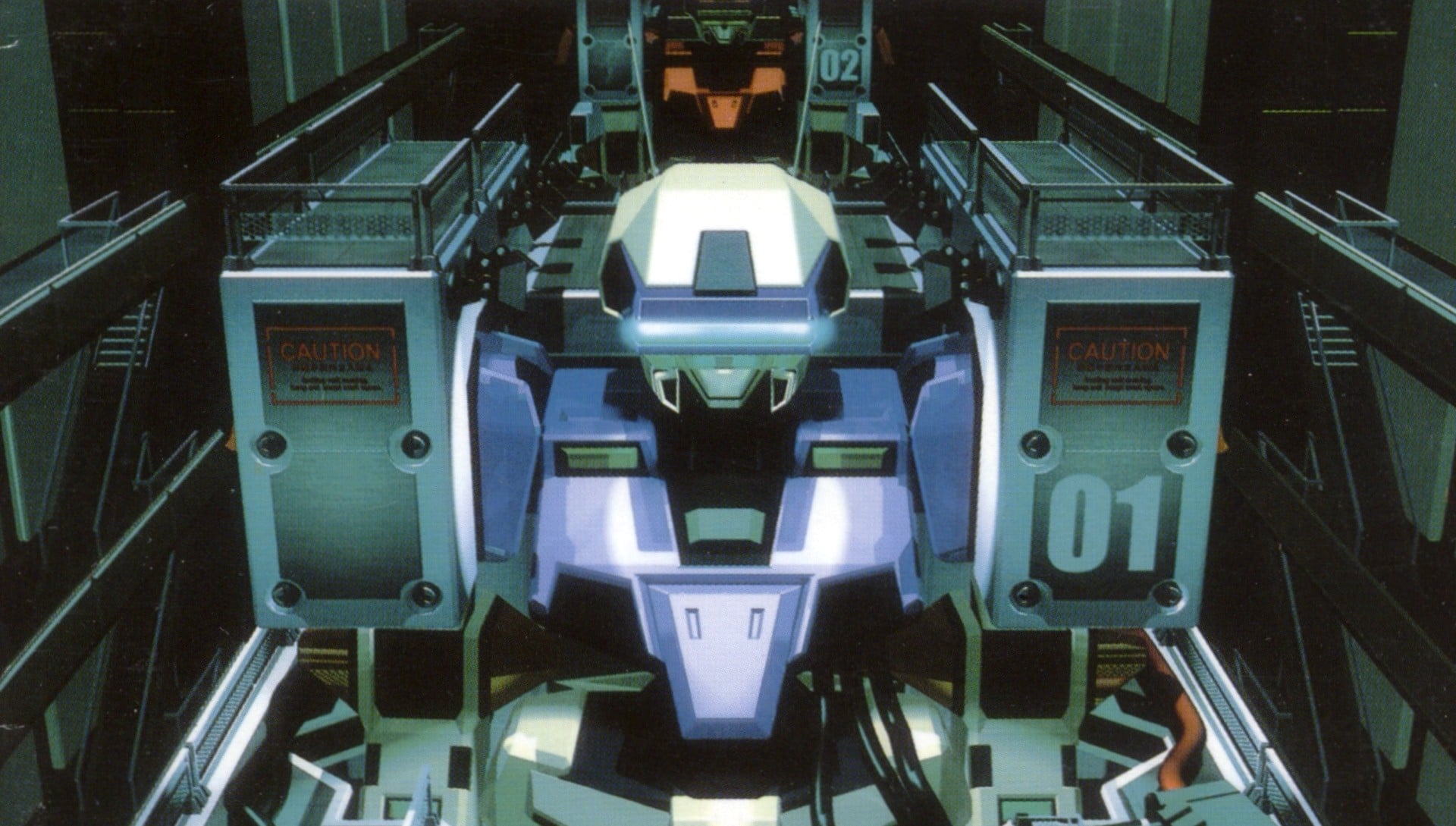
Beyond its innovative mechanics, Virtual-On‘s visual identity was equally impactful, largely thanks to the distinctive mecha designs by the renowned Hajime Katoki. By the mid-1990s, Katoki was already a veteran designer, celebrated for his contributions to the Gundam franchise, particularly his acclaimed work on Gundam Sentinel. His aesthetic for the Virtuaroids blended sleek, angular lines with functional, militaristic elements, giving them a memorable, almost alien quality. A curious design choice saw the heads of these Virtuaroids based on Sega’s VR headset from that era, leading to speculation about whether a virtual reality version of Virtual-On was ever initially conceived. This blend of cutting-edge gameplay and striking design propelled Virtual-On to immense popularity, making it a dominant force in Japanese arcades throughout the 1990s.
The Genesis: Cyber Troopers Virtual-On (1995)
The journey began with Virtual-On: Cyber Troopers, which first graced Japanese arcades in 1995 on Sega’s powerful Model 2 hardware. At a time when 3D polygon graphics were still relatively nascent, the Model 2 allowed for smooth, high-speed battles that felt revolutionary. Cyber Troopers immediately set itself apart from other mecha titles. Players, seated at the TwinStick cabinets, controlled their agile Virtuaroids in vibrant, often multi-tiered arenas, engaging in intense one-on-one combat. The fixed-length vectored dash attacks formed the core of movement, demanding precise timing and spatial awareness.
Crucially, melee combat played an equally vital role. Far from being a mere ranged shooter, Virtual-On encouraged players to close distances, utilizing an array of potent close-quarters attacks that could decisively turn the tide of a match. A distinctive feature of the original arcade game was a subtle movement freeze at the conclusion of each dash attack. This seemingly minor detail introduced a profound layer of tactical "ballet" to the gameplay, forcing players to anticipate their opponent’s movements, exploit momentary vulnerabilities, and master the art of "wrong-footing" to land critical blows. This deliberate pacing element contributed significantly to the game’s high skill ceiling and competitive depth, fostering a dedicated community of players intent on mastering its intricate nuances.
The game’s successful arcade run led to a highly anticipated port to the Sega Saturn. However, this transition introduced a notable gameplay divergence. The dash attack movement freeze, so crucial to the arcade’s tactical rhythm, was largely absent when played with a standard controller. This resulted in a faster, more reactive game that, while still engaging, shifted the strategic emphasis. Curiously, Sega did release a TwinStick peripheral for the Saturn, and when used, it re-inserted the dash attack movement freeze. This created an unusual disparity, as players using the authentic TwinSticks found themselves at a perceived disadvantage against those leveraging the more fluid movement offered by the standard gamepad. This highlighted the challenges of faithfully translating a deeply arcade-centric experience to home consoles, especially one so reliant on a specific control interface.
Evolution and Refinement: Cyber Troopers Virtual-On Oratorio Tangram (1998)
Building upon the success of its predecessor, Cyber Troopers Virtual-On Oratorio Tangram arrived in arcades in 1998, initially running on Sega’s advanced Model 3 hardware. More than a sequel, Oratorio Tangram was widely regarded as a "grand remix" and a significant refinement of the original’s digital combat philosophy. It pushed the digital mentality even further, introducing innovations like single-press dash cancels and the now-iconic right-angle directional change "Watari" dashes, named after the series creator, Juro Watari. These additions granted players an unprecedented level of mobility and evasive options, dramatically increasing the pace and complexity of engagements. New "turbo attacks," executed by combining dash and trigger inputs, further expanded the offensive toolkit, encouraging even more aggressive and creative playstyles.
Oratorio Tangram leaned closer to the Sega Saturn port of the first game in its movement mechanics, with the dash attack movement freeze largely absent across all control methods. This cemented its identity as an even faster-paced and intensely reactive two-player mecha combat experience. The game’s balance and mechanics underwent continuous refinement throughout its arcade life, leading to multiple revisions. The initial Model 3 release, MSBS 5.2, was meticulously balanced into MSBS 5.4. The subsequent Dreamcast release (1999) received further tweaks as MSBS 5.45, ensuring a polished home experience. The final and most celebrated arcade iteration, MSBS 5.66, ran on Sega’s Naomi board, becoming the definitive competitive version.
The Dreamcast version of Oratorio Tangram saw a US release courtesy of Activision, exposing a wider Western audience to the series. However, for many modern fans, the Xbox 360 port of MSBS 5.66, released years later, became the most accessible and familiar entry point, lauded for its faithful recreation of the arcade experience and robust online play. Oratorio Tangram is widely considered the pinnacle of the Virtual-On series, perfectly embodying its core design principles and offering a depth of competitive play that few other titles could match. Its enduring popularity among fighting game enthusiasts and mecha fans alike speaks volumes about its masterful design.
The Divergence: Virtual-On Force (2001) and Virtual-On MARZ (2003)

The series began to diverge with the release of Cyber Troopers Virtual-On Force in 2001, utilizing Sega’s new Hikaru arcade board. In an attempt to innovate and broaden its appeal, Force introduced a significant shift: a four-player setup. While the concept of team-based mecha combat held promise, the execution proved challenging. The game’s pace became notably slower and more deliberate, with a clunkier feel often attributed to the need to balance four players within the same arena.
Force implemented a "wingman and leader" system, where eliminating the opposing team’s leader secured a victory. The intention was to foster strategic teamwork, with wingmen protecting their designated leaders. However, in practice, this often led to less coordinated play and an experience that felt diluted compared to the intense one-on-one duels of previous titles. The complexity of managing multiple targets and the slower pace alienated some long-time fans who cherished the precision and speed of Oratorio Tangram. Virtual-On Force eventually saw a port to the Xbox 360, but its reception was mixed, and it is frequently regarded as the effective end of the Virtual-On series’ dominance in arcades.
Following Force, the series attempted to explore a single-player-focused experience with Cyber Troopers Virtual-On MARZ for the PlayStation 2 in 2003. Essentially a narrative-driven adaptation of Force, MARZ placed players on Mars (hence the name) across numerous missions. While it aimed to flesh out the intricate backstory of the Virtual-On universe, the gameplay inherited the lock-on system and movement mechanics from Force and earlier games. This proved problematic in the context of large, complex single-player maps, where the mecha would often lock onto enemies several rooms away, making navigation and engagement feel awkward and less intuitive.
Despite these gameplay challenges, MARZ did offer some significant positives. It provided a much-needed deep dive into the lore and narrative of the Virtual-On universe, a aspect that had largely been hinted at in prior arcade entries. Moreover, MARZ offered a tantalizing reward for dedicated players: upon completing the game’s Ultimate Difficulty, the exquisite Shirokis Temjin mecha was unlocked. This Virtuaroid was celebrated by fans for its ability to allow players to experience MARZ at a speed and fluidity reminiscent of Oratorio Tangram, offering a glimpse of what could have been a more universally acclaimed single-player experience.
The Decline: A Certain Magical Virtual-On (2018)
The trajectory of the Virtual-On series took an unexpected and ultimately ill-fated turn with the 2018 release of A Certain Magical Virtual-On for the PlayStation 4. This title represented a crossover with the popular Japanese light novel series A Certain Magical Index by Kazuma Kamachi. While it wisely returned to the arena-based combat of its predecessors, eschewing the sprawling maps of MARZ, the game was met with widespread criticism.
Despite its single-player focus, the fundamental gameplay mechanics underwent problematic alterations, particularly concerning how damage was inflicted upon opponents. These changes rendered battles unclear and often confusing, undermining the precision and tactical clarity that had defined the series. The intricate dance of dashes, dodges, and calculated attacks was replaced by a system that felt less intuitive and satisfying. The critical reception was largely negative, with many fans and critics lamenting the departure from the series’ core strengths.
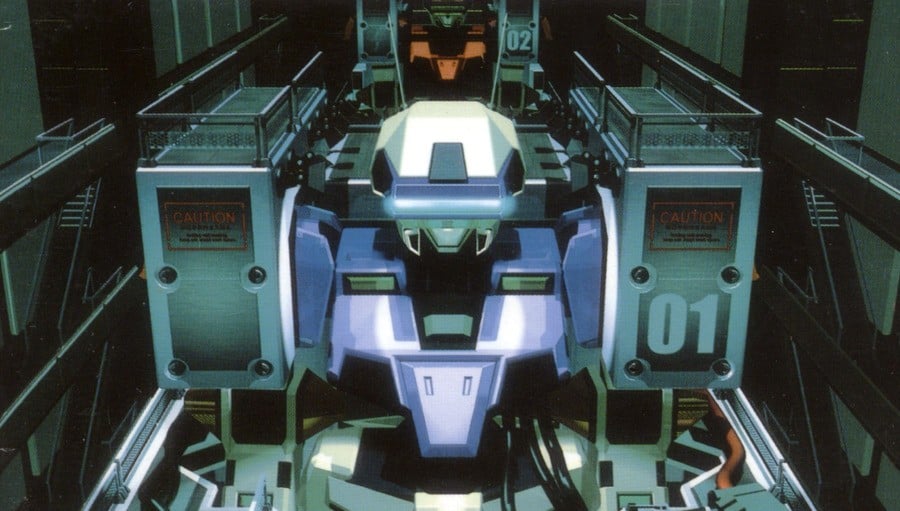
Adding to its unfortunate legacy, A Certain Magical Virtual-On was delisted from the PlayStation Store in 2019, likely due to the expiration of licensing rights with A Certain Magical Index. This left only the physical version playable, further limiting its accessibility and effectively sealing its fate as a commercial and critical disappointment. For many long-time enthusiasts, this crossover title represented a "whimper" rather than a bang, a stark and disheartening conclusion to a series that had once dominated arcades with its innovative brilliance. It marked a significant downturn for Virtual-On, casting a shadow over its proud arcade heritage.
Not All Is Lost: A Modern Revival and Enduring Community
Despite the series’ unfortunate decline in its later iterations, the spirit of Virtual-On was far from extinguished. In a move that delighted its dedicated fanbase, Sega released Cyber Troopers Virtual-On Masterpiece 1995~2001 for the PlayStation 4 in 2019. This comprehensive collection brought together the original Virtual-On: Cyber Troopers, the definitive Oratorio Tangram MSBS 5.66, and Virtual-On Force into a single package. Crucially, all three titles featured robust online play, allowing veteran players to rekindle their competitive rivalries and introduce new players to the series’ unique charm.
The timing of this release was serendipitous, coinciding with the launch of an arguably indispensable peripheral for diehard fans: the Tanita TwinSticks for the PlayStation 4. Developed by the renowned Japanese scale manufacturer Tanita, known for its precision engineering, these TwinSticks were lauded for their exceptional build quality and authentic feel, faithfully replicating the arcade experience at home. This hardware, coupled with the digital collection, provided the perfect platform for Virtual-On players to reignite their arcade skills and engage in competitive online matches.
The good news for contemporary gamers is that this PlayStation 4 collection remains fully backwards compatible with the PlayStation 5. Furthermore, it boasts a surprisingly active online community, a testament to the enduring appeal and depth of these classic mecha combat games. This modern resurgence, driven by accessible re-releases and high-quality peripherals, has ensured that while the Virtual-On series may have concluded its new game development with a disappointing crossover, its foundational arcade masterpieces continue to thrive.
The Virtual-On series, with its distinctive TwinStick controls, digital combat philosophy, and iconic Hajime Katoki designs, represents a significant chapter in gaming history. It stood as a formidable counterpoint to more simulation-heavy mecha games, proving that speed, precision, and tactical depth could coexist within a uniquely arcade-centric framework. From its groundbreaking debut on Model 2 hardware to the refined brilliance of Oratorio Tangram, Virtual-On cultivated a passionate following and left an indelible mark on the fighting game and mecha genres. While its later entries struggled to maintain this legacy, the Cyber Troopers Virtual-On Masterpiece collection and the dedicated community it supports have ensured that these digital mecha masterpieces live on, preserving a unique form of competitive combat in what can only be described as a state of mecha gaming Valhalla. Its journey underscores the enduring power of innovative gameplay and the lasting appeal of a truly distinct vision.