Edi Durjana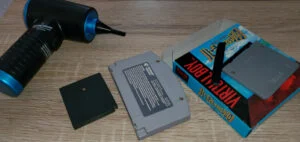
RetroArch, the ubiquitous frontend for emulators and game engines, has announced the immediate availability of "ROM Cleaner," a groundbreaking utility core designed to combat the persistent challenge of digital data degradation in retro game backups. Developed by prominent community contributor Jesse Talavera, known for his work on melonDS DS, McSoftServe, and significant enhancements to RetroArch itself, this new tool introduces an unconventional yet purportedly effective method for maintaining the integrity of digital ROM collections. The utility, available through RetroArch’s core downloader on supported platforms, aims to ensure that cherished digital game archives remain playable and robust for future generations, addressing a concern that has long plagued digital archivists and retro gaming enthusiasts alike. Talavera’s latest contribution, as detailed in an official announcement dated March 2025, marks a distinctive expansion of RetroArch’s capabilities beyond traditional emulation, venturing into the realm of active digital asset maintenance.
The Architect Behind the Innovation
Jesse Talavera is a name synonymous with innovation and dedicated contribution within the RetroArch and broader emulation community. His previous projects have consistently pushed the boundaries of what is possible within the open-source emulation ecosystem. Talavera’s work on melonDS DS, for instance, brought enhanced Nintendo DS emulation capabilities to RetroArch, improving performance and compatibility for a vast library of titles. This contribution was lauded for its stability and features, significantly enriching the DS emulation experience for users worldwide. Similarly, McSoftServe demonstrated his flair for developing creative and useful utilities, often integrating seamlessly with RetroArch’s existing framework to offer supplementary functionalities. Beyond these standalone projects, Talavera has been instrumental in implementing core improvements to RetroArch itself, including advancements in microphone support, which enabled new forms of interaction within emulated environments, and the integration of XDelta softpatching, a crucial feature that allows for non-destructive application of game modifications, translations, and bug fixes without altering the original ROM file. These prior achievements underscore his deep understanding of emulation technology, digital media structures, and user experience design, lending significant weight to any new project he undertakes. His reputation for delivering robust and impactful solutions positions ROM Cleaner as a development that, despite its unique operational premise, warrants serious attention from the community. The consistent thread through Talavera’s work has been a commitment to enhancing the playability and longevity of digital entertainment, a mission that ROM Cleaner explicitly champions by addressing a fundamental concern for digital archivists and casual players alike.
The Imperative of Digital Preservation in the Digital Age
The challenge of digital data degradation is a well-documented and growing concern across various sectors, from archival institutions to individual digital enthusiasts. Unlike physical media, which degrades through visible processes like disc rot, tape decomposition, or flash memory charge loss, digital data faces its own insidious forms of decay. "Bit rot," or data corruption, can occur over time due to various factors, including cosmic rays, faulty storage media, software bugs, or even undetected errors during data transfer. For retro gaming, this translates into ROM files that might suddenly fail to load, exhibit graphical glitches, or become entirely unplayable, despite appearing physically intact on a hard drive. Industry experts and archivists have long grappled with strategies to mitigate these issues, ranging from redundant storage systems and error-correcting codes to periodic data migration and checksum validation. The sheer volume of digital retro game libraries, often comprising thousands of titles, makes manual verification and correction an arduous, if not impossible, task for the average user.
According to a 2023 report by the Digital Preservation Coalition, digital information faces a higher risk of obsolescence and corruption than previously assumed, with an estimated 5-10% of digital assets experiencing some form of degradation within a decade if not actively managed. This phenomenon is particularly acute for older digital formats and less robust storage solutions. The financial implications for large-scale archives can be staggering, with estimates suggesting millions are spent annually on maintaining data integrity. This highlights a critical need for accessible, user-friendly tools that can proactively address these digital vulnerabilities, particularly for non-specialist users maintaining personal collections. The introduction of ROM Cleaner speaks directly to this widespread need, offering a novel approach to a pervasive problem that impacts countless hours of potential gameplay and cultural preservation. It represents a proactive step in a field often reactive to data loss.
Unpacking ROM Cleaner’s Unconventional Mechanism
At the heart of ROM Cleaner’s innovation lies its truly distinctive operational methodology, which deviates sharply from conventional data repair utilities. While most data recovery tools rely on complex algorithms, checksum comparisons, and sector-level analysis to identify and correct corruption, ROM Cleaner introduces a unique form of human-computer interaction. The utility core, once loaded within RetroArch, requires users to provide sensory input: specifically, "a microphone and a set of lungs." As described by Talavera, the process involves "blowing" into the microphone while a problematic ROM file is processed. The stated objective is to "rid it of the dust that’s accumulated over the years," metaphorically translating physical media cleaning practices into the digital realm.
This unconventional input method presents an intriguing conceptual shift. While the precise technical specifications of how auditory input translates into digital file restoration are not fully elaborated in the initial announcement, several interpretations emerge within the context of RetroArch’s sophisticated capabilities. One possibility is that the "blowing" action serves as a unique form of human-generated entropy or a trigger for an underlying, more traditional data repair algorithm. RetroArch’s robust support for microphone input, previously enhanced by Talavera himself, suggests that the system is capable of detecting and processing audio signals, potentially using specific frequencies or patterns in the breath to initiate or guide the repair process. The "dust" metaphor could represent accumulated digital noise, minor corruptions, or metadata inconsistencies that a sophisticated algorithm, perhaps activated or influenced by this human input, is designed to identify and neutralize.
Another interpretation is that this method functions as a playful, yet psychologically engaging, user interface that leverages familiar retro gaming tropes. Many older console cartridges famously required users to "blow into" them to resolve connectivity issues, a practice that, while often attributed to superstition or placebo, sometimes worked by dislodging dust or improving electrical contact. ROM Cleaner appears to transpose this nostalgic ritual into a digital context, offering a tangible, albeit symbolic, action for users to undertake when their digital files falter. This approach, if genuinely effective, could represent a pioneering example of how abstract digital problems can be addressed through unconventional, user-centric interaction models, making the process of digital file maintenance more intuitive and perhaps even cathartic for the user. It acknowledges the emotional connection players have to their games and offers a hands-on method to "care" for their digital collection, bridging the gap between physical and digital media interaction.
A New Paradigm for Retro Gaming and Preservation
The implications of ROM Cleaner, should its efficacy prove consistent, extend far beyond individual user convenience. For the broader retro gaming community and digital preservation efforts, it could herald a new paradigm. Currently, when a ROM file becomes corrupted, the typical recourse is to download a fresh copy, assuming one is available and verified. This often means losing any associated save data, configurations, or personal modifications tied to the original file, which can be particularly disheartening for players who have invested hundreds of hours into a game. ROM Cleaner, by offering a direct repair mechanism, could empower users to restore their unique digital assets without such sacrifices. This capability would be particularly valuable for rare or obscure ROMs that are difficult to replace, or for those with significant sentimental value.
From a preservation standpoint, the utility could significantly reduce the burden on digital archivists and enthusiast groups dedicated to preserving gaming history. While it’s unlikely to entirely replace industrial-grade data integrity solutions employed by national archives, its accessibility within a popular platform like RetroArch could democratize basic digital preservation, allowing millions of users to actively participate in maintaining their own collections. This distributed approach to file integrity could collectively contribute to the longevity of digital cultural heritage. Furthermore, the very existence of such a tool highlights a growing awareness and commitment within the open-source community to not just emulate old games, but to actively preserve the underlying data that makes them playable. This aligns with a broader movement in digital humanities and library science to safeguard digital artifacts against the ravages of time and technological obsolescence, ensuring that future generations can experience the digital past. The potential for ROM Cleaner to become a standard first-response tool for minor digital file issues is considerable, shifting the paradigm from replacement to repair.
Community and Technical Perspectives
The announcement of ROM Cleaner has naturally generated considerable interest and discussion within the emulation community. Initial reactions range from intrigued skepticism to cautious optimism, reflecting both the innovative nature of the tool and the unconventional method it employs. Technologically, the concept of repairing digital data via acoustic input raises pertinent questions about the underlying algorithms and the precise nature of the "dust" it claims to remove. Experts in data forensics and digital preservation will undoubtedly scrutinize the technical claims and seek detailed explanations of the core’s operational logic. The open-source nature of RetroArch and its cores means that the community will likely delve into the source code to understand how this novel mechanism functions at a fundamental level, contributing to its transparency and potential for further development.
From a user perspective, the simplicity of the interface—requiring only a microphone and breath—is a significant draw. It removes many of the technical barriers often associated with data recovery and file corruption, making it approachable for casual users who might otherwise be intimidated by complex command-line tools or esoteric software. However, practical considerations such as the required duration of "blowing," the specific acoustic properties of the "breath" (e.g., intensity, frequency, duration), and the exact types of corruption it can effectively address will be key factors in its widespread adoption and perceived utility. The tool’s effectiveness will likely be measured by its ability to restore ROMs suffering from common forms of bit rot and minor file corruptions, rather than catastrophic data loss. The potential for ROM Cleaner to become a standard troubleshooting step for non-booting or glitching ROMs could significantly enhance the user experience for retro gamers, transforming frustration into a simple, interactive, and even nostalgic solution. This engagement aspect could foster a stronger sense of ownership and responsibility among users for their digital collections.
Availability and Future Outlook
ROM Cleaner is now available for download via RetroArch’s integrated core downloader, marking its official debut. This immediate release ensures that users on supported platforms can begin experimenting with and benefiting from Talavera’s latest creation without delay. The inclusion within RetroArch’s core ecosystem means it will benefit from the platform’s broad compatibility and continuous development cycle, leveraging the robust infrastructure already in place. As with all new RetroArch cores, community feedback will be crucial in refining ROM Cleaner’s capabilities and addressing any initial limitations or bugs, fostering an iterative improvement process.
Jesse Talavera expressed his enthusiasm for the project, stating, "Our mission is to keep yesterday’s games playable and fun for generations, and ROM Cleaner is my latest contribution to that effort. I hope you’ll get just as much use out of it as I am!" This statement reinforces the preservation-centric philosophy underpinning the utility, highlighting its role in ensuring the longevity of digital gaming culture. The future may see further refinements to the "cleaning" process, expanded compatibility for various ROM formats, and potentially even deeper integration with RetroArch’s existing diagnostic tools. The success of ROM Cleaner could also inspire further exploration into unconventional human-computer interaction methods for addressing complex digital challenges, pushing the boundaries of what is considered possible in digital maintenance and preservation. As the digital landscape continues to evolve, tools like ROM Cleaner, with their unique blend of technical ingenuity and user-centric design, play an increasingly vital role in safeguarding our shared digital heritage. The emulation community eagerly anticipates the long-term impact of this intriguing new utility on the enduring quest to preserve digital entertainment for posterity.