Farhan hamdan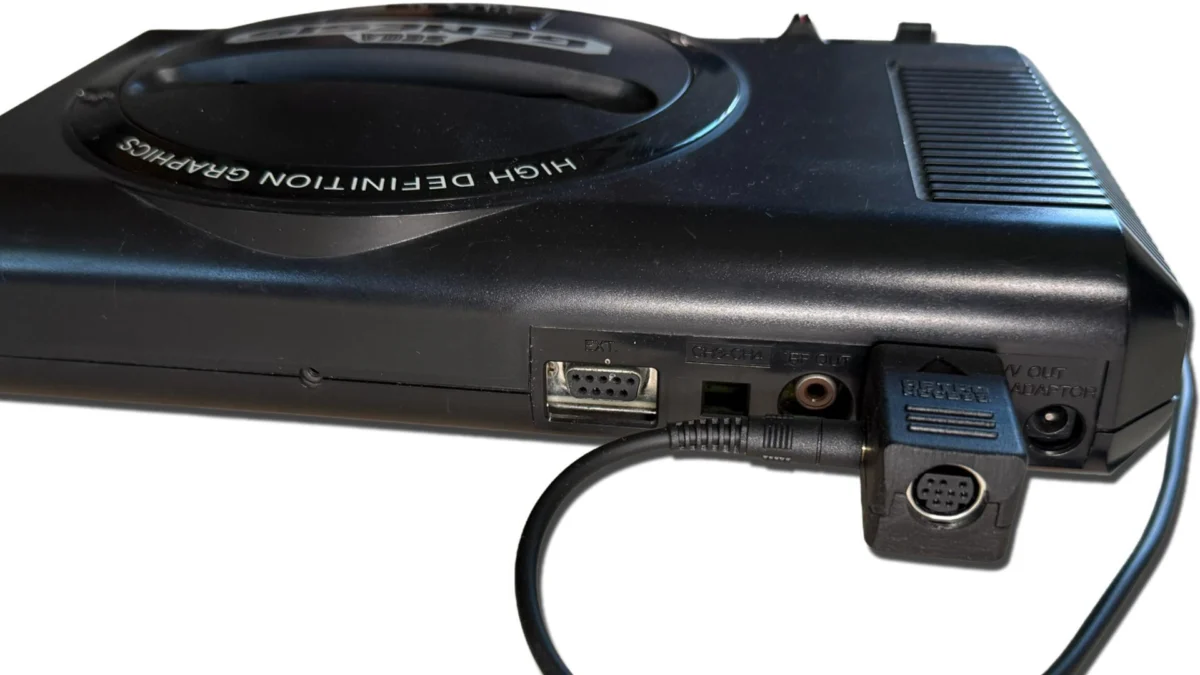
Kyle from Retro-Access has just started selling a “Genesis Bridge”: A small adapter that converts the Genesis / Mega Drive 1 and Sega Master System’s DIN to a Genesis 2-style MiniDIN. This innovation directly addresses a long-standing challenge for retro gaming enthusiasts striving for optimal audio and video quality across different revisions of Sega’s iconic 16-bit console and its predecessors. The adapter ensures all pins are passed through, guaranteeing compatibility with a wide array of existing cables and signal types, including composite video, RGB SCART, HD Retrovision, and RAD2x solutions. Crucially, its design as a compact PCB minimizes the risk of introducing interference, a common concern with longer cable runs, thereby preserving the integrity of both audio and video signals.
The Challenge of Retro Console Connectivity: A Legacy of Revisions and Connectors
The Sega Genesis, known as the Mega Drive outside North America, launched in 1988 in Japan, 1989 in North America, and 1990 in Europe, quickly becoming a formidable competitor in the burgeoning home console market. Its enduring popularity led to numerous hardware revisions over its lifespan, each often featuring subtle yet significant changes, particularly concerning their audio/video output ports. The original Genesis Model 1 (and early Sega Master System consoles) typically utilized an 8-pin DIN connector for video output, often accompanied by a separate 3.5mm headphone jack for stereo audio. However, subsequent revisions, such as the widely popular Genesis Model 2, the Genesis Model 3, and later accessories like the Sega CDX and Sega Nomad, transitioned to a 9-pin MiniDIN connector, which integrated both video and stereo audio signals into a single port.
This fragmentation in connector types presented a significant hurdle for collectors and players. A dedicated retro gaming setup often involves multiple consoles, and the need for distinct sets of A/V cables for different Genesis models complicated cable management, increased costs, and sometimes forced compromises on video quality. Enthusiasts seeking the highest fidelity often gravitated towards RGB (Red Green Blue) video output, which provides a significantly sharper and more vibrant image compared to composite or S-Video, especially when paired with modern upscalers or professional monitors. However, the varying pinouts and signal configurations across Genesis models meant that an RGB SCART cable designed for a Model 1 would not function with a Model 2, and vice-versa, without some form of adaptation.
Technical Ingenuity: How the Genesis Bridge Works
The Genesis Bridge, developed by Kyle of Retro-Access, is a testament to the ongoing innovation within the retro gaming hardware community. It serves as an elegant, passive adapter, converting the 8-pin DIN output of the Genesis Model 1 and compatible Sega Master Systems into the 9-pin MiniDIN format used by the Genesis Model 2. This conversion is achieved through a precisely engineered printed circuit board (PCB) that ensures a direct, transparent pass-through of all necessary signals. This "all pins passed through" design is critical, as it guarantees compatibility with a broad spectrum of existing cables and display solutions. Whether a user employs a standard composite video cable, a high-quality RGB SCART cable, an HD Retrovision component cable, or a RAD2x HDMI solution, the Genesis Bridge facilitates seamless integration.
One of the adapter’s most significant technical advantages lies in its form factor. As a small PCB, it inherently mitigates the common issue of electromagnetic interference (EMI) that can plague poorly shielded or excessively long A/V cables. Unlike a conversion cable that might introduce noise or signal degradation over its length, the Genesis Bridge’s compact, direct design minimizes opportunities for external interference to affect the audio or video lines. This meticulous attention to signal integrity ensures that the visual clarity and audio fidelity produced by the original console remain uncompromised, providing a pristine output to modern display devices. The adapter essentially creates a standardized output, allowing users to invest in a single, high-quality Genesis 2-style cable solution that can then be used across multiple Sega consoles with the bridge acting as the universal translator for older models.
Addressing Regional and Peripheral Complexities
While the Genesis Bridge offers a robust solution for a majority of Sega consoles, certain regional variations and peripheral integrations introduce specific caveats that users must be aware of. As noted by the developer, the adapter’s compatibility does not extend to all Sega Master System models. Specifically, Japanese Master System revisions, such as the MK-2000, are known to feature different components within their motherboard’s video output circuit. This fundamental difference means that these particular Japanese SMS consoles require a custom-wired cable and will not function correctly with standard Genesis 2 cables or, by extension, the Genesis Bridge. Similarly, French SECAM Mega Drive and Master System consoles are also incompatible for analogous reasons related to their unique video output circuitry designed for the SECAM broadcast standard. These exceptions underscore the intricate and often regionally specific hardware variations that characterized the early console industry.
Beyond regional differences, the integration of peripherals like the Sega 32X introduces another layer of consideration. The 32X, often referred to colloquially as the "mushroom turd" due to its distinctive shape and sometimes challenging integration, was an add-on designed to enhance the Genesis’s graphical capabilities. It physically attached to the Genesis’s cartridge slot and utilized the console’s video output, often requiring specific cabling configurations. For users who intend to utilize a 32X, or who simply wish to maintain the option to do so in the future, the Genesis Bridge presents an ideal solution. The 32X typically connects to the Genesis Model 2’s MiniDIN port, making a Genesis 2-style cable the de facto standard for such setups. By converting the Model 1’s output to the Model 2’s MiniDIN, the Genesis Bridge effectively future-proofs a Model 1 console for 32X compatibility. Without the bridge, a Model 1 user would need a specialized Genesis 1 cable that can pass audio through to the 32X, or resort to cumbersome external audio solutions. The bridge streamlines this, allowing a single Genesis 2 cable to handle all scenarios.
For retro fans who own multiple Genesis revisions or anticipate expanding their collection, the Genesis Bridge offers unparalleled versatility. Given that most Genesis revisions beyond the Model 1 (including the Model 2, CDX, and Nomad) employ the MiniDIN connector, pairing the Genesis Bridge with a high-quality Genesis 2 cable becomes a universal solution. This approach eliminates the need for a separate Genesis 1-specific cable, simplifying setup and reducing clutter. While a dedicated Genesis 1 cable with a 3.5mm audio jack remains a viable option for users only intending to use a Model 1 without a 32X, the vast majority of enthusiasts appreciate the flexibility and future-proofing offered by the Genesis Bridge.
The Genesis of the Problem: A Historical Context
The evolution of Sega’s console connectors can be traced back to the early days of console design, where cost-efficiency, regional broadcast standards, and evolving technological capabilities often dictated hardware choices.

The Sega Genesis Era: Innovation and Fragmentation
- 1988-1990 (Genesis Model 1 / Mega Drive 1): The initial design incorporated an 8-pin DIN connector for video output, typically carrying composite, luminance, chroma, and separate RGB signals. Stereo audio was often routed through a dedicated 3.5mm headphone jack on the front, reflecting a design philosophy common in the late 1980s. This allowed for basic A/V output while offering enthusiasts the potential for higher-quality RGB with custom cables.
- 1991 (Sega CD Model 1): The first CD add-on, while connecting internally to the Genesis, often utilized the Genesis’s existing A/V output or provided its own passthrough.
- 1993 (Genesis Model 2 / Mega Drive 2): Sega introduced a more compact and cost-effective redesign. This model replaced the 8-pin DIN with a 9-pin MiniDIN connector, consolidating composite video, RGB, and stereo audio into a single, smaller port. This move streamlined manufacturing and reduced the console’s footprint, but created the immediate incompatibility with Model 1 cables.
- 1994 (Sega 32X): This ambitious add-on required a specific cable to connect to the Genesis’s A/V output and often needed an external audio cable to mix its sound with the Genesis’s. The 32X was primarily designed to connect to the Genesis Model 2’s MiniDIN, further cementing its role as a more "standardized" output for later Sega hardware.
- 1994 (Sega CD Model 2): A redesigned, more compact Sega CD, still leveraging the Genesis’s A/V capabilities.
- 1995 (Sega Nomad): A portable Genesis, featuring its own 9-pin MiniDIN A/V output, mirroring the Model 2’s connector for TV output.
- 1998 (Genesis Model 3): A budget-oriented revision by Majesco, often featuring further cost-cutting measures, sometimes leading to reduced video quality, but still utilizing a MiniDIN output, albeit sometimes with different internal pinouts or missing signals like S-Video.
This chronological progression illustrates how Sega, in its pursuit of market share, cost reduction, and new hardware iterations, inadvertently created a complex landscape for A/V connectivity. Each revision, while addressing manufacturing or market demands, added another layer of complexity for users aiming for universal cable solutions.
Evolution of Retro Gaming Display Standards
The demand for solutions like the Genesis Bridge has grown significantly with the evolution of retro gaming display standards. In the 1990s, most consumers connected their consoles via RF modulators or composite video to CRT televisions. These connections were forgiving of signal imperfections. However, with the advent of high-definition flat-panel displays, the limitations of these older analog signals became glaringly apparent.
The retro gaming community increasingly adopted RGB video as the gold standard for classic consoles, recognizing its superior clarity. This led to a surge in demand for SCART cables (predominant in Europe) and, later, component video (YPbPr) cables like those from HD Retrovision, which could convert RGB signals for use on modern TVs. The development of dedicated retro gaming upscalers like the OSSC (Open Source Scan Converter) and RetroTINK further amplified the need for clean, high-quality RGB signals directly from the console. These devices are highly sensitive to signal interference and demand precise input, making solutions like the Genesis Bridge invaluable for maintaining signal integrity and compatibility across console variants.
Industry and Community Reception: A Commitment to Quality
The introduction of the Genesis Bridge has been met with significant positive reception within the vibrant retro gaming community. Kyle from Retro-Access, a company renowned for its high-quality, meticulously engineered retro gaming cables and adapters, has articulated a clear design philosophy behind products like the Genesis Bridge. While no official statement was released with the product launch, the company’s reputation suggests a commitment to addressing common frustrations faced by enthusiasts. Retro-Access’s products are consistently designed with an emphasis on signal integrity, durability, and user-friendliness, qualities that are clearly embodied in the Genesis Bridge. This adapter is not merely a pass-through device; it is a carefully crafted solution to a specific, persistent problem, reflecting a deep understanding of the technical nuances involved in classic video game hardware.
Industry commentators and prominent retro gaming reviewers have lauded the adapter for its practical utility and quality construction. The ability to standardize on a single, high-quality Genesis 2-style cable for multiple Sega consoles is seen as a major quality-of-life improvement. Reviews often highlight the absence of signal degradation, a testament to the adapter’s PCB design and proper shielding. The convenience of not having to purchase or swap out multiple specialized cables for different Genesis models is a frequently praised benefit, especially for those with extensive collections or limited space. This positive feedback from both the developer and the user community underscores the product’s value proposition in a niche market that highly prioritizes authenticity and performance.
Broader Implications for Retro Gaming
The Genesis Bridge, while seemingly a minor accessory, carries broader implications for the retro gaming ecosystem.
Streamlining the Retro Experience: For individual enthusiasts, the adapter simplifies their setup significantly. It reduces cable clutter, streamlines the process of switching between consoles, and removes the guesswork involved in identifying the correct cable for each revision. This ease of use encourages more people to engage with original hardware, rather than resorting solely to emulation, which can sometimes lack the authentic feel and input responsiveness of physical consoles. By making the experience of connecting and playing classic consoles less cumbersome, the Genesis Bridge contributes to the overall enjoyment and accessibility of retro gaming.
Sustaining the Classic Hardware Ecosystem: Products like the Genesis Bridge play a vital role in the ongoing preservation and usability of classic gaming hardware. As consoles age, original components can degrade, and finding suitable modern display solutions becomes increasingly challenging. By providing a high-quality, reliable bridge between older console outputs and modern display technologies (via standardized Genesis 2 cables and upscalers), Retro-Access is contributing to the longevity of these systems. This not only supports collectors and players but also encourages new generations to explore the rich history of video games on their original platforms. The ability to use a Model 1 Genesis with a 32X, for instance, without convoluted cabling, preserves the intended user experience of that era’s hardware expansions.
Economic Impact and Market Trends: The Genesis Bridge also subtly influences the retro gaming accessories market. By standardizing on the Genesis 2 MiniDIN connector, it potentially boosts demand for high-quality Genesis 2-style cables from various manufacturers, including those producing RGB SCART, component, and HDMI solutions. This consolidation can lead to greater economies of scale for cable manufacturers, potentially resulting in more affordable or higher-quality cable options for the entire community. It also reinforces a trend within the retro hardware scene: the creation of bespoke, high-quality solutions to overcome the limitations of aging technology, a testament to the passion and ingenuity of dedicated developers like Kyle from Retro-Access.
In conclusion, the Genesis Bridge is more than just an adapter; it is a thoughtful solution to a specific, long-standing problem within the retro gaming community. By unifying the A/V output of early Sega consoles with the more prevalent Genesis 2 MiniDIN standard, it significantly enhances usability, streamlines setups, and ensures optimal audio and video quality for enthusiasts. This innovation exemplifies the ongoing commitment within the retro hardware scene to preserving and improving the experience of playing classic games on their original, beloved hardware.