Hartono Sudibyo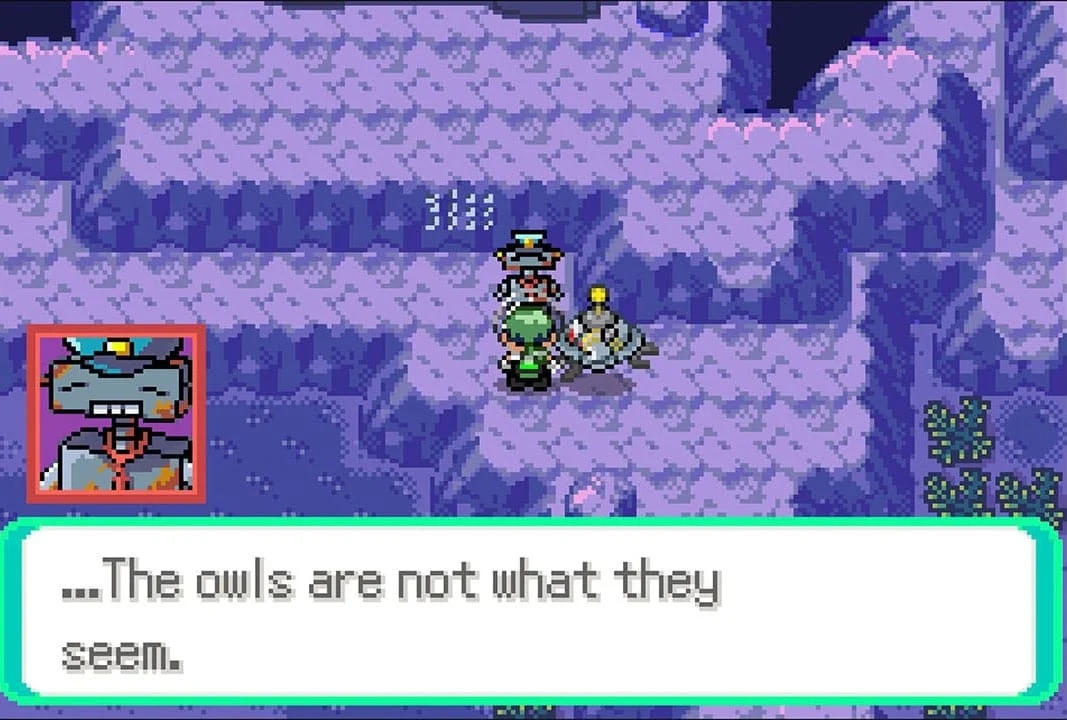
The landscape of Pokémon ROM hacking has undergone a profound evolution over the past decade, shifting from simple text edits and color pallet swaps to total conversions featuring original narratives, custom mechanics, and entirely new gameplay loops. The latest project to capture the attention of the retro gaming and ROM-hacking communities is Pokémon Wild Indigo, a newly unveiled entry submitted to the ongoing Team Aqua’s ROMhacking Competition (TARC 3). Built as an overhaul of the classic Game Boy Advance title Pokémon Emerald, Wild Indigo trades the traditional gym-challenge formula for a sci-fi survival narrative centered on planetary exploration, ecological research, and puzzle-solving. Developed by community creator dblue, the game injects contemporary design philosophies inspired by independent space-exploration titles into a 20-year-old hardware architecture, highlighting the enduring versatility and technical capability of the Generation III engine.
Main Facts of the Project and Competition Framework
Team Aqua’s ROMhacking Competition, widely known in the community as TARC, serves as a premier stage for developers to showcase innovative, highly concentrated hacking projects within strict timelines or themed guidelines. TARC 3 has drawn a diverse array of submissions, yet Pokémon Wild Indigo stands out primarily due to its distinct departure from standard franchise tropes.
In Wild Indigo, players abandon the role of a budding Pokémon trainer aiming for the regional championship. Instead, they assume the identity of a stranded space trucker forced to navigate an uncharted, hazardous alien world. The core objective pivots away from standard combat dominance toward systematic survival, ecological cataloging, and unraveling a deep environmental mystery. To achieve this, players must study indigenous flora, interact with a cynical robotic companion, and adapt to an altered ecosystem populated by a mix of regional variants, entirely original creatures known as "fakemon," and drastically recalibrated statistics and typing for familiar species.

The integration of these mechanics transforms the traditional turn-based formula into an investigative experience. Rather than merely traveling from town to town to collect badges, the player must explore expansive, interconnected environments that demand critical thinking, environmental interaction, and puzzle resolution reminiscent of contemporary exploration-heavy video games.
Chronology and Development Context
The genesis of Pokémon Wild Indigo aligns with the broader timeline of modern Game Boy Advance ROM hacking, a scene that has experienced exponential growth thanks to advanced decompilation projects like pokeemerald. These open-source decompilations allow developers to write code in C rather than relying solely on assembly language, opening the door for complex custom mechanics, advanced graphical scripting, and unorthodox gameplay loops that were previously impossible on original hardware.
While specific development milestones for Wild Indigo remain closely tied to the aggressive schedule of the TARC 3 event, the project represents months of conceptualization and execution by creator dblue. The entry process for TARC competitions typically requires developers to produce a polished, vertical slice or a complete, self-contained short-form game within a designated competition window. This structured pressure often forces creators to innovate efficiently, stripping away traditional padding to focus heavily on core mechanics, atmosphere, and narrative delivery.
By utilizing the engine of Pokémon Emerald—released originally in Japan in 2004 and globally in 2005—dblue tapped into one of the most thoroughly documented and widely supported ROM-hacking environments in gaming history. The transition from Hoenn’s tropical mainland to a desolate, extraterrestrial landscape demonstrates the technical ceiling of the GBA architecture when paired with modern community-built tools like Advance Map, Pokered-style decompilation frameworks, and advanced tile-editing suites.

Supporting Data and Design Influences
The design philosophy behind Pokémon Wild Indigo draws direct inspiration from critically acclaimed titles outside the traditional monster-taming genre. Creator dblue has openly cited Outer Wilds—Mobius Digital’s acclaimed open-world mystery game about space exploration and temporal loops—as a primary narrative and atmospheric touchstone. This influence is reflected in Wild Indigo’s emphasis on piecing together a fragmented planetary history through environmental clues, observation, and methodical documentation rather than linear progression.
Additionally, players and reviewers have noted structural parallels to other distinct video game properties. The puzzle-centric progression and isolating atmosphere evoke comparisons to titles like Dragonyhm, while the visual presentation of a small protagonist navigating a sprawling, oversized natural world draws distinct aesthetic comparisons to Nintendo’s Pikmin franchise. This fusion of elements—combining the top-down perspective and grid-based movement of classic Pokémon with the isolation and wonder of modern cosmic exploration games—creates a unique juxtaposition that challenges preconceived notions of what a monster-collection ROM hack can achieve.
Mechanically, the game introduces several key departures from standard Emerald gameplay:
- Ecosystem Cataloging: Progression relies heavily on documenting the planet’s alien flora and fauna rather than purely defeating gym leaders.
- Stat and Type Rebalancing: Familiar Pokémon species have undergone comprehensive overhauls to their base statistics and elemental typings to fit the harsh planetary setting.
- Original and Regional Variants: The roster incorporates a balanced mix of custom-designed "fakemon" alongside adapted regional variants designed to match the sci-fi motif.
- Narrative-Driven Puzzles: Environmental barriers require item utilization, ecological understanding, and frequent dialogue interventions from an embedded robotic assistant.
Official Community Responses and Reception

Within the digital spaces dedicated to retro gaming preservation and ROM hacking, the reception to Pokémon Wild Indigo has been overwhelmingly positive. Community hubs, including specialized indexing platforms like Hackdex and enthusiast forums such as Retro Dodo, have highlighted the project as a prime example of the creative renaissance currently occurring within the GBA modification scene.
Community analysts and players alike have praised dblue for subverting fatigue associated with traditional, formulaic Pokémon fangames. For years, the market has been saturated with projects that closely mirror official Game Freak releases, often focusing purely on expanded Pokédexes, increased difficulty curves, or standard region layouts. Wild Indigo’s willingness to embrace high-concept science fiction, systemic survival elements, and non-traditional protagonists has been interpreted as a sign of maturity within the hacking community. Creators are increasingly treating the Pokémon engine not merely as a vehicle for nostalgic replication, but as a foundational framework for entirely original interactive art.
Broader Impact and Industry Implications
The emergence of projects like Pokémon Wild Indigo carries significant implications for the broader landscape of fan-created digital content and game preservation. As official gaming hardware continues to advance into high-fidelity realms, the retro development community demonstrates that strict technical limitations often foster the most inventive narrative and mechanical design solutions.
Furthermore, competitions like TARC 3 play a crucial role in accelerating innovation within the scene. By establishing creative constraints and deadlines, these events incentivize developers to take bold risks that they might otherwise avoid in long-term, unguided projects. The success of Wild Indigo proves that audiences are eager for narrative risks within established engines, paving the way for future hacks to experiment further with genre blending, atmospheric storytelling, and unconventional protagonist archetypes.

For players interested in experiencing Pokémon Wild Indigo firsthand, the modification is distributed in the form of a patch file. True to standard community practices, enthusiasts must supply their own legally acquired ROM of Pokémon Emerald, which can then be modified using standard patching software alongside tools hosted on community databases like Hackdex. As TARC 3 continues to evaluate its final submissions, Wild Indigo stands as a testament to the boundless creativity of independent developers working at the intersection of modern narrative design and classic retro hardware.