Indra Gunadi
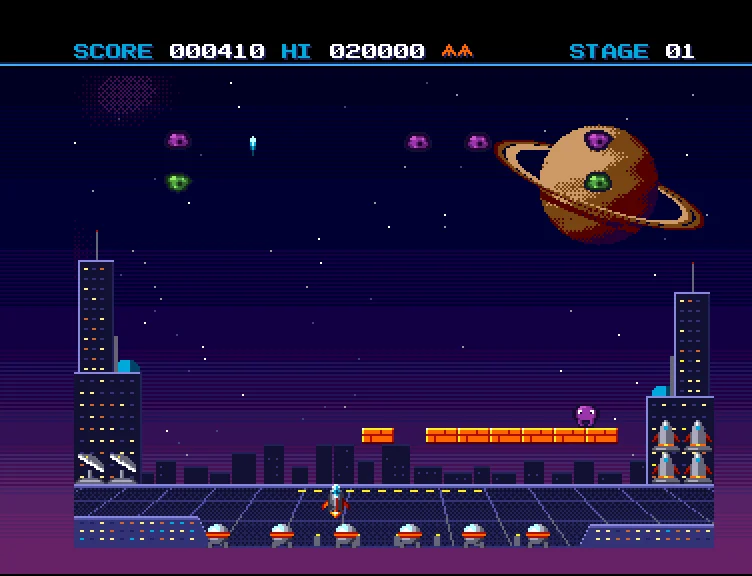
The Commodore Amiga community continues to demonstrate remarkable longevity as an active platform for independent software development, underscored by the recent release of Orion. Debuting on October 26, 2026, this new title from developer Peppe74 is specifically engineered for the Amiga Original Chip Set (OCS), the foundational architecture that defined the Commodore Amiga’s dominance in the late 1980s. Designed to function on the entry-level Amiga 500 configuration—notably with the standard 512KB of RAM—the game serves as a contemporary homage to the golden era of arcade gaming, drawing direct mechanical inspiration from the 1981 classic, Pleiads.
Historical Context and the Persistence of the Amiga 500
The Amiga 500 remains the most iconic machine in Commodore’s history, having shifted the paradigm of home computing upon its release in 1987. Unlike its contemporaries, the A500 utilized custom silicon—the Agnus, Denise, and Paula chips—which offloaded graphics and sound processing from the Motorola 68000 CPU. This architecture allowed for fluid sprite manipulation and multi-channel audio that, at the time, was unmatched in the domestic market.
Despite being nearly four decades old, the Amiga ecosystem maintains a robust "homebrew" scene. Developers continue to push the boundaries of the OCS, often utilizing modern cross-compilation tools to extract performance levels that were previously considered impossible during the machine’s commercial lifecycle. The release of Orion fits into a broader trend of "retro-modernism," where developers leverage the constraints of vintage hardware to create new, optimized experiences for a dedicated global fanbase.
Analyzing the Mechanics of Orion
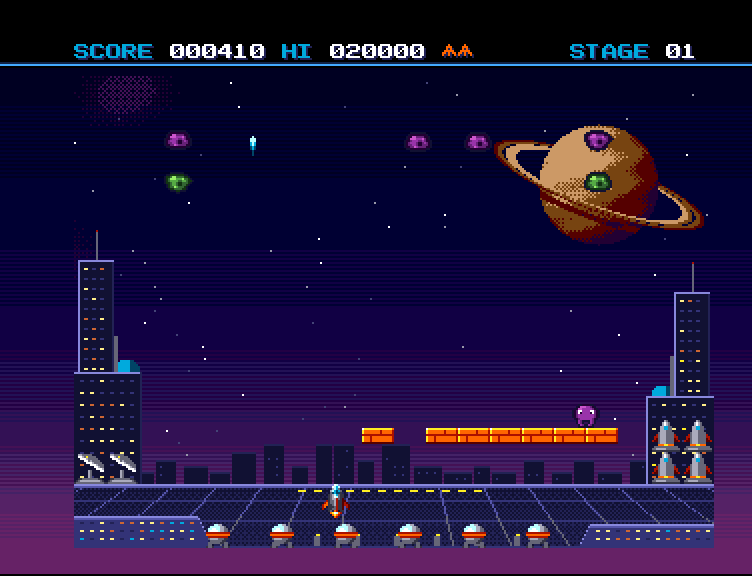
Orion is classified as a fixed-screen shooter, a genre that dominated the early 1980s arcade landscape. The project is modeled after Pleiads, a title notable for its varied enemy formations and multi-stage approach to combat. In Orion, the player controls a ship tasked with defending against waves of descending adversaries. By keeping the technical requirements to the base 512KB A500, Peppe74 has ensured the software remains accessible to the widest possible demographic of Amiga enthusiasts, including those who utilize original hardware rather than emulation.
The developer has been transparent regarding the current state of the software. In initial project disclosures, Peppe74 acknowledged that the current difficulty curve is relatively low, characterizing the game as a work-in-progress. This iterative approach is common within the independent development scene, where feedback from the community—often gathered via forums such as EAB (English Amiga Board) or dedicated platforms like PDroms—directly informs subsequent updates and feature expansions.
Chronology of Amiga Development
The release of Orion represents a continuation of a multi-year resurgence in Amiga software production. The timeline of this movement can be traced back to the mid-2010s, when the cost of original hardware began to rise, prompting a surge in interest from both veteran users and younger collectors.
- 2015–2018: The rise of specialized hardware accelerators and flash-storage interfaces (such as the Gotek and WHDLoad) revolutionized how software was loaded, reducing the reliance on fragile magnetic floppy disks.
- 2020–2023: A period characterized by high-profile indie releases that utilized advanced graphical tricks, such as copper-list effects and overscan, pushing the limits of the OCS/ECS (Enhanced Chip Set).
- 2024–2026: The current era, which has seen an influx of AI-assisted development tools. As noted in the technical documentation for Orion, the project incorporates AI-assisted content in graphics and code, signaling a shift in how legacy software is produced. By utilizing machine learning models to optimize code or generate sprite assets, developers like Peppe74 are able to complete projects in months that previously might have taken years of manual assembly coding.
Technical Implications and Resource Optimization
The challenge of programming for the A500 lies in the strict management of the machine’s 512KB memory pool. Because the OCS architecture lacks a modern operating system overhead, every byte is significant. Developing a game that provides smooth frame rates while handling collision detection and audio interrupts requires a deep understanding of the machine’s "blitter" unit—a co-processor designed to move memory blocks rapidly.
By choosing to target this specific hardware, Peppe74 avoids the pitfalls of "bloatware" that can sometimes plague emulated ports. The game operates at a machine-code level that ensures high responsiveness. Analysts in the retro-computing space note that such releases are not merely nostalgic exercises; they serve as a technical proof-of-concept, demonstrating that even the oldest hardware can host new, engaging content if the programming is sufficiently efficient.
Industry and Community Reception
While Orion is currently in its early stages, early reactions from the Amiga community have been positive, focusing on the game’s aesthetic fidelity to the arcade style of the early 1980s. The community expectation for such releases is generally two-fold: first, that the game provides a stable and enjoyable experience, and second, that it adheres to the "look and feel" of the era it represents.
Peppe74’s stated intention to refine the difficulty suggests a commitment to long-term support. In the current software development lifecycle, a "Day One" release is often just the beginning of a cycle that includes bug fixes, difficulty balancing, and, in some cases, the addition of new levels or power-ups. This reflects a maturation of the homebrew scene, where developers act as both architects and stewards of their projects over extended periods.
Broader Impact on the Retro-Computing Landscape
The release of Orion has broader implications for the longevity of the Amiga platform. As original Commodore hardware ages, the preservation of the platform depends on two things: the maintenance of physical consoles and the continuous creation of new content. If a system ceases to have new software, it risks becoming a static museum piece. By contrast, projects like Orion keep the hardware in active use.
Furthermore, the integration of AI-assisted development, as cited in the release notes for this project, suggests that the "barrier to entry" for legacy software development is dropping. If AI tools can effectively assist in the translation of modern logic into the assembly language required by the Motorola 68000, we may see an acceleration in the number of high-quality titles released for the platform in the coming years.
Future Projections
Looking ahead, the evolution of Orion will be monitored by the community to see how the developer addresses the perceived lack of challenge. Plans for improvement usually involve increasing enemy speed, introducing complex attack patterns, or implementing a "hard mode" that requires more precise input timing.
For the wider Amiga community, the success of small-scale projects like this reinforces the validity of the OCS as a viable target for game design. As long as there is an audience for pixel-perfect, hardware-constrained gaming, developers will continue to find value in the unique architecture of the 1987 Amiga 500.
Conclusion
Orion stands as a representative example of the current state of Amiga development: a marriage of classic arcade aesthetics with modern, AI-assisted development workflows. While the title is currently in its initial, more accessible phase, its existence is a testament to the persistent vitality of the Commodore Amiga platform. As Peppe74 moves forward with planned updates, the project serves as both an entertaining shooter and a case study in how the legacy of the 1980s continues to evolve through the efforts of contemporary independent developers. For owners of the A500, the arrival of Orion provides a fresh opportunity to engage with the machine that defined an entire generation of computing, proving that even after 39 years, the Amiga remains a platform with significant creative potential.