Arya Paningal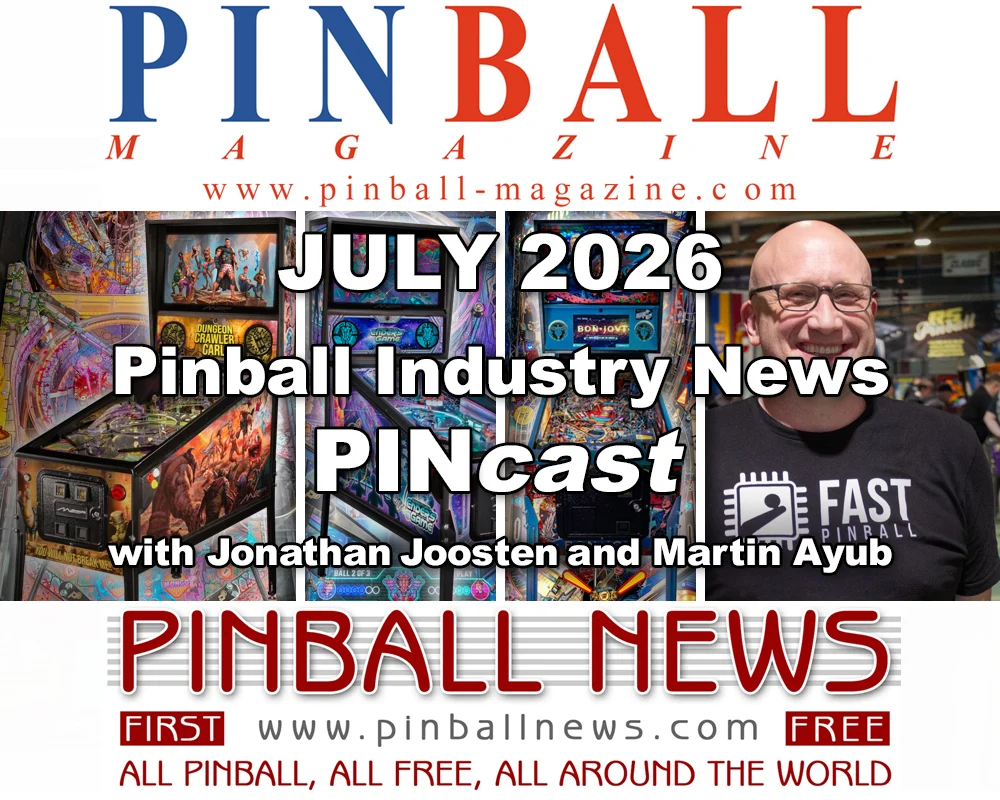
The global pinball manufacturing landscape has entered an unprecedented period of accelerated production, marked by a surge of mid-summer releases that defy the industry’s historical tendency for seasonal lulls. July 2026 has witnessed the introduction of three distinct new game platforms, the finalization of a limited-run collector series, and significant updates to emerging manufacturers’ production pipelines. This flurry of activity, detailed in the latest edition of the Pinball Industry News PINcast, reflects a maturing market where technical innovation in lighting and physical mechanical interaction has become the primary differentiator for success in a competitive landscape.
Multimorphic’s Dual Platform Strategy
The month began with a bold move by Multimorphic, a company known for its modular P3 platform, which announced the immediate availability of two new titles: Dungeon Crawler Carl and Ender’s Game. While these games share the underlying hardware architecture of the P3 system—notably a large, central rotating playfield disk integrated with a matrix of over 180 addressable RGB LEDs—the implementation of these components suggests a strategic shift toward deeper, software-driven experiences.
The decision to launch two titles simultaneously highlights a departure from the traditional "one-at-a-time" release cadence that has dominated the industry for decades. Industry analysts suggest that this strategy serves to maximize the utility of the P3’s modular nature, allowing owners to transition between themes without requiring a full machine replacement. In an interview with PINcast hosts Martin and Jonathan, Multimorphic head Gerry Stellenberg, Co-Creative Director Stephen Silver, and artist Brad Albright detailed the complexities of balancing the high-octane thematic requirements of Dungeon Crawler Carl against the more strategic, tactical narrative of Ender’s Game. The integration of the rotating disk across both titles provides a unified physical foundation, yet the distinct software rulesets demonstrate the platform’s capacity for radical mechanical recontextualization.
Barrels of Fun Enters the Rock and Roll Arena
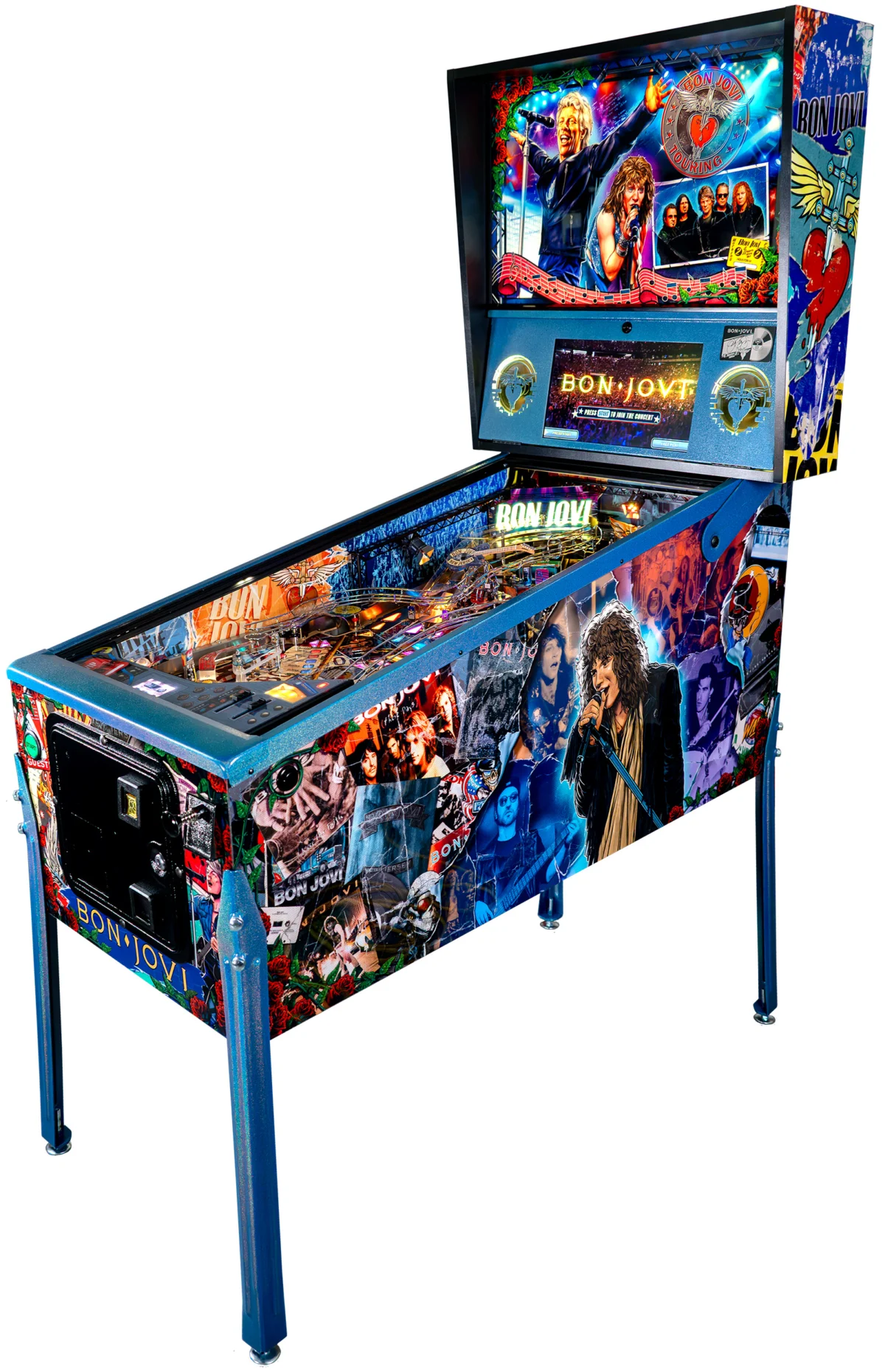
Barely 24 hours after the Multimorphic announcements, Texas-based manufacturer Barrels of Fun unveiled its fourth title, Bon Jovi. The announcement, which occurred in the wake of the Southern Fried Gaming Expo, marks a high-profile expansion for the company. With a limited production run of 700 units, the title is positioning itself as a premium collector’s item rather than a high-volume commercial route game.
The game’s design philosophy, as explained by Chief Mischief Maker David Van Es, centers on mechanical innovation—specifically the "Shot Through The Heart" ball mechanism and a bespoke outlane ball-save device. These features represent an effort to marry the nostalgia of the iconic band with modern kinetic gameplay. Initial feedback from the Southern Fried Gaming Expo suggests that while the licensing choice was initially met with skepticism by some segments of the hobbyist community, the actual gameplay mechanics are successfully converting doubters. This highlights a broader trend in the industry: the growing influence of physical mechanical engineering over pure intellectual property (IP) recognition in driving early-stage adoption.
The Evolution of Boutique Manufacturing and Limited Editions
The month also saw a significant shift for American Pinball, which announced the "Victory Edition" of its Galactic Tank Force title. Limited to a run of just 100 units, this release functions as a capstone for the machine’s production cycle. Beyond the scarcity of the units, the announcement signals a new strategic partnership with The Art of Pinball. Under this exclusive agreement, the design firm will supply high-fidelity sculpts and interactive features for current and future American Pinball machines. This move signifies a broader industry trend toward outsourcing specialized, high-detail additive manufacturing to firms that possess specific expertise in playfield aesthetic design, allowing primary manufacturers to focus on core logic and mechanical reliability.

Concurrent with these developments, Turner Pinball is finalizing the rollout of its Yukon Yeti machine. Having recently revealed a comprehensive sound design package, the company is now transitioning from the prototype phase to full-scale distribution. Of particular note is the news that Turner Pinball has begun construction on a dedicated, expanded manufacturing facility. This investment in physical infrastructure serves as a bellwether for the company’s long-term stability and indicates a transition from boutique development to a more sustainable, scalable manufacturing model.
Analytical Overview of Market Trends
The current state of the pinball industry, as captured by the July 2026 data, reveals several critical shifts in manufacturing and consumer behavior:
- Software-First Design: The success of platforms like the P3, which rely on firmware updates and modular hardware to sustain interest, has forced traditional manufacturers to invest more heavily in software stability and deep, iterative rulesets.
- Mechanical Complexity: The inclusion of advanced lighting arrays and multi-functional mechanical toys (such as the rotating disks in Multimorphic’s latest offerings) is becoming the standard baseline for premium-priced machines.
- Collaborative Ecosystems: The partnership between American Pinball and The Art of Pinball illustrates a move toward "modular specialization," where manufacturers leverage the expertise of third-party design houses to enhance the visual and tactile quality of their games.
- Production Scalability: The move by Turner Pinball to expand its factory capacity suggests that the "home market" for pinball—private owners purchasing new machines for residential use—remains the primary engine of growth for the industry.
The Role of Community and Technical Education
Beyond hardware, the July 2026 PINcast also addresses the foundational elements of the hobby, specifically the state of "homebrew" development. In a discussion with Aaron Davis of FAST Pinball, the podcast explores the technical barriers to entry for independent developers. The segment, What’s Cooking, with…?, serves as a reminder that the industry’s professional manufacturers are heavily influenced by the innovations bubbling up from the open-source and DIY communities. By fostering an environment where homebrew creators can iterate, manufacturers are effectively crowdsourcing R&D, leading to more creative mechanical designs and robust control systems.
Broader Implications for the Future
The current trajectory of the industry suggests that the latter half of 2026 will be characterized by intense competition for player attention. As manufacturers like Multimorphic, Barrels of Fun, American Pinball, and Turner Pinball continue to diversify their product offerings, the consumer is presented with an increasingly specialized range of choices.
The industry’s move toward "evergreen" software—where a single machine can be updated with new rules, sounds, and assets long after its initial purchase—is fundamentally changing the lifecycle of a pinball machine. No longer are machines viewed as static objects; they are increasingly treated as dynamic platforms that require ongoing maintenance and digital enrichment. This evolution places a premium on manufacturer communication, as evidenced by the frequency of technical updates, bug fixes, and feature expansions being released across the board this month.
As these companies prepare for the upcoming trade show season, the focus will likely remain on stability and the continued refinement of the user experience. The rapid-fire release of new hardware, while beneficial to the collector, places significant pressure on supply chains and quality control departments. The industry’s ability to manage this pressure while maintaining the high build quality expected at current price points will determine the sustainability of this current growth spurt.
For those tracking the industry, the July 2026 developments serve as a microcosm of the current state of play: a mix of ambitious mechanical design, strategic licensing, and a move toward more integrated, long-term support for individual titles. As the PINcast highlights, the business of pinball is moving faster than ever, and the ability to adapt to these shifts remains the defining characteristic of the modern manufacturer. Through constant innovation and a willingness to embrace new partnerships, the industry is navigating a transition that prioritizes both the longevity of the machine and the engagement of the player.