Cecilia Chamidah Nur
In a stark reflection of the ongoing upheaval within the video game industry, legendary developer John Romero, co-founder of id Software, has publicly extended a message of solidarity and concern to current and former employees of the studio, following reports that id Software has been significantly impacted by Microsoft’s latest wave of extensive layoffs. This restructuring, which Xbox executive Asha Sharma announced would see "3,200 roles" cut throughout fiscal year 2027, with 1,600 implemented in the immediate term, has sent shockwaves through the gaming community, particularly as it touches one of gaming’s most revered and foundational development houses.
The Unfolding Crisis at Xbox and its Pervasive Reach
The recent announcement by Xbox represents one of the most substantial workforce reductions in the gaming sector this year, underscoring a broader trend of consolidation and cost-cutting measures by major publishers. While Xbox leadership has framed these actions as necessary for "strategic alignment" and focusing on "high-impact areas," the human cost has been immense. The reported 3,200 job cuts are not merely an abstract figure; they represent thousands of careers disrupted, livelihoods impacted, and families facing uncertainty. This figure follows previous significant layoffs by Microsoft, including 10,000 employees across the company in early 2023 and an additional 1,900 employees from its gaming division, primarily affecting Activision Blizzard and ZeniMax Media staff, in January of the current year. The latest round further deepens the distress within an industry already grappling with post-pandemic market corrections and escalating development costs.
Initial reports regarding the current layoffs, which began to surface earlier this week, indicated a wide net cast across Xbox’s internal studios. While official confirmation on all affected entities remains pending, information rapidly emerged from various sources, pointing specifically to id Software as a major casualty. Scott Miller of Apogee Entertainment alluded to the impact on id Software via social media, a sentiment echoed by several departing id employees who took to platforms like X (formerly Twitter) to share their experiences. Further corroboration came from journalists, including Game Developer senior editor Chris Kerr, whose reports suggested that approximately half of id Software’s team had been laid off. Such a drastic reduction signals a profound shift for a studio synonymous with pioneering the first-person shooter genre.
John Romero’s Message of Solidarity and Empathy
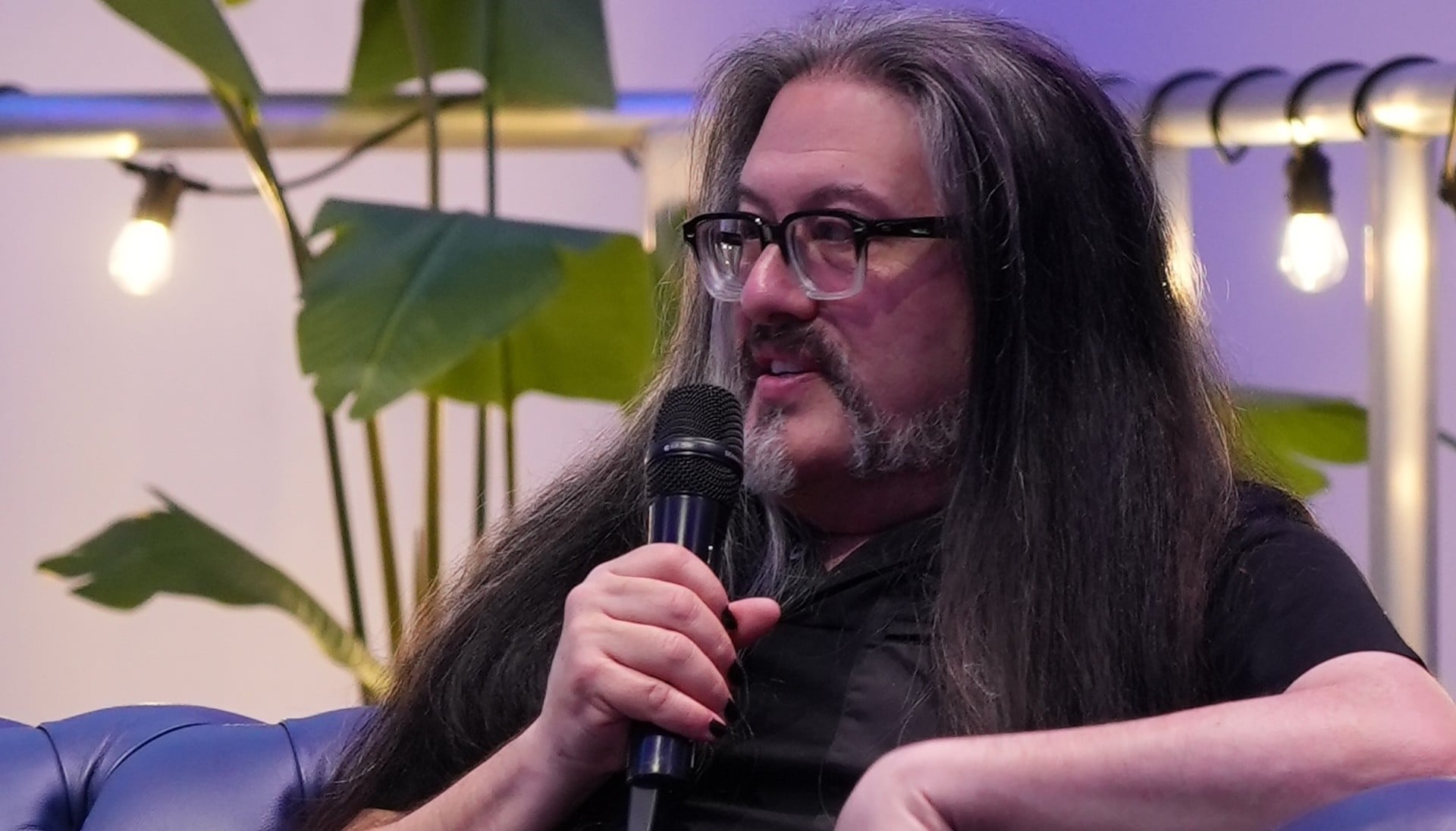
Against this backdrop of corporate restructuring and personal upheaval, John Romero, a titan in the history of video game development, offered a poignant message. Romero, who co-founded id Software in 1991 alongside John Carmack, Adrian Carmack, and Tom Hall, and was instrumental in creating genre-defining titles like DOOM and Quake before his departure in 1996, conveyed his deep sorrow for those affected. "I’m so sorry for everyone at id Software affected by these layoffs," Romero wrote in a public statement. His words carried the weight of personal experience, resonating with his own past separation from the studio he helped build. "I know what it feels like to leave id while id goes on. It’s a strange and painful thing to step away from a place that holds so much of your work, friendships and history."
Romero’s statement was not merely an expression of sympathy; it was also a powerful affirmation of the enduring legacy and recent achievements of id Software’s current and departed staff. He lauded their efforts in maintaining and advancing the studio’s formidable reputation. "The people at id have done a great job moving that legacy forward. DOOM, Quake, and Wolfenstein are not easy names to carry on, especially in today’s industry," he remarked, acknowledging the immense pressure and responsibility inherent in developing sequels and reboots for such iconic franchises. He specifically praised the quality of their recent output: "The last few games showed real care, skill and respect for what those worlds mean to people." This commendation highlights the critical and commercial success of titles like DOOM (2016) and DOOM Eternal, which revitalized the franchise for a new generation while honoring its roots.
The Call for Preservation: Safeguarding Gaming’s History
Beyond offering comfort, Romero used the platform to advocate for a cause close to his heart: the preservation of video game history. Amidst the uncertainty and disruption caused by mass layoffs, invaluable institutional knowledge, creative assets, and personal narratives can easily be lost. Romero emphasized the critical importance of id Software’s historical contributions to the broader narrative of video games.
"id’s history is critically important to the history of games," he stated, drawing a parallel to his own meticulous efforts. "I’ve preserved id’s complete early history from our start at Softdisk through to August 6, 1996, including materials and assets that, as far as I know, id itself no longer has." His concern is palpable: "I hope someone is doing the same for the company’s ongoing legacy (the work, code, assets, stories and the people behind them)." This appeal underscores a crucial, yet often overlooked, aspect of the industry’s rapid evolution: the need to document and safeguard the creative and technical processes that shape its future. When studios downsize or close, often the first things to be discarded are historical archives, early builds, design documents, and the oral histories of the people involved. Romero’s call is a reminder that these artifacts are not just nostalgic relics but vital resources for understanding the craft, technology, and culture of game development.
Microsoft’s Broader Strategic Realignment and Industry Context
These latest layoffs at Xbox are not isolated incidents but part of a larger strategic realignment within Microsoft’s gaming division, and indeed, the broader tech and entertainment industries. For Microsoft, the acquisition spree that brought Bethesda Softworks (including id Software) under its wing in 2021 for $7.5 billion, and the monumental $69 billion acquisition of Activision Blizzard King in 2023, created an unprecedented portfolio of studios and intellectual properties. Integrating these vast entities, each with its own culture, development methodologies, and financial structures, is a complex undertaking. The company’s stated goal has been to streamline operations, enhance efficiency, and focus resources on what it perceives as core, high-growth areas, particularly Game Pass and a burgeoning multi-platform strategy.
However, the rapid growth seen during the pandemic-driven gaming boom has decelerated, leading to a period of market correction. Development costs for AAA titles have continued to skyrocket, often reaching hundreds of millions of dollars, while the returns are not always guaranteed. Publishers are increasingly scrutinizing project pipelines, prioritizing established franchises, and consolidating resources. Microsoft, despite its immense financial resources (reporting record revenues in its recent earnings calls), is not immune to these pressures. The slowing subscriber growth for Game Pass, coupled with the need to justify massive acquisition costs, necessitates difficult decisions regarding investment and staffing across its vast studio network. The strategic shift to bring some first-party Xbox titles to rival platforms like PlayStation and Nintendo Switch further indicates a re-evaluation of its exclusivity model and a pursuit of broader revenue streams, which might also influence internal studio structures and project priorities.
The Genesis and Evolution of id Software: A Legacy Defined
To understand the weight of Romero’s words and the impact of these layoffs, one must appreciate the monumental legacy of id Software. Founded in 1991, id Software quickly established itself as a pioneer, practically inventing and refining the first-person shooter genre. Their early shareware titles like Commander Keen demonstrated their technical prowess, but it was Wolfenstein 3D (1992) that truly ignited the FPS revolution, introducing fast-paced action and a visceral perspective.
The release of DOOM in 1993, however, cemented id Software’s legendary status. With its groundbreaking 3D engine, network multiplayer, and modding capabilities, DOOM was not just a game; it was a cultural phenomenon that reshaped the industry. This was followed by Quake (1996), which pushed the boundaries of 3D graphics and online multiplayer even further, becoming a cornerstone of competitive esports. Romero’s departure after Quake marked the end of an era for the founding team, but id Software continued to innovate, developing subsequent iterations of DOOM and Quake, as well as new IPs like Rage and the influential Wolfenstein series (often developed in collaboration with MachineGames).
When ZeniMax Media acquired id Software in 2009, it brought the studio under a larger corporate umbrella, which eventually became part of Xbox Game Studios with Microsoft’s acquisition of ZeniMax in 2021. Throughout these transitions, id Software maintained a reputation for technical excellence and a commitment to its core design principles: fast-paced, visceral combat and cutting-edge engine technology. The critical and commercial resurgence of the DOOM series with DOOM (2016) and DOOM Eternal (2020) under ZeniMax/Microsoft demonstrated the studio’s continued ability to innovate while respecting its heritage, validating Romero’s praise for the current team.
Impact on id Software’s Future and Development
The reported layoffs at id Software raise significant questions about the studio’s immediate future and its project pipeline. While details are scarce, the reduction of "around half" the team is substantial enough to disrupt ongoing development, potentially delaying or even altering the scope of unannounced projects. Given the recent announcement of DOOM: The Dark Ages at the Xbox Games Showcase 2024, a prequel to DOOM (2016) expected in 2025, it is plausible that this project has been in active development for some time. Such significant workforce reductions can impact morale, lead to the loss of key talent with institutional knowledge, and force a re-evaluation of development strategies. The creative trajectory of a studio so deeply embedded in a specific genre could be profoundly affected. While id Software has always been known for its resilience and ability to rebuild, the scale of these cuts under a corporate giant like Microsoft presents unique challenges.
Broader Industry Implications and the Human Cost
The layoffs at id Software and across Xbox Game Studios are symptomatic of a larger, unsettling trend in the video game industry. 2023 saw record-breaking layoffs, a trend that has tragically continued into 2024. Companies across the spectrum, from indie developers to industry giants, are tightening belts, restructuring, and making difficult decisions that prioritize profitability and strategic alignment over employee numbers. This environment fosters anxiety among developers, leading to concerns about job security, burnout, and the future of creative freedom within consolidated corporations.
The human cost of these decisions is immeasurable. Each layoff represents an individual’s career path abruptly halted, a family’s financial stability threatened, and a community’s fabric strained. The collective talent, passion, and experience shed by these companies represent a significant loss to the industry’s creative potential. Romero’s empathy, born from his own experiences at id and more recently with his studio Romero Games, highlights this personal dimension. Romero Games itself faced significant layoffs last year when an unnamed company (widely speculated to be Microsoft) pulled funding from its new FPS title, forcing the studio to downsize to survive. This shared experience undoubtedly deepened the sincerity and weight of his recent statement.
Conclusion: A Call for Resilience and Remembrance
John Romero’s voice, steeped in the history of game development, serves as a powerful reminder of the cyclical nature of the industry – its booms and busts, its triumphs and its painful contractions. His message to the affected id Software staff is one of profound empathy and recognition for their invaluable contributions. Beyond the immediate crisis, his call for the preservation of id Software’s legacy resonates deeply, emphasizing that the true wealth of the gaming industry lies not just in its current blockbusters or financial reports, but in the accumulated knowledge, creative processes, and personal stories of those who build its worlds. As the industry navigates this turbulent period, the hope remains that affected developers find new opportunities, and that the historical significance of their work is not forgotten, but carefully preserved for future generations of creators and players alike.