Jia Lissa
The transition from the 16-bit glory days of the Sega Genesis to the technically ambitious but commercially troubled Saturn era remains one of the most scrutinized periods in interactive entertainment history. While historians have long analyzed the corporate friction between Sega’s Japanese headquarters and its American subsidiary, few individuals witnessed the friction from both sides of the Pacific. Mike Fischer, a veteran executive whose career spans leadership roles at Sega, Namco, Square Enix, and Microsoft, recently provided a comprehensive look at the inner workings of the company during its most transformative years. His accounts offer a unique synthesis of cultural, technical, and strategic insights that shaped the modern gaming landscape.

The Early Years in Tokyo: The Birth of the Game Gear and Sonic
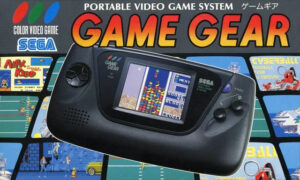
Mike Fischer joined Sega Enterprises in Tokyo on April 1, 1990, entering the Overseas Consumer Products Business Division during a pivotal moment for the company. At the time, the Mega Drive (known as the Genesis in North America) was beginning to find its footing against the dominant Nintendo Entertainment System (NES). Fischer’s early role was that of a "utility player," performing tasks ranging from translating technical repair documents to naming consumer peripherals, such as the "Gear-to-Gear" cable for the Game Gear handheld.
Fischer’s tenure coincided with the development of Sonic the Hedgehog, a project initiated by a company-wide mandate to create a "Mario-killer." While history often credits Yuji Naka as the primary visionary, Fischer clarifies the collaborative nature of the project. He notes that Naoto Ohshima was the character creator—famously combining the head of Felix the Cat with the body of Mickey Mouse (later westernized for local audiences)—while Hirokazu Yasuhara handled the game’s design. Fischer’s observations suggest that the legendary "Sonic Team" was a delicate balance of diverse talents, a balance that would eventually shift as corporate egos expanded.

During this period, Sega’s cultural reach was exemplified by high-profile visits from global icons like Michael Jackson and Ayrton Senna. Fischer served as a translator and liaison for Jackson during the development of Moonwalker, recounting days spent in arcades like the Roppongi Sega GiGO with the pop star. These interactions underscored Sega’s 1990s identity as a "cool," edgy alternative to the family-friendly Nintendo.
The Cultural Divide: Sega of America and the Kalinske Era
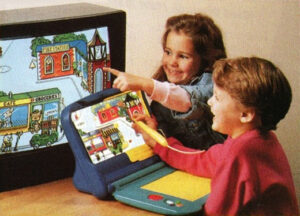
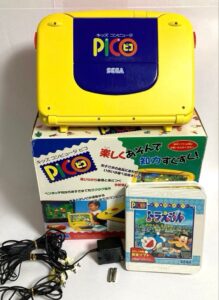
In 1994, Fischer transferred to Sega of America (SOA) to serve as a product manager, specifically focusing on the Sega Pico, an educational toy platform. This move placed him at the heart of the "Console Wars" in the United States, led by Tom Kalinske. Under Kalinske’s leadership, SOA had achieved unprecedented success, at one point capturing over 50% of the U.S. 16-bit market share.
Fischer identifies a significant cultural disconnect between the two branches. In Japan, the Mega Drive had struggled to compete with the Super Famicom, leading Japanese management to view the platform as a legacy product. Conversely, the American team viewed the Genesis as a thriving ecosystem that still had years of profitability. This divergence led to the premature push for the Sega Saturn and the ill-fated 32X peripheral.
Fischer’s anecdotes reveal a "frugal" Japanese headquarters—where employees used the blank side of misprinted paper as scratch pads—contrasted with a more lavish, high-spending American office. This difference in corporate philosophy often led to accusations of "spying," though Fischer maintains that his role was primarily intended to improve communication. He recalls Hayao Nakayama, Sega’s notoriously fiery CEO, frequently siding with Kalinske in internal disputes, acknowledging that the American team understood the Western consumer better than the Japanese middle management did.
Technical Missteps and the Saturn’s Manufacturing Flaws
The transition to the 32-bit era was marred by technical complexities that hindered the Saturn’s success. Fischer highlights a specific instance of manufacturing oversight regarding the Saturn’s physical design. Japanese designers had created hand-painted mock-ups featuring a "sparkle" finish in the plastic. Despite Fischer’s warnings—informed by his experience in the toy division—that injection molding "sparkly" plastic would result in visible flow lines and structural weakness, the designers proceeded. The result was a pre-production shell that Fischer described as "looking like shit," a metaphor for the broader technical hurdles developers faced with the Saturn’s dual-processor architecture.
Furthermore, Fischer reflects on the strategic decision to move away from the Motorola 68000 chipset, which had been the "workhorse" of the Genesis. By switching to a Hitachi-manufactured chipset for the Saturn, Sega lost the continuity and ease of development that had made the Genesis a favorite for third-party programmers. This complexity, combined with poor documentation, allowed the Sony PlayStation to gain a significant advantage in developer relations.
The Shift to Third-Party: Rebuilding Industry Relations
After a stint at Namco during the PlayStation 2’s ascent, Fischer returned to Sega in 2002. By this time, the company had abandoned the hardware business following the Dreamcast’s discontinuation. Fischer was tasked with a critical mission: transitioning Sega into a successful third-party publisher.
This era required "burying the hatchet" with former rivals. Fischer recounts the symbolic moment when the Sonic the Hedgehog mascot was welcomed into Nintendo of America’s headquarters by the Mario mascot. He also worked closely with Sony’s Andy House to secure marketing support for Virtua Fighter on the PlayStation 2.
However, internal friction remained, particularly with Yuji Naka, who had become a senior executive. Fischer describes delivering a "Gamer’s Manifesto" to the Japanese teams, urging them to adopt Western trends such as M-rated content, multiplayer functionality, and long-form narratives to combat the rising used-game market. Naka reportedly reacted with hostility, accusing Fischer of wanting to make "porno games." This resistance to market evolution, Fischer argues, contributed to the stagnation of certain Sega franchises in the early 2000s.
Chronology of Key Events
- 1988: Mike Fischer graduates with a degree in Economics; moves to Japan to teach English.
- 1990: Fischer joins Sega Enterprises in Tokyo (Overseas Consumer Products).
- 1991: Launch of Sonic the Hedgehog; Game Gear released in North America.
- 1994: Fischer transfers to Sega of America; focuses on the Sega Pico.
- 1995: Surprise launch of the Sega Saturn at the first E3; the beginning of Sega’s hardware decline.
- 1997: Fischer leaves Sega for Namco; witnesses the success of Tekken and Soul Calibur.
- 2001: Sega officially announces its exit from the hardware market.
- 2002: Fischer returns to Sega to manage third-party transitions.
- 2004: Fischer joins Microsoft’s Xbox division in Japan.
Analysis of Broader Implications and Legacy
The career of Mike Fischer serves as a microcosm of the video game industry’s globalization. His experiences highlight the difficulty of managing a multinational brand when regional markets move at different speeds. The "Sega vs. Sega" rivalry was not merely a personality clash but a fundamental disagreement on the lifecycle of technology.
Today, under the leadership of Shuji Utsumi, Sega is attempting to reclaim its status as an innovator. Fischer expresses optimism about Utsumi’s "tough" leadership style, noting that he possesses the strategic vision to modernize legacy IPs like Yakuza (now Like a Dragon) while moving past the nostalgia-reliant strategies of the past.
The success of Sonic Mania—a game developed by fans-turned-professionals—serves as a poignant reminder of Fischer’s critique: that fresh blood and external perspectives are often necessary to revitalize aging franchises. As Sega moves forward, the lessons from the 1990s—the importance of developer documentation, the necessity of regional autonomy, and the danger of corporate ego—remain more relevant than ever.

Fischer’s narrative ultimately reframes Sega’s history not as a series of failures, but as a "wonderful fraternity" of individuals who, for a brief moment, challenged the status quo and fundamentally changed how video games were marketed and perceived on a global scale.