Cecilia Chamidah Nur
The release of BlastEm version 1.0 marks a significant milestone in the preservation of Sega gaming history, capping off thirteen years of meticulous, human-driven software development. However, the announcement from developer Michael Pavone has resonated far beyond the technical achievements of his emulator. By explicitly stating that BlastEm is “100% artisanal AI-free code,” Pavone has ignited a broader conversation regarding the role of generative artificial intelligence within the niche, yet passionate, world of retro gaming emulation and software preservation.
A Legacy of Manual Craftsmanship
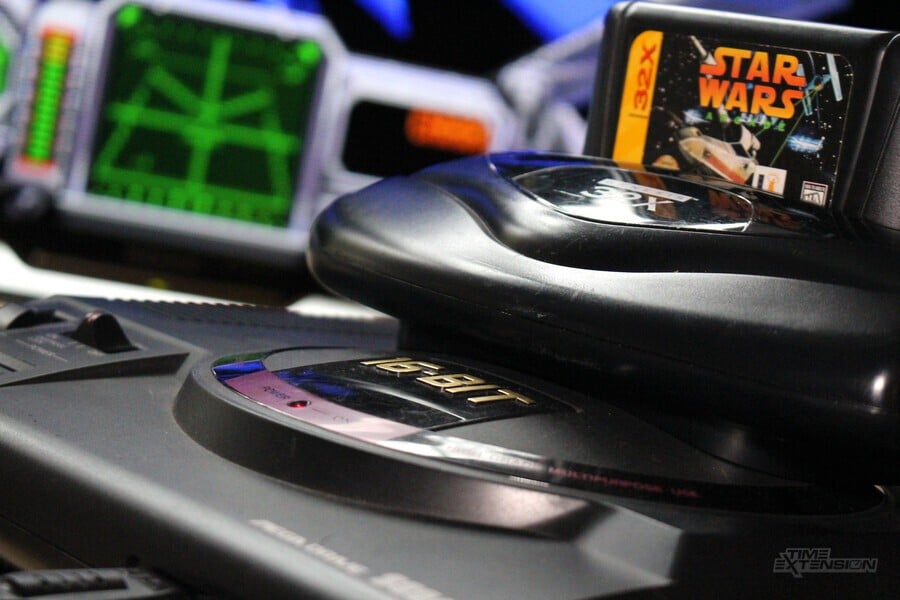
BlastEm, an emulator renowned for its high accuracy and compatibility with a wide range of Sega hardware—including the Genesis, Sega CD, 32X, Game Gear, and the obscure SG-1000 and SC-3000—has long been a cornerstone of the emulation community. Unlike many modern projects that leverage automated coding assistants or large language models to expedite recompilation or translation tasks, BlastEm remains a testament to traditional software engineering.

The 1.0 release is the culmination of over a decade of iterative development. In an era where "vibe-coding"—the practice of using AI to generate code based on natural language prompts—has become increasingly common, Pavone’s commitment to manual coding represents a philosophical stand. For developers like Pavone, the value of retro gaming development lies not merely in the end product, but in the intellectual rigor required to reverse-engineer hardware that has been obsolete for decades.
The Rising Tide of AI in Retro Development
The intersection of GenAI and retro gaming has created a polarized landscape. On one side, proponents argue that tools such as AI-assisted recompilation and machine-learning-based translation provide an essential bridge for aging software that might otherwise be lost to bit rot. By automating the tedious aspects of code migration, these tools allow smaller teams to port classic games to modern hardware at a pace previously thought impossible.
However, the rapid influx of these projects has introduced concerns regarding quality control and historical accuracy. Recent examples, such as the 100% AI-generated port of a classic fighting game that drew significant criticism from the community, highlight a recurring issue: "AI slop." This term, increasingly prevalent in developer forums, refers to projects where the speed of production is prioritized over the integrity of the code. Critics argue that when AI is used to fill in the gaps of complex machine code, the resulting output often lacks the nuance required to maintain the specific timing and behavioral quirks that define authentic retro gaming experiences.

Chronology of Development and Industry Shift
The development trajectory of BlastEm serves as a baseline for comparison against the current "AI-first" movement:
- 2011: Initial development begins on BlastEm, focusing on high-accuracy emulation of the Motorola 68000 CPU.
- 2015–2018: The emulator gains notoriety for its speed and its ability to handle complex 32X and Sega CD hardware, positioning it as a gold standard for Sega enthusiasts.
- 2023–2024: The widespread adoption of LLMs and coding assistants leads to an explosion of "recomp" projects in the homebrew scene.
- September 2026: BlastEm reaches version 1.0. Pavone publicly reaffirms his commitment to human-authored code, directly addressing the trend of AI-integrated emulation projects.
This timeline illustrates the shift from a culture of solitary, deep-dive technical research to a culture of high-velocity output. Where early emulation was a labor of love taking years, modern tools have allowed for the emergence of projects that appear to offer similar results in weeks, fundamentally altering the expectations of the community.
Implications for the Future of Preservation
The broader implications of this divide extend to the legitimacy of preservation efforts. If a project is "translated" or "recompiled" by an AI, does it remain an authentic representation of the original work, or is it a derivative hallucination?
Industry analysts observing this trend note that while commercial software entities are increasingly comfortable with AI-driven efficiency to maximize return on investment (ROI), the retro gaming scene occupies a unique position. Because these projects are typically non-commercial and driven by hobbyist passion, the "process" is often considered part of the "product." For developers who see their work as a form of intellectual contribution or artistic expression, the use of AI acts as a form of alienation from the craft.
Pavone’s sentiment—that retro development is fundamentally about the challenge and the achievement—resonates with a segment of the developer community that values the "artisanal" approach. There is a palpable fear that in a world where AI can churn out code, the unique technical hurdles that have historically defined the hobby will be flattened, leading to a loss of the specialized knowledge required to understand how these systems actually function.
Looking Ahead: The Roadmap for BlastEm
Despite the discourse surrounding AI, Pavone remains focused on the technical horizon. The 1.0 release is not the end of the project but rather a stable foundation. His immediate objectives include:

- Teradrive Emulation: Expanding the emulator’s reach to include the IBM-compatible PC with integrated Mega Drive hardware.
- Sega-PAC Support: Incorporating the elusive LaserActive add-on into the existing architecture.
- Stability Maintenance: Transitioning from long-term development cycles to a more consistent schedule of releases and bug fixes.
For users who wish to stay on the bleeding edge of these developments, Pavone encourages the use of nightly builds. These versions will continue to serve as the primary testing ground for new features, ensuring that even as the project maintains its human-only code base, it remains technically competitive with any modern alternatives.
Conclusion: The Value of Human Effort
The debate ignited by the BlastEm 1.0 announcement is likely to continue as AI tools become more integrated into the software development lifecycle. However, Pavone’s stance serves as a crucial reminder of the distinction between utility and craft. While AI may satisfy the demand for functionality—the "does it work?" metric—it cannot replicate the intent, the learning process, or the community recognition that comes from mastering a difficult technical challenge.
As the industry moves forward, the "artisanal" designation may become a badge of honor for developers, distinguishing projects that are built on deep, human understanding from those generated by predictive models. Whether this will ultimately result in a bifurcation of the retro scene—where AI-assisted projects become the standard for casual use and hand-coded emulators remain the gold standard for enthusiasts—remains to be seen. What is clear, however, is that for developers like Michael Pavone, the code is only as valuable as the effort poured into its creation.