Cecilia Chamidah Nur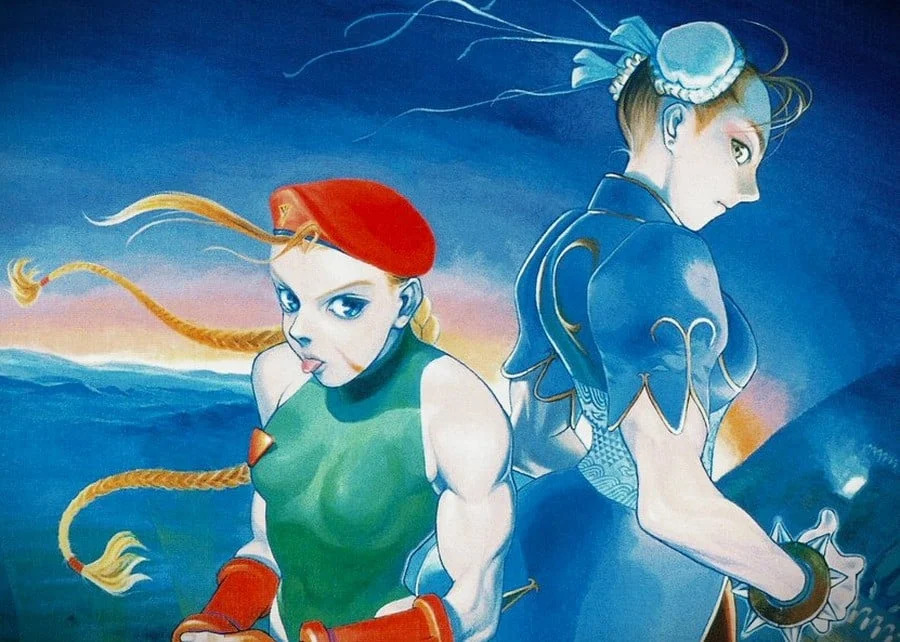
The fighting game community is currently engaged in a spirited dialogue following comments made by legendary developer Akira Nishitani, the visionary behind foundational Capcom titles such as Final Fight, Forgotten Worlds, and X-Men: Children of the Atom. Nishitani, whose design pedigree is instrumental to the evolution of the 2D fighting game genre, recently utilized social media to propose a potential rebalancing of Super Street Fighter II Turbo. Released in 1994, the title is widely regarded by the global competitive community as the definitive iteration of the Street Fighter II series, celebrated for its high-octane mechanics and enduring mechanical stability.
Nishitani’s remarks, which suggest a willingness to revisit the game’s internal parameters, have sent ripples through a scene that has spent three decades refining its understanding of the game’s meta-game. While the developer lightheartedly framed the potential project as a possible "nerf fest," the gravity of such a statement—given his status as an industry pioneer—has prompted an extensive examination of what it means to modify a "perfect" competitive artifact.
A Chronology of Competitive Balance
Super Street Fighter II Turbo arrived during the height of the arcade era, serving as the fourth major update to the original 1991 Street Fighter II. It introduced several groundbreaking features, including the Super Combo gauge, air combos, and the debut of the iconic hidden boss, Akuma.
The game’s competitive longevity is an anomaly in the gaming industry. For over 30 years, it has remained a staple of major tournament circuits, including Evolution Championship Series (EVO) and various regional grassroots events. The community’s commitment to the original 1994 CPS2 arcade hardware has been the primary safeguard against obsolescence. By relying on the native, unpatched code, players have fostered a high-skill ceiling where the game’s "broken" elements—such as extreme damage output, generous grab hitboxes, and specific frame recovery windows—are treated not as bugs, but as essential design features that define the character-specific matchups.
This dedication to the "original vision" was tested in 2008 with the release of Super Street Fighter II Turbo: HD Remix. Led by designer David Sirlin, the project sought to modernize the game for the PlayStation 3 and Xbox 360, applying rigorous balance adjustments to the entire roster. While the remaster was praised for its technical improvements and online infrastructure, the competitive community largely remained tethered to the original 1994 arcade build, viewing the changes as a departure from the high-stakes, ruthless nature of the classic experience.
Technical Analysis: The Complexity of the Meta
The appeal of Super Street Fighter II Turbo lies in its asymmetry. The game features a roster where characters possess wildly disparate tools. For example, Balrog’s headbutt, Vega’s wall-dive mobility, and Ken’s high-priority Shoryuken are frequently cited as elements that would be "corrected" in a modern development cycle. However, in the context of the game’s ecosystem, these tools create a unique dynamic of risk and reward.
Data from the competitive scene suggests that the game has reached a state of near-perfect equilibrium through collective mastery. Because the game has not been subject to modern digital patches, the "tier list" has remained remarkably stable. Unlike contemporary fighting games, which rely on seasonal updates to rotate top-tier characters and maintain interest, Super Street Fighter II Turbo has achieved a "solved" status that players find satisfying rather than stagnant. The depth of the game allows for counter-play that, while demanding near-perfect execution, consistently rewards the player with superior system knowledge and tactical spacing.

The Implications of Developer Intervention
The prospect of an "Nishitani-authorized" rebalance presents a theoretical conflict between historical preservation and creative evolution. If a developer with Nishitani’s authority were to release a modified version of the game, it would raise significant questions regarding the legitimacy of the "original" versus the "updated" experience.
From a preservationist standpoint, any alteration to the game’s core parameters risks undermining the thousands of hours of theory-crafting and frame-data analysis performed by the community. Professional players who have dedicated decades to mastering the nuances of the 1994 hardware would be forced to navigate a landscape where their muscle memory and strategic foresight might be rendered obsolete by a simple change in frame recovery or hitbox size.
However, from a design perspective, Nishitani’s curiosity reflects the mindset of a creator who views his work as a living entity. In many creative industries, original authors often wish to revisit early works to apply the wisdom gained over a career. While the current competitive community is unlikely to abandon the CPS2 hardware, a new version could serve as a valuable "what-if" scenario, offering a modern perspective on a classic foundation without necessarily invalidating the legacy of the original.
Industry and Community Reactions
The reaction from the community has been largely one of protective skepticism. Veteran tournament organizers, who invest heavily in the maintenance of original arcade cabinets and super-gun setups, maintain that the game’s "flaws" are the very things that prevent it from becoming homogenized. The community’s identity is intrinsically linked to the game’s brutal, uncompromising nature.
Conversely, there is a segment of the audience that is intrigued by the prospect of a "Director’s Cut" approach. Given the success of modern retro-revivals and the ongoing popularity of the Fighting Game Collection series, there is a market for games that offer a fresh spin on historical mechanics. If Capcom were to facilitate such a project, it would be the first instance of an original creator formally re-evaluating a pillar of the genre since the emergence of the modern esports era.
Broader Impact on Fighting Game Culture
The debate triggered by Nishitani highlights a broader trend in gaming: the tension between developers and the communities that adopt their titles. In the current landscape, games are often updated frequently, with balance patches becoming a standard expectation. This constant state of flux has changed how players relate to their tools. Super Street Fighter II Turbo stands in stark contrast to this, serving as a monument to a time when a game was finished, shipped, and left to the players to decode.
Whether or not Nishitani follows through with his proposal is perhaps less significant than the discourse it has generated. It serves as a reminder that the value of a classic title is not just in its software, but in the community that has grown around it. Should a new version emerge, it will be subject to the same scrutiny that the original faced in 1994. However, until then, the tournament scene remains firm. For the dedicated players who continue to frequent regional events, the only balance that matters is the one found on the original PCB, where the game remains exactly as it was designed: unforgiving, exhilarating, and perfectly, timelessly broken.