Farhan hamdan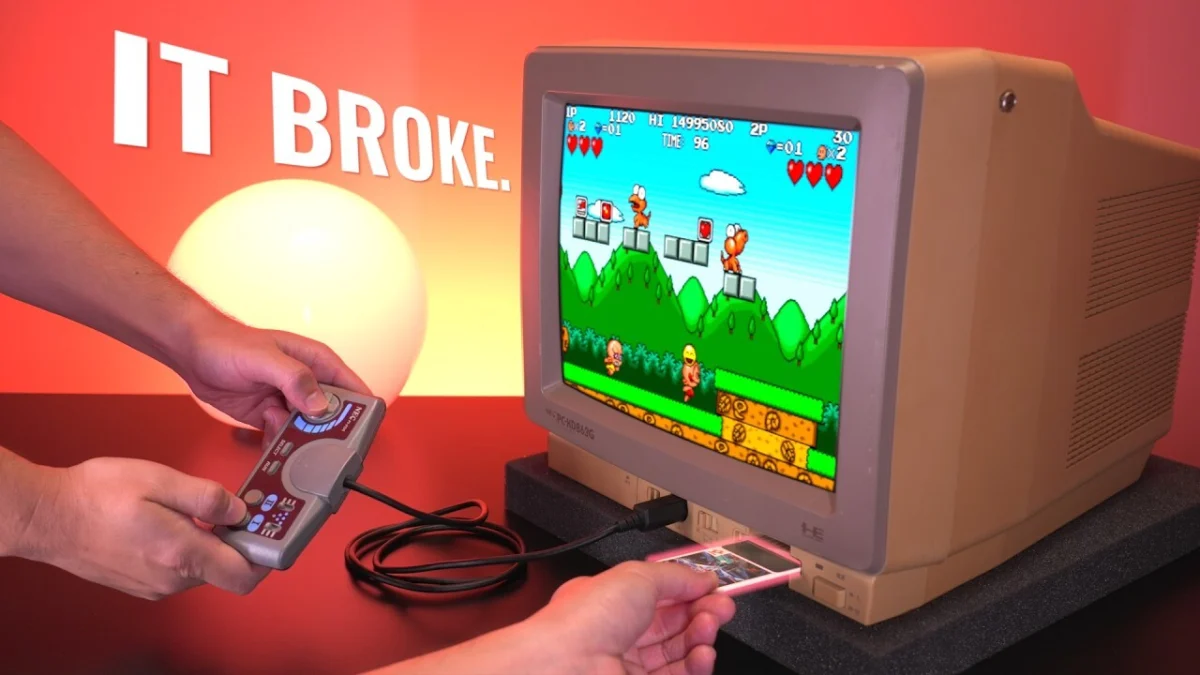
The Allure of the NEC PC-KD863G: A Technological Marvel
The NEC PC-KD863G stands as a testament to NEC’s innovative approach in the late 1980s and early 1990s. While dedicated gaming consoles were gaining traction, NEC, a diversified electronics giant, sought to offer a premium, all-in-one entertainment solution. The PC-KD863G integrated a full PC Engine (known as the TurboGrafx-16 in North America) into a high-fidelity CRT display. This combination offered several advantages: optimal display quality for the PC Engine’s native resolution, reduced cable clutter, and a sleek, unified aesthetic that appealed to early adopters of home entertainment systems.
The PC Engine, released in Japan in 1987, was a joint venture between NEC and Hudson Soft. It was notable for being the first console to feature a CD-ROM peripheral (the PC Engine CD-ROM² System) and for its relatively advanced 16-bit graphics chip (though marketed as an 8-bit console with a 16-bit graphics processor). Its library included iconic titles such as Bonk’s Adventure, R-Type, and Castlevania: Rondo of Blood. The PC-KD863G, therefore, provided an unparalleled out-of-the-box experience for these games, leveraging the CRT’s natural ability to render pixel art with crisp lines and vibrant colors without the scaling artifacts often seen on modern flat-panel displays. This direct integration eliminated potential signal degradation and ensured a historically accurate visual presentation, a crucial factor for retro gaming purists.
However, the PC-KD863G was produced in relatively limited quantities, primarily for the Japanese domestic market, and its substantial size and weight made it a niche product even upon release. Over the decades, its scarcity has only increased, transforming it into a "holy grail" item for serious collectors and preservationists of retro gaming hardware. Its robust construction, while a boon for longevity, also poses significant logistical challenges for modern acquisition and transport, as Tito’s journey vividly illustrates.
A Global Pursuit: The Chronology of Acquisition
Tito’s quest began, as many do in the digital age, with the discovery of the rare unit listed for sale in Japan. The decision to pursue such an item was not taken lightly, given the inherent difficulties involved. The timeline of his endeavor can be broken down into several critical phases:
- Discovery and Initial Assessment: Upon locating the NEC PC-KD863G, extensive research was conducted to verify its authenticity, condition, and the feasibility of an international acquisition. The unit’s known rarity and specific technical requirements necessitated careful planning.
- Logistical Planning (Pre-Travel): Recognizing the fragility and weight of a CRT, especially one of this size (likely between 50-70 lbs or 23-32 kg), a custom-designed, robust flight case was commissioned. This case was crucial for protecting the delicate internal components, particularly the picture tube, from the shocks and vibrations of international air travel. Simultaneously, travel arrangements, including flights and local transportation in Japan, were meticulously organized. Securing a reliable seller and arranging for local pickup were also key pre-travel considerations.
- The Journey to Japan: Tito embarked on the transatlantic journey to Japan, a testament to the dedication required for such a specialized acquisition. This phase involved navigating international travel protocols and coordinating with local contacts. The video documents not only the technical aspects of the journey but also cultural immersion, including meetings with fellow retro gaming enthusiasts and friends, adding a personal dimension to the otherwise technical pursuit.
- Acquisition and Initial Inspection: Upon arrival, Tito successfully acquired the PC-KD863G. An initial on-site inspection would have been critical to confirm the unit’s physical condition and basic functionality before the complex return journey.
- Return Journey and Customs: The most perilous leg of the journey involved transporting the cased CRT back across continents. This phase demanded careful handling, adherence to airline regulations for oversized and fragile cargo, and navigating customs procedures in both Japan and the destination country. The custom flight case proved indispensable during this stage, absorbing potential impacts and ensuring the unit’s safety.
- Unboxing and Initial Power-Up: Back in his studio, Tito proceeded with the careful unboxing. The anticipation surrounding the initial power-up of a vintage device after such a journey is palpable. This stage often involves careful voltage checks and a slow ramp-up to prevent damage.
- The Unexpected Malfunction: Despite all precautions, the unit, upon initial testing, exhibited a critical malfunction. The specifics of the "broke" incident, while not explicitly detailed in the summary, typically involve issues common to vintage electronics: capacitor failure, cold solder joints, power supply irregularities, or damage to delicate signal pathways. This setback underscores a universal truth about collecting vintage hardware: functionality is rarely guaranteed, and repair is often an intrinsic part of ownership.
- Diagnosis and Repair Efforts: The subsequent phase involved diagnosing the fault. For a device like the PC-KD863G, this would entail detailed electrical testing, component-level troubleshooting, and potentially trace repair on the circuit boards. The video’s inclusion of "great shots of trace repair for modding nerds" indicates the depth of technical work required, highlighting the specialized skills necessary to revive such complex vintage electronics.
- Ongoing Restoration and Peripherals Search: Even after addressing the primary malfunction, the journey of restoration continues. Tito’s public appeal for the matching NEC PSP-101 speakers indicates the desire to complete the original setup, a common pursuit among purists aiming for a historically accurate and complete collection. These speakers, designed to seamlessly integrate with the monitor, are themselves rare peripherals, adding another layer to the collecting challenge.
The Broader Implications: Preservation, Community, and Technical Expertise

Tito’s endeavor transcends a mere personal acquisition; it serves as a powerful microcosm of the broader retro gaming movement, illuminating several critical implications:
- Hardware Preservation: In an era dominated by digital emulation, the physical preservation of original hardware is paramount. Emulators, while convenient, cannot fully replicate the nuances of original hardware, including display characteristics, controller feel, and the inherent ‘lag’ or response times. Acquiring and restoring devices like the PC-KD863G ensures that future generations can experience gaming history in its authentic form. This effort is crucial as these devices are no longer manufactured and their numbers dwindle due to age and disuse.
- The Role of Content Creators: Figures like Tito from Macho Nacho Productions play a vital role in documenting and disseminating knowledge within the retro gaming community. Their videos not only entertain but also educate, offering practical advice on CRT maintenance, console modding, and the realities of international collecting. This content fosters a shared passion and provides valuable resources for enthusiasts worldwide.
- The Challenges of Vintage Electronics Ownership: The incident where the unit "broke" upon arrival is a stark reminder that vintage electronics are inherently prone to failure. Components degrade over time, solder joints weaken, and original specifications can drift. This necessitates a significant investment in diagnostic tools, repair skills, and a willingness to learn about electronics repair. It transforms ownership from passive consumption into an active, ongoing process of maintenance and restoration.
- Community Collaboration and Knowledge Sharing: The call for help in locating the PSP-101 speakers exemplifies the collaborative spirit within the retro gaming community. Online forums, social media, and dedicated communities are instrumental in sourcing rare parts, sharing repair techniques, and connecting collectors globally. The shout-outs to Carci, Scruffy, and Oleg further underscore the social fabric of this niche, where friendships are forged over shared passions and mutual support.
- Economic Realities of High-End Collecting: The costs associated with such an acquisition are substantial. Beyond the purchase price of the rare CRT, there are significant expenditures for international air travel, the custom flight case, potential import duties, and the ongoing costs of repair and component sourcing. This positions such endeavors as high-investment hobbies, often requiring considerable financial commitment and resourcefulness. The market for rare retro hardware continues to appreciate, driven by scarcity and intense demand, making such items not just collectibles but sometimes long-term investments.
Technical Deep Dive: CRT Repair and Longevity
The mention of "trace repair for modding nerds" provides a glimpse into the intricate technical work involved in restoring vintage CRTs. Trace repair refers to the meticulous process of fixing damaged electrical pathways (traces) on a printed circuit board (PCB). These traces, often made of copper, can crack or lift due to age, heat cycles, physical stress, or corrosion, leading to intermittent or complete circuit failure. Repair involves carefully scraping away the solder mask, bridging the broken trace with a fine wire, and then re-soldering and protecting the connection. This requires steady hands, specialized tools, and a deep understanding of electronics.
Beyond trace repair, CRTs, being vacuum tubes, have a finite lifespan. Common issues include:
- Capacitor aging: Electrolytic capacitors dry out over time, leading to power supply instability, picture distortions, or complete failure. A full "re-capping" is a standard maintenance procedure for vintage electronics.
- Flyback transformer issues: The flyback transformer generates the high voltage necessary for the electron gun and can fail, leading to no picture or arcing.
- Electron gun wear: Over thousands of hours of use, the electron gun inside the tube can weaken, resulting in a dim picture, poor focus, or color shifts. While a skilled technician can sometimes "rejuvenate" a tube, severe wear is often irreversible.
- Cold solder joints: Vibrations and thermal expansion/contraction over decades can cause solder joints to crack, creating intermittent connections.
Tito’s experience underscores that acquiring a vintage CRT is rarely a plug-and-play affair. It’s an adoption into a community that embraces the challenge of preservation and the satisfaction of restoring a piece of technological heritage to its former glory. The ability to perform or commission such repairs is a crucial skill in the retro gaming community, ensuring the longevity of these cherished displays.
Conclusion: A Continuing Legacy
The journey undertaken by Tito from Macho Nacho Productions to secure the NEC PC-KD863G is a compelling narrative of passion, perseverance, and technical acumen. It encapsulates the spirit of retro gaming: a blend of nostalgia, a pursuit of authenticity, and a dedication to preserving the tangible history of interactive entertainment. From the global logistics of transport to the intricate details of component-level repair, this saga offers a comprehensive view into the sophisticated demands of high-end vintage hardware collecting. As the search for the elusive PSP-101 speakers continues, Tito’s experience stands as a vivid reminder that the quest for a complete and authentic retro gaming setup is often a multi-faceted, ongoing adventure, driven by an unwavering commitment to a bygone era of technological innovation. Such endeavors not only enrich individual collections but also contribute significantly to the collective knowledge and preservation efforts of the global retro gaming community.