Cecilia Chamidah Nur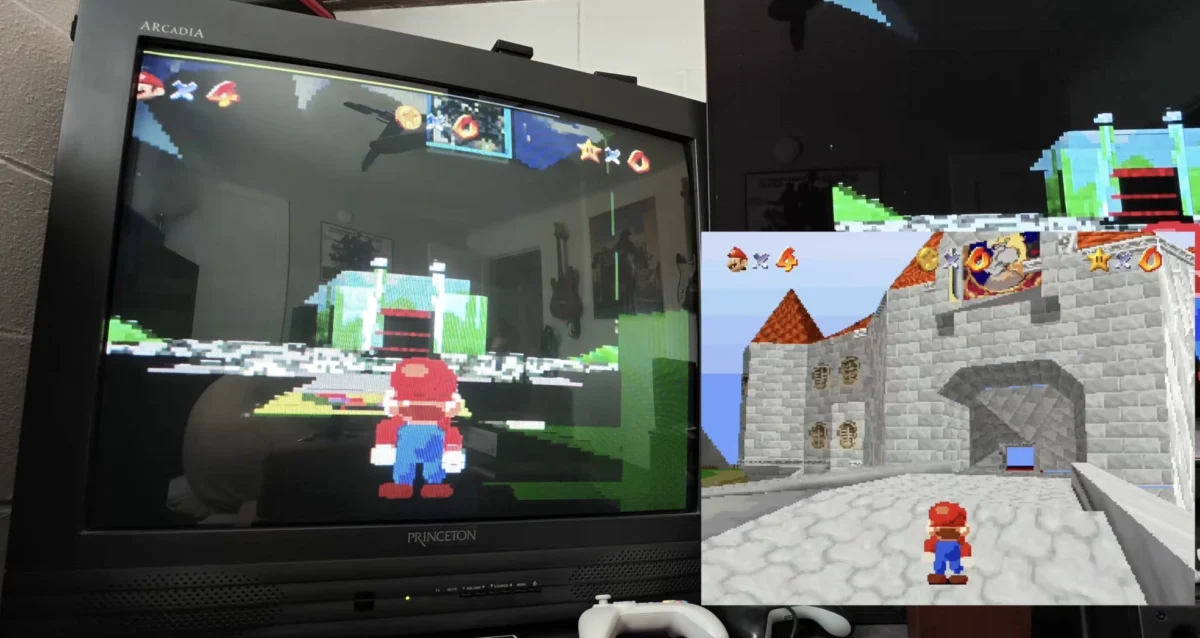
A remarkable demonstration has emerged from the dedicated homebrew community, showcasing a custom 3D engine running on the vintage Panasonic FZ-10 3DO console, utilizing the iconic 3D geometry from Nintendo’s seminal 1996 title, Super Mario 64. This ambitious project, spearheaded by the individual known as Eyepatch Entertainment, challenges conventional wisdom regarding the 3DO’s capabilities and highlights the enduring passion for retro hardware and software exploration. The developer explicitly states, "This is basically just homebrew and not a port. You can’t call this a port," underscoring the fundamental technical re-engineering involved rather than a direct translation of existing code.
The 3DO: A Pioneer’s Unfulfilled Promise
To fully appreciate the scope of this undertaking, it is crucial to understand the historical context and technical specifications of the 3DO Interactive Multiplayer. Launched in 1993 by The 3DO Company, founded by Electronic Arts founder Trip Hawkins, the 3DO was positioned as a premium, multimedia-focused entertainment system designed to bridge the gap between burgeoning CD-ROM technology and the evolving landscape of 3D gaming. Unlike its contemporaries, the 3DO was not a proprietary console from a single manufacturer; instead, its hardware specifications were licensed to various electronics companies, including Panasonic, Sanyo, and GoldStar, who then produced their own versions of the console. The Panasonic FZ-10, released in 1994, was a more streamlined and cost-effective iteration of the original FZ-1 REAL 3DO Interactive Multiplayer.
Technically, the 3DO was impressive for its time, featuring a 32-bit ARM60 RISC CPU clocked at 12.5 MHz, coupled with two custom video co-processors and a dedicated DSP for audio. It boasted 2 MB of DRAM and 1 MB of VRAM, with a theoretical polygon rendering capability that, while not explicitly defined by a specific hardware limit, allowed for rudimentary 3D graphics. Its CD-ROM drive offered a significant storage advantage over cartridge-based systems. However, despite its advanced architecture and multimedia aspirations, the 3DO faced several critical challenges. Its high price point (initially $699.95, equivalent to over $1,400 today), a fragmented market due to multiple manufacturers, and a relatively limited library of truly groundbreaking titles ultimately hampered its success.
The 3DO’s legacy is often characterized as a transitional piece of technology, bridging the technological chasm between the 16-bit sprite-based consoles like the Super Nintendo Entertainment System and the Sega Genesis, and the true 3D powerhouses that would soon dominate the market: the Sega Saturn (released 1994 in Japan, 1995 worldwide), the Sony PlayStation (released 1994 in Japan, 1995 worldwide), and the Nintendo 64 (released 1996). While the 3DO was capable of rendering polygons, it never achieved the widespread recognition as a "3D powerhouse" that its successors would, largely due to its market position and the relative sophistication of its early 3D implementations compared to what was to come.
The Super Mario 64 Revolution and the N64’s Power
In stark contrast to the 3DO’s journey, the release of Super Mario 64 in 1996 for the Nintendo 64 (N64) was nothing short of revolutionary. It single-handedly redefined 3D platforming and set new benchmarks for camera control, open-world level design, and intuitive 3D character movement. The N64 itself was a significantly more powerful machine than the 3DO, designed from the ground up to excel at 3D graphics. Its heart was a 64-bit MIPS R4300i CPU clocked at 93.75 MHz, complemented by the custom-designed Reality Coprocessor (RCP) running at 62.5 MHz, which handled graphics and audio processing. The N64 utilized 4 MB of Rambus RDRAM (expandable to 8 MB with the Expansion Pak), providing high-bandwidth memory crucial for its advanced texture mapping and anti-aliasing capabilities.
The N64’s architecture, particularly its RCP, was optimized for rendering textured polygons at high speeds, employing features like z-buffering, perspective correction, and anti-aliasing directly in hardware. This allowed Super Mario 64 to present vast, intricate 3D environments with smooth, responsive gameplay, features that were largely beyond the practical capabilities of earlier 32-bit consoles, including the 3DO, without significant compromises. The sheer leap in graphical fidelity and processing power between the 3DO and the N64 makes the concept of bringing a game like Super Mario 64 to the earlier console an almost preposterous technical challenge.
The "Bonkers Proposition": Bridging a Generational Divide
Given the generational gap and fundamental architectural differences, the idea of developing Super Mario 64 for the 3DO is, as the original article states, "understandably considered a bit of a bonkers proposition." This isn’t merely a matter of clock speed; it’s a profound disparity in how each system was designed to handle 3D graphics. The N64 leveraged dedicated hardware for many tasks that would have to be painstakingly emulated in software on the 3DO. For instance, the N64’s Reality Coprocessor excelled at texture mapping and polygon rendering, while the 3DO’s video co-processors, though capable of drawing untextured polygons and simple texture mapping, lacked the sophisticated hardware acceleration for the complex, textured environments of Super Mario 64.
Memory constraints also play a significant role. The 3DO’s 2 MB of DRAM and 1 MB of VRAM, while decent for its era, are dwarfed by the N64’s standard 4 MB of RDRAM, which could be expanded to 8 MB. Super Mario 64 was meticulously crafted to utilize the N64’s memory and processing pipeline efficiently. Recreating such an environment on the 3DO would necessitate drastic reductions in polygon counts, texture resolution, draw distances, and potentially the complete overhaul of how physics and collision detection are handled. The proposition is not just about translating code; it’s about fundamentally rethinking the game’s engine for an entirely different, less powerful hardware paradigm.
Eyepatch Entertainment’s Ingenious Approach: Homebrew, Not a Port
Recognizing these formidable technical hurdles, Eyepatch Entertainment has not attempted a direct port, but rather a "from-the-ground-up 3D engine for the 3DO," which then imports the 3D geometry from Super Mario 64. This distinction is critical. A "port" typically implies adapting an existing codebase to a new platform, often with some level of compatibility in mind. What Eyepatch Entertainment has achieved is far more akin to reverse-engineering the visual data (map geometry) and then building a completely new system around it, tailored specifically to the 3DO’s architecture.
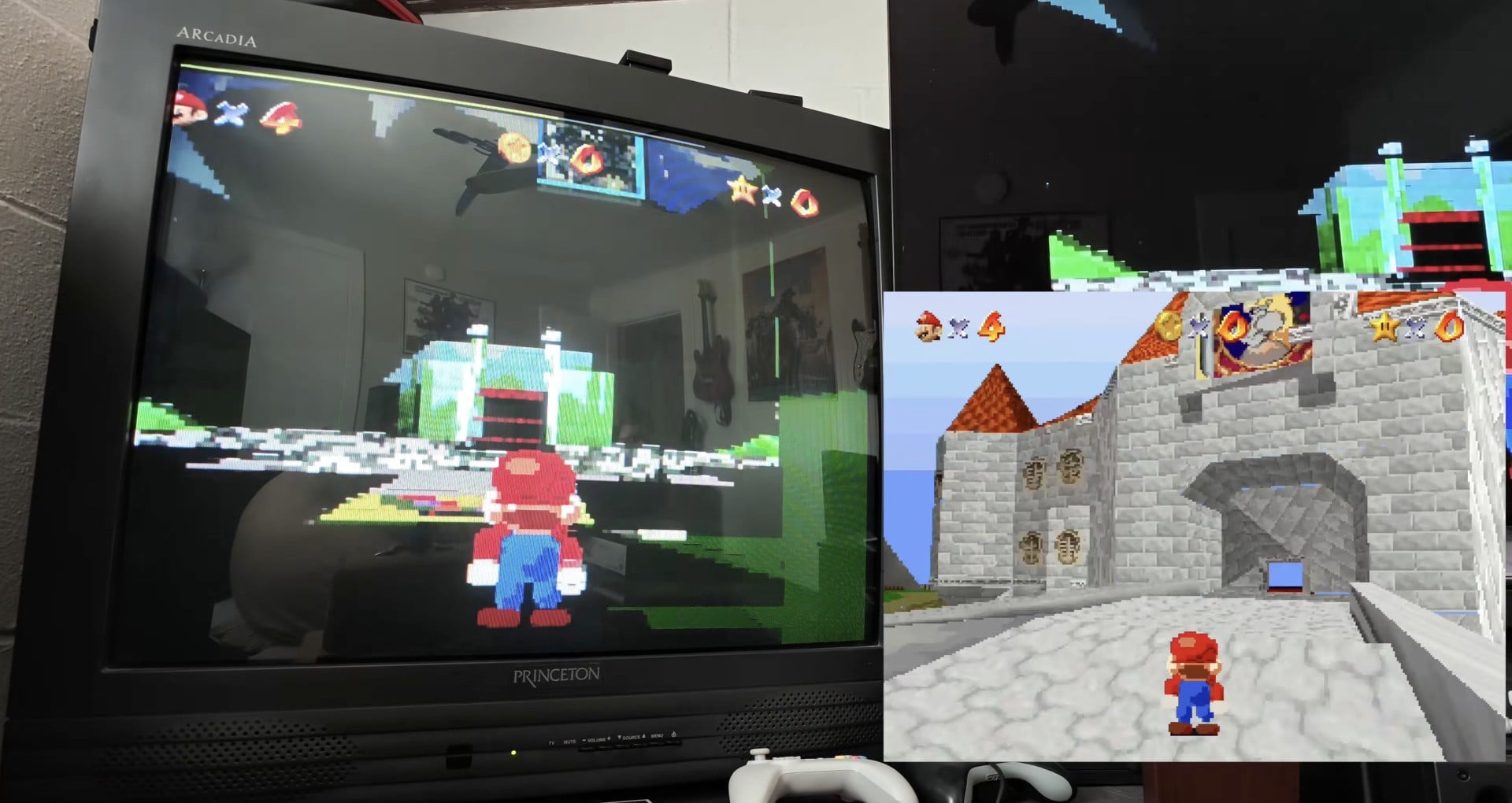
As the developer explains in their video demonstration, "What you’re seeing right now… is a from-the-ground-up 3D engine for the 3DO… This is the Mario 64 geometry running on a 3DO. This shouldn’t work. This doesn’t really work, but you are seeing it kind of work." This candid admission highlights the experimental nature of the project. The primary goal is to assess the feasibility of rendering Mario 64‘s environments on 3DO hardware and to see "how close they can get to a functional version of Mario 64 on 3DO hardware."
Key design choices underscore this approach:

- New 3D Engine: Instead of trying to adapt the N64’s rendering pipeline, a custom engine was developed to leverage the 3DO’s specific hardware capabilities and limitations. This involves bespoke routines for polygon rendering, culling, and projection.
- Imported Geometry: The actual 3D models of the levels (e.g., Inside Castle, Outside Castle, Bob-omb Battlefield, The Backyard) are extracted from Super Mario 64 and fed into the new 3DO engine. This allows for the visual recognition of the iconic environments.
- Sprite-Based Mario: Crucially, players do not control a polygonal 3D model of Mario. Instead, a "slightly cursed" sprite-based version of the plumber navigates the 3D environments. This is a pragmatic decision, as rendering a complex, animated 3D Mario model with sufficient detail and smooth animation would likely overwhelm the 3DO’s capabilities, especially while simultaneously rendering the level geometry. The developer explains, "You can’t have a polygonal 3D Mario, so I just have an animated sprite here."
- Simplified Controls: Mario’s movement utilizes "tank controls," a common method in early 3D games where directional inputs rotate the character, and a separate input moves them forward. This simplifies the control scheme, likely to reduce computational overhead associated with complex character physics and direct analog control. The demo includes a jump button and a "stomp that spins him and dumps him."
- Inspiration from GBA Port: The developer notes drawing inspiration from the Game Boy Advance (GBA) port of Super Mario 64 DS (which itself was a remake), specifically regarding the approach to character representation and environmental interaction on less powerful hardware. This suggests a focus on functional gameplay within technical constraints rather than absolute graphical fidelity.
The Demo: A Glimpse into the Feat
The current demo, shared via a video demonstration, offers a compelling, albeit imperfect, look at this ambitious project. Eyepatch Entertainment openly admits the demo is "a bit of a mess." Key observations from the demonstration include:
- Inconsistent Frame Rate: The frame rate fluctuates wildly, ranging from a sluggish 1 frame per second (FPS) in complex areas to a more playable 20 FPS in simpler scenes. This variability is a direct consequence of the 3DO’s struggle to process and render the dense Mario 64 geometry in real-time.
- Rendering Errors: The video clearly shows numerous "rendering errors," such as flickering polygons, geometry pop-in, and visual glitches. These are common artifacts when pushing hardware beyond its intended limits or when dealing with complex data on a less capable system.
- Lack of Sound: The demo currently operates without any audio, focusing solely on the visual and control aspects of the engine. Integrating sound, especially complex spatial audio or music, would add another layer of computational demand.
- Limited Functionality: While movement and basic actions like jumping and stomping are present, the demo is far from a fully functional game. It’s a technical proof-of-concept exploring the limits of the hardware.
Despite these acknowledged imperfections, the underlying achievement is remarkable. As Eyepatch Entertainment proudly states, the demo "doesn’t crash" and "what’s amazing" is that it is actually running on authentic 3DO hardware, in addition to the Opera 3DO emulator. This stability on original hardware is a testament to the developer’s meticulous coding and understanding of the 3DO’s internal workings. The fact that any recognizable Super Mario 64 geometry can be rendered and navigated, however imperfectly, on a 3DO is a significant technical feat.
The Broader Context: Homebrew, Preservation, and Technical Curiosity
Projects like Eyepatch Entertainment’s Super Mario 64-inspired homebrew extend beyond mere novelty. They represent a vital aspect of the retro gaming community:
- Game Preservation: While this is not a direct preservation of Super Mario 64 itself, it demonstrates the community’s dedication to understanding and pushing the boundaries of classic hardware. Such reverse-engineering efforts often contribute to better emulation, documentation, and ultimately, the long-term preservation of gaming history.
- Technical Education and Exploration: These projects offer invaluable insights into the architectures of old consoles. Developers like Eyepatch Entertainment delve into low-level programming, understanding how to squeeze performance out of antiquated systems, a skill that requires deep technical knowledge and creativity.
- Community Engagement: Such ambitious undertakings often foster vibrant discussions within the retro gaming, emulation, and homebrew communities, inspiring others to experiment and contribute. The collective curiosity fuels innovation and appreciation for the ingenuity of early game developers.
- Reimagining Possibilities: By attempting the "impossible," homebrew developers challenge established narratives about what specific hardware could or could not do. While the 3DO may never host a perfect Super Mario 64 experience, this project reveals hidden depths and unexpected capabilities, even if achieved through highly unconventional means.
Looking Ahead: The Enduring Spirit of Innovation
To circle back to the core question posed by Eyepatch Entertainment at the start of their video, "Can Mario 64 run on the 3DO?" The current answer remains: "Not exactly." A faithful, fully playable port with the fidelity and gameplay of the N64 original is likely beyond the 3DO’s practical capabilities. However, this nuanced answer does not diminish the significance of this homebrew project. It is a testament to what dedicated individuals can achieve when driven by curiosity and a deep passion for vintage technology.
The effort involved in creating a custom 3D engine, importing complex geometry, and making it runnable on a console over two decades old is immense. It stands as a vibrant example of the ongoing dialogue between past and present in video game development. While the demo may be "a mess" in its current state, it is a glorious mess, embodying the spirit of technical exploration and the boundless creativity of the homebrew community. The world of retro gaming salutes Eyepatch Entertainment for their audacious attempt, however silly or technically challenging it may appear, pushing the boundaries of what was thought possible on the venerable 3DO.